
Deep-sea fishing charter and seasickness: what to expect
A deep-sea fishing charter is the hardest trip in this cluster, and the run out is not why. It is the hours afterwards, anchored or drifting over structure with your eyes down on bait and rigs, too far from the dock to quit.
Deep-V sportfisher or head boat · Half day 4 to 6 hours, full day 8 to 12 hours · Reported seasickness risk: the most commonly warned-about trip in this cluster.
- Low
- Moderate
- High
- Very high
Risk summarises what passengers, crews and published marine guidance commonly report for this kind of craft, not a measurement of any one operator's boat.
Key facts
- Deep-sea fishing charters run 4 to 6 hours for a half day and 8 to 12 hours for a full day, most of it spent anchored or drifting rather than underway.
- Charter operators commonly advise that if you feel ill at anchor, getting the boat underway again can help.
- The fishing itself is the second trigger: bait, rigs and reels keep your eyes down and off the horizon for minutes at a time.
Try Dizzout free. Put it on your phone before you go, so it is there when you need it. Drug-free, any headphones.Free · works with any headphones · no account to try
Stop seasickness on the water. Free to try, no card needed. Or go straight to the App Store or Google Play.
Why a fishing charter sets people off
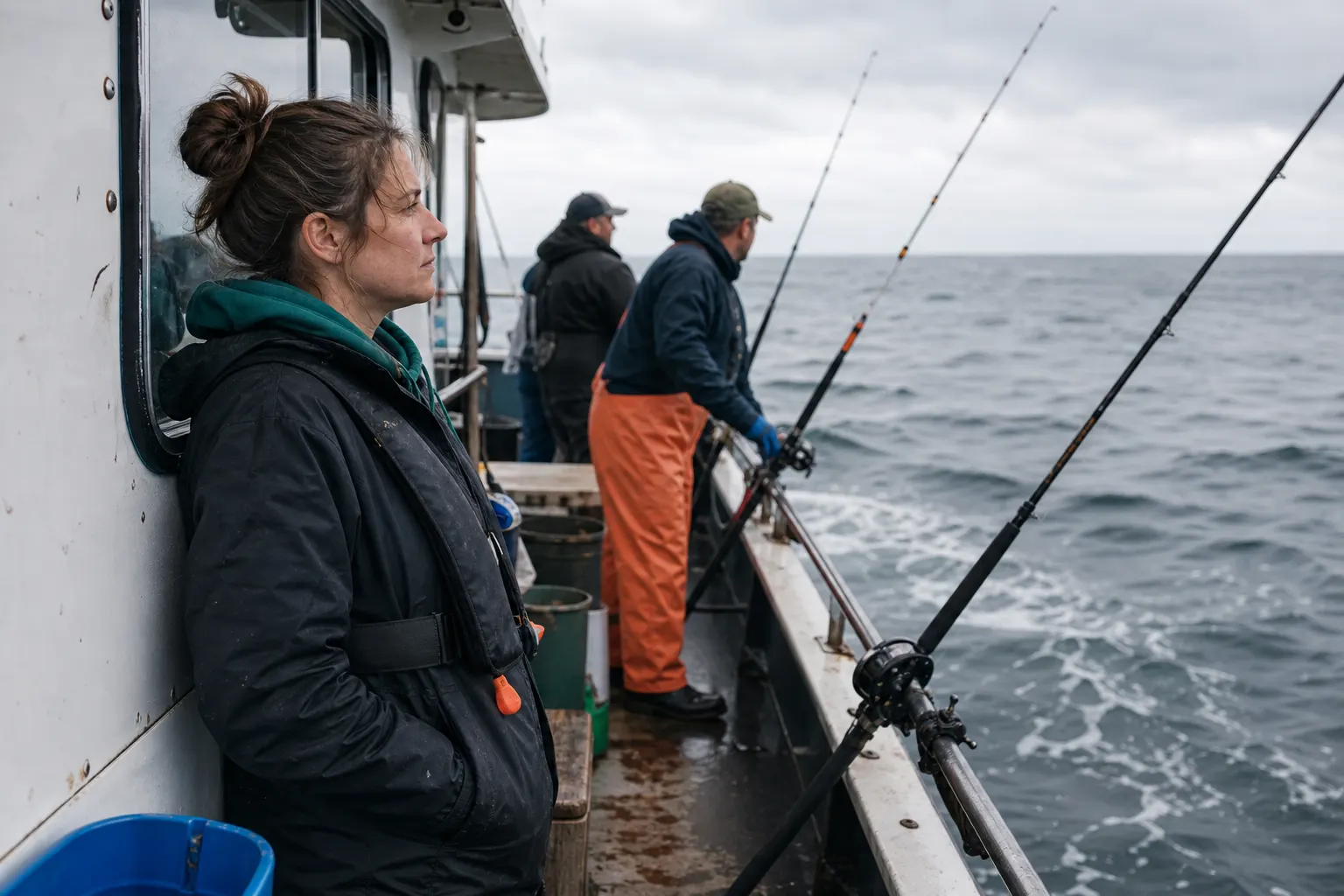
Charters run offshore at speed and then stop to fish. A hull with no way on tends to lie beam on to wind and swell, and beam seas set up the slow, self-perpetuating roll boaters describe as the least comfortable motion there is. The fishing does the rest: bait, rigs and reels pull your eyes down for minutes at a time, so the horizon, the one steady reference you have, is exactly what you stop looking at. Boaters commonly report that the deeper a hull's deadrise, the more it rocks once it stops, which is the trade you make for a boat that cuts through chop at speed.
Stopped or underway: which part is worse
Commonly reported as worse at anchor or on the drift, and the mechanics fit. One Marathon charter puts it in its own advice page: if you are on anchor and you feel ill, pulling the anchor and heading offshore might help. No controlled study has compared anchored against underway, so read this as the accumulated experience of crews who run these boats daily rather than a measured result.
Where to be on board
Midships on deck, facing forward for the run out. Once fishing starts, take a spot where you can lift your eyes to the horizon between tasks, stay out of the cabin, and keep upwind of the exhaust at the stern.
Going on a fishing charter? Set it up first
You will not want to be setting up an app once the boat is moving. Dizzout is a drug-free app that plays precisely calibrated audio through any headphones you already own, wired or Bluetooth, with relief in about 90 seconds. Free to try.
Heading out on the water? Check the trip first
Check your tripFree, two minutes, and it scores the trip you actually have ahead.
Put it on your phone before you go
Free to try, no card needed. Or go straight to the App Store or Google Play.
 Scan to open on your phone
On a computer? Dizzout installs on your phone. Scan the code, or open dizzout.com/get on your phone and it'll take you straight to the right store.
Know someone who gets motion sick?
Send them the app that helps stop it, drug-free, in about 90 seconds, works with any headphones. Free to try.
What helps on this trip
- Pick the calm forecast and the shorter trip. Charter guidance is consistent: an inshore or half-day trip in settled weather is a different experience from a full day offshore in wind.
- Ask the crew to get underway if the roll at anchor is getting to you. It is a normal request, and moving changes both the rhythm of the motion and how the hull sits to the swell.
- Between casts, lift your eyes to the horizon instead of staring at the rod tip or the deck.
- Stand midships and stay out of the cabin. Under the hardtop with no horizon and engine fumes drifting past is where people commonly lose it.
- If it starts anyway, put your earbuds in. Dizzout is drug-free sound therapy designed to help after symptoms start, and it works with any headphones.
For what actually holds up under testing, see the remedy verdicts, and for the water itself rather than the boat, how rough your sea usually is. Anything you take before travelling is a question for a pharmacist or doctor.
Frequently asked questions
How do I not get seasick deep sea fishing?
Book the calmest forecast you can and start with a half day rather than a full one, because exposure time is the variable you control most easily. On the boat, stay midships and on deck, face forward on the run out, and lift your eyes to the horizon between casts instead of staring down at bait and rigs. If the roll at anchor is the thing getting to you, ask the crew to get underway: charter operators commonly say that helps.
Is seasickness worse when the fishing boat is anchored or drifting?
Commonly reported, yes. A boat with no forward drive tends to swing beam on to the swell, and rolling side to side at a slow rhythm is the motion people find hardest. Charters put it in their own advice pages: if you feel ill on anchor, pulling the anchor and getting underway might help. No controlled study has compared the two states, so this is the accumulated experience of crews rather than a measured finding.
Can the boat turn back if I get seasick miles offshore?
On a private charter that is the captain's call, and it is worth asking before you book how they handle it. On a head boat shared with dozens of other anglers, an early return for one passenger is unlikely. What crews commonly offer instead is a change of mode rather than a change of plan: pulling the anchor and running for a while, or moving to a more sheltered spot.
Other trips and excursions
Related
- Seasickness: the full guideWhy ships do it, the steadiest cabin, and a survival kit for the crossing.
- Is your sea rough? Sea by seaEvery crossing in one table, roughest first, each with a month-by-month page.
- Cruise ships & motion sicknessNamed ships sorted by how much they move, grouped by cruise line.
- Feeling it right now: the 90-second stepsThree steps over 90 seconds, with a timer that waits if you lock the screen.
Sources & further reading
- https://mainattraction.org/how-to-not-get-seasick-on-your-fishing-trip/
- https://fishingbooker.com/blog/how-to-prevent-seasickness-on-a-fishing-charter/
- https://charterfishingdestin.com/how-to-prevent-sea-sickness/
- https://floridasportfishing.com/floridas-official-head-boat-fishing-guide/
- https://www.thehulltruth.com/boating-forum/618309-best-hull-sea-sickness.html
Your next question, probably
Will the water itself be rough?
Sea by sea, month by month
If that is not your question:
Written from operator guidance, marine, aviation and specialist sources, and published passenger and participant reports as of September 2026. Risk levels describe a kind of trip, not any particular operator's craft, and conditions on the day matter more than the category does. Operator and brand names are trademarks of their respective owners; Dizzout is not affiliated with or endorsed by them. Sensitivity varies from person to person; this page is informational and not medical advice.