
Dive boat and seasickness: what to expect
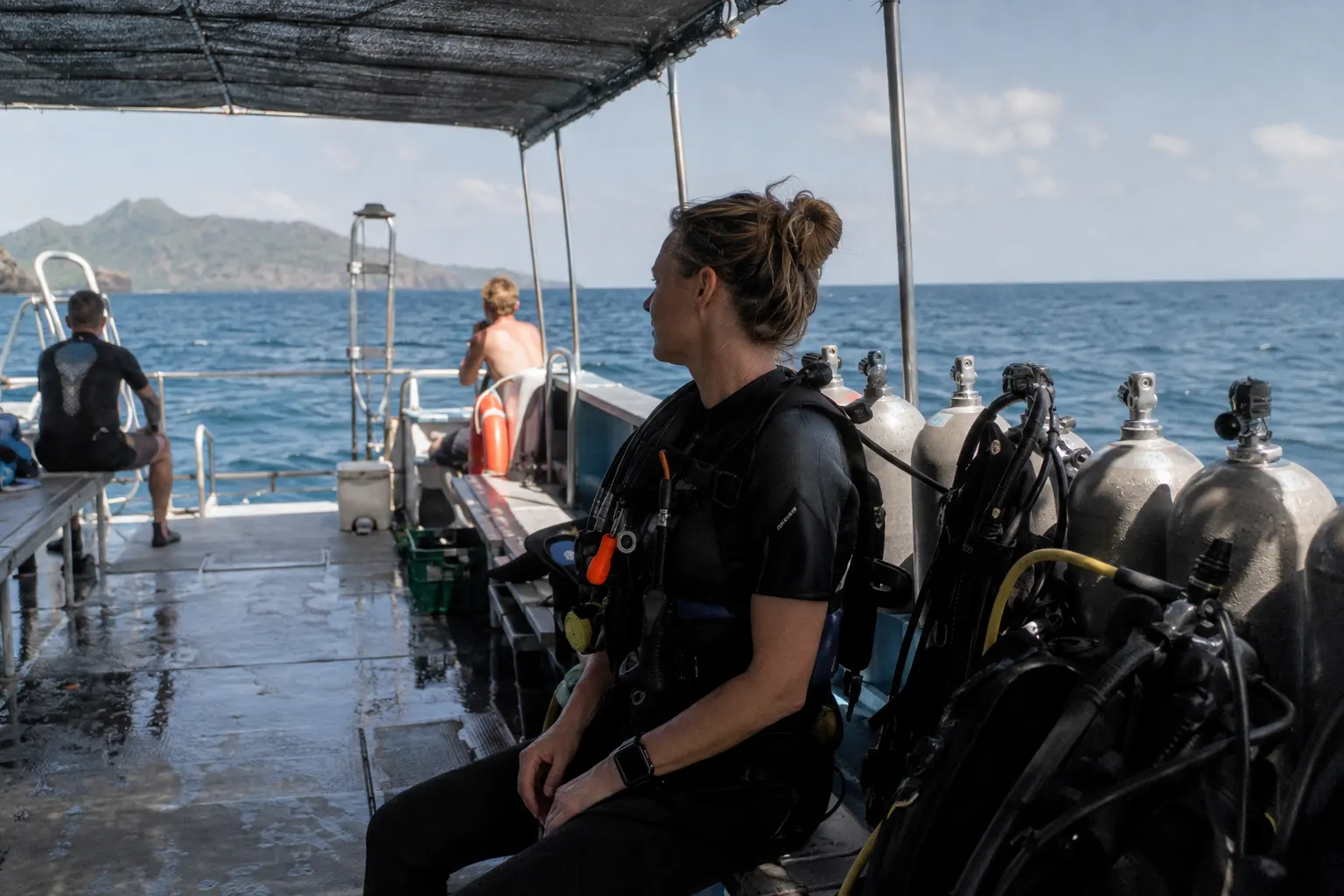
A dive boat is a high-risk trip with an unusual escape hatch: it moors at the site and rolls there for the whole surface interval, and many divers report their symptoms disappearing the moment they descend.
Monohull or catamaran dive boat · Half day two-tank trips with long moored surface intervals · Reported seasickness risk: commonly reported as a strong trigger.
- Low
- Moderate
- High
- Very high
Risk summarises what passengers, crews and published marine guidance commonly report for this kind of craft, not a measurement of any one operator's boat.
Key facts
- Dive guidance from Divers Alert Network advises standing in the centre of the boat and avoiding the upper and lower decks, where motion is amplified.
- PADI notes that many divers' seasickness symptoms disappear once they descend, because the conflicting sensory signals stop underwater.
- Dive guidance recommends the largest boat available, and a catamaran over a monohull, for divers who are prone to seasickness.
Try Dizzout free. Put it on your phone before you go, so it is there when you need it. Drug-free, any headphones.Free · works with any headphones · no account to try
Stop seasickness on the water. Free to try, no card needed. Or go straight to the App Store or Google Play.
Why a dive boat sets people off
The run to the site is short. The rest of the trip is spent moored or anchored, rolling, while you gear up head down over a tank and a regulator. PADI describes symptoms commonly vanishing on descent, because underwater the conflicting signals between eyes, inner ear and limbs stop. Between dives you are back on a rolling deck with a logbook, a briefing, and often engine fumes drifting over the stern, which is the window divers most commonly name as the worst part of the day.
Stopped or underway: which part is worse
Worst moored, which is where the day is spent. Gearing up on a deck that is rolling at a mooring is the classic trigger window, and the dive itself is commonly the relief.
Where to be on board
Divers Alert Network advises standing in the centre of the boat and avoiding the upper and lower decks, where bobbing and swaying are amplified. Set your gear up before departure where you can, spend the surface interval midships in fresh air with the horizon in view, and stay out of the cabin.
Going on a dive boat? Set it up first
You will not want to be setting up an app once the boat is moving. Dizzout is a drug-free app that plays precisely calibrated audio through any headphones you already own, wired or Bluetooth, with relief in about 90 seconds. Free to try.
Heading out on the water? Check the trip first
Check your tripFree, two minutes, and it scores the trip you actually have ahead.
Put it on your phone before you go
Free to try, no card needed. Or go straight to the App Store or Google Play.
 Scan to open on your phone
On a computer? Dizzout installs on your phone. Scan the code, or open dizzout.com/get on your phone and it'll take you straight to the right store.
Know someone who gets motion sick?
Send them the app that helps stop it, drug-free, in about 90 seconds, works with any headphones. Free to try.
What helps on this trip
- Assemble your gear before you leave the dock, or in short head-up sessions rather than one long head-down one at the mooring.
- Spend the surface interval midships and outside, with the horizon in view, rather than in the cabin with a logbook.
- Stay upwind of the exhaust. Fumes over the stern while the boat sits at a mooring is a combination divers name repeatedly.
- If you have a choice of boats, dive guidance points prone divers at the largest hull available, and at a catamaran over a monohull.
- If it starts anyway, put your earbuds in between dives. Dizzout is drug-free sound therapy designed to help after symptoms start, and it works with any headphones.
For what actually holds up under testing, see the remedy verdicts, and for the water itself rather than the boat, how rough your sea usually is. Anything you take before travelling is a question for a pharmacist or doctor.
Frequently asked questions
How do divers deal with seasickness on the boat?
Mostly by managing the surface interval, because that is where the rolling happens. Divers Alert Network advises standing in the centre of the boat and avoiding the upper and lower decks, where the bobbing and swaying are amplified. The other common moves are practical: rig your gear before departure rather than head down at the mooring, stay outside with the horizon in view between dives, and keep upwind of the engine exhaust at the stern.
Does seasickness really go away underwater?
For many divers, yes. PADI describes symptoms commonly disappearing on descent, because the sensory conflict that causes them stops: underwater your eyes, inner ear and limbs all report the same gentle three-dimensional movement instead of arguing with each other. The relief does not always survive the ascent, though. Coming back up to a rolling deck and a surface interval is where divers commonly report it returning.
Why do I feel worst when the dive boat is moored at the site?
Because a boat with no forward drive lies beam on to the swell and rolls, and you spend that time head down over your gear rather than looking out at the horizon. It is the same pattern fishing charters and whale watch boats report. The transit is comparatively easy; the stop is the hard part, and on a two-tank trip the stop is most of the day.
Other trips and excursions
Related
- Seasickness: the full guideWhy ships do it, the steadiest cabin, and a survival kit for the crossing.
- Is your sea rough? Sea by seaEvery crossing in one table, roughest first, each with a month-by-month page.
- Cruise ships & motion sicknessNamed ships sorted by how much they move, grouped by cruise line.
- Feeling it right now: the 90-second stepsThree steps over 90 seconds, with a timer that waits if you lock the screen.
Sources & further reading
- https://dan.org/safety-prevention/diver-safety/divers-blog/seasickness-prevention-and-treatment/
- https://blog.padi.com/seasickness-while-diving-how-to-handle-it/
- https://scubaboard.com/community/threads/how-do-i-overcome-seasickness-on-boat-dives-without-medication.644881/
- https://www.dresseldivers.com/blog/how-avoid-seasickness-dive-boat/
Your next question, probably
Will the water itself be rough?
Sea by sea, month by month
If that is not your question:
Written from operator guidance, marine, aviation and specialist sources, and published passenger and participant reports as of September 2026. Risk levels describe a kind of trip, not any particular operator's craft, and conditions on the day matter more than the category does. Operator and brand names are trademarks of their respective owners; Dizzout is not affiliated with or endorsed by them. Sensitivity varies from person to person; this page is informational and not medical advice.