
Gulet cruise and seasickness: what to expect
A Turkish gulet is the rare multi-day cruise that earns a low rating, and the charter guides say it outright: heavy, stable boats on coastal routes, so seasickness is not generally an issue. The honest caveat is a specific one: a night at anchor in a bay the wind has found.
Heavy wooden motor-sailer with a wide beam · Multi-day cruises built of short coastal legs · Reported seasickness risk: commonly reported as one of the easier trips in this guide.
- Low
- Moderate
- High
- Very high
Risk summarises what passengers, crews and published marine guidance commonly report for this kind of craft, not a measurement of any one operator's boat.
Key facts
- Charter guides state that seasickness is not generally an issue on gulets: the boats are heavy and stable, and most do not cruise into open sea.
- The blue cruise rhythm keeps exposure low: short coastal legs, two or three swim stops a day, and nights at anchor in sheltered bays.
- The exception charter guidance names is an anchorage that catches the wrong wind, which can roll the boat through the night.
Try Dizzout free. Put it on your phone before you go, so it is there when you need it. Drug-free, any headphones.Free · works with any headphones · no account to try
Stop seasickness on the water. Free to try, no card needed. Or go straight to the App Store or Google Play.
Why a gulet cruise sets people off
Mostly it does not, for three stacked reasons. The boats are heavy wooden motor-sailers with wide beams, which move slowly and roll little. The routes are deliberately coastal: blue cruise itineraries hop between sheltered bays and gulfs rather than crossing open sea, and the classic cruising grounds are long stretches of protected water where a morning's leg is short and the afternoon is spent swimming at anchor. And the rhythm keeps exposure low: most days involve an hour or two under way and many hours stopped in flat, enclosed coves. The vulnerability is the one every anchored boat has: if the overnight bay catches the wrong wind, the boat rolls at anchor through the night, and charter guidance is blunt that a poorly chosen anchorage makes for a rough night.
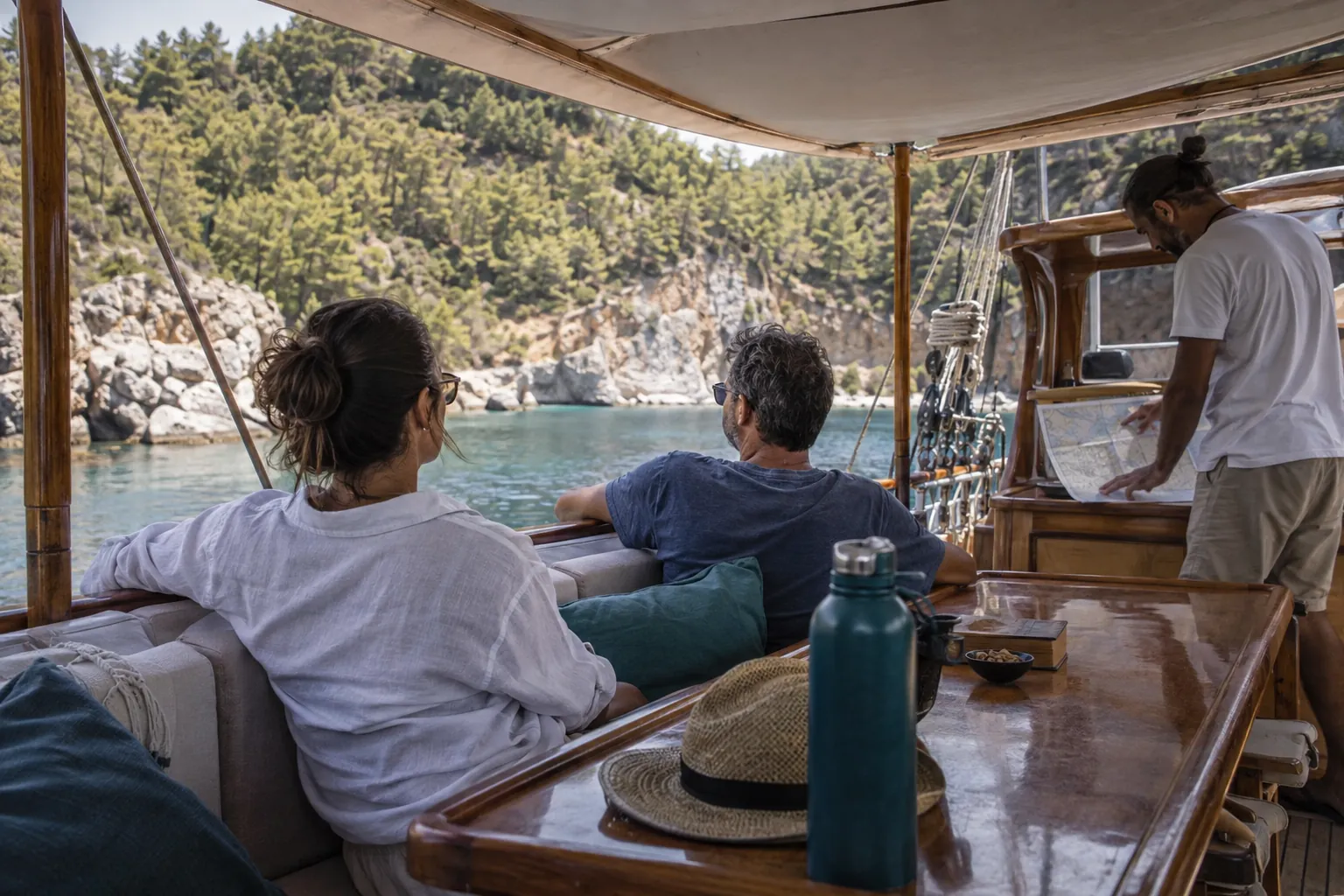
Under way or at anchor: which part is worse
Under way is short and usually sheltered; at anchor is where the good and the bad both live. A still cove at anchor is the calmest sleeping you will do afloat, flat enough that the cluster's stopped-boat rule barely applies. The same anchorage with wind blowing into it is the exception, and it is why crews watch the forecast and move bays when the weather asks them to. Trusting the captain's choice of overnight bay is most of the protection.
Where to be on board
On deck with the coastline in view during the legs, which are short enough that most guests spend them at the rail anyway. Cabins on a gulet are aft or below; if a breezy night has the anchorage rolling, the cockpit cushions and the open deck sleep better than a closed cabin, and gulet guests use them for exactly that.
Going on a gulet cruise? Set it up first
You will not want to be setting up an app once the boat is moving. Dizzout is a drug-free app that plays precisely calibrated audio through any headphones you already own, wired or Bluetooth, with relief in about 90 seconds. Free to try.
Heading out on the water? Check the trip first
Check your tripFree, two minutes, and it scores the trip you actually have ahead.
Put it on your phone before you go
Free to try, no card needed. Or go straight to the App Store or Google Play.
 Scan to open on your phone
On a computer? Dizzout installs on your phone. Scan the code, or open dizzout.com/get on your phone and it'll take you straight to the right store.
Know someone who gets motion sick?
Send them the app that helps stop it, drug-free, in about 90 seconds, works with any headphones. Free to try.
What helps on this trip
- Book the classic sheltered itineraries, the enclosed gulfs and bay-hopping routes, rather than legs with open-sea crossings, if you are sensitive.
- Spend the short legs on deck with the coast in view. The scenery is the point of the trip and also the steadiest reference aboard.
- Let the crew chase the shelter. Moving to a calmer bay when the wind shifts is normal gulet practice, not an inconvenience.
- If a rolly night does arrive, take a cushion to the open deck: air, horizon at first light, and less amplified motion than a closed cabin.
- Keep your earbuds by the bunk. If a night at anchor turns rolly, put them in: Dizzout is drug-free sound therapy designed to help after symptoms start, and it works with any headphones.
For what actually holds up under testing, see the remedy verdicts, and for the water itself rather than the boat, how rough your sea usually is. Anything you take before travelling is a question for a pharmacist or doctor.
Frequently asked questions
Will I get seasick on a gulet cruise?
The charter guides answer this directly: not generally, because gulets are heavy, stable boats and most itineraries never enter open sea. The blue cruise format works in your favour too, short coastal hops, long swimming stops, and nights at anchor in sheltered coves, so your daily exposure to real motion is an hour or two at most. The scenario to plan around is not the sailing but a windy night at a poorly sheltered anchorage, which crews avoid by moving bays with the forecast.
Are there rough parts on a blue cruise route?
A classic bay-hopping itinerary in the sheltered gulfs has very few: those cruising grounds are long stretches of protected water, and the legs between anchorages are short. Routes that include open coastal passages, or reach exposed headlands, add real sea for an hour or two, and if you are sensitive that is the itinerary detail to ask about before booking. Crews run these waters all season and time the exposed stretches for the calm hours of the day.
What if the boat rolls at anchor overnight?
It means the wind has found your bay, and the fix belongs to the crew first: gulets routinely move to better-sheltered anchorages when the weather shifts, and charter guidance treats picking the right bay as basic seamanship. As a guest, if a rolly night does happen, the open deck beats a closed cabin, fresh air, less amplified motion, and the horizon there at first light. By breakfast the crew has usually either moved the boat or the wind has moved on.
Other trips and excursions
Related
- Seasickness: the full guideWhy ships do it, the steadiest cabin, and a survival kit for the crossing.
- Is your sea rough? Sea by seaEvery crossing in one table, roughest first, each with a month-by-month page.
- Cruise ships & motion sicknessNamed ships sorted by how much they move, grouped by cruise line.
- Feeling it right now: the 90-second stepsThree steps over 90 seconds, with a timer that waits if you lock the screen.
Sources & further reading
- https://turkeytravelplanner.com/turkish-gulets/frequently-asked-questions/
- https://www.boatbookings.com/yachting_content/gulet_charter.php
- https://www.guletexpert.com/choose-anchor-bays-overnight/
- https://barbarosyachting.com/destinations/region/gulf-of-gokova
- https://miryaguletcharter.com/blue-cruise-in-turkey/
Your next question, probably
Will the water itself be rough?
Sea by sea, month by month
If that is not your question:
Written from operator guidance, marine, aviation and specialist sources, and published passenger and participant reports as of September 2026. Risk levels describe a kind of trip, not any particular operator's craft, and conditions on the day matter more than the category does. Operator and brand names are trademarks of their respective owners; Dizzout is not affiliated with or endorsed by them. Sensitivity varies from person to person; this page is informational and not medical advice.