
Aerial tramway and motion sickness: what to expect
A big aerial cable car mostly glides, and riders who ask about motion sickness beforehand mostly report a smooth trip. The three things you actually feel are small and predictable: a bump and sway passing each tower, a rock when the wind is up, and, on the mountain rides, an effect that is not motion at all: altitude.
Suspended cabin between widely spaced towers · Typically around 10 minutes per leg · Reported motion sickness risk: commonly reported as one of the easier trips in this guide.
- Low
- Moderate
- High
- Very high
Risk summarises what riders and operator guidance commonly report for this kind of ride, not a measurement of any one system.
Key facts
- Riders report big aerial trams as mostly smooth, with brief bumps and sway at each support tower and extra rocking in wind.
- The Palm Springs tram, the largest rotating aerial tram in the world, climbs from 2,643 to 8,516 feet in about ten minutes, with the floor making two slow revolutions.
- Queasiness at a mountain top station is often altitude rather than motion, a distinction the tram's own visitors and staff deal with routinely.
Going on an aerial tram ride? Dizzout is drug-free sound therapy you can start on board, with relief in about 90 seconds.Starts in your browser · works with any headphones
Stop seasickness on the water. Get your personalized Dizzout plan. Paid subscription for full access.

On your phone? Scan to start there.
Why an aerial tram ride sets people off
The cabin hangs from a cable, so it can swing, and the moments it does are easy to list. Passing a support tower, the cable's angle changes and the car bumps and sways briefly, which riders at Palm Springs describe as noticeable but subtle. Wind rocks the cabin, more on long spans between towers. And on rotating trams, the floor turns slowly under you while the cabin does not, which a minority of riders find briefly disorienting. The confound worth knowing on mountain systems is elevation: the Palm Springs tram climbs from 2,643 feet to 8,516 feet in about ten minutes, and queasiness or a headache at the top is classic altitude, not motion, which is why staff there field it sympathetically and often.
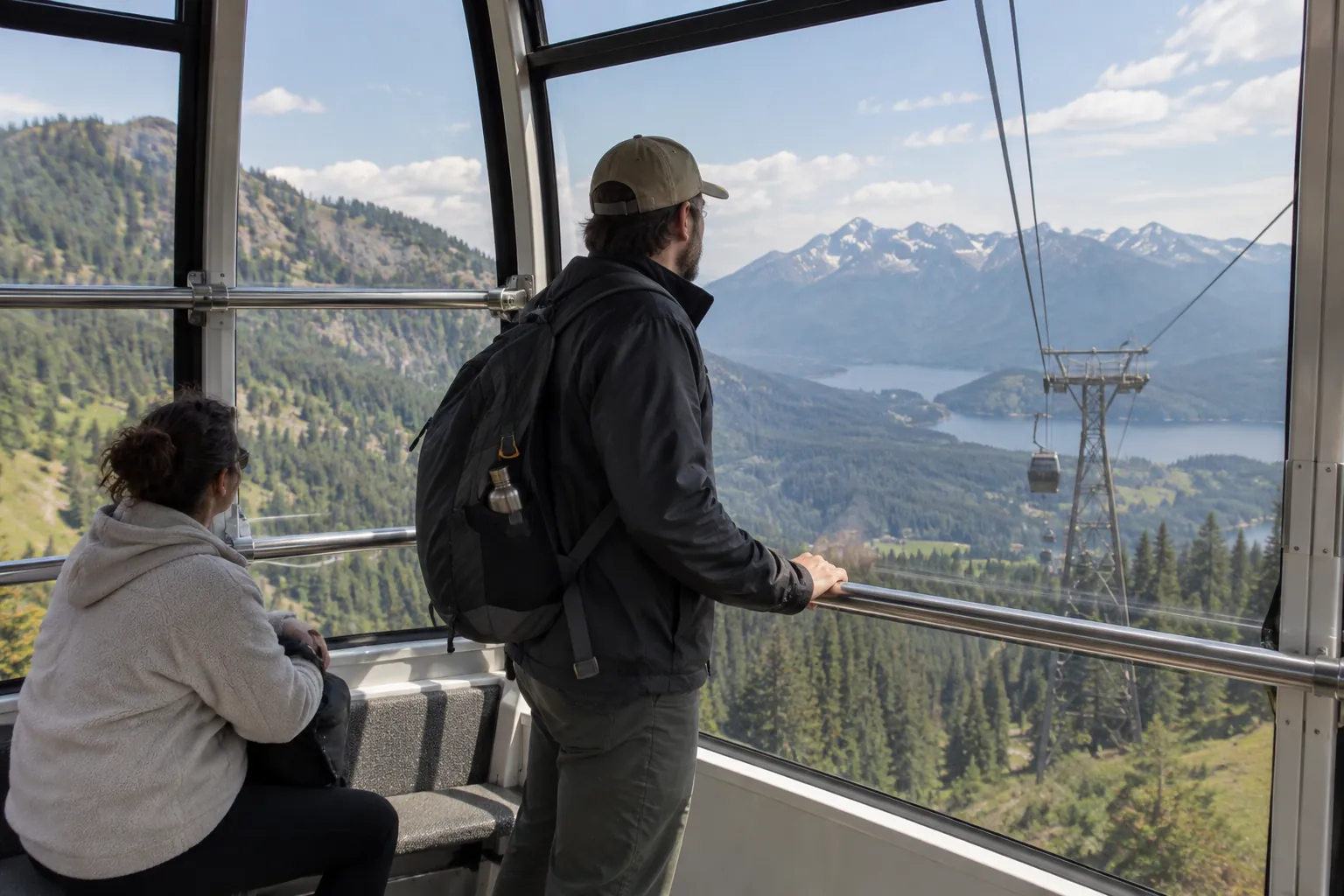
Tower passes, wind and pauses: what you actually feel
The felt moments are the tower passes, the windy spans and any mid-line pause, and all three share the same mechanic: the smooth glide stops and the hang of the cabin briefly shows. A paused car in wind sways more than a moving one. All of it is short, though, and the whole leg is over in about ten minutes, which is under the time most people need to build real symptoms.
Where to stand in the cabin
Stand where you can see out and far: a distant view gives your eyes the same anchor a horizon gives at sea. Hold the rail through tower passes if the bump unsettles you, and on a rotating car let the floor carry you rather than walking against it. If you feel off at a mountain top station, get water, take it slowly, and remember the elevation is the likelier culprit than the ride up.
Going on an aerial tram ride? Have Dizzout ready
Stop seasickness on the water
A cable car ride is short, but mountain days are long: winding roads up, thin air at the top, the ride back down. Put the app on your phone before the day starts, so it is there for whichever leg gets to you. Dizzout is a drug-free app that plays precisely calibrated audio through any headphones you already own, with relief in about 90 seconds. Free to download.
Get your personalized Dizzout plan. Paid subscription for full access.
30,000+ travelers in 30+ countries · How we count

On your phone? Scan to start there.
Comparing apps first? See how the motion sickness apps compare
Not travelling yet? Remind me the day before my trip
Know someone who gets motion sick?
Send them the app that helps stop it, drug-free, in about 90 seconds, works with any headphones. Free to download.
What helps on this trip
- Look out and far. A distant fixed point does for a swinging cabin what the horizon does for a deck.
- Hold the rail through the tower passes, which are the one predictable bump on the line.
- On a rotating tram, stand with the rail and let the floor do the moving. Walking against the rotation is the disorienting version.
- At the top of a big climb, treat queasiness as possible altitude first: water, shade and a slow start, and it commonly eases as you head back down.
- Earbuds work fine in a cabin. If the sway gets to you, put them in: Dizzout is drug-free sound therapy designed to help after symptoms start, and it works with any headphones.
For what actually holds up under testing, see the remedy verdicts, and for the water itself rather than the boat, how rough your sea usually is. Anything you take before travelling is a question for a pharmacist or doctor.
Frequently asked questions
Do aerial trams cause motion sickness?
Rarely, and the riders who ask beforehand mostly come back reassured. The cabin glides for most of the line; what you feel is a brief bump and sway at each tower, some rocking in wind, and on rotating trams the slow turn of the floor. The rides are also short, around ten minutes a leg, which is less time than most people need to develop real symptoms. Standing where you can see out to a distant view covers most of the rest.
Why did I feel sick at the top of the mountain if the tram was smooth?
Probably the mountain, not the tram. Big aerial systems climb fast: Palm Springs goes from 2,643 feet to 8,516 feet in about ten minutes, and arriving lightheaded, queasy or headachy after a jump like that is classic altitude, which is why the staff there hear about it all the time. It tends to ease as you rest, drink water and come back down. The ride's own motion, the tower bumps and wind rock, is real but brief, and rarely what follows you around the summit.
Is the rotating floor at Palm Springs disorienting?
For most riders, no: the floor makes only two complete revolutions across the whole ten-minute journey, slow enough that many people notice the changing view before they notice the turning. The trick if you are sensitive is to hold the rail and stand still, letting the rotation carry you, rather than repositioning yourself against it. Riders who reported queasiness generally pin it on the tower sway or the altitude rather than the rotation itself.
Other trips and excursions
Related
- Seasickness: the full guideWhy ships do it, the steadiest cabin, and a survival kit for the crossing.
- Is your sea rough? Sea by seaEvery crossing in one table, roughest first, each with a month-by-month page.
- Cruise ships & motion sicknessNamed ships sorted by how much they move, grouped by cruise line.
- Feeling it right now: the 90-second stepsThree steps over 90 seconds, with a timer that waits if you lock the screen.
Sources & further reading
- https://www.tripadvisor.com/FAQ_Answers-g32847-d104111-t4009001-I_get_motion_sickness_will_I_need_motion.html
- https://en.wikipedia.org/wiki/Palm_Springs_Aerial_Tramway
- https://www.tripster.com/travelguide/palm-springs-aerial-tramway-review/
- https://www.tripadvisor.com/ShowUserReviews-g32847-d104111-r181532702-Palm_Springs_Aerial_Tramway-Palm_Springs_Greater_Palm_Springs_California.html
- https://wheretoexplorenext.com/2021/07/05/palm-springs-aerial-tramway-2021/
Your next question, probably
Feeling rough right now?
The 60-second protocol: your eyes, the air and your breathing
Not your question? What actually works?Get motion sick on every trip?
Written from operator guidance, marine, aviation and specialist sources, and published passenger and participant reports as of September 2026. Risk levels describe a kind of trip, not any particular operator's craft, and conditions on the day matter more than the category does. Operator and brand names are trademarks of their respective owners; Dizzout is not affiliated with or endorsed by them. Sensitivity varies from person to person; this page is informational and not medical advice.