
Is the Korea Strait rough? What to expect on the crossing
Usually manageable, with two seasons to respect. The Korea Strait between Busan and Kyushu is a relatively shallow shelf sea, and the overnight ferries across it run year-round with mostly ordinary crossings. Winter brings a short, steep chop when the north-west monsoon reaches down from the continent, and late summer brings typhoons, which stop sailings outright a few times a year. Spring and early summer are the quiet bet.
Strait · East Asia · Reputation among passengers: mixed: commonly reported as uncomfortable in the wrong conditions.
- Low
- Moderate
- High
- Very high
Roughness summarises typical reported conditions for this crossing, not a forecast for any given sailing.
Monsoon chop over a shallow shelf
Key facts
- The Korea Strait is a strait, and passenger reports place it in the moderate roughness band.
- The mechanism behind that reputation: Monsoon chop over a shallow shelf.
- Conditions are reported roughest in January, February, August, September and December.
- The calmest months are usually April, May and June.
- It is also known as Daehan Haehyeop / Tsushima Strait (eastern channel).
Try Dizzout free. Put it on your phone before you go, so it is there when you need it. Drug-free, any headphones.Free · works with any headphones · no account to try
Stop seasickness. Free to try, no card needed. Or go straight to the App Store or Google Play.
Why the Korea Strait gets rough
Shallow water and seasonal wind. The strait averages roughly 90 m deep, split by Tsushima Island into two channels, and shallow water turns wind into short, closely spaced waves rather than long swell, the kind of motion ferry passengers feel most. In winter, the same north-west monsoon that batters the Sea of Japan reaches across the strait. The warm Tsushima Current flows steadily north-east through it, so wind out of the north quarter works against the current and steepens the sea further. In August and September, typhoons curving past Kyushu send in heavy swell and force outright cancellations.
When it's worst, month by month
December to February is the monsoon chop season: not dangerous for these ships, but the most consistently uncomfortable stretch of the year. August and September are typhoon months; most days are fine, but when a storm approaches, every operator cancels, and the strait can stay rough for a couple of days after it passes. April to June is the most settled period, and October usually offers a second quiet window between the typhoons and the monsoon.
| Jan | Feb | Mar | Apr | May | Jun | Jul | Aug | Sep | Oct | Nov | Dec |
|---|---|---|---|---|---|---|---|---|---|---|---|
| Rough | Rough | Mixed | Calm | Calm | Calm | Mixed | Rough | Rough | Mixed | Mixed | Rough |
Typical seasonal pattern, not a forecast. Any month can deliver a calm crossing or a bad one. Check the marine forecast for your sailing date.
Where to be on board
Front to back
- Bow (front)Avoid
- MidshipBest
- Stern (aft)OK
The crossing: 6 to 19 hours
Roughest stretch: The open strait between Busan and the Japanese coast
On the overnight boats, take a midship berth on a lower deck rather than the cheapest open-floor room high in the ship.
Get your read
A few quick questions about you, then your trip. Nothing is saved or sent.
Step 1: about you
How you usually react to travel is the single best signal. These come from the validated MSSQ.
Step 2: your trip
Pick the kind of trip you are planning.
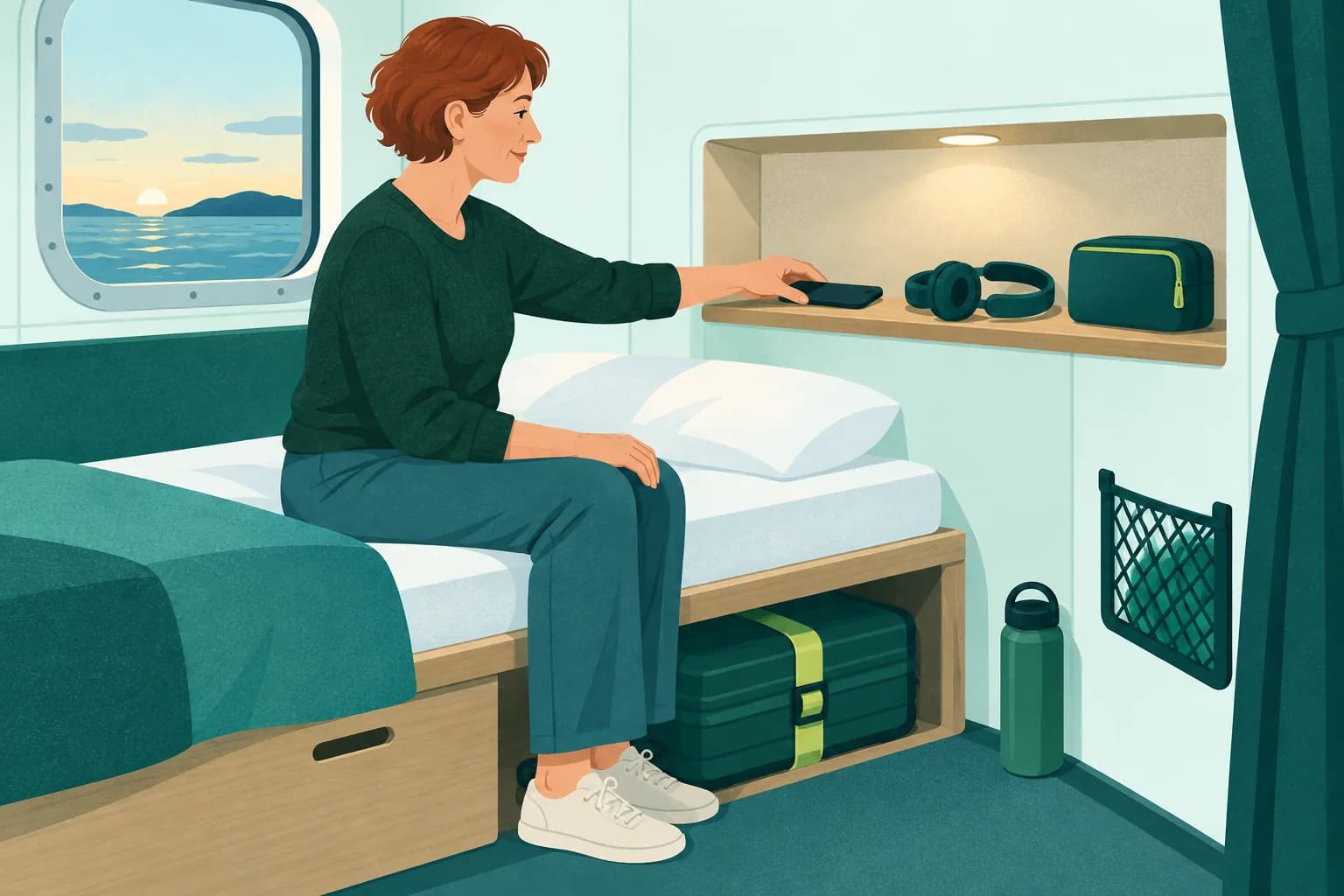
Arrange the berth before settling in
Put your phone and headphones where you can reach them from your seat. Prepare Dizzout after your overnight luggage is stowed.
Booked a crossing? Check it before you sail
Check your tripFree, two minutes, and it scores the trip you actually have ahead.
Free to download. Paid subscription for full access. Or go straight to the App Store or Google Play.
 Scan to open on your phone
On a computer? Dizzout installs on your phone. Scan the code, or open dizzout.com/get on your phone and it'll take you straight to the right store.
Know someone who gets motion sick?
Send them the app that helps stop it, drug-free, in about 90 seconds, works with any headphones. Free to try.
The crossings that cross it
| Route | Typical duration | What to know |
|---|---|---|
| Busan to Hakata (Fukuoka) | overnight, about 9 hours dock to dock | Camellia Line's New Camellia sails nightly from Busan; the return leg runs by day in about 6 hours. |
| Busan to Shimonoseki | overnight, about 12 to 14 hours | Kampu Ferry; evening departure and morning arrival in both directions. |
| Busan to Osaka | about 17 to 19 hours | Panstar cruise ferry, three sailings a week; the strait comes first, then the sheltered Seto Inland Sea. |
What helps on this crossing
- The overnight timing works in your favour: you can be horizontal in a berth for the open-water hours.
- In typhoon season, check the operator's site the day before; cancellations are announced early and rebooking is routine.
- The Osaka route spends most of its length in the sheltered Inland Sea, so only the first stretch out of Busan is open water.
- Eat before boarding rather than aboard if the forecast looks poor.
- A midship berth low in the ship beats a private cabin high at the bow.
- April to June sailings are the easy ones; if your dates float, use that.
For the full toolkit see the seasickness guide, or what to do once it has already started. For what the trials actually say about the oldest trick on that list, see the verdict on looking at the horizon. If the rocking follows you ashore afterwards, that is land sickness, which is normal, and it passes.
Frequently asked questions
Is the Korea Strait rough?
Moderately, and mostly by season. It is a shallow shelf sea, so wind turns quickly into short, steep chop, and the winter monsoon makes December to February the most consistently bumpy stretch. Late-summer typhoons cause the dramatic disruptions, cancelling sailings for a day or two at a time. Outside those windows, the overnight ferries between Busan and Japan usually report ordinary crossings.
When is the Korea Strait calmest?
April to June is the most settled stretch: the winter monsoon has broken down and typhoon season has not started. October often gives a second quiet window. December to February brings persistent monsoon chop, and August and September carry typhoon risk, so travellers with flexible dates should aim for late spring or mid-autumn.
Is the Busan to Fukuoka ferry rough?
Usually not badly. The New Camellia is a large overnight ship, the crossing is about 9 hours dock to dock, and much of it passes while you sleep. In winter a north-westerly blow puts short chop across the strait and you will feel it, especially in the higher shared rooms. In settled spring and early-summer weather it is commonly a smooth night.
Is there still a fast ferry between Busan and Fukuoka?
No. The high-speed Queen Beetle service was suspended in 2024 and its operator withdrew from the route in 2025, with the vessel sold off for cruise work. The sea crossing is now served by conventional overnight ferries: Camellia Line to Hakata and Kampu Ferry to Shimonoseki, with Panstar covering Busan to Osaka. The slower ships are also the steadier ride.
Do typhoons affect the Busan to Japan ferries?
Yes, mainly in August and September. When a typhoon approaches the strait or crosses Kyushu, operators cancel sailings outright, usually with a day or more of notice, and heavy leftover swell can affect the first sailings after it passes. Most late-summer crossings still run normally; the practical advice is to keep a buffer day in your itinerary and check the operator's announcements.
Other crossings
Sources & further reading
- https://travelwing.kr/en/new-camellia-schedule-2026-guide/
- https://www.directferries.com/busan_hakata_fukuoka_ferry.htm
- https://japan-cycling.com/japan-korea-kampu-ferry/
- https://www.hapskorea.com/japans-jr-kyushu-withdraws-queen-beetle-high-speed-passenger-ship-service/
- https://www.panstar.co.kr/en/business/cruise/busan_osaka
- https://www.worldatlas.com/articles/where-is-the-korea-strait.html
Your next question, probably
Where on the ship should you be?
Which cabins move least, and what to do if you already booked one
If that is not your question:
Sea conditions described here are typical patterns drawn from published marine and operator information as of July 2026, not a forecast: conditions on any given sailing depend on the weather that day, and any month can deliver a calm crossing or a bad one. Route and operator names are trademarks of their respective owners; Dizzout is not affiliated with or endorsed by them. Seasickness sensitivity varies from person to person; this page is informational and not medical advice.