
Is the Bay of Biscay rough? What to expect on the crossing
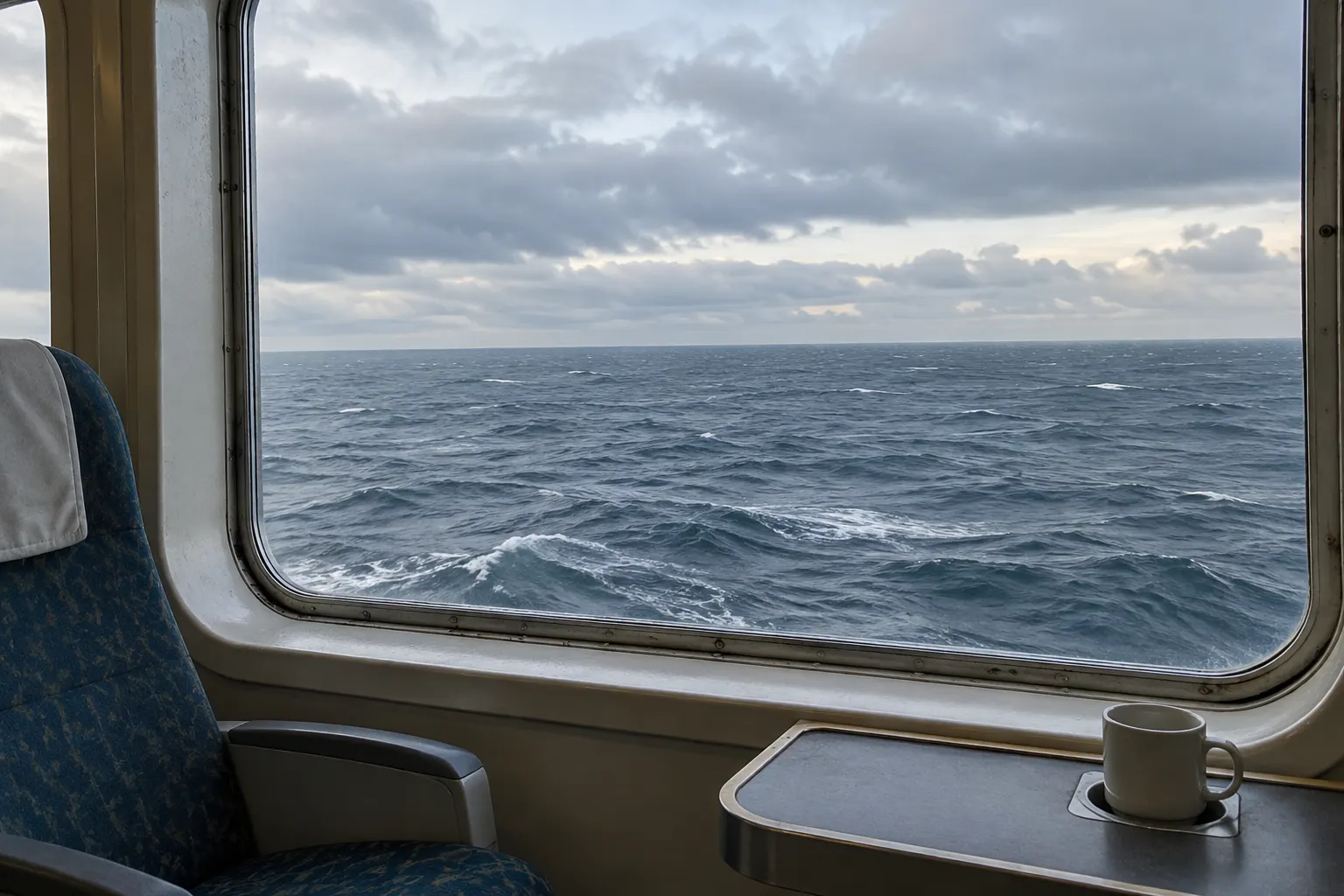
Yes, the Bay of Biscay has a long-standing reputation as one of Europe's roughest regular passenger crossings, and passengers frequently describe an uncomfortable motion on it. That reputation is seasonal rather than constant: summer sailings are often calm enough to be unremarkable. Between about October and March, though, Atlantic depressions track straight across it and the ride is commonly reported as heavy.
Crossing the Bay of Biscay this week? Dizzout is drug-free sound therapy you can start in your seat on the crossing, with relief in about 90 seconds.Starts in your browser · works with any headphones
Stop seasickness. Get your personalized Dizzout plan. Paid subscription for full access.

On your phone? Scan to start there.
Bay · North-east Atlantic · Reputation among passengers: has a long-standing reputation for rough passages.
- Low
- Moderate
- High
- Very high
Roughness summarises typical reported conditions for this crossing, not a forecast for any given sailing.
Atlantic swell over a shoaling shelf
In the Nausea Index table of the 121 sea crossings we cover, the Bay of Biscay is rated rough, one of 34 in that band, with 6 rated higher. Full table: the roughest sea crossings, ranked.
Key facts
- The Bay of Biscay is a bay, and passenger reports place it in the high roughness band.
- The mechanism behind that reputation: Atlantic swell over a shoaling shelf.
- Conditions are reported roughest in January, February, November and December.
- The calmest months are usually June, July and August.
- It is also known as Golfe de Gascogne / Golfo de Vizcaya.
Why is the Bay of Biscay so rough?
Two things combine. The bay is open to the west, so swell arriving from mid-Atlantic storms has thousands of miles of fetch behind it and reaches the crossing as long, powerful waves. It then runs into the continental shelf, where the seabed climbs from an abyssal plain more than 4,000 m deep to under 200 m over a short distance. Shoaling waves slow, shorten and steepen. Add locally generated wind waves from a passing depression and the result is a confused, cross-running sea rather than a tidy swell.
When is the Bay of Biscay roughest?
Roughest from October to March, when Atlantic low-pressure systems run across the bay one after another and some deepen over it. Calmest from late May to August, when the Azores high sits further north and gales in the Biscay forecast area become uncommon. September is a turning point: still often mild, but the first autumn depressions can arrive without much warning.
| Roughest water in Jan | Roughest water in Feb | Roughest water in Mar | Roughest water in Apr | Roughest water in May | Roughest water in Jun | Roughest water in Jul | Roughest water in Aug | Roughest water in Sep | Roughest water in Oct | Roughest water in Nov | Roughest water in Dec |
|---|---|---|---|---|---|---|---|---|---|---|---|
| Roughest | Roughest | Rough | Mixed | Mixed | Calm | Calm | Calm | Mixed | Rough | Roughest | Roughest |
Typical seasonal pattern, not a forecast. Any month can deliver a calm crossing or a bad one. Check the marine forecast for your sailing date. Select a month to see every sea and ferry crossing ranked for it.
Where to be on board
Front to back
- Bow (front)Avoid
- MidshipBest
- Stern (aft)OK
The crossing: 20-33 hours
Roughest stretch: Mid-passage, once clear of the French shelf edge
Choose a low deck as well as midship: motion increases the higher and further from the centre you are.
Get your read
A few quick questions about you, then your trip. Nothing is saved or sent.
Step 1: about you
How you usually react to travel is the single best signal. These come from the validated MSSQ.
Step 2: your trip
Pick the kind of trip you are planning.
Prepare for an overnight crossing
Keep your phone and headphones in the cabin bag you can reach. Prepare Dizzout after you have settled into your seat or bunk.
Free to download. Paid subscription for full access.
30,000+ travelers in 30+ countries · How we count

On your phone? Scan to start there.
Comparing apps first? See how the motion sickness apps compare
Not travelling yet? Remind me the day before my trip

Know someone who gets motion sick?
Send them the app that helps stop it, drug-free, in about 90 seconds, works with any headphones. Free to download.
The crossings that cross it
| Route | Typical duration | What to know |
|---|---|---|
| Portsmouth-Santander | about 32-33 hours | Operated by Brittany Ferries; crosses the open bay end to end. |
| Portsmouth-Bilbao | about 32-33 hours | Two nights aboard, with a long offshore middle section. |
| Plymouth-Santander | about 20 to 22 hours | Seasonal and the shortest option, but still fully across the bay. |
What helps on this crossing
- Book a midship cabin on a low deck. On a 30-hour passage you will spend a lot of it lying down.
- Check the Met Office shipping forecast for sea areas Plymouth, Biscay and FitzRoy the day before you sail.
- Deck level matters more than usual here: the higher the deck, the wider the arc your body travels through in a roll.
- If the swell is long and slow, seeing the horizon from a window or open deck usually settles things faster than a windowless cabin.
- Choose flexible dining rather than a fixed sitting; you may not want a full meal at a set hour if the ship is moving.
- A June sailing and a November sailing are different propositions here, so if your dates are flexible at all, that is the biggest lever.
Buying a tablet in the UK before you sail? UK pharmacies sell Kwells, Stugeron and Avomine for travel sickness, and their labels differ on when to take them. Kwells vs Stugeron and Stugeron vs Avomine set out the label facts side by side. Which one suits you is a question for the pharmacist.
For the full toolkit see the seasickness guide, or what to do once it has already started. For what the trials actually say about the oldest trick on that list, see the verdict on looking at the horizon. If the rocking follows you ashore afterwards, that is land sickness, which is normal, and it passes.
Frequently asked questions
Is the Bay of Biscay always rough?
No. It has a reputation for rough water, but that reputation is built on autumn and winter conditions. From June to August the bay is frequently calm, and many summer crossings pass without noticeable motion. The variability is the point: the same route can be flat in July and heavy in November, so the forecast for your specific sailing matters more than the bay's general name.
When is the Bay of Biscay calmest?
Late May through August. The Azores high tends to sit further north in summer, Atlantic depressions track well above the bay, and gale-force winds in the Biscay forecast area become uncommon. June and July are usually the settled core. From late September the autumn pattern returns and the odds shift quickly.
Why is the Bay of Biscay so rough?
Depth and exposure. Swell built by storms far out in the Atlantic arrives with a lot of energy, then meets the continental shelf, where the bottom rises from thousands of metres to under 200 m. Waves shoal, shorten and steepen. If a local depression is also blowing across the bay, the wind waves cross the swell and the sea becomes confused rather than regular.
Where should I sit or sleep on a Bay of Biscay ferry?
As close to the middle of the ship as you can get, and as low down. A ship rotates about a point near its centre, so the bow and stern travel through the largest vertical arc and the upper decks swing furthest sideways. On a crossing of about a day and a half, a midship cabin low in the ship is worth paying for.
How long does it take to cross the Bay of Biscay by ferry?
Portsmouth to Santander runs to roughly 32 to 33 hours, and Portsmouth to Bilbao takes about as long, around 32 to 33 hours. The seasonal Plymouth to Santander route is the short option at about 20 to 22 hours. Cruise ships heading south from UK ports also cross the bay, usually as a full sea day.
Is the Bay of Biscay rough in winter?
Usually, yes. In a typical year, December, January and February are all rated roughest. This is the typical pattern, not a forecast for any sailing.
Other crossings
Sources & further reading
Sea conditions described here are typical patterns drawn from published marine and operator information as of July 2026, not a forecast: conditions on any given sailing depend on the weather that day, and any month can deliver a calm crossing or a bad one. Route and operator names are trademarks of their respective owners; Dizzout is not affiliated with or endorsed by them. Seasickness sensitivity varies from person to person; this page is informational and not medical advice.