
Is the Irish Sea rough? What to expect on the crossing
Sometimes, and it depends heavily on which boat you take. The Irish Sea is shallow and strongly tidal, so it can turn short and lumpy in a fresh wind. On the same water on the same day, a fast catamaran and a full-size cruise ferry give noticeably different rides, and that difference is worth understanding before you book.
Crossing the Irish Sea this week? Dizzout is drug-free sound therapy you can start in your seat on the crossing, with relief in about 90 seconds.Starts in your browser · works with any headphones
Stop seasickness. Get your personalized Dizzout plan. Paid subscription for full access.

On your phone? Scan to start there.
Sea · British Isles · Reputation among passengers: mixed: commonly reported as uncomfortable in the wrong conditions.
- Low
- Moderate
- High
- Very high
Roughness summarises typical reported conditions for this crossing, not a forecast for any given sailing.
Wind against strong tidal streams
In the Nausea Index table of the 121 sea crossings we cover, the Irish Sea is rated manageable, one of 81 in that band, with 40 rated higher. Full table: the roughest sea crossings, ranked.
Key facts
- The Irish Sea is a sea, and passenger reports place it in the moderate roughness band.
- The mechanism behind that reputation: Wind against strong tidal streams.
- Conditions are reported roughest in January, February, November and December.
- The calmest months are usually May, June, July and August.
- It is also known as Muir Éireann.
Why does the Irish Sea get rough?
Wind against tide, mostly. Much of the Irish Sea is shallow, with Cardigan Bay and the water east of the Isle of Man under 50 m, and the tidal streams through it are strong. Depth-averaged speeds pass 1 m/s at springs in St George's Channel, off north-west Anglesey, north of the Isle of Man and in the North Channel, and exceed 2 m/s near headlands, notably north-west of Anglesey. When a fresh wind blows against a running tide, waves shorten and steepen sharply, which is why conditions can change within an hour of the tide turning.
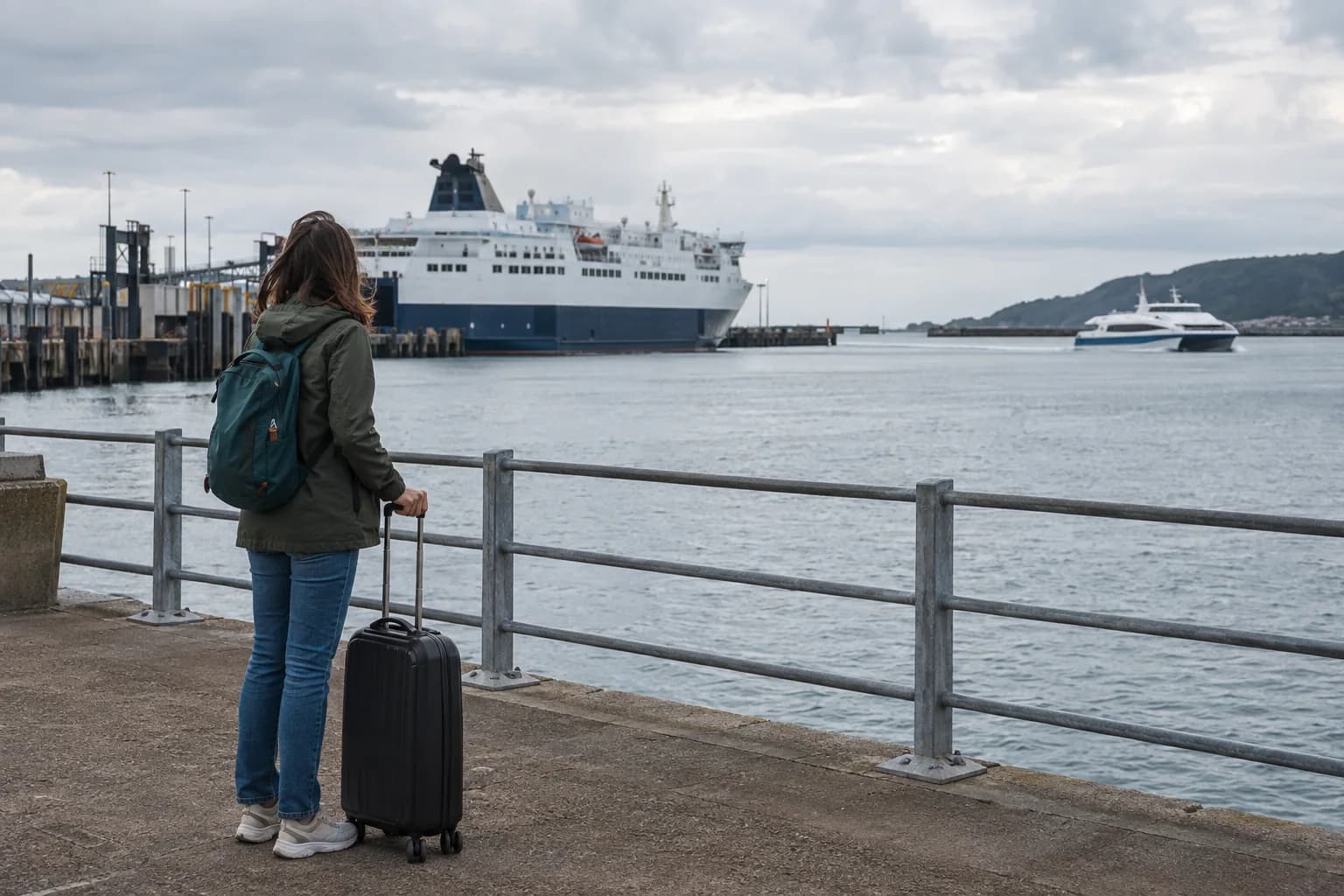
When is the Irish Sea roughest?
Roughest from October to March, when Atlantic depressions pass over or just north of Ireland. Calmest from May to August. The tide, though, runs year-round, so even a calm-looking summer day can be lumpy for a couple of hours around peak flow if the wind is opposing it. Fast-craft services are typically seasonal and weather-sensitive; conventional ferries run through the winter.
| Roughest water in Jan | Roughest water in Feb | Roughest water in Mar | Roughest water in Apr | Roughest water in May | Roughest water in Jun | Roughest water in Jul | Roughest water in Aug | Roughest water in Sep | Roughest water in Oct | Roughest water in Nov | Roughest water in Dec |
|---|---|---|---|---|---|---|---|---|---|---|---|
| Rough | Rough | Mixed | Mixed | Calm | Calm | Calm | Calm | Mixed | Mixed | Rough | Rough |
Typical seasonal pattern, not a forecast. Any month can deliver a calm crossing or a bad one. Check the marine forecast for your sailing date. Select a month to see every sea and ferry crossing ranked for it.
Where to be on board
Front to back
- Bow (front)Avoid
- MidshipBest
- Stern (aft)OK
The crossing: 2h15-8 hours
Roughest stretch: Open mid-crossing, once clear of Anglesey
On a catamaran, midship and low matters more than usual: the bows heave and slam hardest.
Get your read
A few quick questions about you, then your trip. Nothing is saved or sent.
Step 1: about you
How you usually react to travel is the single best signal. These come from the validated MSSQ.
Step 2: your trip
Pick the kind of trip you are planning.
Separate the wet layer first
Keep wet outerwear away from your phone and ordinary headphones for Dizzout. Prepare personal audio in a dry, seated space.
Free to download. Paid subscription for full access.
30,000+ travelers in 30+ countries · How we count

On your phone? Scan to start there.
Comparing apps first? See how the motion sickness apps compare
Not travelling yet? Remind me the day before my trip

Know someone who gets motion sick?
Send them the app that helps stop it, drug-free, in about 90 seconds, works with any headphones. Free to download.
The crossings that cross it
| Route | Typical duration | What to know |
|---|---|---|
| Holyhead to Dublin (cruise ferry) | 3h15 to 3h30 | Large conventional ship; slower, heavier, steadier motion. |
| Holyhead to Dublin (fast craft) | about 2h15 | Catamaran; quicker but a livelier, sharper ride. |
| Liverpool to Belfast | about 8 hours | Longer and further north, with day and overnight sailings. |
| Cairnryan to Belfast | about 2 hours 15 minutes | Stena Line across the North Channel; the open middle hour is the exposed part. |
What helps on this crossing
- If you are prone to seasickness, book the conventional cruise ferry rather than the fast craft: it is an hour slower and markedly steadier.
- On a fast catamaran the motion is mainly up-and-down rather than rolling, so sit as near the middle of the hull length as you can.
- Check the tide times against the wind direction. Wind over tide is the single best predictor of a lumpy Irish Sea crossing.
- Fast-craft sailings are cancelled or switched in strong winds more often than conventional ones, so build slack into onward travel plans.
- On the longer Liverpool to Belfast route, take an overnight sailing and a cabin: sleeping through the motion is easier than sitting through it.
- Fast craft use ride-control fins and stern tabs to damp vertical motion; they work best in moderate seas and less well as waves build.
Buying a tablet in the UK before you sail? UK pharmacies sell Kwells, Stugeron and Avomine for travel sickness, and their labels differ on when to take them. Kwells vs Stugeron and Stugeron vs Avomine set out the label facts side by side. Which one suits you is a question for the pharmacist.
For the full toolkit see the seasickness guide, or what to do once it has already started. For what the trials actually say about the oldest trick on that list, see the verdict on looking at the horizon. If the rocking follows you ashore afterwards, that is land sickness, which is normal, and it passes.
Frequently asked questions
Is the Irish Sea rough?
It has a mixed reputation rather than a fearsome one. In summer, crossings between Holyhead and Dublin are frequently smooth. In winter, or when a fresh wind runs against a strong tide, it turns short and lumpy quickly. It is a shallow, strongly tidal sea, so the change from comfortable to uncomfortable can happen within an hour.
Is the fast ferry or the regular ferry better for seasickness?
The conventional cruise ferry, in most conditions. It is far heavier, sits deeper, rolls slowly and carries much more length to bridge between waves. A fast catamaran barely rolls, because its two hulls are set wide apart, but it pitches and heaves harder and meets waves at greater speed. That produces sharp vertical acceleration, which is the motion most closely linked to sickness.
How long is the Holyhead to Dublin crossing?
About three hours and fifteen minutes to three hours thirty on a conventional cruise ferry, which runs year-round and several times a day. The fast craft covers the same water in around two hours fifteen minutes, but operates seasonally and is more likely to be affected by strong winds.
Why does the Irish Sea get choppy so suddenly?
Tide. Streams here are strong: depth-averaged speeds pass one metre per second at springs in St George's Channel, off north-west Anglesey, north of the Isle of Man and in the North Channel, and reach around two metres per second near headlands. When the tide turns to run against the wind, the waves shorten and steepen within a short time, even though the wind itself has not changed.
When is the Irish Sea calmest?
May to August, with June and July usually the steadiest. Atlantic depressions track further north in summer and the wind is generally lighter. From October to March the pattern reverses and crossings are much more variable. Whatever the month, the tide still matters, so check the wind direction against the tide for your sailing time.
Is the Irish Sea rough in winter?
Usually, yes. In a typical year, December, January and February are all rated rough. This is the typical pattern, not a forecast for any sailing.
Other crossings
Sources & further reading
- https://en.wikipedia.org/wiki/Irish_Sea
- https://www.seai.ie/sites/default/files/publications/Tidal_Current_Energy_Resources_in_Ireland_Report.pdf
- https://www.stenaline.ie/routes/dublin-holyhead
- https://ferrygogo.co.uk/ireland/holyhead-dublin/
- https://assets.publishing.service.gov.uk/media/5a7a1b7840f0b66a2fbfff19/SEA6_Hydrography_POL.pdf
Sea conditions described here are typical patterns drawn from published marine and operator information as of July 2026, not a forecast: conditions on any given sailing depend on the weather that day, and any month can deliver a calm crossing or a bad one. Route and operator names are trademarks of their respective owners; Dizzout is not affiliated with or endorsed by them. Seasickness sensitivity varies from person to person; this page is informational and not medical advice.