
Is the Holyhead to Dublin crossing rough?
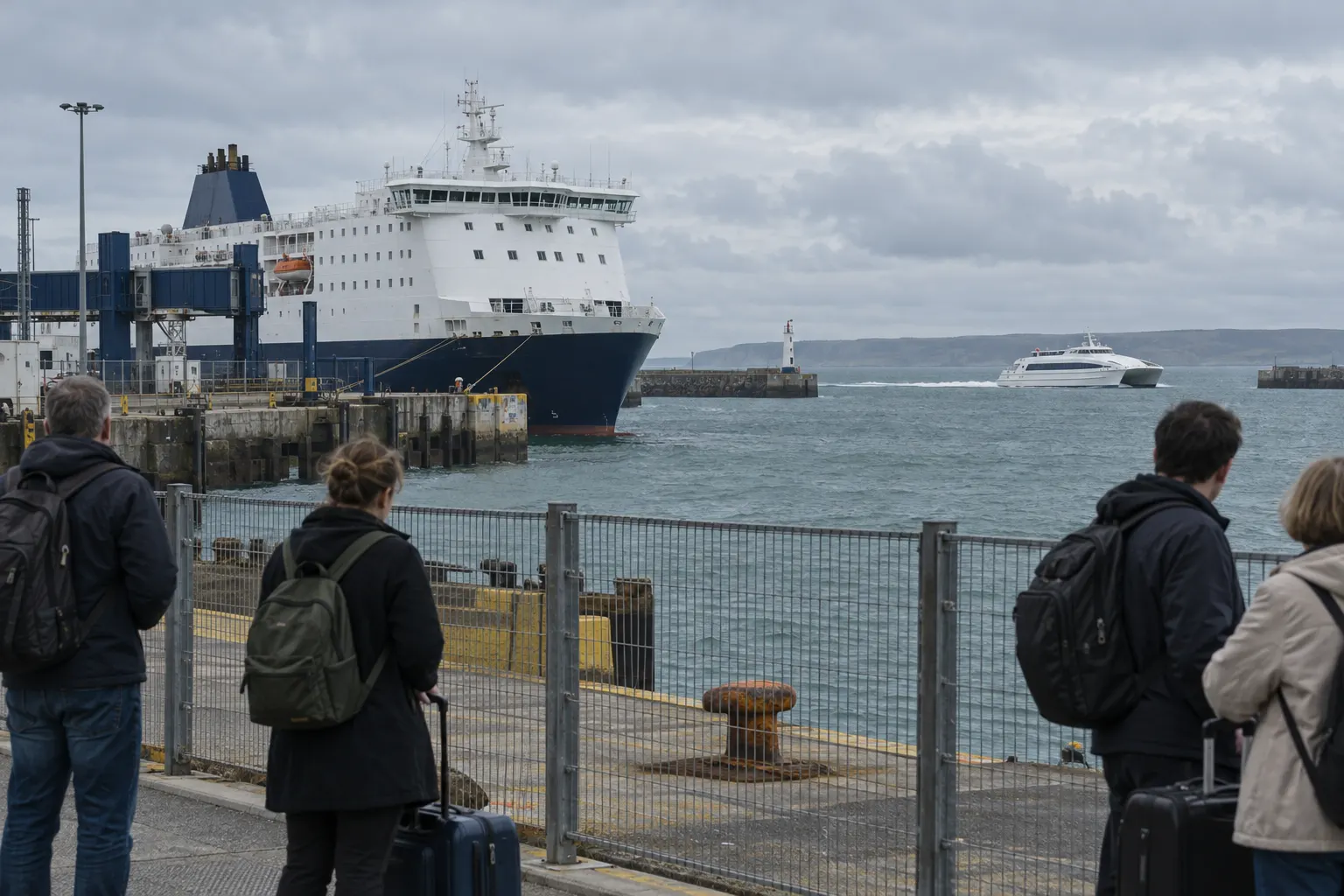
Sometimes, and your choice of ship changes how it feels. Holyhead to Dublin is the busiest Irish Sea route, crossing open water where wind regularly argues with strong tidal streams. The conventional ferries take about 3 hours 15 minutes with a heavier, steadier motion; the fast craft does it in about 2 hours 15 minutes with a lighter, sharper one. Same sea, two different rides.
Central Irish Sea · about 3 hours 15 minutes conventional, about 2 hours 15 minutes fast craft · Reputation among passengers: mixed: commonly reported as uncomfortable in the wrong conditions.
- Low
- Moderate
- High
- Very high
Roughness summarises typical reported conditions on this route, not a forecast for any given sailing.
Wind against strong tidal streams
Key facts
- The Holyhead to Dublin crossing takes about 3 hours 15 minutes conventional, about 2 hours 15 minutes fast craft, operated by Irish Ferries and Stena Line.
- It crosses the Central Irish Sea, and passenger reports place the route in the moderate roughness band.
- What drives the rough days: Wind against strong tidal streams.
- Conditions are reported roughest in January, February, November and December.
- The calmest months are usually May, June, July and August.
Taking the Holyhead to Dublin crossing? Dizzout is drug-free sound therapy you can start in your seat on the crossing, with relief in about 90 seconds.Starts in your browser · works with any headphones
Stop seasickness. Get your personalized Dizzout plan. Paid subscription for full access.

On your phone? Scan to start there.
Why the Holyhead to Dublin crossing gets rough
The central Irish Sea funnels some of the strongest tidal streams around Britain and Ireland, and when a fresh wind blows against the running tide the waves shorten and steepen quickly. The crossing is exposed once clear of Anglesey, with no islands to hide behind until Dublin Bay. It is rarely dangerous weather for these ships; it is exactly the short, jerky sea state that upsets stomachs.
This route crosses the Irish Sea. For the full picture of that water, every crossing on it and what drives its reputation, see is the Irish Sea rough?
When it's worst, month by month
May to August is mostly settled. October to February brings regular gales, and the wind-against-tide chop can appear on any brisk day year-round; it is a state of the sea here, not a season.
| Roughest water in Jan | Roughest water in Feb | Roughest water in Mar | Roughest water in Apr | Roughest water in May | Roughest water in Jun | Roughest water in Jul | Roughest water in Aug | Roughest water in Sep | Roughest water in Oct | Roughest water in Nov | Roughest water in Dec |
|---|---|---|---|---|---|---|---|---|---|---|---|
| Rough | Rough | Mixed | Mixed | Calm | Calm | Calm | Calm | Mixed | Mixed | Rough | Rough |
Typical seasonal pattern, not a forecast. Any month can deliver a calm crossing or a bad one. Check the marine forecast for your sailing date. Select a month to see every sea and ferry crossing ranked for it.
Where to be on board
Front to back
- Bow (front)Avoid
- MidshipBest
- Stern (aft)OK
The crossing: 2h15 to 3h30
Roughest stretch: Open mid-crossing, once clear of Anglesey
On the fast craft, sit as central and as low as the layout allows; on the big ferries, a midship lounge seat with a window does the job.
Which boat to pick
The fast catamaran is quicker but livelier: a light hull at speed transmits every wave, and in short chop it slaps and jolts where the big ships shoulder through. If you are motion sensitive, the conventional ferry's extra hour usually buys a much steadier ride, and in rough weather fast craft sailings are the first to be cancelled or re-timed anyway.
Keep audio in the personal bag
Keep ordinary headphones for Dizzout with the bag you can reach. Organize the small kit before larger luggage is put away.
Free to download. Paid subscription for full access.
30,000+ travelers in 30+ countries · How we count

On your phone? Scan to start there.
Comparing apps first? See how the motion sickness apps compare
Not travelling yet? Remind me the day before my trip

Know someone who gets motion sick?
Send them the app that helps stop it, drug-free, in about 90 seconds, works with any headphones. Free to download.
What helps on this crossing
- Motion sensitive? Book the conventional ferry, not the fast craft; the slower ship is the steadier one.
- Sit midship with a horizon view; on the catamaran especially, avoid the far forward seats.
- Keep breakfast plain before a morning crossing on a windy day.
- Wind against tide is the trigger here, so a blustery day with big tides is the one to re-time if you can.
- Fresh air on deck (on the conventional ships) resets most mild queasiness within minutes.
Buying a tablet in the UK before you sail? UK pharmacies sell Kwells, Stugeron and Avomine for travel sickness, and their labels differ on when to take them. Kwells vs Stugeron and Stugeron vs Avomine set out the label facts side by side. Which one suits you is a question for the pharmacist.
For the full toolkit see the seasickness guide, or what to do once it has already started. Choosing between a fast catamaran and a conventional ship elsewhere too? The physics is the same everywhere: see the catamaran guide. If the rocking follows you ashore afterwards, that is land sickness, which is normal, and it passes.
Frequently asked questions
Fast ferry or normal ferry from Holyhead: which is better for seasickness?
The conventional ferry, for most people. The fast craft's light catamaran hull at speed turns short Irish Sea chop into sharp, frequent jolts, while the large ferries roll and pitch more slowly. The hour you save on the fast craft is an hour you may spend regretting the choice on a lively day.
How rough does the Holyhead to Dublin crossing get?
Most sailings are easy, and the crossing is short. The bad version is a fresh wind blowing against a spring tide, which stands the sea up into short steep waves for the open middle of the route. In winter gales the operators re-time or cancel fast craft sailings first, and occasionally conventional ones.
Which months are calmest on the Irish Sea?
May to August, when gale frequency is lowest. November to February is the rough season. Unlike pure swell routes, though, this crossing can chop up on any windy day with the tide running, so the day's forecast matters as much as the month.
Should I take a seasickness tablet before boarding?
That is one for a pharmacist or your doctor rather than us. Two things help the decision: the crossing is short, about 2 to 3 and a half hours depending on ship, and most motion sickness medicines are labelled to be taken before sailing rather than once symptoms have started.
Other ferry routes
Sources & further reading
Your next question, probably
Where on the ship should you be?
Which cabins move least, and what to do if you already booked one
Not your question? What actually works at sea?Sick right now, mid-crossing?Still rocking after you land?
Conditions described here are typical patterns drawn from published marine and operator information as of September 2026, not a forecast: any month can deliver a calm crossing or a bad one, and schedules, vessels and operators change. Route, vessel and operator names are trademarks of their respective owners; Dizzout is not affiliated with or endorsed by them. Seasickness sensitivity varies from person to person; this page is informational and not medical advice.