
Is the Penzance to St Mary's (Isles of Scilly) crossing rough?
Yes, honestly, this one has earned its reputation. Penzance to St Mary's takes about 2 hours 45 minutes on Scillonian III across fully exposed Atlantic water off Land's End, and the ship itself is part of the story: built shallow and flat-bottomed to work St Mary's harbour on all tides, a design widely reported to make the motion livelier than the sea state alone would suggest. Forum threads about being sick on this exact crossing go back decades.
Atlantic approaches off Land's End, Celtic Sea · about 2 hours 45 minutes · Reputation among passengers: has a long-standing reputation for rough passages.
- Low
- Moderate
- High
- Very high
Roughness summarises typical reported conditions on this route, not a forecast for any given sailing.
Open Atlantic swell met by a flat-bottomed hull
Key facts
- The Penzance to St Mary's (Isles of Scilly) crossing takes about 2 hours 45 minutes, operated by Isles of Scilly Travel.
- It crosses the Atlantic approaches off Land's End, Celtic Sea, and passenger reports place the route in the high roughness band.
- What drives the rough days: Open Atlantic swell met by a flat-bottomed hull.
- Conditions are reported roughest in January, February, March, October, November and December.
- The calmest months are usually April, May, June, July, August and September.
Taking the Penzance to St Mary's (Isles of Scilly) crossing? Dizzout is drug-free sound therapy you can start in your seat on the crossing, with relief in about 90 seconds.Starts in your browser · works with any headphones
Stop seasickness. Get your personalized Dizzout plan. Paid subscription for full access.

On your phone? Scan to start there.
Why the Penzance to St Mary's (Isles of Scilly) crossing gets rough
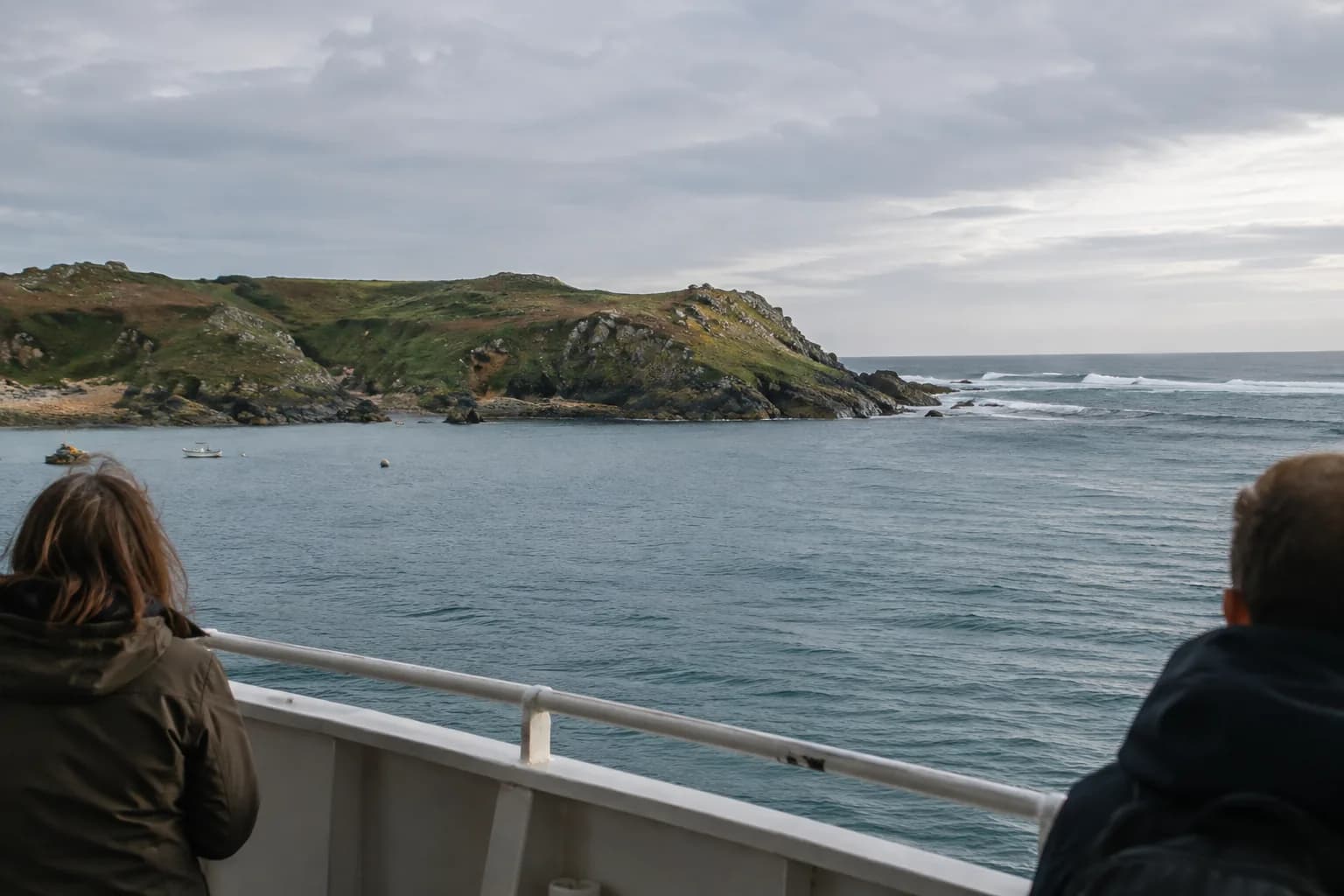
Two things stack. First, the water: once past Land's End there is nothing between the route and the open Atlantic, and swell trains arrive from different storms at once, crossing each other into a confused sea. Second, the ship: a flat, shallow draught is the price of entering St Mary's harbour at any tide, and it rides swell with a quick, rolling, corkscrew motion despite the fitted anti-roll tank. Calm days are genuinely calm; average days move more than newcomers expect.
When it's worst, month by month
The service runs in the warmer months, and even then the Atlantic swell never fully switches off; a flat crossing is a gift, not a promise. Early and late season sailings meet leftover storm swell more often than high summer ones.
| Roughest water in Jan | Roughest water in Feb | Roughest water in Mar | Roughest water in Apr | Roughest water in May | Roughest water in Jun | Roughest water in Jul | Roughest water in Aug | Roughest water in Sep | Roughest water in Oct | Roughest water in Nov | Roughest water in Dec |
|---|---|---|---|---|---|---|---|---|---|---|---|
| Rough | Rough | Rough | Mixed | Mixed | Mixed | Mixed | Mixed | Mixed | Rough | Rough | Rough |
Typical seasonal pattern, not a forecast. Any month can deliver a calm crossing or a bad one. Check the marine forecast for your sailing date. Select a month to see every sea and ferry crossing ranked for it.
Where to be on board
Front to back
- Bow (front)Avoid
- MidshipBest
- Stern (aft)OK
The crossing: about 2h45
Roughest stretch: Open water from Land's End to the islands
Midship, low, and outside if the weather allows; the open aft deck with the horizon in view is many regulars' choice over the enclosed lounges.
Dry your hands before setup
Dry your hands before preparing ordinary headphones for Dizzout. Keep damp cloths away from the phone and audio case.
Free to download. Paid subscription for full access.
30,000+ travelers in 30+ countries · How we count

On your phone? Scan to start there.
Comparing apps first? See how the motion sickness apps compare
Not travelling yet? Remind me the day before my trip

Know someone who gets motion sick?
Send them the app that helps stop it, drug-free, in about 90 seconds, works with any headphones. Free to download.
What helps on this crossing
- Book a calm-looking day if your dates flex at all; the swell forecast matters more here than the wind forecast.
- Sit midship and low, or stand outside aft with the horizon; avoid reading below decks entirely.
- Eat lightly and early; regulars treat breakfast before this crossing as a strategic decision.
- The flight to St Mary's exists; motion-sensitive travellers with the budget sometimes fly out and sail back, when the afternoon swell is often kinder.
- Do not judge the whole trip by the first 20 minutes in Mount's Bay; the open-water motion starts past Land's End.
Buying a tablet in the UK before you sail? UK pharmacies sell Kwells, Stugeron and Avomine for travel sickness, and their labels differ on when to take them. Kwells vs Stugeron and Stugeron vs Avomine set out the label facts side by side. Which one suits you is a question for the pharmacist.
For the full toolkit see the seasickness guide, or what to do once it has already started. Choosing between a fast catamaran and a conventional ship elsewhere too? The physics is the same everywhere: see the catamaran guide. If the rocking follows you ashore afterwards, that is land sickness, which is normal, and it passes.
Frequently asked questions
Why does the Scillonian have such a seasickness reputation?
Because both the water and the hull contribute. The route is fully exposed to Atlantic swell, often from more than one direction at once, and Scillonian III's flat, shallow-draught design, needed to enter St Mary's harbour on any tide, rides that swell with a quick rolling motion. The reputation is well documented across decades of passenger reports; it is not a myth, and it is also not every crossing.
How long is the Penzance to Scilly ferry?
About 2 hours 45 minutes from Penzance to St Mary's with Isles of Scilly Travel. The first stretch crosses Mount's Bay, the middle passes Land's End into open Atlantic water, and that open section is where the motion lives.
Is the crossing always rough?
No. Settled summer spells produce genuinely flat, pleasant crossings, and regulars know both versions well. The honest framing: this is a small ship on open ocean water, so an average day moves more than an average ferry, and a poor day is memorable. Watch the swell forecast rather than assuming.
Should I take seasickness medicine before the Scillonian?
Many passengers ask exactly this, and the right answer comes from a pharmacist or doctor who knows your situation. Route facts for that conversation: about 2 hours 45 minutes at sea, the exposed section starts around half an hour in, and most motion sickness medicines are labelled for use before departure.
Other ferry routes
Sources & further reading
Your next question, probably
Where on the ship should you be?
Which cabins move least, and what to do if you already booked one
Not your question? What actually works at sea?Sick right now, mid-crossing?Still rocking after you land?
Conditions described here are typical patterns drawn from published marine and operator information as of September 2026, not a forecast: any month can deliver a calm crossing or a bad one, and schedules, vessels and operators change. Route, vessel and operator names are trademarks of their respective owners; Dizzout is not affiliated with or endorsed by them. Seasickness sensitivity varies from person to person; this page is informational and not medical advice.