
Is the Dover to Calais crossing rough?
Usually no, and never for long. Dover to Calais crosses the narrowest point of the English Channel in about 90 minutes to 1 hour 40 minutes, on large conventional ferries run by three operators: P&O Ferries, DFDS and Irish Ferries. The strait is shallow, so a fresh wind against the tide can turn a routine hop into a short, choppy ride, but by the time it feels bad you are already halfway there.
Strait of Dover, English Channel · about 90 minutes to 1 hour 40 minutes · Reputation among passengers: mixed: commonly reported as uncomfortable in the wrong conditions.
- Low
- Moderate
- High
- Very high
Roughness summarises typical reported conditions on this route, not a forecast for any given sailing.
Shallow strait, wind against tide
Key facts
- The Dover to Calais crossing takes about 90 minutes to 1 hour 40 minutes, operated by P&O Ferries, DFDS and Irish Ferries.
- It crosses the Strait of Dover, English Channel, and passenger reports place the route in the moderate roughness band.
- What drives the rough days: Shallow strait, wind against tide.
- Conditions are reported roughest in January, February, November and December.
- The calmest months are usually May, June, July and August.
Taking the Dover to Calais crossing? Dizzout is drug-free sound therapy you can start in your seat on the crossing, with relief in about 90 seconds.Starts in your browser · works with any headphones
Stop seasickness. Get your personalized Dizzout plan. Paid subscription for full access.

On your phone? Scan to start there.
Why the Dover to Calais crossing gets rough
The Strait of Dover is only around 21 miles across and the water under the route is shallow, so waves here are short and steep rather than long and rolling. When a strong south-westerly blows against the tidal stream running through the strait, the chop stands up quickly, and the ships pitch into it head-on for part of the crossing. The saving grace is duration: even a bad crossing is over in well under two hours, and the harbour approaches at both ends are comparatively settled.
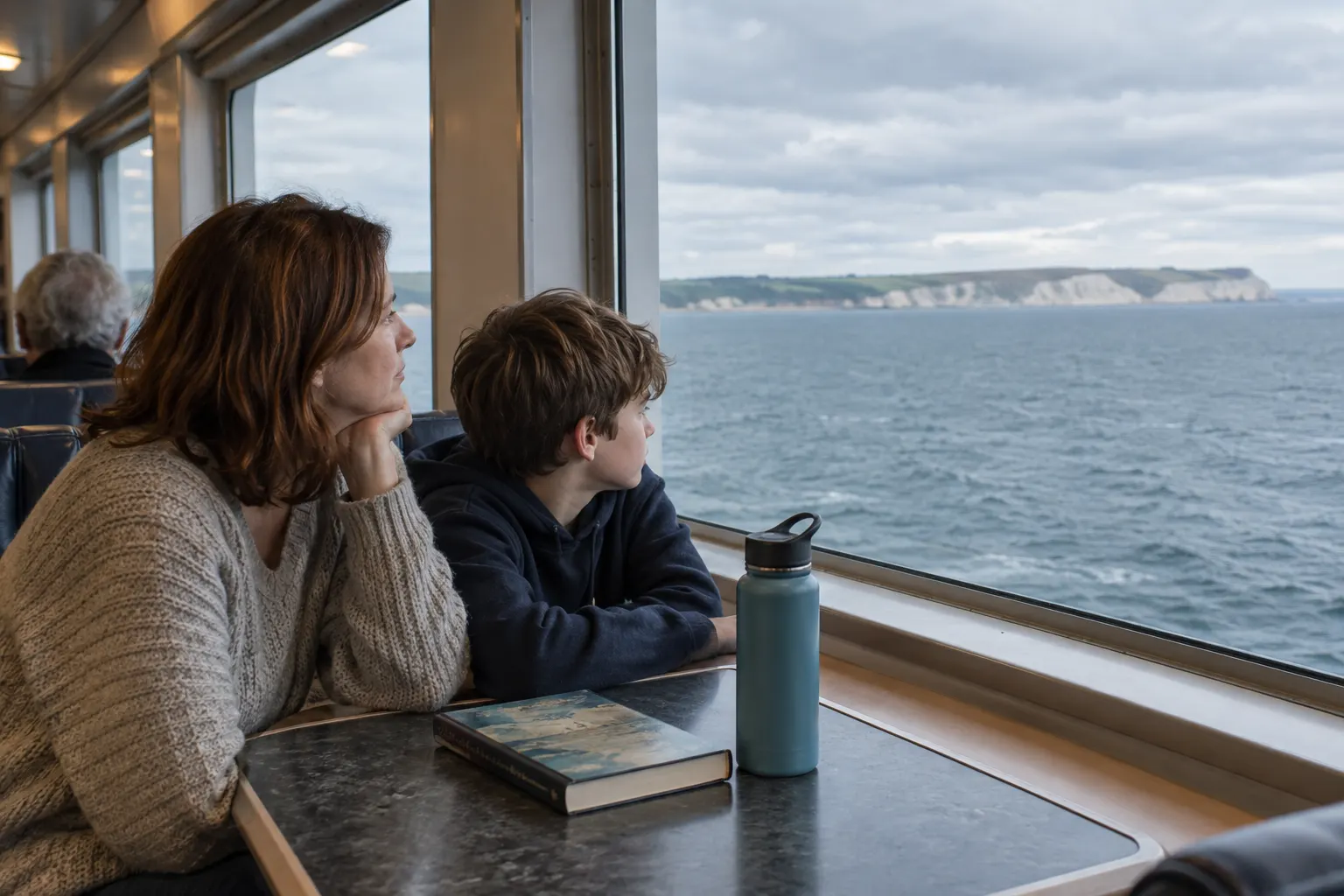
This route crosses the English Channel. For the full picture of that water, every crossing on it and what drives its reputation, see is the English Channel rough?
When it's worst, month by month
Calmest from May to August, when settled spells are common and many crossings pass unnoticed. November to February brings the most gale-disrupted days, when sailings can run late or bunch up; spring and autumn sit in between.
| Roughest water in Jan | Roughest water in Feb | Roughest water in Mar | Roughest water in Apr | Roughest water in May | Roughest water in Jun | Roughest water in Jul | Roughest water in Aug | Roughest water in Sep | Roughest water in Oct | Roughest water in Nov | Roughest water in Dec |
|---|---|---|---|---|---|---|---|---|---|---|---|
| Rough | Rough | Mixed | Mixed | Calm | Calm | Calm | Calm | Mixed | Mixed | Rough | Rough |
Typical seasonal pattern, not a forecast. Any month can deliver a calm crossing or a bad one. Check the marine forecast for your sailing date. Select a month to see every sea and ferry crossing ranked for it.
Where to be on board
Front to back
- Bow (front)Avoid
- MidshipBest
- Stern (aft)OK
The crossing: about 90 minutes
Roughest stretch: Mid-strait, between the two harbour approaches
Stay low and central, and pick a seat with a view out. The bow lounges get the most vertical movement when the strait is chopping.
Taking the Dover to Calais crossing? Have Dizzout ready
Stop seasickness
Dizzout is drug-free sound therapy you can start in your seat on the crossing, with relief in about 90 seconds. It plays precisely calibrated audio through any headphones you already own, wired or Bluetooth. Free to download.
Get your personalized Dizzout plan. Paid subscription for full access.
30,000+ travelers in 30+ countries · How we count

On your phone? Scan to start there.
Comparing apps first? See how the motion sickness apps compare
Not travelling yet? Remind me the day before my trip
Know someone who gets motion sick?
Send them the app that helps stop it, drug-free, in about 90 seconds, works with any headphones. Free to download.
What helps on this crossing
- Eat something plain before boarding, not on board while the ship is moving.
- Get a seat by a window on a low deck near the middle of the ship, facing the direction of travel.
- On a windy day, the open deck areas midship give you horizon and fresh air for the worst 40 minutes.
- If you have a car on board, do not sit in it during the crossing; car decks are enclosed and horizonless.
- Sailing frequency is your friend here: on a stormy day you can often move to a later crossing after the front passes.
Buying a tablet in the UK before you sail? UK pharmacies sell Kwells, Stugeron and Avomine for travel sickness, and their labels differ on when to take them. Kwells vs Stugeron and Stugeron vs Avomine set out the label facts side by side. Which one suits you is a question for the pharmacist.
For the full toolkit see the seasickness guide, or what to do once it has already started. Choosing between a fast catamaran and a conventional ship elsewhere too? The physics is the same everywhere: see the catamaran guide. If the rocking follows you ashore afterwards, that is land sickness, which is normal, and it passes.
Frequently asked questions
How rough does Dover to Calais actually get?
Most crossings are unremarkable. The strait is sheltered compared with the open Channel, and the ships are large. On perhaps the worst days each winter a gale against the tide produces short, steep chop that has the ship visibly pitching, and operators occasionally delay or re-time sailings. Even then the exposed section lasts under an hour.
Which operator is best if I get seasick?
All three operators on this route, P&O Ferries, DFDS and Irish Ferries, use large conventional ferries rather than fast craft, so the motion difference between them is small. Timing matters more than the logo on the funnel: a mid-morning sailing after an overnight blow is usually lumpier than one the following calm day.
Is Dover to Calais rougher than the longer Channel crossings?
Usually the opposite. Dover to Calais is the shortest and most sheltered of the Channel routes. The western crossings, such as Plymouth to Roscoff or Portsmouth to St Malo, spend far longer in open water and take Atlantic swell that never reaches the strait. What Dover does have is sharpness: shallow-water chop is quick and jerky while it lasts.
Should I take seasickness tablets before this crossing?
That is a question for a pharmacist or your doctor, who can factor in your health and anything else you take. Worth knowing for planning: most motion sickness medicines are labelled to be taken before departure rather than after symptoms start, and this crossing is short enough that many people simply pick a calm-looking sailing instead.
Other ferry routes
Sources & further reading
Your next question, probably
Where on the ship should you be?
Which cabins move least, and what to do if you already booked one
Not your question? What actually works at sea?Sick right now, mid-crossing?Still rocking after you land?
Conditions described here are typical patterns drawn from published marine and operator information as of September 2026, not a forecast: any month can deliver a calm crossing or a bad one, and schedules, vessels and operators change. Route, vessel and operator names are trademarks of their respective owners; Dizzout is not affiliated with or endorsed by them. Seasickness sensitivity varies from person to person; this page is informational and not medical advice.