
How rough is a Hawaii cruise? Season by season
Hawaii cruising is two different products. The interisland ship sails from Honolulu year round and spends nearly every night in port or on short hops, but those hops cross some of the windiest channels in the world: the Alenuihaha between Maui and the Big Island carries mean winds measured well above the surrounding trades. Round trips from the US West Coast are the opposite: four to five consecutive days each way on the open Pacific, gentle in summer, and exposed to big north swell from October to April.
Hawaiian interisland channels and the open North Pacific · Interisland sailings run year round; West Coast round trips mostly run autumn to spring, inside the winter swell season.
- Low
- Moderate
- High
- Very high
The band summarises a typical in-season sailing for this region, not a forecast. The month table below is where the season detail lives.
Key facts
- A typical in-season sailing here sits in the moderate motion band. Interisland sailings run year round; West Coast round trips mostly run autumn to spring, inside the winter swell season.
- The waters involved: Hawaiian interisland channels and the open North Pacific.
- Open water is usually at its calmest in March, April, May, June, July, August, September, October and November.
- Conditions are typically roughest in January, February and December.
Sailing on a Hawaii cruise? Dizzout is drug-free sound therapy you can start anywhere on the ship, with relief in about 90 seconds.Starts in your browser · works with any headphones
Stop seasickness on your cruise. Get your personalized Dizzout plan. Paid subscription for full access.

On your phone? Scan to start there.
When a Hawaii cruise is calmest, month by month
| Roughest water in Jan | Roughest water in Feb | Roughest water in Mar | Roughest water in Apr | Roughest water in May | Roughest water in Jun | Roughest water in Jul | Roughest water in Aug | Roughest water in Sep | Roughest water in Oct | Roughest water in Nov | Roughest water in Dec |
|---|---|---|---|---|---|---|---|---|---|---|---|
| Rough | Rough | Mixed | Mixed | Mixed | Mixed | Mixed | Mixed | Mixed | Mixed | Mixed | Rough |
Typical seasonal pattern, not a forecast. Any month can deliver a calm crossing or a bad one. Check the marine forecast for your sailing date. Select a month to see every sea and ferry crossing ranked for it.
The strip rates open water legs. Channel chop rides the trade winds in every month, and the winter band reflects the North Pacific swell season, roughly October to April with its heart in December to February. Days in port, which is most of an interisland week, feel none of it.
Why it gets rough here
Two mechanisms, two seasons. The islands sit in the trade wind belt, and their volcanoes funnel that flow between them: the Alenuihaha Channel between Maui and the Big Island accelerates the flow so sharply that modelled winds through and downstream of the channel top 11 metres per second on days when the upstream trades run 7 to 8, and interisland hops feel it as short, sharp chop. In winter, storms in the North Pacific send long period swell at the islands' north shores, the same swell that runs the famous big wave season, and open ocean legs to and from the mainland share that water.
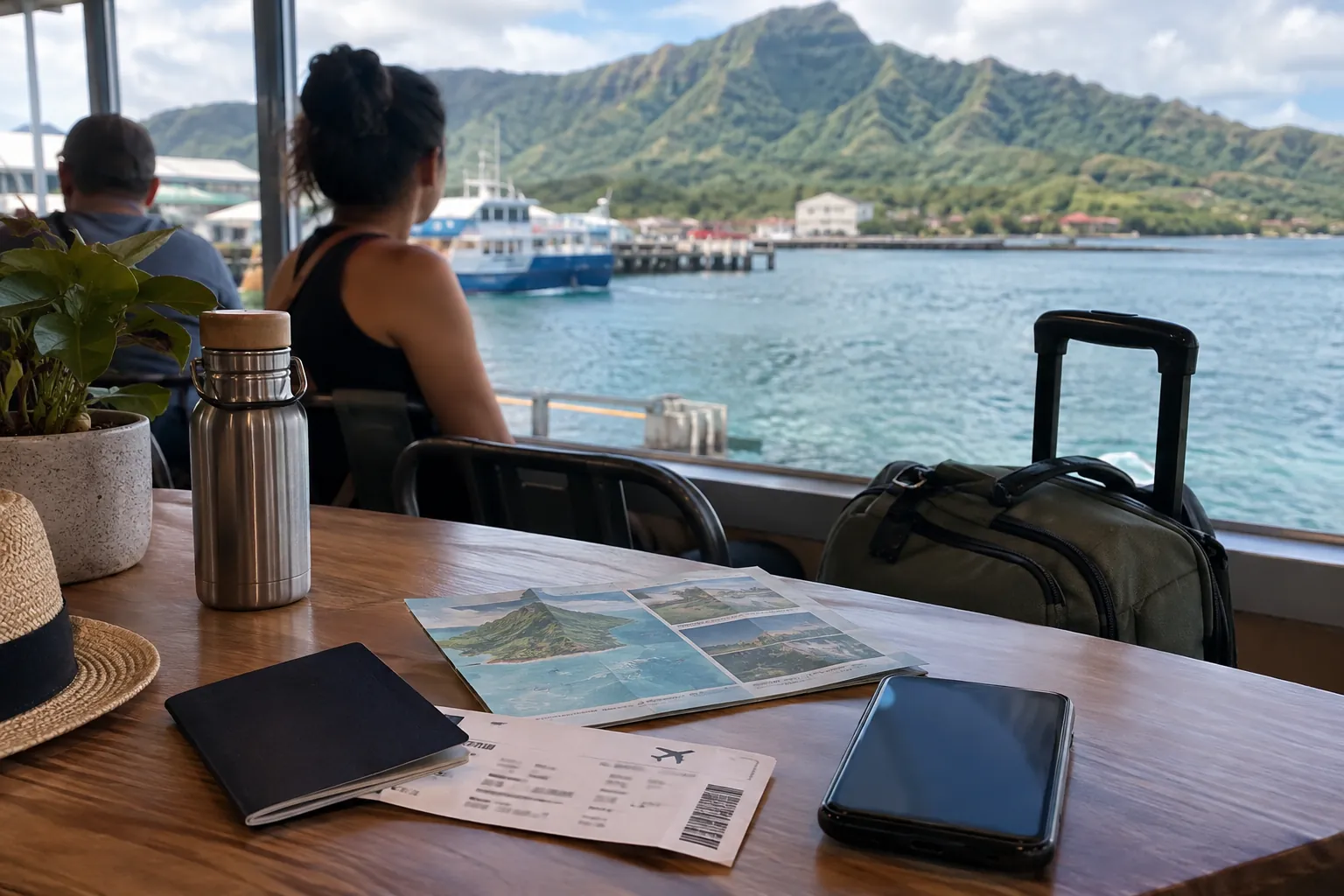
Interisland or the long way out
The interisland itinerary shelters by structure: nights in port or short channel hops, no multi day open ocean at all, at the price of a few windy channel crossings measured in hours. West Coast round trips cannot shelter: it is well over 2,000 miles of open Pacific each way with no islands to hide behind. If long exposure is your trigger, the interisland loop plus flights is the calm construction.
When do you sail?
Get a day-by-day prep checklist that unlocks as departure gets closer. Free, stays on your device.
Sailing on a Hawaii cruise? Have Dizzout ready
Stop seasickness on your cruise
Dizzout is drug-free sound therapy you can start anywhere on the ship, with relief in about 90 seconds. It plays precisely calibrated audio through any headphones you already own, wired or Bluetooth. Free to download.
Get your personalized Dizzout plan. Paid subscription for full access.
30,000+ travelers in 30+ countries · How we count

On your phone? Scan to start there.
Comparing apps first? See how the motion sickness apps compare
Not travelling yet? Remind me the day before my trip
Cabin choice for this region
On a West Coast round trip treat cabin choice like a transatlantic: midship, low, especially for winter dates. On the interisland loop the channel crossings are short enough that position matters much less. The general rule behind it is the same everywhere, midship and low, and the ship guide explains why that spot moves least.
The ships, and what size buys you here
The interisland trade belongs to one ship, Norwegian Cruise Line's Pride of America, the only large cruise ship based in Honolulu year round; at about 80,000 gross tons it is mid size by current standards, and the channel chop is short lived either way. West Coast round trips run on mainstream large ships, where size earns its keep on the long Pacific legs.
Know someone who gets motion sick?
Send them the app that helps stop it, drug-free, in about 90 seconds, works with any headphones. Free to download.
Frequently asked questions
Do you get seasick on a Hawaii interisland cruise?
+
Some people do, briefly. The itinerary has no long open ocean legs and close to 100 hours in port across the week, but the channel crossings, the Alenuihaha especially, are short stretches of genuinely windy water, usually run overnight. It is chop measured in hours, not swell measured in days.
How rough is the cruise from California to Hawaii?
+
Four to five consecutive sea days each way on open Pacific. In late spring and summer that water is often gentle. From October to April, North Pacific storm swell makes motion the default assumption, and most of these round trips sail exactly then, so prepare rather than hope.
When is the calmest time for a Hawaii cruise?
+
For open water, May to September, outside the north swell season. Interisland sailings are a reasonable choice in any month, since their exposure is limited to channel hops either way.
Why is the Alenuihaha Channel so rough?
+
Funnelling. Trade winds squeeze between the high volcanoes of Maui and the Big Island, and measurements show mean channel winds several metres per second above the open ocean trades upwind. Strong wind over a short stretch builds steep chop rather than long swell, which is exactly the motion short hops feel most.
Other regions
Related guides
Sources & further reading
Conditions described here are typical seasonal patterns drawn from published climatology and operator information as of September 2026, not a forecast: any month can deliver a calm sailing or a rough one, and itineraries change. Route and operator names are trademarks of their respective owners; Dizzout is not affiliated with or endorsed by them. Seasickness sensitivity varies from person to person; this page is informational and not medical advice.