
How rough is a South Pacific cruise? Season by season
South Pacific cruising, New Caledonia, Vanuatu, Fiji, French Polynesia, splits the year in two. May to October is the dry season: steady trades, settled weather, and the calmest water the region offers. November 1 to April 30 is the official South Pacific tropical cyclone season, with peak activity from January to March, and while ships route well clear of storms, that half of the year brings more squalls, more disruption risk and a larger helping of swell. Even calm months carry long, slow Pacific swell on open legs, which most people find easier than chop.
Coral Sea, the island groups from New Caledonia to French Polynesia · Australia based ships sail here with a southern summer peak; the calmest water is the May to October dry season.
- Low
- Moderate
- High
- Very high
The band summarises a typical in-season sailing for this region, not a forecast. The month table below is where the season detail lives.
Key facts
- A typical in-season sailing here sits in the moderate motion band. Australia based ships sail here with a southern summer peak; the calmest water is the May to October dry season.
- The waters involved: Coral Sea, the island groups from New Caledonia to French Polynesia.
- Open water is usually at its calmest in May, June, July, August and September.
- Conditions are typically roughest in January, February and March.
Sailing on a South Pacific cruise? Dizzout is drug-free sound therapy you can start anywhere on the ship, with relief in about 90 seconds.Starts in your browser · works with any headphones
Stop seasickness on your cruise. Get your personalized Dizzout plan. Paid subscription for full access.

On your phone? Scan to start there.
When a South Pacific cruise is calmest, month by month
| Roughest water in Jan | Roughest water in Feb | Roughest water in Mar | Roughest water in Apr | Roughest water in May | Roughest water in Jun | Roughest water in Jul | Roughest water in Aug | Roughest water in Sep | Roughest water in Oct | Roughest water in Nov | Roughest water in Dec |
|---|---|---|---|---|---|---|---|---|---|---|---|
| Rough | Rough | Rough | Mixed | Calm | Calm | Calm | Calm | Calm | Mixed | Mixed | Mixed |
Typical seasonal pattern, not a forecast. Any month can deliver a calm crossing or a bad one. Check the marine forecast for your sailing date. Select a month to see every sea and ferry crossing ranked for it.
The cyclone months rate high for risk and disruption rather than week long rough water: most January sailings go smoothly, but rerouting and leftover swell are far more likely, and the Coral Sea and Tasman legs from Australia carry their own moods.
Why it gets rough here
The southwest Pacific breeds its cyclones in its own summer, which is why the official season runs November to April with a January to March peak, as defined by the Fiji Meteorological Service, the region's designated warning centre. Outside that season the southeast trades run steady and the pattern settles. What never fully leaves is the ground swell: the Southern Ocean exports long period swell year round, so open legs between island groups rise and fall slowly even on windless days, while lagoon anchorages behind reefs sit almost still.
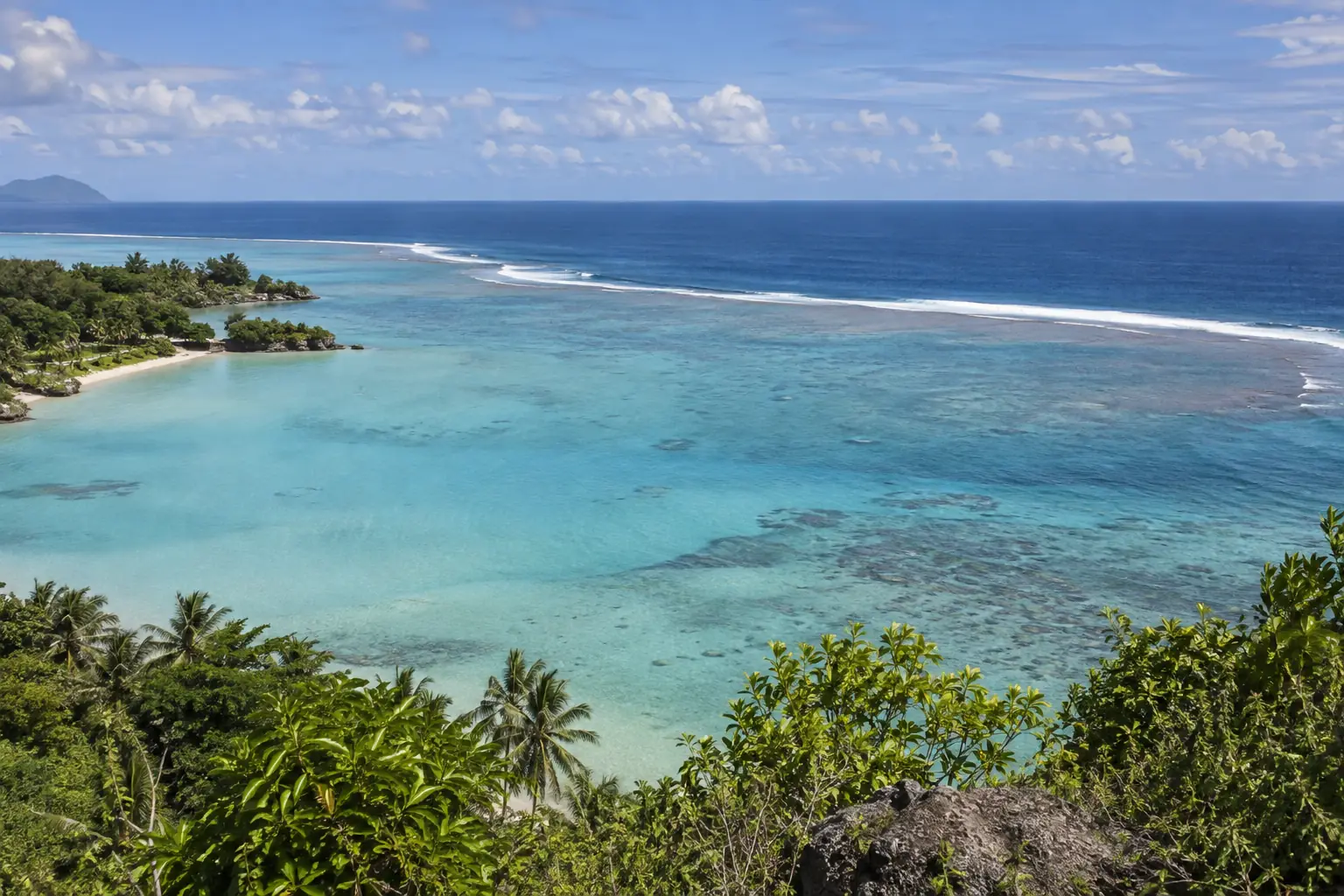
Lagoons shelter, passages do not
Island heavy itineraries out of Sydney or Brisbane to New Caledonia and Vanuatu spend their middle days hopping short legs and anchoring behind reefs, with the exposed water concentrated in the Coral Sea or Tasman crossing at each end. French Polynesia itineraries that stay within the Society Islands keep legs short and often overnight inside lagoons. The long hauls, Tahiti to Fiji or repositioning from Hawaii, are the sailings with real consecutive sea days.
When do you sail?
Get a day-by-day prep checklist that unlocks as departure gets closer. Free, stays on your device.
Keep each kit contained
Put camera gear away before preparing ordinary headphones for Dizzout. Leave a clear surface for your phone and audio case.
Free to download. Paid subscription for full access.
30,000+ travelers in 30+ countries · How we count

On your phone? Scan to start there.
Comparing apps first? See how the motion sickness apps compare
Not travelling yet? Remind me the day before my trip

Cabin choice for this region
Midship low earns most on the open crossing days at the start and end of Australia based itineraries. At the islands, most nights are short hops or anchorages. The general rule behind it is the same everywhere, midship and low, and the ship guide explains why that spot moves least.
The ships, and what size buys you here
The regional fleet is Australia based for the southern summer: Royal Caribbean rotates Quantum class ships through Australian home ports, and Princess bases ships such as Royal Princess there for the season, with the South Pacific islands as core product. These are large, stabilised ships; the small ship end of the market lives inside French Polynesia's lagoons.
- Quantum of the SeasRoyal Caribbean · 168,666 GT · motion guide
- Royal PrincessPrincess Cruises · 142,714 GT · motion guide
Know someone who gets motion sick?
Send them the app that helps stop it, drug-free, in about 90 seconds, works with any headphones. Free to download.
The waters on this route, rated
Each body of water on this region's itineraries has its own page with a month by month strip, the mechanism behind its reputation, and where to be on board while crossing it.
Frequently asked questions
Is the South Pacific rough for cruising?
+
In the dry season, May to October, it is one of the gentler regions: steady trades and long slow swell. In cyclone season the averages worsen and disruption risk rises, though most sailings still go smoothly. On many itineraries the roughest water is actually the Tasman or Coral Sea leg leaving Australia.
When is cyclone season in the South Pacific?
+
November 1 to April 30, peaking January to March, as defined by the Fiji Meteorological Service. Ships divert around storms; the practical effects for passengers are itinerary changes, missed anchorages and leftover swell.
What is the ocean swell like between the islands?
+
Long and slow. The Southern Ocean sends ground swell across the region year round, so open legs have a gentle rise and fall even in fine weather. Most people tolerate it far better than short chop, and inside lagoons it disappears.
Which South Pacific itinerary is calmest?
+
Dry season sailings that maximise lagoon time: Society Islands loops in French Polynesia, or New Caledonia and Vanuatu itineraries with short interisland hops. The fewer long open legs, the fewer chances the ocean gets.
Other regions
Related guides
Sources & further reading
Conditions described here are typical seasonal patterns drawn from published climatology and operator information as of September 2026, not a forecast: any month can deliver a calm sailing or a rough one, and itineraries change. Route and operator names are trademarks of their respective owners; Dizzout is not affiliated with or endorsed by them. Seasickness sensitivity varies from person to person; this page is informational and not medical advice.