
How rough is a Mexican Riviera cruise? Season by season
The Mexican Riviera is a coast hugging itinerary, and in its main October to April season the Pacific off western Mexico is mostly kind: long gentle swell, warm dry weather, short hops between ports. The two honest caveats are the edges. The first afternoon out of Los Angeles can be the choppiest water of the trip as ships clear the exposed California coast, and the eastern Pacific hurricane season, May 15 to November 30 with most activity from late June to early October, overlaps the first weeks of the cruise calendar.
The eastern Pacific off Baja California and mainland Mexico · The main season runs October to April; summer sailings exist and sit inside hurricane season.
- Low
- Moderate
- High
- Very high
The band summarises a typical in-season sailing for this region, not a forecast. The month table below is where the season detail lives.
Key facts
- A typical in-season sailing here sits in the low motion band. The main season runs October to April; summer sailings exist and sit inside hurricane season.
- The waters involved: The eastern Pacific off Baja California and mainland Mexico.
- Open water is usually at its calmest in January, February, March, April, May and December.
- Conditions are typically roughest in August, September and October.
Sailing on a Mexican Riviera cruise? Dizzout is drug-free sound therapy you can start anywhere on the ship, with relief in about 90 seconds.Starts in your browser · works with any headphones
Stop seasickness on your cruise. Get your personalized Dizzout plan. Paid subscription for full access.

On your phone? Scan to start there.
When a Mexican Riviera cruise is calmest, month by month
| Roughest water in Jan | Roughest water in Feb | Roughest water in Mar | Roughest water in Apr | Roughest water in May | Roughest water in Jun | Roughest water in Jul | Roughest water in Aug | Roughest water in Sep | Roughest water in Oct | Roughest water in Nov | Roughest water in Dec |
|---|---|---|---|---|---|---|---|---|---|---|---|
| Calm | Calm | Calm | Calm | Calm | Mixed | Mixed | Rough | Rough | Rough | Mixed | Calm |
Typical seasonal pattern, not a forecast. Any month can deliver a calm crossing or a bad one. Check the marine forecast for your sailing date. Select a month to see every sea and ferry crossing ranked for it.
The hurricane band marks risk, not certainty: most late summer sailings are fine, but September and October storms have historically reached Cabo San Lucas, and lines reroute when they threaten. Winter is the calm, dry heart of the season.
Why it gets rough here
The route runs down a lee coast. Winter systems that pound California and the Pacific Northwest lose most of their punch this far south, and Baja California blocks much of the northwest swell once ships are past it, so the classic winter run to Cabo, Mazatlan and Puerto Vallarta rides on long, manageable swell. The eastern Pacific is one of the busiest tropical cyclone basins in the world, but its storms mostly track west into open ocean; the exceptions that curve toward Baja cluster in late summer and early autumn.
Which legs are exposed
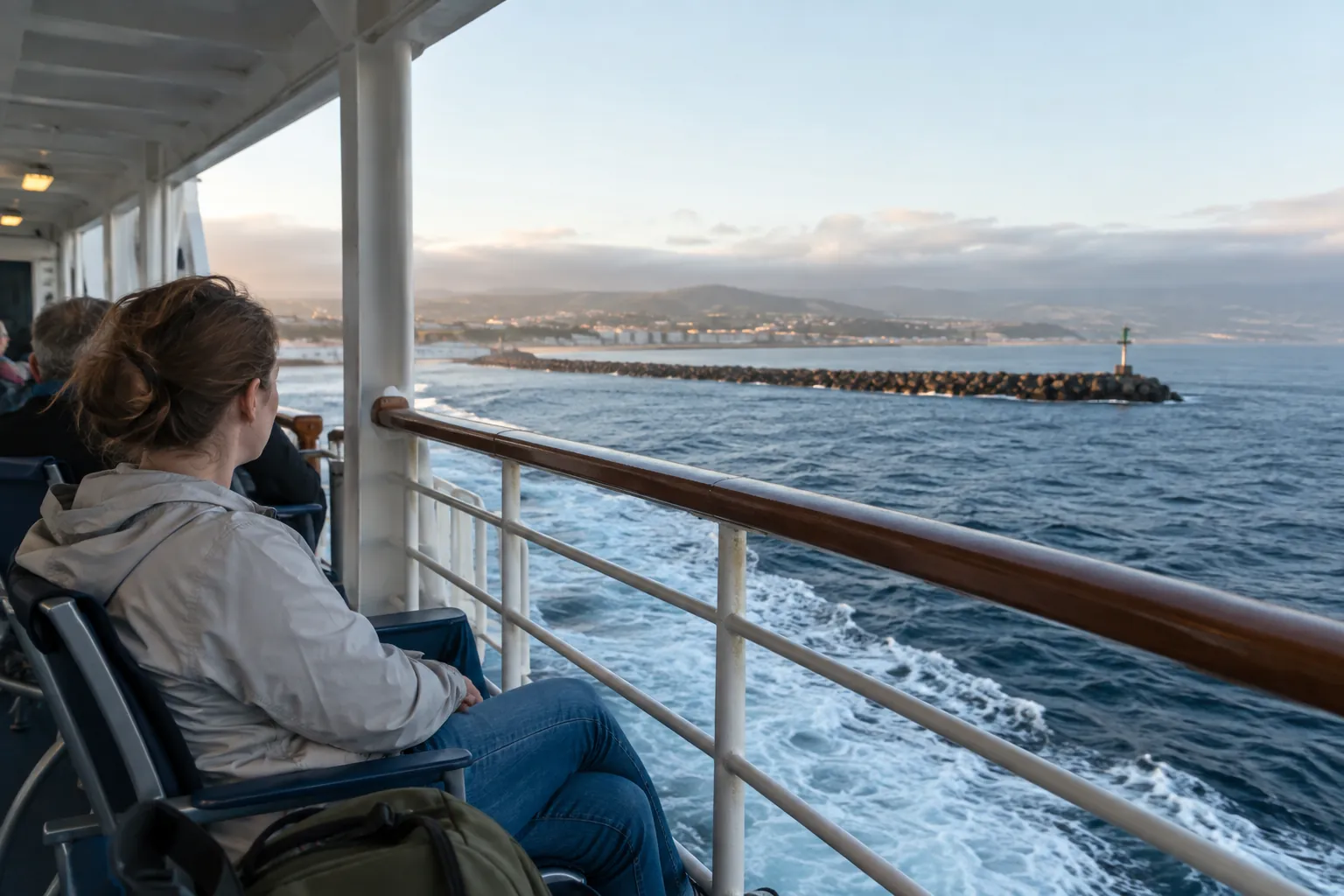
The exposed stretch is the first and last day, along the California and northern Baja coast, where winter can serve up leftover northwest swell. From Cabo San Lucas onward the route enters warmer, more sheltered water, and port days come thick: a typical week gives three ports and limited open ocean. Short Ensenada and Catalina loops keep exposure lowest of all.
When do you sail?
Get a day-by-day prep checklist that unlocks as departure gets closer. Free, stays on your device.
Keep a dry setup space
Use a dry, stable surface when preparing ordinary headphones for Dizzout. Keep drinks separate from your phone and audio case.
Free to download. Paid subscription for full access.
30,000+ travelers in 30+ countries · How we count

On your phone? Scan to start there.
Comparing apps first? See how the motion sickness apps compare
Not travelling yet? Remind me the day before my trip

Cabin choice for this region
Midship low is cheap insurance for the first night out of Los Angeles, which is the leg passengers mention most. The rest of a winter week rarely tests the cabin. The general rule behind it is the same everywhere, midship and low, and the ship guide explains why that spot moves least.
The ships, and what size buys you here
This run is served by big West Coast based ships: Carnival Panorama from Long Beach, Discovery Princess, and Royal Caribbean hardware such as Ovation and Quantum of the Seas on seasonal rotations. All sit in the 130,000 to 170,000 gross ton class, which is more than the winter route usually requires.
- Carnival PanoramaCarnival · 133,868 GT · motion guide
- Discovery PrincessPrincess Cruises · 145,281 GT · motion guide
- Ovation of the SeasRoyal Caribbean · 168,666 GT · motion guide
- Quantum of the SeasRoyal Caribbean · 168,666 GT · motion guide
Know someone who gets motion sick?
Send them the app that helps stop it, drug-free, in about 90 seconds, works with any headphones. Free to download.
Frequently asked questions
Is a Mexican Riviera cruise rough?
+
Usually gentle in the October to April season: the route follows a lee coast on long, easy swell. The choppiest hours are commonly the first afternoon and evening out of Los Angeles; after Cabo the water tends to settle further.
What about hurricane season on the Mexican Riviera?
+
The eastern Pacific season runs May 15 to November 30, with most activity late June to early October. Ships route around storms, so the realistic risk on a summer or early autumn sailing is itinerary changes and a rolly day, not riding out a hurricane. Storms have historically reached Cabo San Lucas in September and October.
When is the calmest month for a Mexican Riviera cruise?
+
December through April: dry season, hurricane season over, and the only trade off is leftover winter swell near California on day one. January to March adds whale season in Cabo and Puerto Vallarta as a bonus.
Is the first day out of LA always choppy?
+
Not always, but often enough that regulars expect it. The ship crosses exposed coastal water before turning south into Baja's lee, and in winter, distant North Pacific storms can leave swell there on otherwise fine days. It usually eases within the first day.
Other regions
Related guides
Sources & further reading
Conditions described here are typical seasonal patterns drawn from published climatology and operator information as of September 2026, not a forecast: any month can deliver a calm sailing or a rough one, and itineraries change. Route and operator names are trademarks of their respective owners; Dizzout is not affiliated with or endorsed by them. Seasickness sensitivity varies from person to person; this page is informational and not medical advice.