
Is the Plymouth to Santander crossing rough?
It can be. Plymouth to Santander is the shortest UK to Spain ferry at about 20 hours, sailing seasonally with Brittany Ferries, but the saving is made in the Channel, not the bay: the route still crosses the open Bay of Biscay from top to bottom. One night aboard instead of two, over the same water that gives the longer routes their reputation.
Western Channel approaches and Bay of Biscay · about 20 hours, seasonal · Reputation among passengers: has a long-standing reputation for rough passages.
- Low
- Moderate
- High
- Very high
Roughness summarises typical reported conditions on this route, not a forecast for any given sailing.
The short cut that still crosses all of Biscay
Key facts
- The Plymouth to Santander crossing takes about 20 hours, seasonal, operated by Brittany Ferries.
- It crosses the Western Channel approaches and Bay of Biscay, and passenger reports place the route in the high roughness band.
- What drives the rough days: The short cut that still crosses all of Biscay.
- Conditions are reported roughest in January, February, November and December.
- The calmest months are usually June, July and August.
Taking the Plymouth to Santander crossing? Dizzout is drug-free sound therapy you can start in your seat on the crossing, with relief in about 90 seconds.Starts in your browser · works with any headphones
Stop seasickness. Get your personalized Dizzout plan. Paid subscription for full access.

On your phone? Scan to start there.
Why the Plymouth to Santander crossing gets rough
Departing from Plymouth trims the Channel leg, so a larger fraction of this crossing is pure Biscay. The bay's mechanics do not care where you boarded: Atlantic swell rolls in from the west, steepens over the shelf edge, and turns confused when a depression adds local wind waves. What the shorter duration genuinely buys you is fewer hours of exposure and only one night at sea.
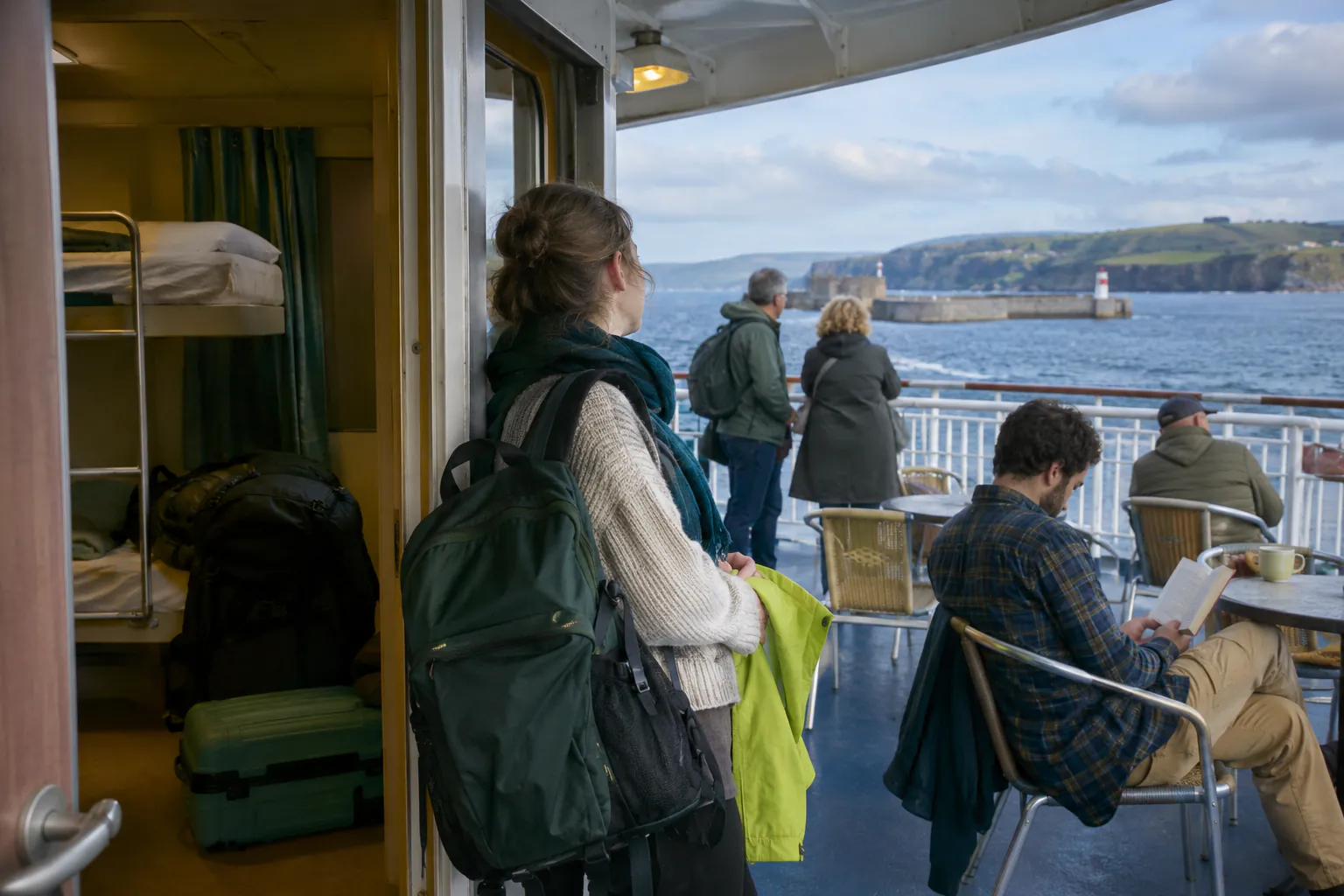
This route crosses the Bay of Biscay. For the full picture of that water, every crossing on it and what drives its reputation, see is the Bay of Biscay rough?
When it's worst, month by month
The route runs in the warmer months, which is also Biscay's calmer season; many crossings are easy. Early and late season sailings carry more risk of meeting the first autumn or last spring depressions.
| Roughest water in Jan | Roughest water in Feb | Roughest water in Mar | Roughest water in Apr | Roughest water in May | Roughest water in Jun | Roughest water in Jul | Roughest water in Aug | Roughest water in Sep | Roughest water in Oct | Roughest water in Nov | Roughest water in Dec |
|---|---|---|---|---|---|---|---|---|---|---|---|
| Roughest | Roughest | Rough | Mixed | Mixed | Calm | Calm | Calm | Mixed | Rough | Roughest | Roughest |
Typical seasonal pattern, not a forecast. Any month can deliver a calm crossing or a bad one. Check the marine forecast for your sailing date. Select a month to see every sea and ferry crossing ranked for it.
Month bands: Dizzout sea-state data for the Plymouth to Santander crossing, built from the reports and sources listed on this page. Free to cite with a link to this page.
Where to be on board
Front to back
- Bow (front)Avoid
- MidshipBest
- Stern (aft)OK
The crossing: about 20 hours
Roughest stretch: The open bay, most of the second half
Midship and low, cabin or reclining seat alike. The single overnight falls in open water, so position matters as much as on the longer routes.
Taking the Plymouth to Santander crossing? Have Dizzout ready
Stop seasickness
Dizzout is drug-free sound therapy you can start in your seat on the crossing, with relief in about 90 seconds. It plays precisely calibrated audio through any headphones you already own, wired or Bluetooth. Free to download.
Get your personalized Dizzout plan. Paid subscription for full access.
30,000+ travelers in 30+ countries · How we count

On your phone? Scan to start there.
Comparing apps first? See how the motion sickness apps compare
Not travelling yet? Remind me the day before my trip
Know someone who gets motion sick?
Send them the app that helps stop it, drug-free, in about 90 seconds, works with any headphones. Free to download.
What helps on this crossing
- Take the cabin even for one night, and take it midship and low.
- Eat your main meal early in the crossing, while the ship is still in the Channel approaches.
- Daylight hours in open water go easier with the horizon in view; save the cinema for the calm stretches.
- Sailing in high summer stacks the odds well; this seasonal route mostly runs when Biscay is at its best.
- Check the FitzRoy and Biscay shipping forecast areas before you drive to Plymouth.
- Dizzout, a drug-free sound therapy app for passengers: it works with any headphones once nausea starts, with relief in about 90 seconds.
Buying a tablet in the UK before you sail? UK pharmacies sell Kwells, Stugeron and Avomine for travel sickness, and their labels differ on when to take them. Kwells vs Stugeron and Stugeron vs Avomine set out the label facts side by side. Which one suits you is a question for the pharmacist.
For the full toolkit see the seasickness guide, or what to do once it has already started. Choosing between a fast catamaran and a conventional ship elsewhere too? The physics is the same everywhere: see the catamaran guide. If the rocking follows you ashore afterwards, that is land sickness, which is normal, and it passes.
Frequently asked questions
Is Plymouth to Santander calmer because it is shorter?
No; it is shorter because it starts further west, which trims the English Channel leg, not the Bay of Biscay leg. You cross the same open bay as the Portsmouth routes. What you get is less total exposure, about 20 hours instead of 33, and one night at sea instead of two.
When does the Plymouth to Santander ferry run?
It is a seasonal route, operating through the warmer part of the year with Brittany Ferries. That timing works in your favour: the sailing season overlaps with Biscay's settled months, so the average crossing on this route is calmer than the year-round averages for the bay suggest.
What is the roughest part of the trip?
The open bay south of the shelf edge, which on this schedule mostly falls in the second half of the crossing. The sea often changes character noticeably as the ship crosses from deep Atlantic water onto the shelf, where waves shorten and steepen.
Do I need to sort seasickness medicine in advance?
Ask a pharmacist or your doctor whether medicine makes sense for you; that is their territory. If they suggest something, note that most motion sickness medicines are labelled to be taken before departure, and this route's open water starts within a few hours of leaving Plymouth.
Other ferry routes
Sources & further reading
Your next question, probably
Where on the ship should you be?
Which cabins move least, and what to do if you already booked one
Not your question? What actually works at sea?Sick right now, mid-crossing?Still rocking after you land?
Conditions described here are typical patterns drawn from published marine and operator information as of September 2026, not a forecast: any month can deliver a calm crossing or a bad one, and schedules, vessels and operators change. Route, vessel and operator names are trademarks of their respective owners; Dizzout is not affiliated with or endorsed by them. Seasickness sensitivity varies from person to person; this page is informational and not medical advice.