
Is the Newhaven to Dieppe crossing rough?
Sometimes. Newhaven to Dieppe is a 4 hour DFDS crossing of the open mid-Channel rather than the sheltered Dover strait, so it feels more like a small sea passage than a shuttle. In summer it is generally an easy ride; in a south-westerly blow it takes the weather on the beam for a couple of hours and passengers notice.
Mid English Channel · about 4 hours · Reputation among passengers: mixed: commonly reported as uncomfortable in the wrong conditions.
- Low
- Moderate
- High
- Very high
Roughness summarises typical reported conditions on this route, not a forecast for any given sailing.
Open mid-Channel, longer in the swell
Key facts
- The Newhaven to Dieppe crossing takes about 4 hours, operated by DFDS.
- It crosses the Mid English Channel, and passenger reports place the route in the moderate roughness band.
- What drives the rough days: Open mid-Channel, longer in the swell.
- Conditions are reported roughest in January, February, November and December.
- The calmest months are usually May, June, July and August.
Taking the Newhaven to Dieppe crossing? Dizzout is drug-free sound therapy you can start in your seat on the crossing, with relief in about 90 seconds.Starts in your browser · works with any headphones
Stop seasickness. Get your personalized Dizzout plan. Paid subscription for full access.

On your phone? Scan to start there.
Why the Newhaven to Dieppe crossing gets rough
Once clear of Newhaven the route has no shelter until the French coast. The mid-Channel is deeper and more open than the strait, so instead of quick shallow chop you get proper wind waves and, after a blow, leftover swell arriving up-Channel from the Atlantic. The route runs roughly south-east while the prevailing wind comes from the south-west, which puts the sea on the ship's beam, and beam seas roll a ferry more than head seas pitch it.
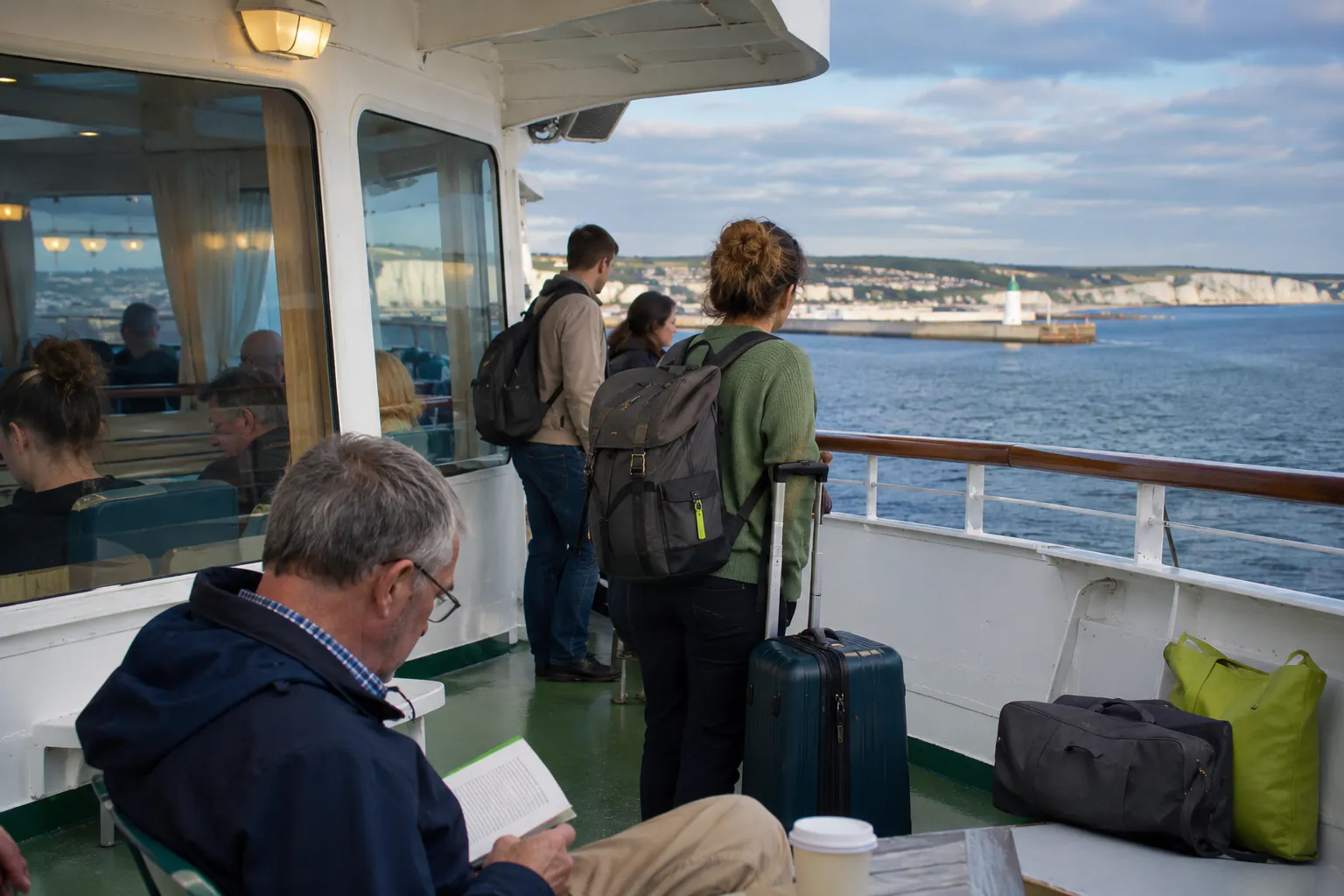
This route crosses the English Channel. For the full picture of that water, every crossing on it and what drives its reputation, see is the English Channel rough?
When it's worst, month by month
June to August sailings are usually settled. The autumn gale season builds from October and the December to February period produces the crossings people write home about; even then most sailings run, just more slowly.
| Roughest water in Jan | Roughest water in Feb | Roughest water in Mar | Roughest water in Apr | Roughest water in May | Roughest water in Jun | Roughest water in Jul | Roughest water in Aug | Roughest water in Sep | Roughest water in Oct | Roughest water in Nov | Roughest water in Dec |
|---|---|---|---|---|---|---|---|---|---|---|---|
| Rough | Rough | Mixed | Mixed | Calm | Calm | Calm | Calm | Mixed | Mixed | Rough | Rough |
Typical seasonal pattern, not a forecast. Any month can deliver a calm crossing or a bad one. Check the marine forecast for your sailing date. Select a month to see every sea and ferry crossing ranked for it.
Month bands: Dizzout sea-state data for the Newhaven to Dieppe crossing, built from the reports and sources listed on this page. Free to cite with a link to this page.
Where to be on board
Front to back
- Bow (front)Avoid
- MidshipBest
- Stern (aft)OK
The crossing: about 4 hours
Roughest stretch: The open middle two hours, clear of both coasts
Midship and low, on the side away from the wind if you sit outside. Four hours is long enough that seat choice genuinely changes the trip.
Taking the Newhaven to Dieppe crossing? Have Dizzout ready
Stop seasickness
Dizzout is drug-free sound therapy you can start in your seat on the crossing, with relief in about 90 seconds. It plays precisely calibrated audio through any headphones you already own, wired or Bluetooth. Free to download.
Get your personalized Dizzout plan. Paid subscription for full access.
30,000+ travelers in 30+ countries · How we count

On your phone? Scan to start there.
Comparing apps first? See how the motion sickness apps compare
Not travelling yet? Remind me the day before my trip
Know someone who gets motion sick?
Send them the app that helps stop it, drug-free, in about 90 seconds, works with any headphones. Free to download.
What helps on this crossing
- Treat it as a short sea crossing, not a Dover hop: eat before boarding and keep the meal light.
- Claim a fixed seat midship by a window early; the middle two hours are when you will want it.
- If the forecast is fresh from the south-west, the ship will roll; lying back with eyes closed beats reading.
- Fresh air on the leeward outside deck settles most people faster than a lounge seat.
- Check the Channel shipping forecast the evening before; with two round trips most days you may be able to pick the calmer sailing.
- Dizzout, a drug-free sound therapy app for passengers: it works with any headphones once nausea starts, with relief in about 90 seconds.
Buying a tablet in the UK before you sail? UK pharmacies sell Kwells, Stugeron and Avomine for travel sickness, and their labels differ on when to take them. Kwells vs Stugeron and Stugeron vs Avomine set out the label facts side by side. Which one suits you is a question for the pharmacist.
For the full toolkit see the seasickness guide, or what to do once it has already started. Choosing between a fast catamaran and a conventional ship elsewhere too? The physics is the same everywhere: see the catamaran guide. If the rocking follows you ashore afterwards, that is land sickness, which is normal, and it passes.
Frequently asked questions
Is Newhaven to Dieppe rougher than Dover to Calais?
On a windy day, yes. It is more than twice as long, it crosses open mid-Channel water rather than the sheltered strait, and the prevailing wind tends to put the sea on the beam, which rolls the ship. On calm summer days the two routes feel equally easy; the difference only shows up when the weather does.
How long is the Newhaven to Dieppe crossing?
About 4 hours dock to dock on the DFDS conventional ferry, with morning and evening departures on most days in each direction. Rough weather can add time; the ship slows rather than pounds.
When is this route calmest?
May to August, when Channel gales are uncommon and the leftover Atlantic swell is smallest. October through February is the lively season. Spring crossings are usually fine but the sea can still carry winter swell into April.
What about seasickness tablets for a 4 hour crossing?
Ask a pharmacist or your doctor; they can weigh your health and other medicines, which a route guide cannot. The one planning fact worth having: most motion sickness medicines are labelled to be taken before sailing, so the decision needs making at Newhaven, not mid-Channel.
Other ferry routes
Sources & further reading
Your next question, probably
Where on the ship should you be?
Which cabins move least, and what to do if you already booked one
Not your question? What actually works at sea?Sick right now, mid-crossing?Still rocking after you land?
Conditions described here are typical patterns drawn from published marine and operator information as of September 2026, not a forecast: any month can deliver a calm crossing or a bad one, and schedules, vessels and operators change. Route, vessel and operator names are trademarks of their respective owners; Dizzout is not affiliated with or endorsed by them. Seasickness sensitivity varies from person to person; this page is informational and not medical advice.