
How rough is an Alaska cruise? Season by season
Most of an Alaska cruise is spent on some of the calmest cruising water anywhere: the Inside Passage is a chain of channels sheltered by islands, and ships in its channels barely move. The motion question is the open water at the edges. One way itineraries cross the Gulf of Alaska, Seattle round trips run the open Pacific west of Vancouver Island, and both stretches get noticeably rougher from late August into September as the Aleutian Low rebuilds.
Inside Passage, Gulf of Alaska and the open Pacific off Vancouver Island · The season runs May to September; June and July sit in the calmest part of the gulf's year.
- Low
- Moderate
- High
- Very high
The band summarises a typical in-season sailing for this region, not a forecast. The month table below is where the season detail lives.
Key facts
- A typical in-season sailing here sits in the moderate motion band. The season runs May to September; June and July sit in the calmest part of the gulf's year.
- The waters involved: Inside Passage, Gulf of Alaska and the open Pacific off Vancouver Island.
- Open water is usually at its calmest in June and July.
- Conditions are typically roughest in January, February, November and December.
Sailing on an Alaska cruise? Dizzout is drug-free sound therapy you can start anywhere on the ship, with relief in about 90 seconds.Starts in your browser · works with any headphones
Stop seasickness on your cruise. Get your personalized Dizzout plan. Paid subscription for full access.

On your phone? Scan to start there.
When an Alaska cruise is calmest, month by month
| Roughest water in Jan | Roughest water in Feb | Roughest water in Mar | Roughest water in Apr | Roughest water in May | Roughest water in Jun | Roughest water in Jul | Roughest water in Aug | Roughest water in Sep | Roughest water in Oct | Roughest water in Nov | Roughest water in Dec |
|---|---|---|---|---|---|---|---|---|---|---|---|
| Roughest | Roughest | Rough | Mixed | Mixed | Calm | Calm | Mixed | Rough | Rough | Roughest | Roughest |
Typical seasonal pattern, not a forecast. Any month can deliver a calm crossing or a bad one. Check the marine forecast for your sailing date. Select a month to see every sea and ferry crossing ranked for it.
The strip rates the exposed legs, the Gulf of Alaska and the open Pacific, matching our Gulf of Alaska page. Inside Passage water stays sheltered all season, whatever the month. Outside May to September there is essentially no mainstream cruising here.
Why it gets rough here
The Gulf of Alaska sits under the Aleutian Low, one of the most active storm generating systems in the northern hemisphere. It weakens through early summer and rebuilds from about September, which is why early season and late season gulf crossings feel so different. The Inside Passage escapes almost all of it: a barrier of islands takes the ocean swell, leaving the channels themselves to local wind chop.
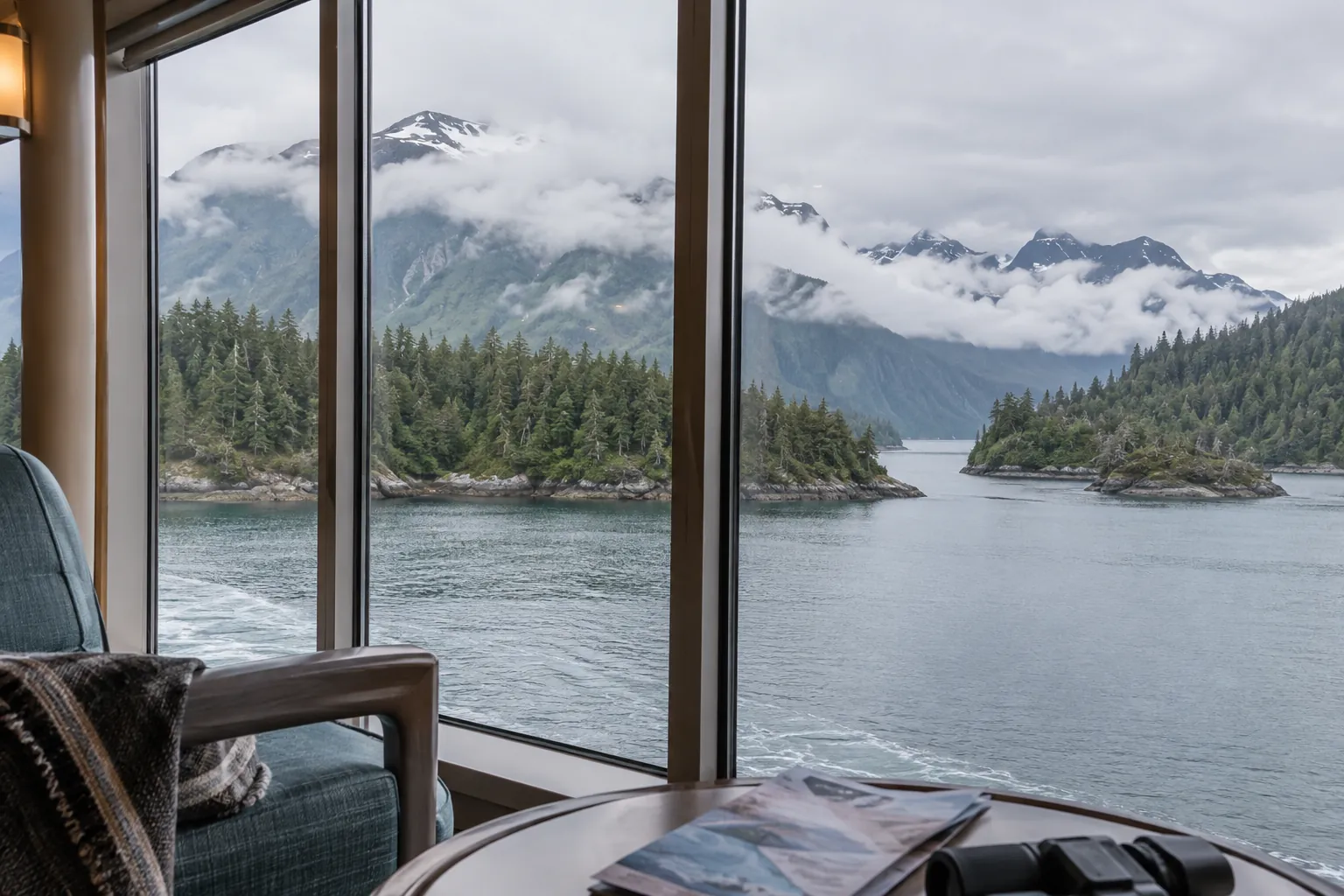
Inside Passage or the open gulf
This is the region where itinerary shape decides almost everything. Round trips from Vancouver stay in sheltered water nearly the whole way. Round trips from Seattle add a day each way on the open Pacific west of Vancouver Island, which is commonly the roughest water of the week. One way sailings between Vancouver and Whittier or Seward cross the open Gulf of Alaska, usually overnight, and that crossing carries the real motion risk, especially in September.
When do you sail?
Get a day-by-day prep checklist that unlocks as departure gets closer. Free, stays on your device.
Prepare the audio kit in your cabin
Get Dizzout and your headphones ready while seated indoors. Close the organizer before carrying the kit elsewhere on the ship.
Free to download. Paid subscription for full access.
30,000+ travelers in 30+ countries · How we count

On your phone? Scan to start there.
Comparing apps first? See how the motion sickness apps compare
Not travelling yet? Remind me the day before my trip

Cabin choice for this region
Book midship and low for the gulf night on one way itineraries. On a Vancouver round trip the sheltered water does the work for you, and a balcony for the scenery is the better spend. The general rule behind it is the same everywhere, midship and low, and the ship guide explains why that spot moves least.
The ships, and what size buys you here
Alaska draws large modern ships. Norwegian Bliss and Ovation of the Seas, both around 168,000 gross tons, shrug off typical gulf swell, while Royal Princess and Star Princess hold Seattle round trips on the more sheltered Inside Passage. On any of them the exposed legs still move in September; size raises the threshold, it does not remove it.
- Norwegian BlissNorwegian Cruise Line · 168,028 GT · motion guide
- Ovation of the SeasRoyal Caribbean · 168,666 GT · motion guide
- Royal PrincessPrincess Cruises · 142,714 GT · motion guide
- Star PrincessPrincess Cruises · 177,882 GT · motion guide
- Celebrity EdgeCelebrity Cruises · 130,818 GT · motion guide
- Discovery PrincessPrincess Cruises · 145,281 GT · motion guide
Know someone who gets motion sick?
Send them the app that helps stop it, drug-free, in about 90 seconds, works with any headphones. Free to download.
The waters on this route, rated
Each body of water on this region's itineraries has its own page with a month by month strip, the mechanism behind its reputation, and where to be on board while crossing it.
- Is the Salish Sea rough?Mountain-sheltered basins, one strait open to the Pacific
- Is the Inside Passage rough?Island shelter, except at its open crossings
- Is the Gulf of Alaska rough?Aleutian Low storms, no island shelter
Frequently asked questions
Which parts of an Alaska cruise are sheltered?
+
Nearly everything except the edges. The Inside Passage is a protected waterway threaded between islands, so ocean swell cannot reach most of it; what you feel there is light wind chop and the occasional more open stretch such as Queen Charlotte Sound or Dixon Entrance. The exposed water is the Gulf of Alaska and the open Pacific west of Vancouver Island.
When is an Alaska cruise calmest?
+
June and July, with May usually good too. From late August the Aleutian Low starts rebuilding, and September sailings carry the highest in season odds of a rough gulf crossing or open Pacific leg.
Are Seattle round trips rougher than Vancouver ones?
+
On average, yes. Seattle ships route west of Vancouver Island on the open Pacific for about a day in each direction, while Vancouver ships thread the Inside Passage nearly the whole way. On a calm June week the difference is small; in September it is not.
Do I need to worry about the Gulf of Alaska crossing?
+
Plan for it rather than worry about it. It is usually one night in each direction on one way itineraries, June and July conditions are mostly moderate, and the ships that sail it are large. Have your remedy ready before the ship leaves sheltered water.
Other regions
Related guides
Sources & further reading
Conditions described here are typical seasonal patterns drawn from published climatology and operator information as of September 2026, not a forecast: any month can deliver a calm sailing or a rough one, and itineraries change. Route and operator names are trademarks of their respective owners; Dizzout is not affiliated with or endorsed by them. Seasickness sensitivity varies from person to person; this page is informational and not medical advice.