
Is the Gulf of Alaska rough? What to expect on the crossing
The Gulf of Alaska itself is open North Pacific water and can certainly be rough. Most Alaska cruise passengers never cross it, though. Round-trip Inside Passage sailings stay mostly behind a screen of islands, apart from short open crossings such as Queen Charlotte Sound. Only one-way itineraries between Vancouver and Seward or Whittier run through the open gulf, usually for a day or two.
Crossing the Gulf of Alaska this week? Dizzout is drug-free sound therapy you can start in your seat on the crossing, with relief in about 90 seconds.Starts in your browser · works with any headphones
Stop seasickness. Get your personalized Dizzout plan. Paid subscription for full access.

On your phone? Scan to start there.
Gulf · North Pacific · Reputation among passengers: has a long-standing reputation for rough passages.
- Low
- Moderate
- High
- Very high
Roughness summarises typical reported conditions for this crossing, not a forecast for any given sailing.
Aleutian Low storms, no island shelter
In the Nausea Index table of the 121 sea crossings we cover, the Gulf of Alaska is rated rough, one of 34 in that band, with 6 rated higher. Full table: the roughest sea crossings, ranked.
Key facts
- The Gulf of Alaska is a gulf, and passenger reports place it in the high roughness band.
- The mechanism behind that reputation: Aleutian Low storms, no island shelter.
- Conditions are reported roughest in January, February, November and December.
- The calmest months are usually June and July.
Why is the Gulf of Alaska so rough?
The gulf is where the Aleutian Low sits, a semi-permanent area of low pressure that gathers North Pacific storms and steers them into the Alaskan coast. It is strongest in winter and largely fades in summer, which is why the cruise season sits where it does. The water is deep and fully open to the Pacific, with no island chain in front of it, so swell reaches the coast unbroken. That is exactly the shelter the Inside Passage has and the gulf does not.
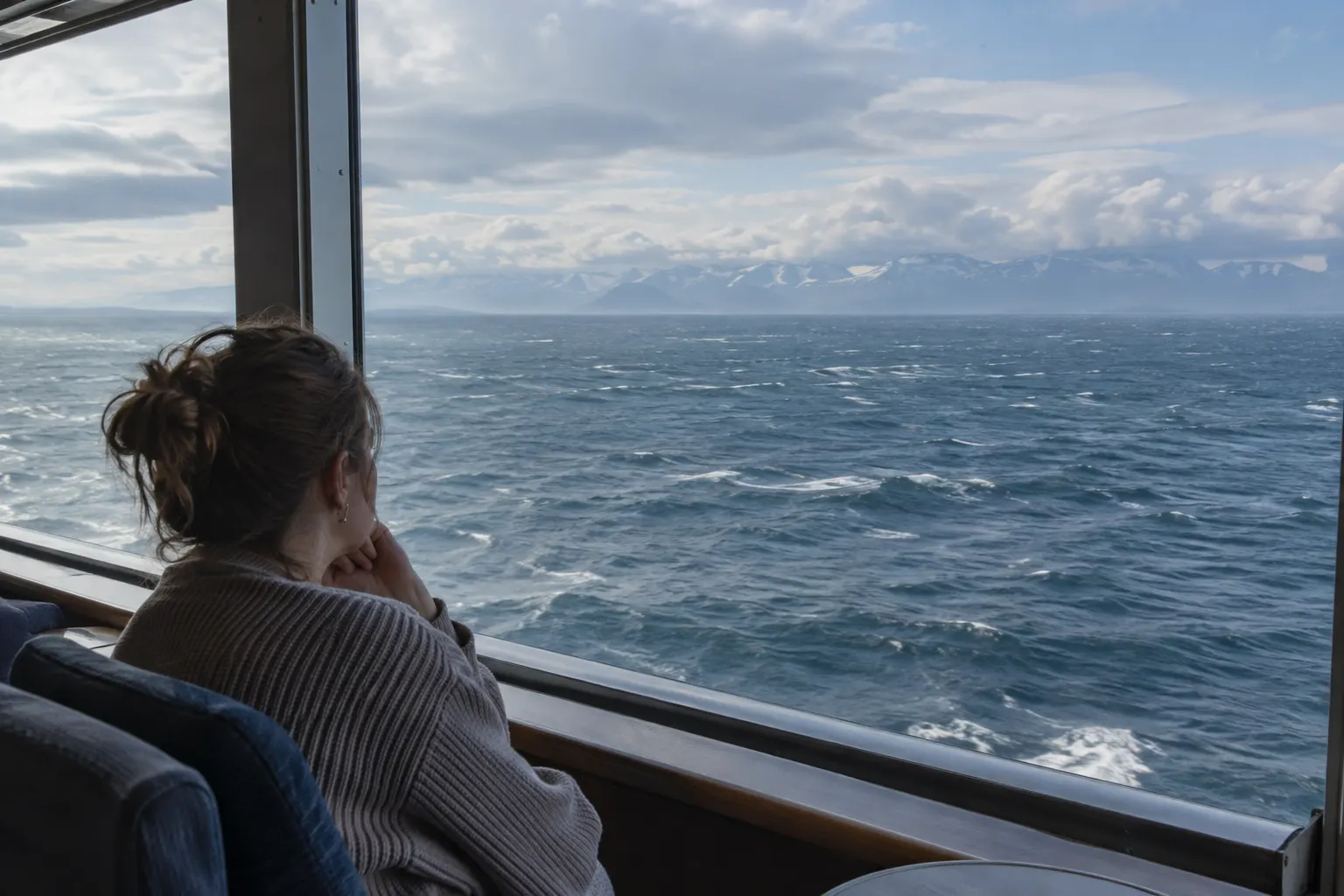
When is the Gulf of Alaska roughest?
The Alaska cruise season runs roughly May to September, deliberately sitting in the calmest part of the gulf's year. The Aleutian Low weakens through summer and rebuilds from about September, so late-season sailings are the ones most likely to meet swell. May and September are also when repositioning voyages cluster, which is when one-way gulf itineraries are most common.
| Roughest water in Jan | Roughest water in Feb | Roughest water in Mar | Roughest water in Apr | Roughest water in May | Roughest water in Jun | Roughest water in Jul | Roughest water in Aug | Roughest water in Sep | Roughest water in Oct | Roughest water in Nov | Roughest water in Dec |
|---|---|---|---|---|---|---|---|---|---|---|---|
| Roughest | Roughest | Rough | Mixed | Mixed | Calm | Calm | Mixed | Rough | Rough | Roughest | Roughest |
Typical seasonal pattern, not a forecast. Any month can deliver a calm crossing or a bad one. Check the marine forecast for your sailing date. Select a month to see every sea and ferry crossing ranked for it.
Where to be on board
Front to back
- Bow (front)Avoid
- MidshipBest
- Stern (aft)OK
The crossing: 7 nights, 1-2 days in open water
Roughest stretch: Open-gulf leg, northbound: the final overnight after Hubbard Glacier
Midship on a lower deck. That choice matters on the open-gulf leg and barely at all in the Inside Passage.
Get your read
A few quick questions about you, then your trip. Nothing is saved or sent.
Step 1: about you
How you usually react to travel is the single best signal. These come from the validated MSSQ.
Step 2: your trip
Pick the kind of trip you are planning.
Set wet layers aside first
Make a dry place for your phone and headphones before preparing Dizzout. Keep the outdoor jacket separate from the audio kit.
Free to download. Paid subscription for full access.
30,000+ travelers in 30+ countries · How we count

On your phone? Scan to start there.
Comparing apps first? See how the motion sickness apps compare
Not travelling yet? Remind me the day before my trip

Know someone who gets motion sick?
Send them the app that helps stop it, drug-free, in about 90 seconds, works with any headphones. Free to download.
The crossings that cross it
| Route | Typical duration | What to know |
|---|---|---|
| Vancouver-Seward or Whittier | 7 nights, 1-2 days in open water | Northbound one-way itinerary; the open-gulf leg usually falls late, after Hubbard Glacier. |
| Seward or Whittier-Vancouver | 7 nights, 1-2 days in open water | Southbound version; the open-gulf leg comes early, in the first day or two. |
| Round-trip Vancouver or Seattle | 7 nights, Inside Passage only | Does not cross the open gulf. Round-trip Vancouver stays in the Inside Passage throughout; round-trip Seattle sails open Pacific outside Vancouver Island before entering it. |
What helps on this crossing
- If you have a choice and motion worries you, book a round-trip Inside Passage sailing from Vancouver. It stays mostly behind islands, apart from short open crossings such as Queen Charlotte Sound; a Seattle round-trip adds open Pacific water off Vancouver Island.
- On a one-way itinerary, know which day the open gulf falls. Northbound it is usually after Hubbard Glacier; southbound it is near the start.
- The open-gulf leg often runs overnight, which works in your favour, because much of it passes while you are asleep anyway.
- Late-season sailings in September meet the rebuilding Aleutian Low. June and July sit in the calmest stretch of the gulf's year.
- Book midship on a lower deck. On the Inside Passage days it makes almost no difference; on the open-gulf day it makes a large one.
- Glacier and fjord days are sheltered water. Use them for excursions and big meals, and keep the open-gulf day deliberately low-key.
For the full toolkit see the seasickness guide, or what to do once it has already started. For what the trials actually say about the oldest trick on that list, see the verdict on looking at the horizon. If the rocking follows you ashore afterwards, that is land sickness, which is normal, and it passes.
Frequently asked questions
Is the Gulf of Alaska rough on a cruise?
It can be. It is open North Pacific water with no island chain in front of it, and swell of several metres is not unusual, particularly late in the season. That said, the open-gulf portion is typically only one or two days of a seven-night sailing, and a good part of it is often overnight.
Which Alaska cruises cross the open Gulf of Alaska?
One-way itineraries. These run between Vancouver at the southern end and Seward or Whittier, the ports serving Anchorage, at the northern end. US shipping law means the southern end of a one-way gulf itinerary is essentially always Vancouver rather than Seattle. Round-trip Inside Passage cruises do not cross the gulf; they turn round inside the sheltered channels. A simple test: if the itinerary needs two different airports, it almost certainly crosses the gulf.
Is the Inside Passage rough?
Usually not. It threads between islands and through fjords that block Pacific swell, which is why it is the route most often suggested for people prone to seasickness. There are a few short exposed stretches where the ship crosses open sounds, but the great majority of the sailing is protected water.
When is the Gulf of Alaska calmest?
Midsummer. The Aleutian Low, the semi-permanent low-pressure area that drives North Pacific storms into this coast, is strongest in winter and largely fades by June and July. It rebuilds from around September, which is why late-season Alaska sailings have a reputation for lumpier gulf crossings than early ones.
Which Alaska itinerary is better if I get seasick?
A round-trip Inside Passage sailing, on balance, because it never crosses the open gulf and stays mostly in sheltered water. The trade-off is that one-way gulf itineraries usually include a second glacier day and reach further north. If you want the northern ports, a one-way sailing early in the season with a midship lower-deck cabin is the middle ground.
Is the Gulf of Alaska rough in winter?
Usually, yes. In a typical year, December, January and February are all rated roughest. This is the typical pattern, not a forecast for any sailing.
Other crossings
Sources & further reading
Sea conditions described here are typical patterns drawn from published marine and operator information as of July 2026, not a forecast: conditions on any given sailing depend on the weather that day, and any month can deliver a calm crossing or a bad one. Route and operator names are trademarks of their respective owners; Dizzout is not affiliated with or endorsed by them. Seasickness sensitivity varies from person to person; this page is informational and not medical advice.