
Is the Hiram Bingham (Belmond) rough?
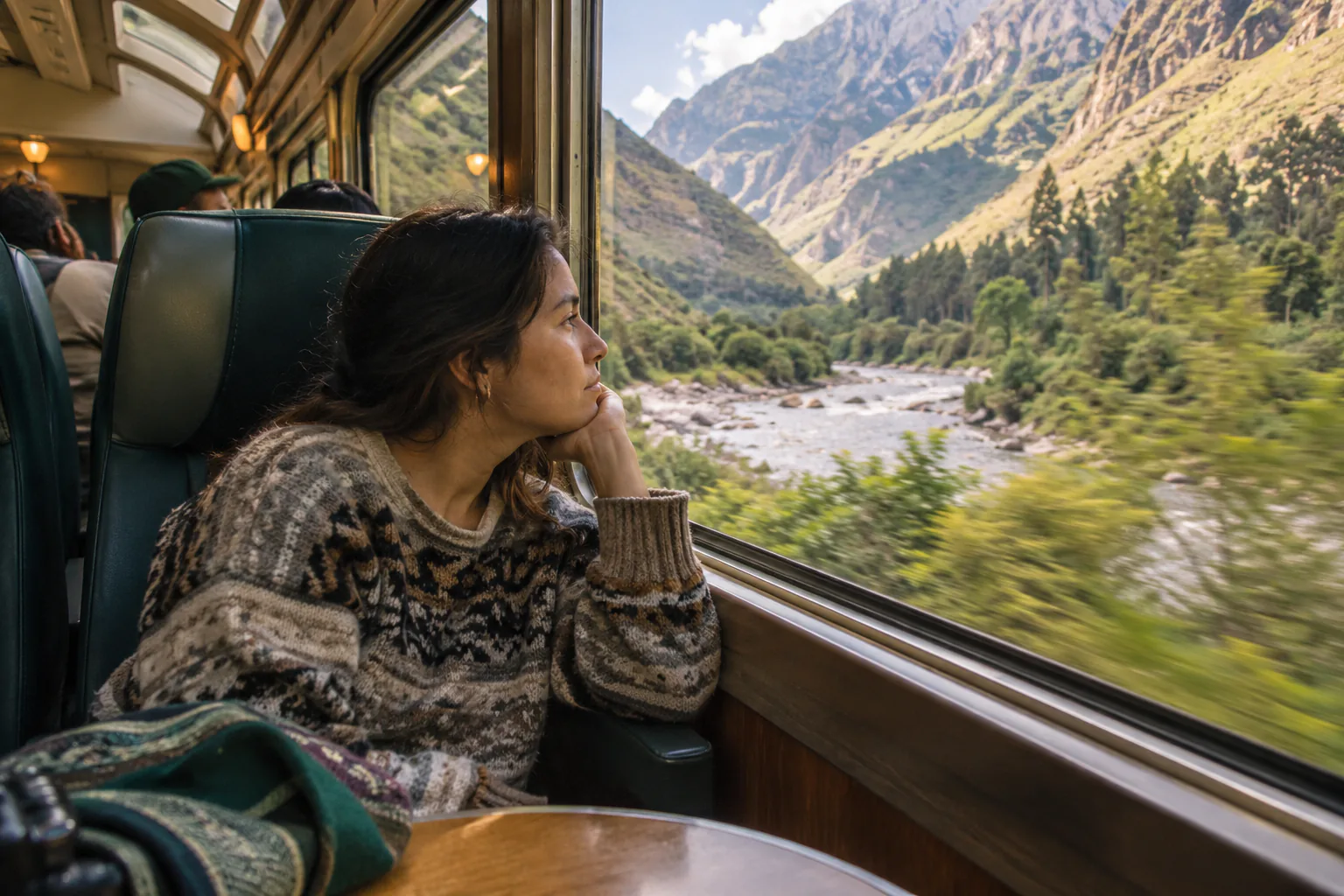
The Hiram Bingham is the gentle way to Machu Picchu: about 3.5 hours of heavy Pullman stock at dining pace, with an open-air observatory car at the back. Motion sickness risk on board is low by design. The two honest cautions are the ones that apply to the whole valley: Cusco's altitude, which affects people before they ever board, and the rainy-season bimodal pattern that swaps part of the rail journey for a road leg.
Cusco region to Machu Picchu, Peru · about 3.5 hours each way · Slow Pullman run, altitude story
Key facts
- The Hiram Bingham takes about 3.5 hours each way, departing Poroy from May to December, with a rainy-season bimodal service running a bus to a Sacred Valley station instead.
Queasy on the train? Dizzout is drug-free sound therapy you can start from your seat, with relief in about 90 seconds.Starts in your browser · works with any headphones
Get your personalized Dizzout plan. Paid subscription for full access.

On your phone? Scan to start there.
Why the Hiram Bingham (Belmond) moves you the way it does
Heavy, slow trains on winding line produce long, unhurried movement rather than jolts, and 3.5 hours is a modest exposure. The observatory car gives you open air and a full horizon on demand, which is the best onboard reset there is. The framing risk for this trip is altitude: the train departs the Cusco area May to December, and Cusco stands far above the destination valley, so travellers acclimatising badly feel it in the city and on the winding bus up to the citadel more than in a Pullman armchair.
The journey
- Operator
- Belmond
- Duration
- about 3.5 hours each way
- Windows
- Pullman windows plus an open-air observatory car
- Season
- Runs bimodal in the rainy season, with a bus leg replacing part of the rails
Put reading aside for a pause
Close the guidebook when you take a reading break. Prepare ordinary headphones for Dizzout after putting paper and screen work aside.
Free to download. Paid subscription for full access.
30,000+ travelers in 30+ countries · How we count

On your phone? Scan to start there.
Comparing apps first? See how the motion sickness apps compare
Know someone who gets motion sick?
Send them the app that helps stop it, drug-free, in about 90 seconds, works with any headphones. Free to download.
What helps on board
- Use the open-air observatory car when you feel warm or queasy; fresh air plus a real horizon is the strongest reset on board.
- Go easy on the welcome drinks: alcohol lowers motion tolerance, and altitude compounds it.
- Acclimatise before the trip, not on it; the altitude story starts in Cusco, not on the train.
- Have relief ready before departure. If nausea starts mid-journey, sound therapy through any headphones is one drug-free option, with relief in about 90 seconds.
Where to sit is its own question, answered properly in where to sit on a train for motion sickness. And for why trains set people off at all, from sway to reading to tilting stock, see the train motion sickness guide.
Frequently asked questions
Is the Hiram Bingham good for people who get motion sick?
Yes, as trains go. It is slow, heavy stock on a descending valley line, with an open-air car for fresh air and horizon whenever you want it. The risks worth planning for are Cusco's altitude and the winding citadel bus, not the train.
Does the champagne make it worse?
It can. Alcohol reliably lowers motion sickness tolerance, and at altitude it hits harder. Pacing the on-board drinks until the train is rolling smoothly, or until the return leg, is the sensible order of operations.
What changes in the rainy season?
Between roughly January and March the service can run bimodal: a road transfer to a Sacred Valley station replaces part of the rail journey. The road leg is windier than the rails it replaces, which matters to sensitive travellers.
Other trains and lines
Sources & further reading
Your next question, probably
Feeling it right now, on board?
The 60-second protocol
Not your question? Why do trains set some people off?What actually has evidence?How prone are you, really?
Details on this page reflect published operator, heritage and engineering information as of September 2026; services, fleets and tilt settings change, so check with the operator before you travel. Train, route and operator names are trademarks of their respective owners; Dizzout is not affiliated with or endorsed by them. Motion sickness sensitivity varies from person to person; this page is informational and not medical advice.