Is the Rocky Mountaineer rough?
The Rocky Mountaineer splits its journeys into daylight-only days with hotel nights between, which is quietly the most motion-sickness-friendly format in scenic rail: you never try to sleep on a moving train, and each day's exposure resets overnight. The riding itself is slow, heavy and winding, through canyon and mountain country including the Spiral Tunnels territory on the Banff route.
British Columbia and Alberta, Canada · 2 to 3 daylight days with hotel nights between · Two daylight days through the Rockies
Key facts
- Rocky Mountaineer trains run exclusively in daylight with overnight hotel stops rather than sleepers, operating in the April to October season.
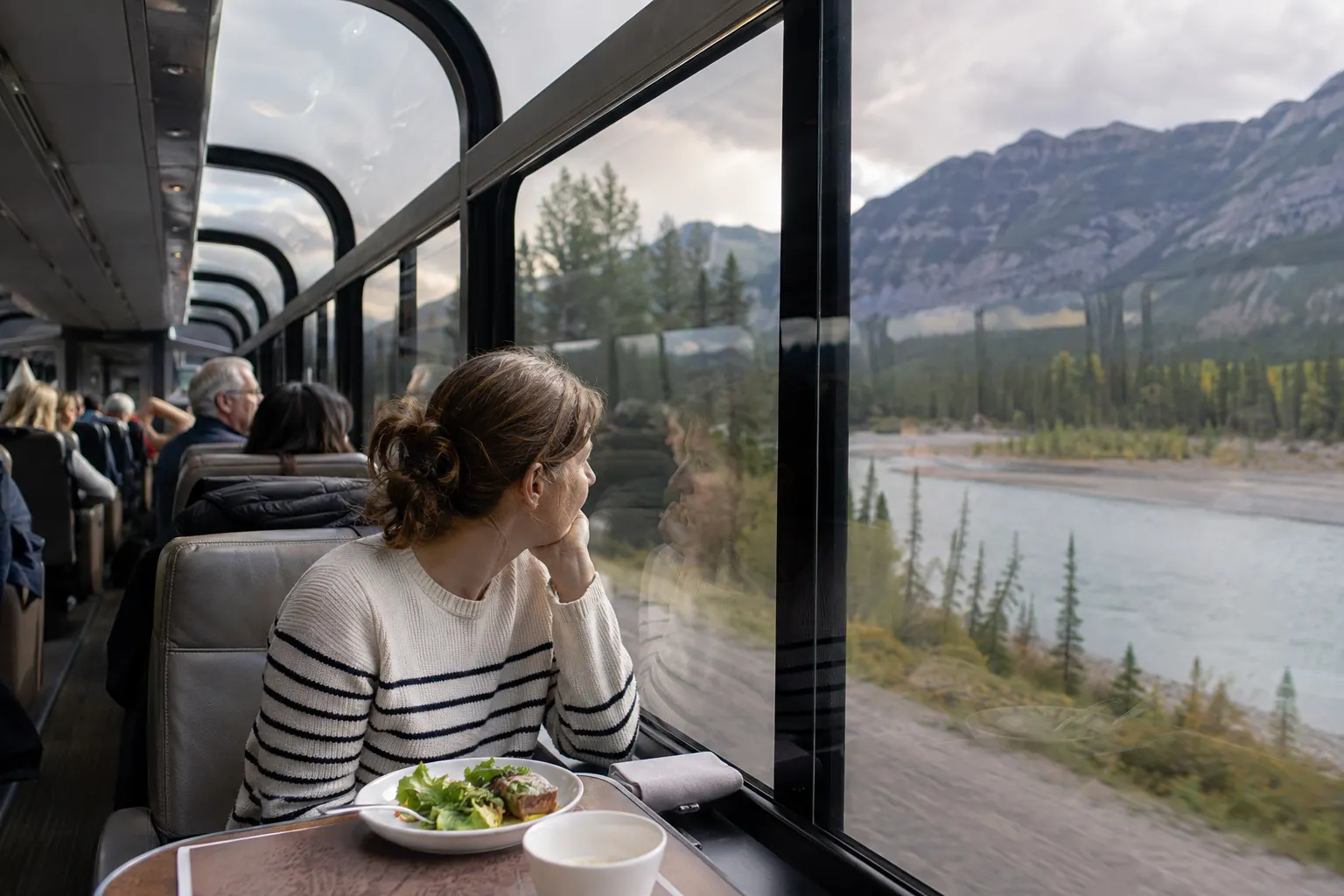
- GoldLeaf service is a bi-level, glass-domed coach with full-length windows.
Queasy on the train? Dizzout is drug-free sound therapy you can start from your seat, with relief in about 90 seconds.Starts in your browser · works with any headphones
Get your personalized Dizzout plan. Paid subscription for full access.

On your phone? Scan to start there.
Why the Rocky Mountaineer moves you the way it does
Long scenic days on curving mountain track are an accumulation exposure, and this operator's format manages it structurally: travel happens in daylight when your eyes can see the motion, and the day ends in a stationary hotel bed. The glass-domed GoldLeaf coaches surround you with horizon, the best visual input available on rails. What sensitive riders should still respect is the length of each day aboard and the winding canyon sections, where the train sways steadily for hours at a time.
The journey
- Operator
- Rocky Mountaineer
- Duration
- 2 to 3 daylight days with hotel nights between
- Windows
- GoldLeaf service runs bi-level glass-domed coaches with full-length windows
- Season
- Operates in the April to October season
Look outside beyond the viewfinder
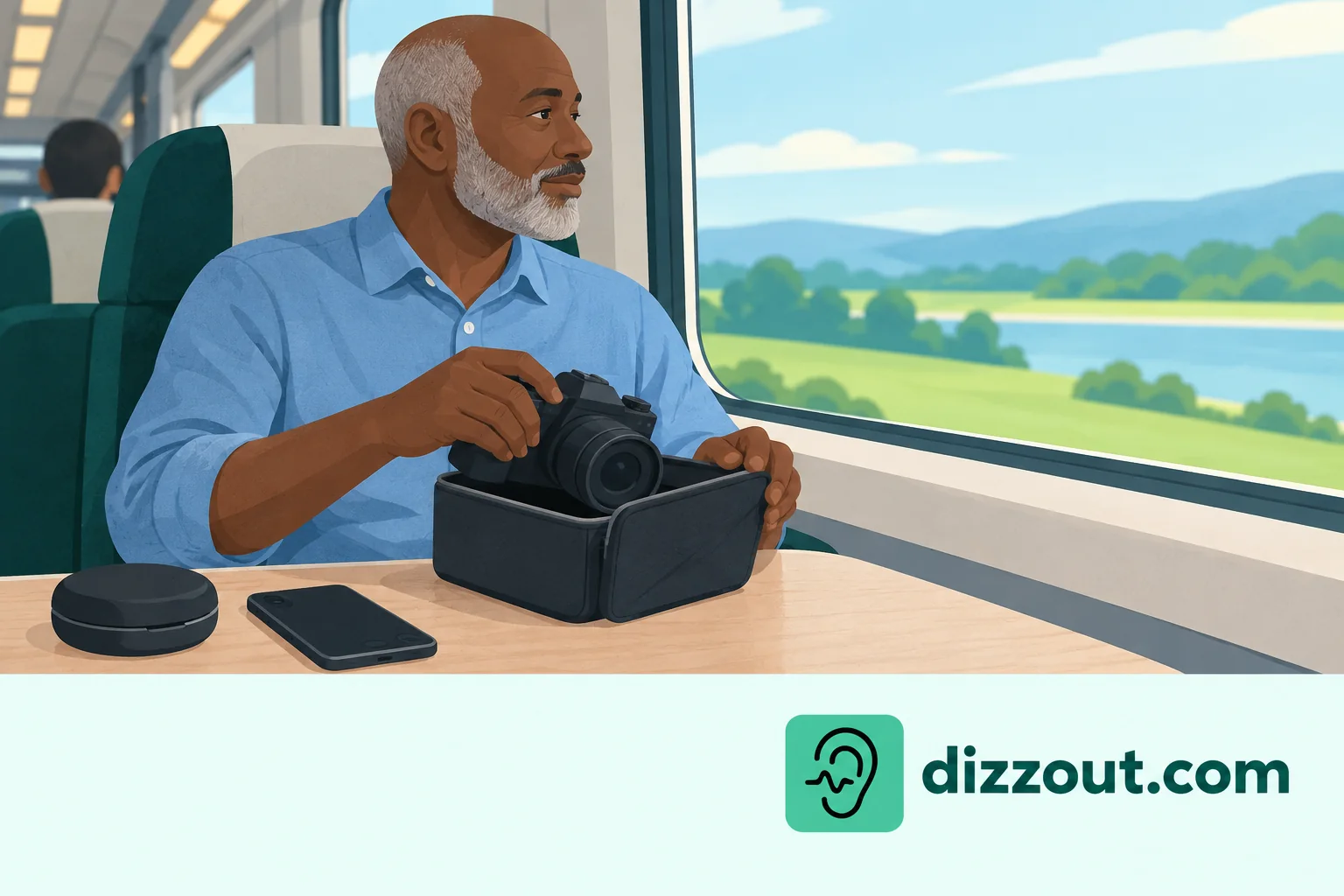
Set the camera aside when you take a visual break. Keep ordinary headphones accessible if you choose Dizzout during the journey.
Free to download. Paid subscription for full access.
30,000+ travelers in 30+ countries · How we count

On your phone? Scan to start there.
Comparing apps first? See how the motion sickness apps compare
Know someone who gets motion sick?
Send them the app that helps stop it, drug-free, in about 90 seconds, works with any headphones. Free to download.
What helps on board
- Use the dome: keeping the mountain horizon in wide view is the strongest anti-nausea input a coach can give you.
- Step onto the outdoor viewing platform for fresh air when the canyon sections get long.
- Pace the on-board food and drink service; heavy meals and alcohol both lower motion tolerance.
- Have relief ready before departure. If nausea starts mid-journey, sound therapy through any headphones is one drug-free option, with relief in about 90 seconds.
Where to sit is its own question, answered properly in where to sit on a train for motion sickness. And for why trains set people off at all, from sway to reading to tilting stock, see the train motion sickness guide.
Frequently asked questions
Is the Rocky Mountaineer rough?
No, it is slow and heavy, but the days are long and the canyon sections wind steadily for hours. The daylight-only format with hotel nights means exposure resets every evening, which is exactly what a sensitive rider wants from a multi-day journey.
Does the dome car help or hurt motion sickness?
Helps, for most people. The glass dome keeps the horizon and mountains in your peripheral vision, so your eyes agree with your inner ear about the motion. If bright sun through the dome makes you drowsy or headachy, the lower level of GoldLeaf coaches has conventional windows.
Which route is gentler?
All routes are slow scenic running, and none has a notorious stretch. The First Passage to the West route to Banff includes the historic Spiral Tunnels country, where the line curves inside the mountains; treat it as the most winding scenery rather than a rough section.
Other trains and lines
Sources & further reading
Your next question, probably
Feeling it right now, on board?
The 60-second protocol
Not your question? Why do trains set some people off?What actually has evidence?How prone are you, really?
Details on this page reflect published operator, heritage and engineering information as of September 2026; services, fleets and tilt settings change, so check with the operator before you travel. Train, route and operator names are trademarks of their respective owners; Dizzout is not affiliated with or endorsed by them. Motion sickness sensitivity varies from person to person; this page is informational and not medical advice.