The short answer
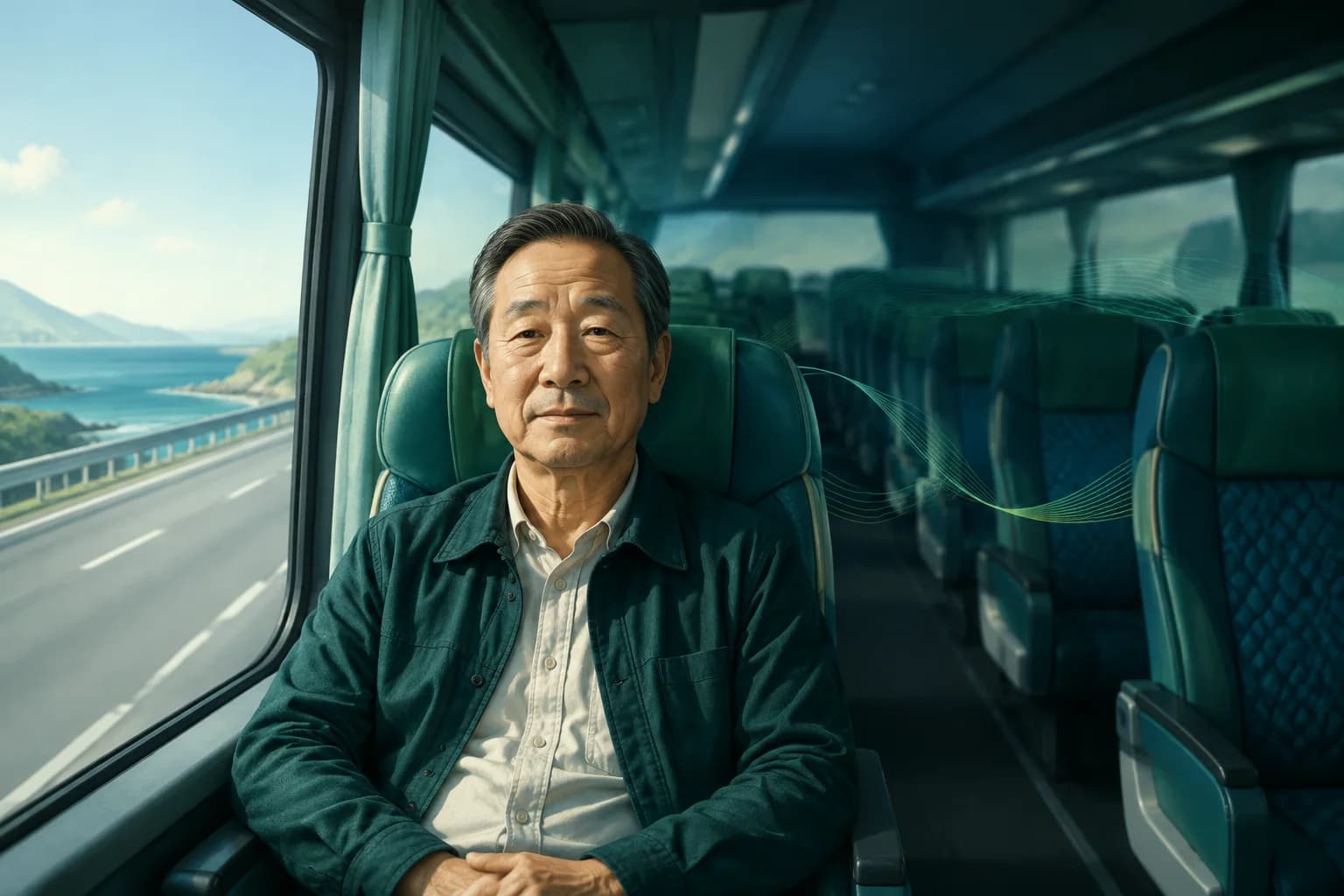
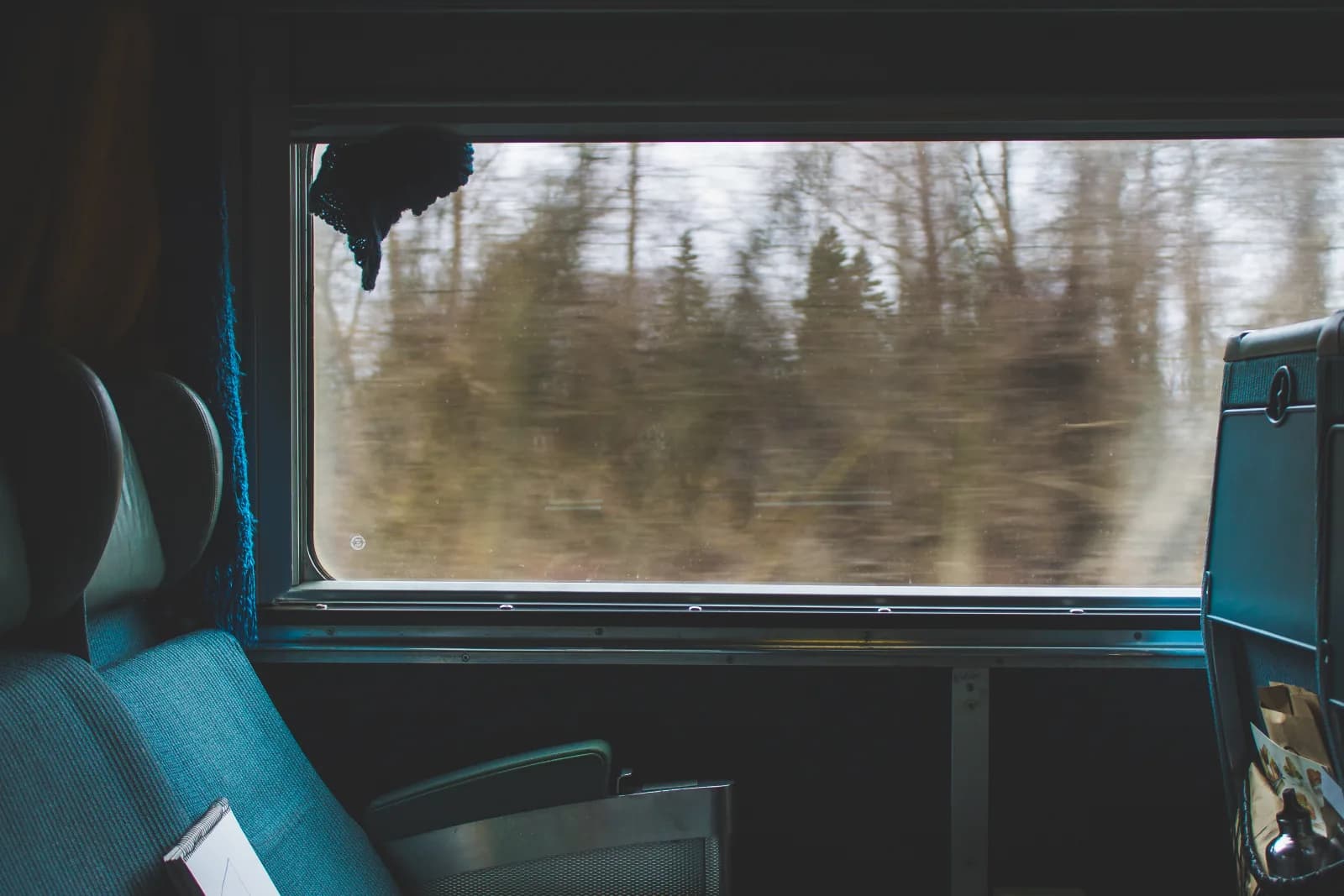
The steadiest seat on a train is a forward facing window seat near the middle of a carriage. Facing forward keeps what your eyes see matched to what your inner ear feels. The middle of the carriage sits between the wheelsets, so it shakes less than the seats directly above them. On a subway with no view out, sit facing forward near the center of the car and rest your eyes on something that does not move. And if the only free seat faces backwards, there are fixes for that too.
Trains are supposed to be the easy mode. No winding road, no fumes, room to stretch. Yet plenty of people step off a two-hour ride feeling green, and most of them sat in the first empty seat they found.
Seat choice on a train is not superstition. Where you sit changes how much vibration reaches you, what your eyes get to see, and whether your brain can predict the next lurch. Here is the seating logic, end to end, including the backwards seat problem.
Queasy on the train? Drug-free relief through any headphones, in about 90 seconds.Starts in your browser · works with any headphones
Stop travel sickness on your commute. Get your personalized Dizzout plan. Paid subscription for full access.

On your phone? Scan to start there.
The short answer: forward facing, mid carriage, window
Motion sickness starts when your senses disagree: your inner ear feels sway and braking that your eyes do not see. The best train seat shrinks that gap from both ends. Forward facing means the world moves the way your body expects. A window seat gives your eyes the real horizon, the one reference that always agrees with your inner ear. Mid carriage simply moves less, for a mechanical reason covered below.
That is the whole rule. Everything else in this article is what to do when you cannot have all three.
- Prefer
- Middle of a carriage, forward facing, by the window. You sit between the wheelsets with the horizon in view.
- Alternative
- The front carriages and seats near the doors. Fine for most riders, with a little more noise and jolt.
- Watch for
- Rear facing seats, seats directly over the wheels, and the last carriages, where sway is largest.
Why facing backwards makes some people queasy
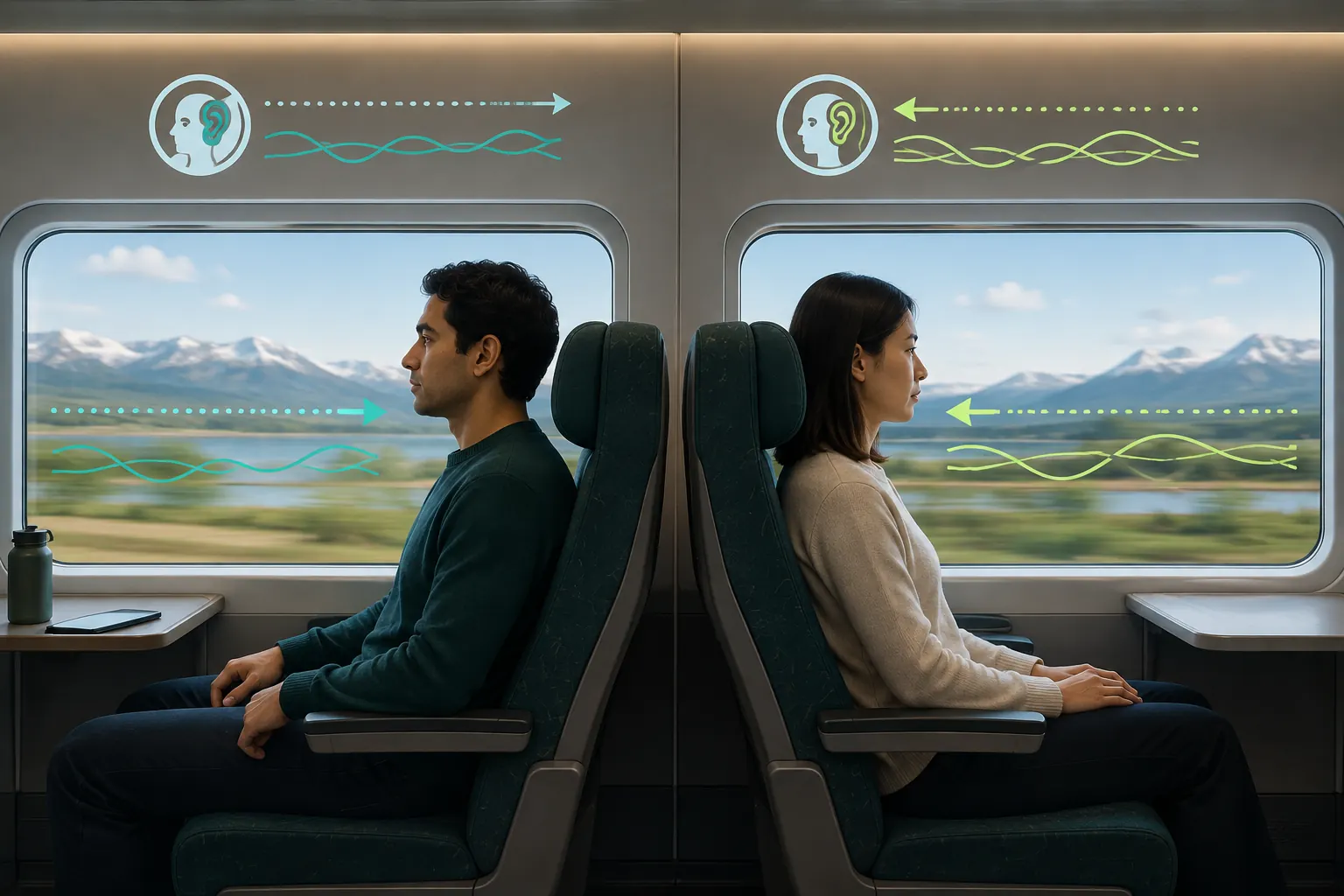
Your brain runs on prediction. Facing forward, it sees a curve coming and preloads for the lean. Facing backwards, every input arrives reversed: the scenery streams away from you, braking presses you into the seat instead of away from it, and each curve arrives unannounced. For riders who are already sensitive, that steady drip of small surprises is enough to start the cold sweat.
One honest footnote. The folk rule says backwards is always worse, but the research is messier: in some tilting train studies, riders facing backwards reported milder symptoms than riders facing forward. Bodies differ. If backwards reliably makes you queasy, that is real and worth acting on. If it never has, do not start worrying about it now.
Over the wheels vs the middle of the carriage
A passenger carriage rides on two wheelsets, called bogies, one near each end. Sit directly above a bogie and you feel every joint, switch and rough patch of track first hand. Sit in the middle of the carriage and the car body itself acts as your suspension: the same bumps arrive smaller and softer.
Two smaller notes. The gangways between carriages are the most mobile, rattly spots on the train, so avoid the seats right beside them. And the rear carriages of a long train tend to sway more than the front, which is why the diagram above puts the calmest zone mid train, mid carriage.
High speed and tilting trains
Counterintuitively, faster is usually gentler. Dedicated high speed lines are built with continuously welded rail and long, sweeping curves, so a train at full speed often rides smoother than a regional service on old track. If high speed rail is on your route options, it is rarely the one to fear.
The exception is the tilting train, which leans into curves so it can take winding conventional track at speed. That tilt keeps you from sliding sideways, but the rolling motion it adds can set off motion sickness in susceptible riders, and this has been documented in peer-reviewed research on tilting services. Same seat logic applies, plus one addition: keep your eyes out the window on the far landscape, so your view and the lean stay connected. And for which trains and routes are actually rough, from the Pendolino's tilt to the Bernina's spirals, see the train-by-train guide.
Subways and metros: no window, no horizon
Underground, the window fix is gone. There is no horizon, many metro cars seat you sideways, and the stop-start rhythm of a subway packs more accelerations into ten minutes than an intercity train does in an hour. That combination is why some people are fine on trains but miserable on the metro.
What still works: choose a forward facing seat when the car has them, stay near the center of the car, and give your eyes one fixed thing inside the car, a door edge, a route map, rather than your feed. Skip reading on the jerky stretches. Cool air helps too, so take a spot near a vent when you can.
Standing vs sitting when the train is full
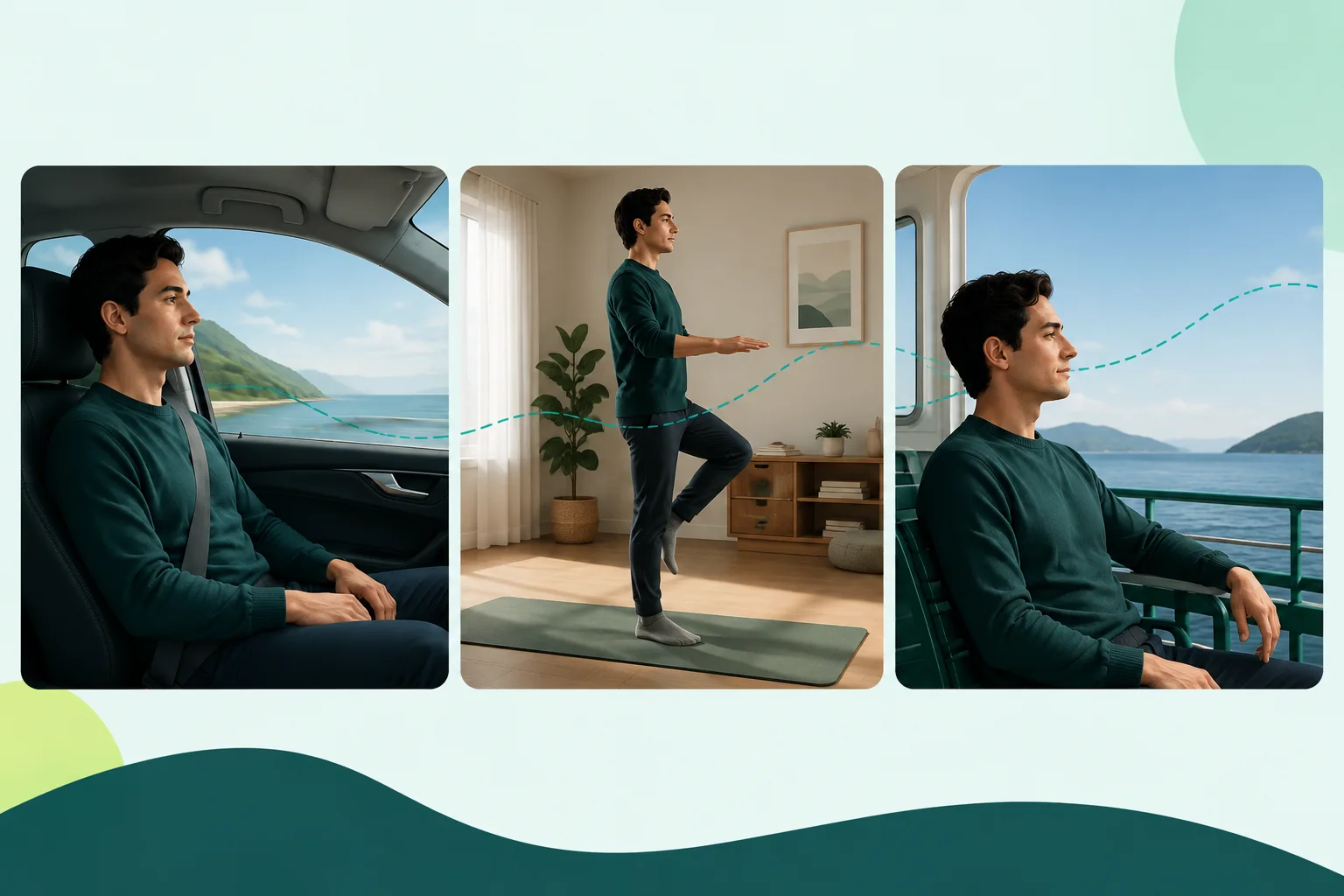
A full train takes the seat choice away, and standing is genuinely not the worst outcome. On your feet, your legs work like a sailor's: knees soft, feet apart, facing the direction of travel, one hand on a pole. Your body absorbs the motion it can feel coming, which is exactly the loop motion sickness disrupts.
The combination to avoid is the one commuters default to: wedged into a sideways seat, head down, eyes on a phone. That stacks a sideways body, an unpredictable motion stream and a stationary visual field on top of each other. If you must sit sideways, at least keep your eyes up and level.
Reading and phones on a train: what changes
Trains are friendlier to reading than cars, which is why the question is usually phrased as can you get car sick on a train. You can, and reading is the usual trigger: your eyes lock onto a stationary page while your body sways, the same conflict as reading in a car, just milder because the motion is steadier.
The workarounds are small. Hold the phone higher, near the window line, so the moving world stays in your peripheral vision. Glance at the horizon every couple of minutes to let your senses re-agree. On rough sections, switch to audio. If this is your daily ride rather than a one-off, the commuting guide covers the routine end of it.
When you cannot change seats
Reserved seating, a packed carriage, a backwards seat and no swap in sight. In order of effort:
- Anchor your head. Press it back into the headrest. Less head bobbing means less conflicting input.
- Look far, not near. Distant scenery barely moves in your visual field, so the direction you face matters less. The window still helps even when it is behind your shoulder line.
- Close your eyes. It removes half the argument your senses are having. Pair it with slow, steady breathing.
- Get airflow. Open a vent, unzip a layer. Heat and stale air lower your threshold.
- Have relief ready before boarding. If nausea has already set in, sound therapy through any headphones is one option designed to help calm the response in about 90 seconds, and you can use it with your eyes closed, in a tunnel, facing whichever way the seat points. There is also a 60-second protocol for the moment it hits.
One last thing. Seat strategy handles the ordinary queasiness of a moving train. If dizziness or nausea persists after you are back on solid ground, or comes with hearing changes or spinning vertigo, that is a doctor conversation, not a seating chart. And if you are not sure how susceptible you actually are, the motion sickness test gives you a read in about two minutes.
For the days the only seat faces backwards
Stop the nausea
You cannot always pick your seat, and underground there is no window fix. Dizzout plays precisely calibrated audio through the headphones you already have in. Drug-free, no drowsiness, about 90 seconds, on iOS and Android.
Get your personalized Dizzout plan. Paid subscription for full access.
30,000+ travelers in 30+ countries · How we count

On your phone? Scan to start there.
Comparing apps first? See how the motion sickness apps compare
Frequently asked questions
Is it better to face forwards or backwards on a train?
Most people who get motion sick do better facing forwards: the view matches the felt motion and the brain can see each curve before it arrives. The research is less tidy than the folk rule, and some tilting train studies found that backwards facing riders reported milder symptoms. If facing backwards reliably makes you queasy, trust your own pattern and swap seats when you can.
Why do I feel sick on a train but not in a car?
Trains add motions a car does not have: side to side sway, jolts over switches, and on tilting services a roll into every curve. You are also far more likely to read or work on a train, which locks your eyes on a stationary page while your body moves. Sitting mid carriage, facing forward, with regular glances out the window closes most of that gap.
Can you get car sick on a train?
Yes, it is the same condition with a different trigger mix. Motion sickness on a train comes from the same sensory mismatch as car sickness: your inner ear feels motion your eyes do not see. Some people who struggle in cars are fine on trains, and the reverse also happens, because susceptibility and triggers are personal.
Why do some train seats face backwards?
Because most trains do not turn around at the end of the line. They simply drive back the other way, so fixed seats that face forward on the way out face backwards on the way home, and many carriages split their seats between the two directions or set them around tables. Some fleets fit seats that can be turned at the terminus, but on many lines a backwards seat is just the layout. If facing backwards makes you queasy, look for a forward-facing seat as you board or swap when one frees up.
Where is the smoothest seat on a train carriage?
The middle of the carriage, between the two wheelsets. Seats directly over the wheels pick up more vibration and jolt, and the gangway ends of each carriage move the most. A forward facing window seat in that middle zone is the full combination.
Do high speed trains cause more motion sickness?
Usually less. Dedicated high speed lines use continuously welded rail and long, gentle curves, so the ride is often smoother than a slower regional line. The exception is tilting trains on winding conventional routes, where the tilt into curves can set off symptoms in susceptible riders.
What helps on the subway where there are no windows?
Face forward if the car allows it, stay near the center of the car, and rest your eyes on something fixed inside, like a door edge or route map, instead of your phone. Cool air and a steady grip help too. Because there is no window to fix on, sound-based options matter more underground: a sound therapy app like Dizzout is one option designed to help calm the response in about 90 seconds, with your eyes open or closed.
Someone you know gets motion sick?
Send them this guide. It might be the trip it saves.
Your next question, probably
What else helps on trains?
The full train guide
Not your question? Is the metro a different problem?Queasy every single commute?Feeling it right now?
About this article
- CDC Yellow Book: Motion Sickness (Golding), current edition
- Cohen B, et al. Motion sickness on tilting trains. FASEB Journal, 2011
- MedlinePlus Genetics: Motion sickness
This article is informational and not a substitute for medical advice. If symptoms persist after you leave the train or come with hearing changes or lasting vertigo, talk to your doctor.