The short answer
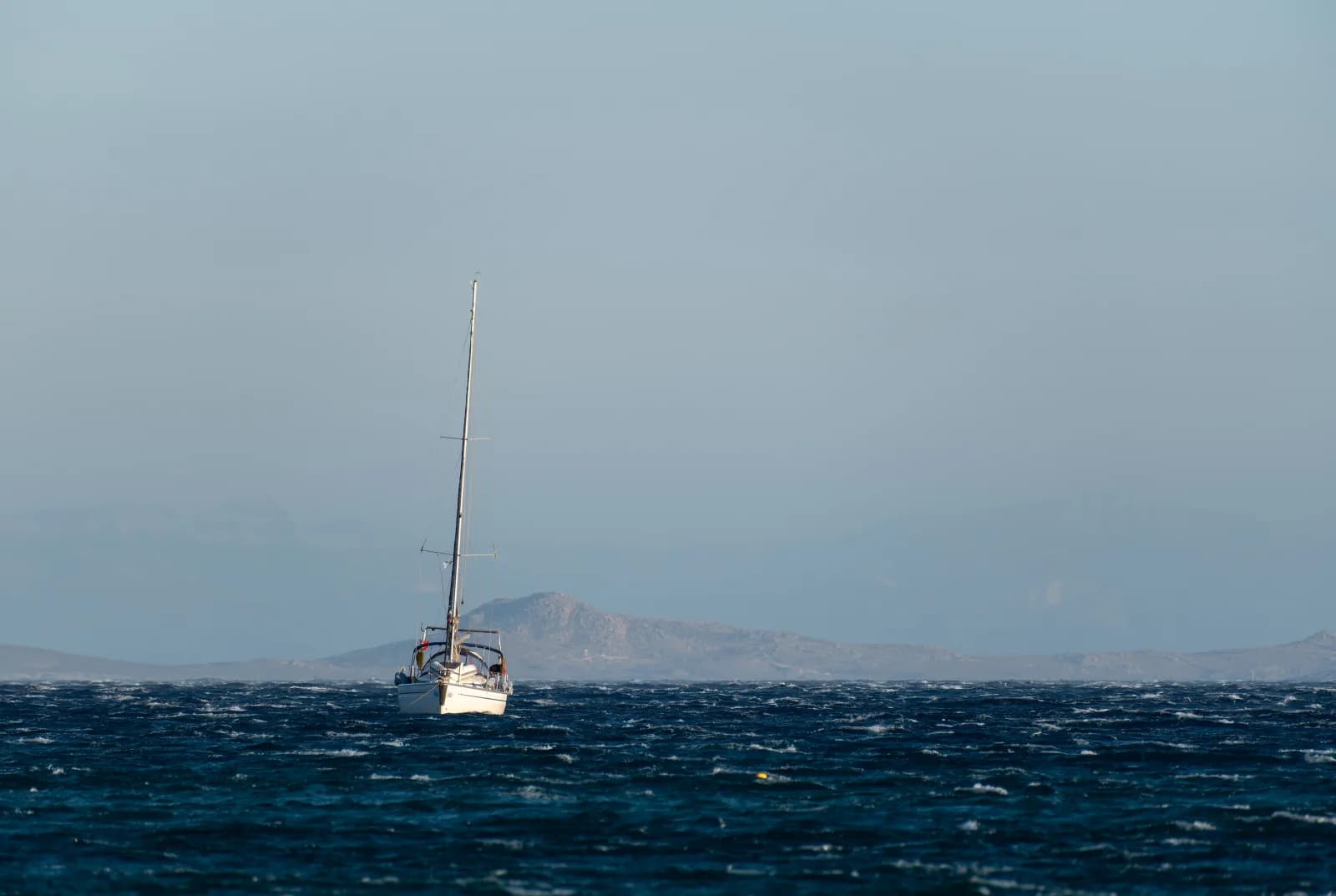
Neither bow nor stern: the best place to sit on a boat or ferry is midship, on a low deck, facing forward. A vessel pitches around a point near its middle, so the ends travel the farthest with every wave, and the bow slams hardest because it meets each wave first. The stern rides a little softer but adds engine vibration and exhaust smell, which help nobody's stomach. Sit as close to the center of the vessel as you can, stay low, and keep your eyes on the horizon.
Every ferry crossing has the same quiet competition. The passengers who have been seasick before walk straight past the window seats at the front, past the lounge at the back, and settle into the unglamorous middle rows. They know something the rest of the boat is about to learn.
The bow-or-stern question comes up before almost every crossing, and the honest answer is that both are the wrong choice. Here is where the motion actually lives on a boat, deck by deck, and what to do when the good spots are already taken.
Seasick on the water? Drug-free relief in about 90 seconds, on any headphones, wherever you end up sitting.Starts in your browser · works with any headphones
Stop seasickness on the water. Get your personalized Dizzout plan. Paid subscription for full access.

On your phone? Scan to start there.
The short answer: midship, low deck, facing forward
Health guidance is consistent here: the NHS says to sit in the middle of the boat, and Mayo Clinic's advice for ships is a cabin near the middle, close to the water level. Ferry operators' own seasickness pages back the essentials: stay off the bow, keep low, face forward. The middle of the boat is the pivot everything else swings around, so it is the part that moves least.
Three rules cover it. Sit midship, halfway between bow and stern. Sit low, on the lowest passenger deck that still has a view out. Face forward, so the motion your eyes see matches the motion your inner ear feels. It is the same logic that picks the wing seat on a plane and the front seat of a car, applied to water.
Why the bow slams and the stern wallows
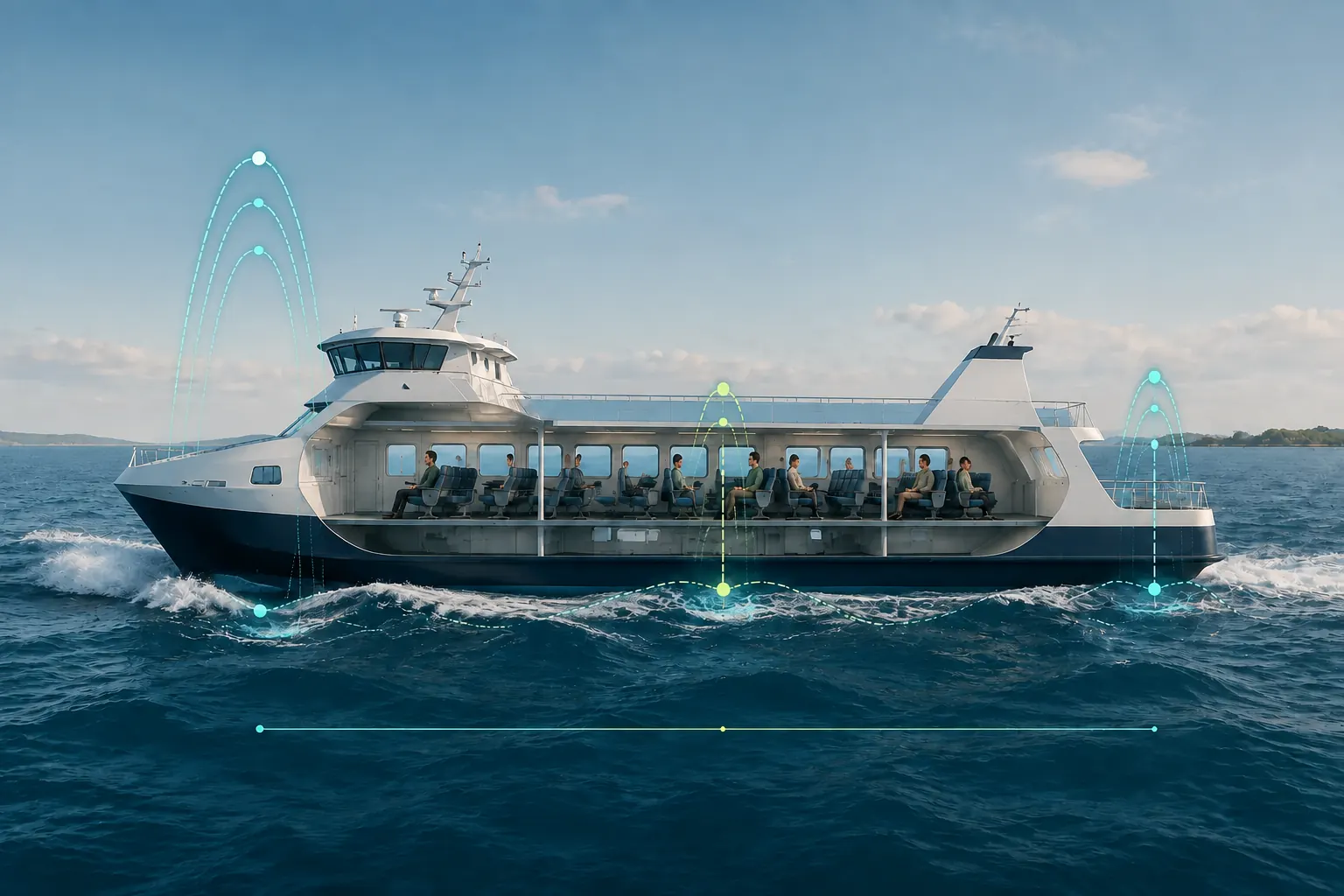
Picture the boat as a seesaw. As it pitches over waves, it rotates around a point near its middle. A seat at either end rides a long arc up and down with every wave, while a seat over the pivot barely travels. That is the whole case for midship in one image.
The bow gets the worst of it. It is the part of the hull that meets each wave first, so in a head sea it rises, hangs, and slaps down again. Add wind and spray and the front of the boat feels dramatic even in modest chop. The forward observation lounge with the big windows is one of the worst places on the ship for a queasy passenger, which is exactly why it is often empty on a rough day.
The stern pitches less than the bow on most hulls, which is why some crews prefer it. But it brings its own problems: engine vibration under your feet, the smell of exhaust drifting over the aft deck, and a slow corkscrewing wallow when the waves come from behind. Smell matters more than people expect. Diesel fumes on an already unsettled stomach can finish what the motion started. The full seasickness guide covers why your body reacts the way it does.
Upper deck or lower deck
Lower. When a ship rolls, it tilts around a line low in the hull, so the higher you sit, the farther the same tilt swings you. Think of a metronome: the tip travels a wide arc while the base barely moves. The panoramic top deck is the tip.
This is why the standard advice for cruise cabins is midship, near the waterline. On a day ferry you rarely get to choose your deck precisely, so aim for the lowest passenger deck that still lets you see the horizon. A low seat with a view beats both a high seat with a view and a low seat without one. If you are booking an overnight ferry or a cruise, the ship and cruise guide goes deeper on cabin position.
Inside cabin or open air
Open air wins when the weather allows it. Outside you get cool moving air and an unbroken view of the horizon, the one stationary reference your brain can anchor to. Standard prevention advice for boats starts with exactly that: fix your eyes on the horizon.
Inside is workable if you pick the spot well. Take a forward-facing seat by a window, midship. Avoid windowless lounges, the cafeteria with its food smells, and any seat that faces backwards or sideways. And put the phone away: reading in a moving cabin tells your eyes the world is still while your inner ear reports waves, which is the classic mismatch that starts the nausea.
Ferries vs small boats vs catamarans
- Large ferries. The midship rule matters most here because the vessel is long enough for the ends to move very differently from the middle. Many big ferries also have stabilizers, so a calm crossing can feel almost like a building. Save your effort for open-water crossings, where the difference between the bow lounge and a midship bench is real.
- Small boats. On a fishing boat, water taxi or RIB, everything moves, but the spread is the same: the bow seats pound the hardest, especially at speed into chop. Sit low, near the middle or slightly aft of it, and keep clear of the exhaust at the transom. Different trips punish you differently, and the boat-by-boat guides rank them honestly.
- Catamarans. Two hulls resist rolling, so a catamaran feels noticeably steadier side to side than a single hull. The trade is a quicker, snappier motion in short chop that some stomachs actually find harder. The midship rule still applies, and no hull shape saves you on a genuinely rough day.
Where to stand when there are no seats left
On a crowded crossing the midship seats go first, because every experienced passenger is following the same rule you just learned. If you board late and the middle is full, standing well beats sitting badly.
Find a rail or a wall to hold, midship, on the side sheltered from the wind. Stand with your feet apart and your knees soft, and let your legs absorb the motion the way they do on a moving bus. Keep your eyes up and on the horizon, not on the deck or your phone. Avoid the temptation to retreat to the bow viewing deck for air or to the stern to sit on the floor near the engines: you would be trading a bad seat for a worse one.
What to do once the swell picks up
Do
- Move midship and low, even if it means standing
- Fix your eyes on the horizon and keep them there
- Get cool moving air, outside or under a vent
- Eat light before boarding, skip alcohol
- Have your relief ready before you need it
Don't
- Read, scroll or watch the deck
- Sit backwards or sideways to the motion
- Stay in a warm, windowless lounge
- Linger near food or exhaust smells
- Wait until nausea peaks before acting
Practical guidance, not measured effects. Which of these helps most is personal.
Position is prevention. Once the swell arrives, add the rest: horizon, fresh air, a cool spot, and nothing greasy beforehand. Some travelers get real mileage from ginger or acupressure wristbands, both low-risk things to have in a pocket. Motion sickness tablets are an option too, but most work best taken before departure rather than after symptoms start, and the common ones can make you drowsy, so check with your pharmacist or doctor before the trip, especially if you are driving after you dock.
And if it is already building mid-crossing, you are not out of options. Sound therapy through ordinary headphones is one drug-free option designed to help calm the response in about 90 seconds, and it travels with you: it works the same at the midship rail, in the cafeteria queue, or wedged into the last seat at the stern. If you are queasy this minute, start with the 60-second protocol.
The bottom line
Skip the bow-or-stern debate: the ends of the boat are where the motion lives, and the middle is where it dies down. Board early, claim a low midship seat facing forward, keep the horizon in view, and carry a backup for the day the sea does not care where you sit. If dizziness or a rocking feeling persists for days after you are back on land, or comes with hearing changes or severe headache, that is a doctor conversation rather than a seating one.
For when the midship seats are gone
Stop the nausea
You cannot always pick your spot on a crowded ferry. Dizzout plays precisely calibrated audio through any headphones, anywhere on deck. Drug-free, relief in about 90 seconds, and no drowsiness for the drive after docking.
Get your personalized Dizzout plan. Paid subscription for full access.
30,000+ travelers in 30+ countries · How we count

On your phone? Scan to start there.
Comparing apps first? See how the motion sickness apps compare
Not travelling yet? Remind me the day before my trip
Frequently asked questions
Is the front or back of a boat better for seasickness?
Neither: the middle of the boat is the calm zone. Between the two, the bow usually feels rougher because it meets each wave first and travels the farthest up and down, while the stern rides a little softer but adds engine vibration, exhaust smell and a wallowing motion in a following sea. If you cannot sit midship, most prone passengers do better slightly aft of center than at the bow.
Is it better to be on a high or low deck on a ferry?
Low. A ship rolls around a line low in the hull, so the same tilt swings a top-deck passenger through a much wider arc than someone near the waterline. The standard advice for ships is a cabin near the middle of the vessel, close to the water level. Pick the lowest passenger deck that still gives you a view of the horizon.
Should you stay inside or outside on a rough crossing?
Outside, if the weather and the crew allow it: cool moving air plus an unbroken horizon view is the strongest free remedy on the boat. If you stay inside, take a forward-facing window seat midship and keep away from windowless lounges and food smells. Wherever you are, do not read or scroll, because that recreates the exact eye-ear mismatch that causes the nausea.
Why does the bow of a boat feel the roughest?
A boat pitches around a point near its middle, so the ends swing through the biggest arcs, and the bow is the end that meets each wave first. In a head sea it rises, hangs and slams down, and wind and spray add to the effect. The stern moves too, but the bow gets the sharpest, most abrupt motion, which is the kind stomachs handle worst.
Does facing forward really help on a boat?
For most people, yes. Facing forward lines up what your eyes see with what your inner ear feels, and it makes it natural to rest your gaze on the horizon, the one stationary reference in view. Sitting backwards or sideways feeds your brain motion that disagrees with what you are watching, which widens the mismatch behind seasickness.
Where is the best place to sit on a ferry for seasickness?
Midship, on the lowest passenger deck that still has a view of the horizon, facing forward. The middle of the vessel swings through the smallest arc as it pitches, and a low deck rolls less than a high one. A forward-facing window seat there is the best indoor spot; outside on deck in the open air is better still if the weather and the crew allow it. Avoid the bow, windowless lounges and anywhere near food smells.
Someone you know gets motion sick?
Send them this guide. It might be the trip it saves.
Your next question, probably
What about cars, planes and trains?
The seat rule for every vehicle
Not your question? Which boat trips are roughest?Why does the sea hit harder than the road?Feeling it right now?
About this article
- CDC Yellow Book 2026: Motion Sickness
- CalMac Ferries: I get seasick, where is the best place to sit?
- Interislander: Smile through the seasickness
- NHS: Motion sickness
- Mayo Clinic: Motion sickness first aid
This article is informational and not a substitute for medical advice. Product and company names are trademarks of their respective owners; Dizzout is not affiliated with or endorsed by them.