
Is the Durango and Silverton rough?
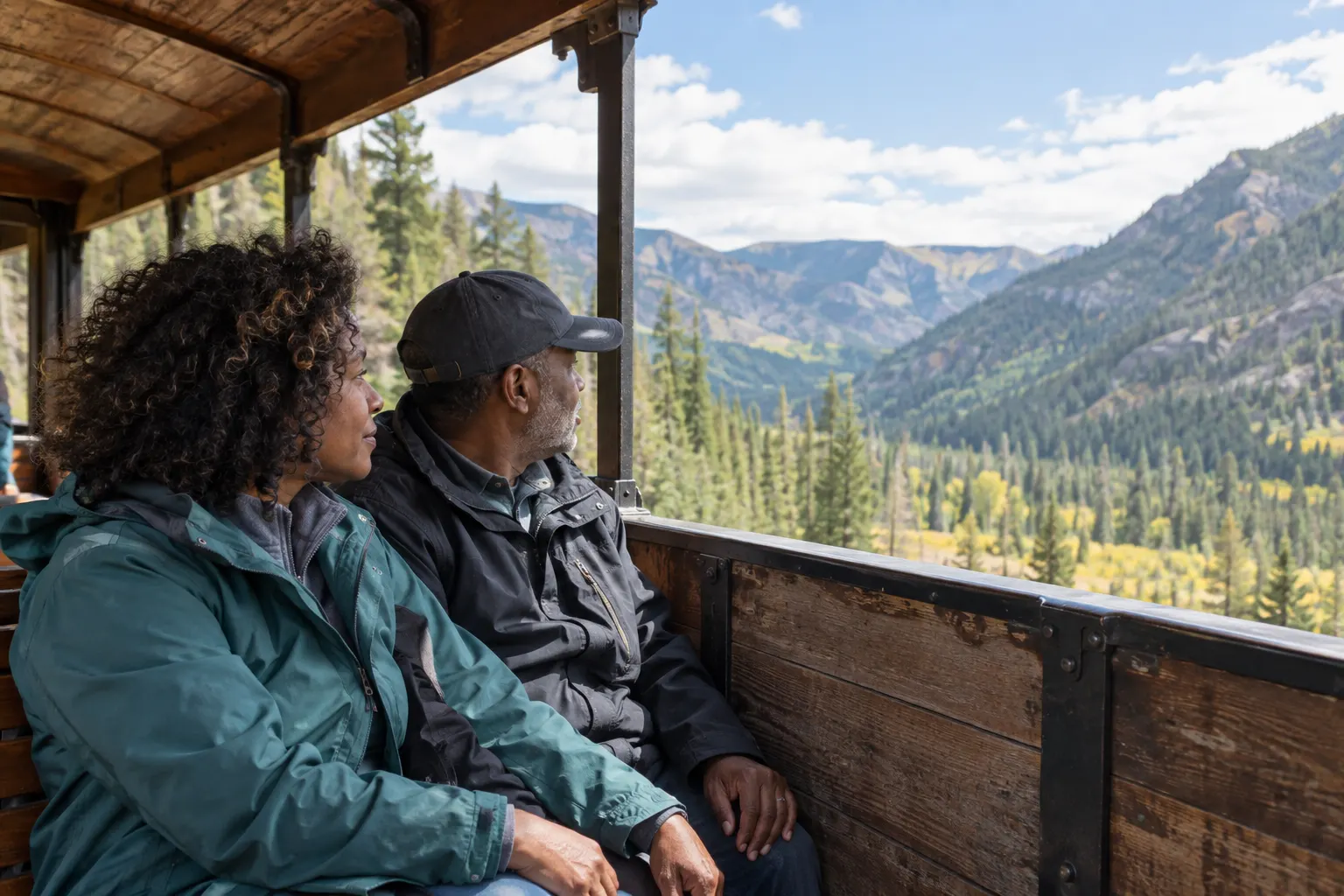
The Durango and Silverton is 3.5 hours each way of genuine 1880s narrow gauge, and the persistent side-to-side rock is the thing riders name in reviews. Narrow track and short vintage coaches sway more per mile than any mainline, and on the Highline shelf the train creeps along a rock ledge about 400 feet above the Animas River. The motion is slow but continuous, and it does not pause for the return leg.
Colorado, USA · about 3.5 hours each way · Narrow gauge sway, 400 ft shelf
Key facts
- The Highline segment runs about 400 feet above the Animas River.
Queasy on the train? Dizzout is drug-free sound therapy you can start from your seat, with relief in about 90 seconds.Starts in your browser · works with any headphones
Get your personalized Dizzout plan. Paid subscription for full access.

On your phone? Scan to start there.
Why the Durango and Silverton moves you the way it does
Narrow gauge geometry is the mechanism: a 3-foot track gauge under tall coaches means every track irregularity becomes visible roll, and the line's mountain curves keep the direction changing. Steam-era couplers and vintage trucks add a fore-and-aft surge modern stock has damped away. The Highline is a psychological amplifier more than a physical one: the swaying feels different when the drop beside you is 400 feet. The open gondola cars trade weather protection for the best airflow and sight lines on the train.
The journey
- Operator
- Durango and Silverton Narrow Gauge Railroad
- Duration
- about 3.5 hours each way
- Windows
- Open gondola cars and enclosed coaches
- Season
- Summer steam season, with winter event trains
Set the cap aside before setup
Prepare ordinary headphones for Dizzout while seated. Put loose clothing aside and keep the passenger space clear.
Free to download. Paid subscription for full access.
30,000+ travelers in 30+ countries · How we count

On your phone? Scan to start there.
Comparing apps first? See how the motion sickness apps compare
Know someone who gets motion sick?
Send them the app that helps stop it, drug-free, in about 90 seconds, works with any headphones. Free to download.
What helps on board
- Ride an open gondola car if weather allows: unlimited fresh air and a full horizon are the two best tools on this train.
- Look across the valley rather than down at the river on the Highline shelf.
- Use the Silverton layover properly: food, water and an hour of solid ground before the return leg.
- Have relief ready before departure. If nausea starts mid-journey, sound therapy through any headphones is one drug-free option, with relief in about 90 seconds.
Where to sit is its own question, answered properly in where to sit on a train for motion sickness. And for why trains set people off at all, from sway to reading to tilting stock, see the train motion sickness guide.
Frequently asked questions
Why does the Durango train sway so much?
It is real 1880s narrow gauge: 3-foot track under tall coaches, mountain curves, and vintage suspension. Every irregularity becomes a visible roll, and reviews consistently mention the continuous rocking as the ride's defining sensation.
Is the Highline scary or rough?
It is slow and steady; the drama is visual. The train walks along a blasted rock shelf about 400 feet above the Animas River, and the sway feels bigger with that drop in view. Looking across the valley rather than down keeps most stomachs settled.
Open gondola or enclosed coach for a queasy rider?
Open, in decent weather. Continuous fresh air and a wraparound horizon outweigh the extra breeze, and cinder smuts from the locomotive are part of the deal either way. Enclosed coaches suit cold days and anyone who wants to move around less.
Other trains and lines
Sources & further reading
Your next question, probably
Feeling it right now, on board?
The 60-second protocol
Not your question? Why do trains set some people off?What actually has evidence?How prone are you, really?
Details on this page reflect published operator, heritage and engineering information as of September 2026; services, fleets and tilt settings change, so check with the operator before you travel. Train, route and operator names are trademarks of their respective owners; Dizzout is not affiliated with or endorsed by them. Motion sickness sensitivity varies from person to person; this page is informational and not medical advice.