Is the Grand Canyon Railway rough?
The Grand Canyon Railway is a genuinely low-risk ride: 65 miles of prairie and pine forest at modest speed, taking 2 hours 15 minutes each way from Williams to the South Rim. There are no mountain grades and no winding canyon shelf; the canyon itself only appears once you step off. For families with motion-sensitive kids, it is the calm alternative to the winding drives into the park.
Williams to Grand Canyon South Rim, Arizona, USA · 2 hours 15 minutes each way · 65 easy miles of prairie and pine
Key facts
- The Grand Canyon Railway runs 65 miles from Williams to the South Rim, taking 2 hours 15 minutes each way.
Queasy on the train? Dizzout is drug-free sound therapy you can start from your seat, with relief in about 90 seconds.Starts in your browser · works with any headphones
Get your personalized Dizzout plan. Paid subscription for full access.

On your phone? Scan to start there.
Why the Grand Canyon Railway moves you the way it does
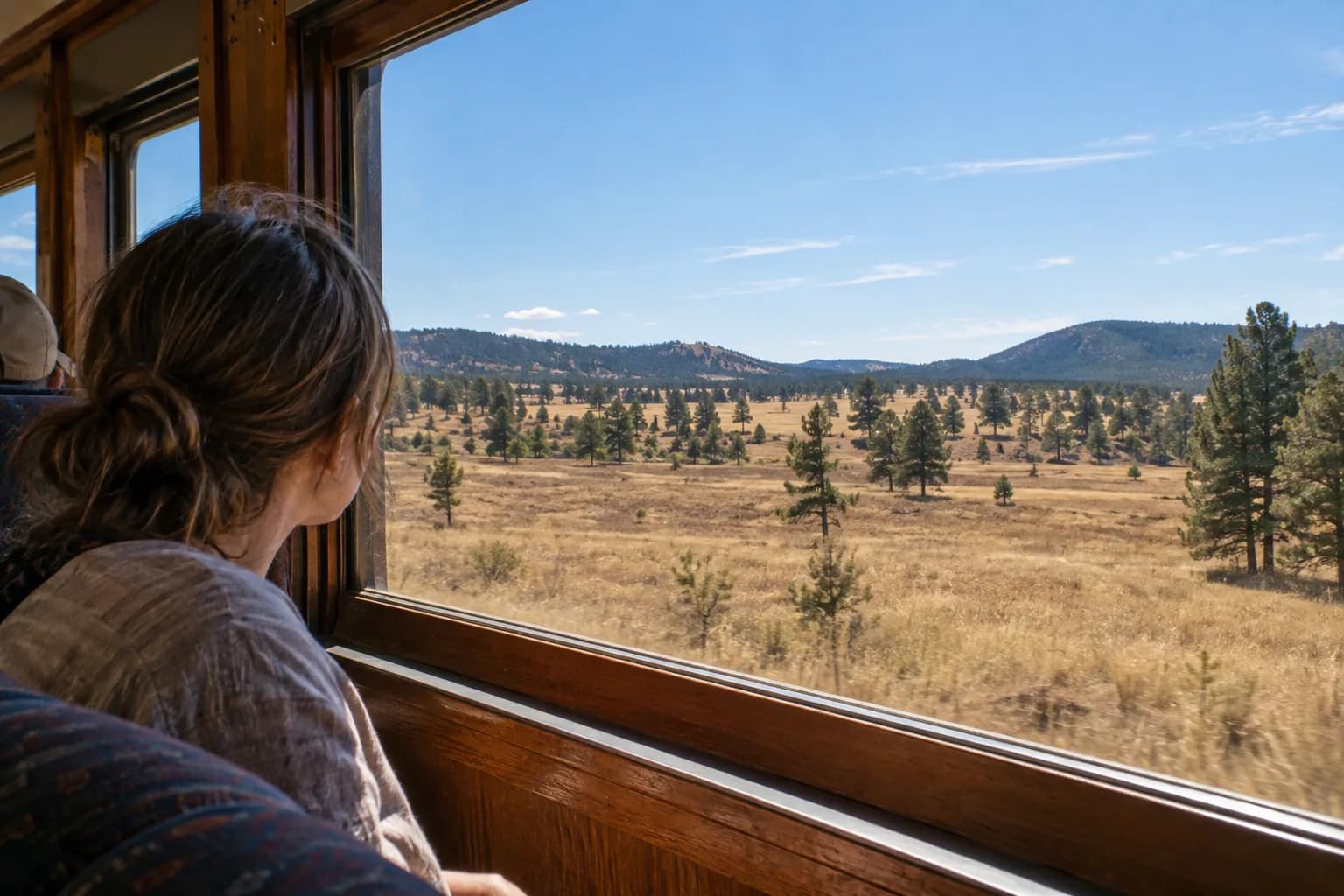
The line crosses the Coconino plateau, which is exactly what it sounds like: broadly level country where the track runs long and straight with sweeping, gentle bends. Vintage and dome cars add character without adding much sway at these speeds. The comparison that matters is the road: the drives to and around the South Rim involve more curves than the railway does, so swapping car for train usually reduces the day's total motion dose for a sensitive traveller.
The journey
- Operator
- Grand Canyon Railway
- Duration
- 2 hours 15 minutes each way
- Windows
- Dome cars on some service classes
- Season
- Runs year round
Riding the Grand Canyon Railway? Set it up first
Stop Motion Sickness Now
A winding line is a bad place to go looking for an app. Put it on your phone before you board: Dizzout is a drug-free app that plays precisely calibrated audio through any headphones you already own, wired or Bluetooth, with relief in about 90 seconds. Free to download.
Get your personalized Dizzout plan. Paid subscription for full access.
30,000+ travelers in 30+ countries · How we count

On your phone? Scan to start there.
Comparing apps first? See how the motion sickness apps compare
Know someone who gets motion sick?
Send them the app that helps stop it, drug-free, in about 90 seconds, works with any headphones. Free to download.
What helps on board
- This is one of the easiest rides on this list: long straight prairie running with gentle bends, so ride it normally.
- Dome cars put more sky in your peripheral vision, which helps the rare rider who feels the sway.
- The basics, cool air and a light breakfast, cover a two-hour plateau crossing.
- Board with relief ready. If nausea starts mid-journey, sound therapy through any headphones is a drug-free option with relief in about 90 seconds.
Where to sit is its own question, answered properly in where to sit on a train for motion sickness. And for why trains set people off at all, from sway to reading to tilting stock, see the train motion sickness guide.
Frequently asked questions
Is the Grand Canyon Railway rough?
No. It crosses level plateau country on long straight stretches with gentle bends, at modest speed. It is among the calmest famous train rides anywhere, which is part of why it suits families.
Is the train or the drive easier for a car-sick child?
Usually the train. The park roads wind more than the railway does, and on the train a queasy child can move, look far, and get air. The railway also lands you at the rim without a parking search.
Do the dome cars change the motion?
They ride the same rails, so the motion is identical; the upper level adds a wider horizon, which most sensitive riders find helpful rather than harmful at these speeds.
Other trains and lines
Sources & further reading
Your next question, probably
Feeling it right now, on board?
The 60-second protocol
Not your question? Why do trains set some people off?What actually has evidence?How prone are you, really?
Details on this page reflect published operator, heritage and engineering information as of September 2026; services, fleets and tilt settings change, so check with the operator before you travel. Train, route and operator names are trademarks of their respective owners; Dizzout is not affiliated with or endorsed by them. Motion sickness sensitivity varies from person to person; this page is informational and not medical advice.