
Is the Cusco to Machu Picchu (PeruRail and Inca Rail) rough?
The train to Machu Picchu is gentler than its reputation. Only departures from Cusco's San Pedro station use El Zig-Zag, the five switchbacks that climb out of the city at about 4.9 percent; most services now start at Ollantaytambo and skip them entirely. From there the line descends along the Urubamba river, downhill and winding but slow. The roughest transport of the day is usually not the train at all: it is the hairpin bus from Aguas Calientes up to the citadel.
Sacred Valley, Peru · 3 to 4 hours depending on departure point · Switchbacks out of Cusco, then descent
Status, September 2026
Season note, September 2026: in the January to March rains, services can run bimodal, a bus to a Sacred Valley station plus a shorter train leg. Check your operator's current pattern when booking.
Key facts
- Five switchbacks known as El Zig-Zag climb out of Cusco at about 4.9 percent average grade; only Cusco San Pedro departures use them, while Poroy and Ollantaytambo departures avoid them.
- Vistadome cars have side and roof panoramic windows.
- Cusco sits far higher than Aguas Calientes, so the train ride descends, and altitude symptoms usually start in Cusco itself.
Queasy on the train? Dizzout is drug-free sound therapy you can start from your seat, with relief in about 90 seconds.Starts in your browser · works with any headphones
Get your personalized Dizzout plan. Paid subscription for full access.

On your phone? Scan to start there.
Why the Cusco to Machu Picchu (PeruRail and Inca Rail) moves you the way it does
Cusco sits far higher than Machu Picchu's valley, so the rail journey is a descent, and altitude symptoms most travellers worry about tend to start in Cusco itself rather than on the train. The switchback climb, where your service uses it, repeatedly reverses direction like a Himalayan zigzag. After that the motion is river-valley winding at modest speed, with the Vistadome's roof glazing keeping sky and canyon walls in view. Season matters: in the rainy months operators can run a bus leg to a Sacred Valley station instead, which adds winding road to the itinerary.
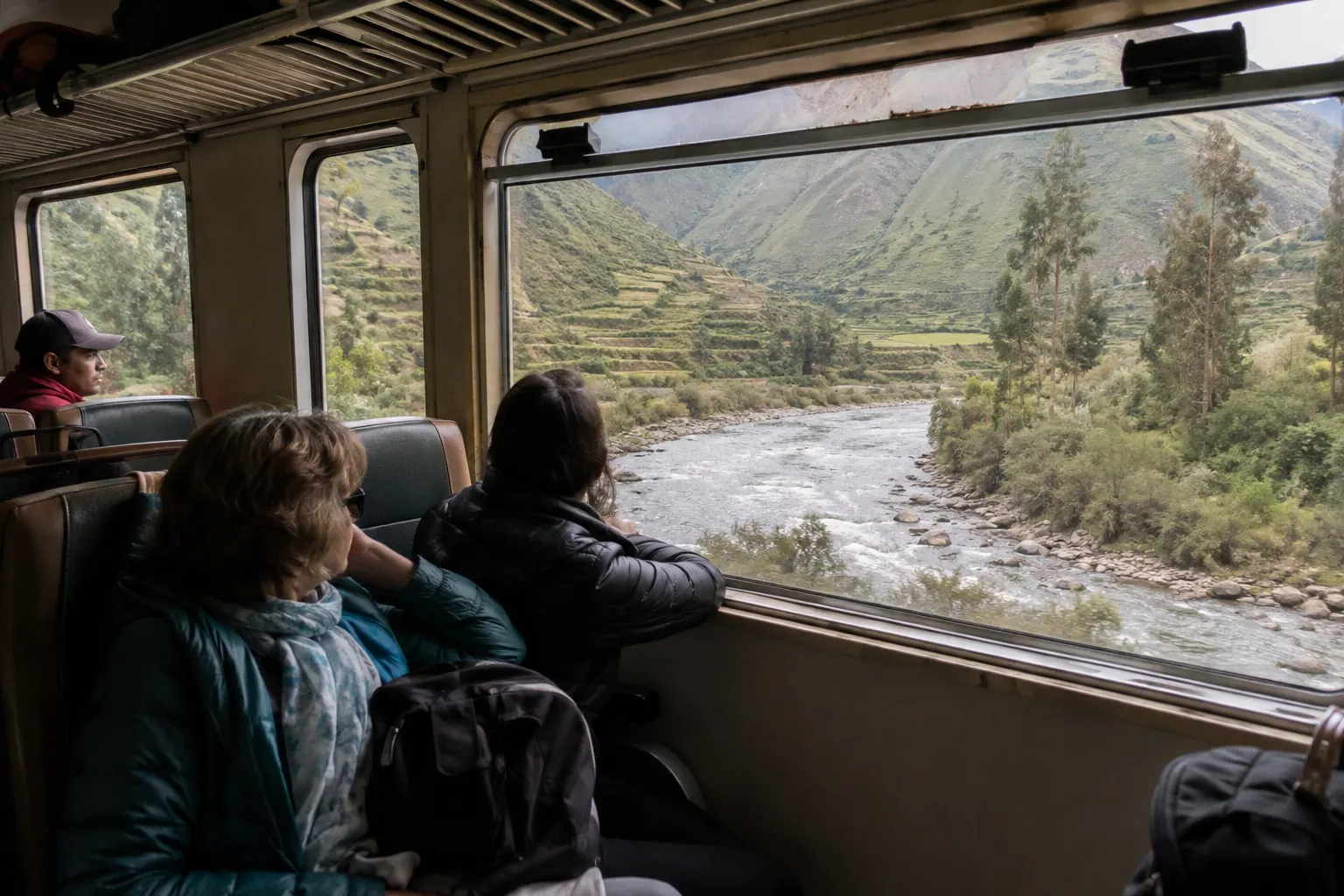
The journey
- Operator
- PeruRail (also Inca Rail)
- Duration
- 3 to 4 hours depending on departure point
- Windows
- Vistadome cars with side and roof panoramic windows; Expedition standard windows
- Season
- January to March rains can force a bus-plus-train bimodal service
Riding the Cusco to Machu Picchu (PeruRail and Inca Rail)? Set it up first
Stop Motion Sickness Now
A winding line is a bad place to go looking for an app. Put it on your phone before you board: Dizzout is a drug-free app that plays precisely calibrated audio through any headphones you already own, wired or Bluetooth, with relief in about 90 seconds. Free to download.
Get your personalized Dizzout plan. Paid subscription for full access.
30,000+ travelers in 30+ countries · How we count

On your phone? Scan to start there.
Comparing apps first? See how the motion sickness apps compare
Know someone who gets motion sick?
Send them the app that helps stop it, drug-free, in about 90 seconds, works with any headphones. Free to download.
What helps on board
- Let the Vistadome windows work: the switchbacks out of Cusco make sense to your inner ear when you watch the valley swing past.
- Arrive in Cusco a day early if you can; altitude symptoms that start before boarding tend to get blamed on the train.
- Go easy on food and pisco the night before; the descent is gentle but constant.
- Pack the drug-free rescue: a sound therapy session through any headphones, with relief in about 90 seconds.
Where to sit is its own question, answered properly in where to sit on a train for motion sickness. And for why trains set people off at all, from sway to reading to tilting stock, see the train motion sickness guide.
Frequently asked questions
Is the Machu Picchu train rough?
No. It is a slow, winding river-valley descent, and most departures skip the Cusco switchbacks by starting at Ollantaytambo. Travellers who feel unwell on the day more often report the altitude in Cusco or the hairpin bus up to the citadel than the train itself.
What is El Zig-Zag?
Five switchbacks that lift the line out of Cusco's bowl at about 4.9 percent, with the train reversing direction at each one, and they top out near 3,700 m before the descent begins. Only services from Cusco San Pedro use them; Poroy and Ollantaytambo departures start beyond the climb.
Is altitude or motion the bigger problem on this trip?
Altitude, usually, and it is a Cusco problem more than a train problem: the city stands far higher than Machu Picchu, and the train takes you down. If you are acclimatising, the common advice pattern is to sleep lower in the Sacred Valley and treat Cusco gently.
Other trains and lines
Sources & further reading
Your next question, probably
Feeling it right now, on board?
The 60-second protocol
Not your question? Why do trains set some people off?What actually has evidence?How prone are you, really?
Details on this page reflect published operator, heritage and engineering information as of September 2026; services, fleets and tilt settings change, so check with the operator before you travel. Train, route and operator names are trademarks of their respective owners; Dizzout is not affiliated with or endorsed by them. Motion sickness sensitivity varies from person to person; this page is informational and not medical advice.