
Is the Trans-Siberian Railway rough?
The Trans-Siberian is the endurance case: 9,289 km and about seven days of continuous travel from Moscow to Vladivostok, the longest railway in the world. No single kilometre of it is rough. The question is what days of uninterrupted slow sway, jointed-track rhythm and seven time zones of body-clock drift do to a susceptible traveller, and the answer is that fatigue and motion accumulate together.
Moscow to Vladivostok, Russia · about 7 days end to end · 9,289 km, about seven days
Status, September 2026
Planning note, September 2026: practical access for many western travellers is limited. This page describes the journey itself rather than current booking routes.
Key facts
- The Trans-Siberian runs 9,289 km from Moscow to Vladivostok, the longest railway line in the world, taking about seven days and crossing seven time zones.
Queasy on the train? Dizzout is drug-free sound therapy you can start from your seat, with relief in about 90 seconds.Starts in your browser · works with any headphones
Get your personalized Dizzout plan. Paid subscription for full access.

On your phone? Scan to start there.
Why the Trans-Siberian Railway moves you the way it does
Motion sickness research consistently ties symptoms to exposure duration, and nothing on rails exposes you longer. The sway of a heavy sleeper at steady speed is gentle, but it never stops: you eat, read and sleep inside it for a week. Crossing seven time zones eastbound also desynchronises sleep, and tiredness lowers the nausea threshold. Most riders adapt within a day or two, the same sea-legs adaptation sailors describe, and many report the rhythm becomes soothing. The travellers who struggle are usually struggling by day one, not day five.
The journey
- Operator
- Russian Railways (RZD)
- Duration
- about 7 days end to end
- Windows
- Standard sleeper stock
- Season
- Runs year round
Riding the Trans-Siberian Railway? Set it up first
Stop Motion Sickness Now
A winding line is a bad place to go looking for an app. Put it on your phone before you board: Dizzout is a drug-free app that plays precisely calibrated audio through any headphones you already own, wired or Bluetooth, with relief in about 90 seconds. Free to download.
Get your personalized Dizzout plan. Paid subscription for full access.
30,000+ travelers in 30+ countries · How we count

On your phone? Scan to start there.
Comparing apps first? See how the motion sickness apps compare
Know someone who gets motion sick?
Send them the app that helps stop it, drug-free, in about 90 seconds, works with any headphones. Free to download.
What helps on board
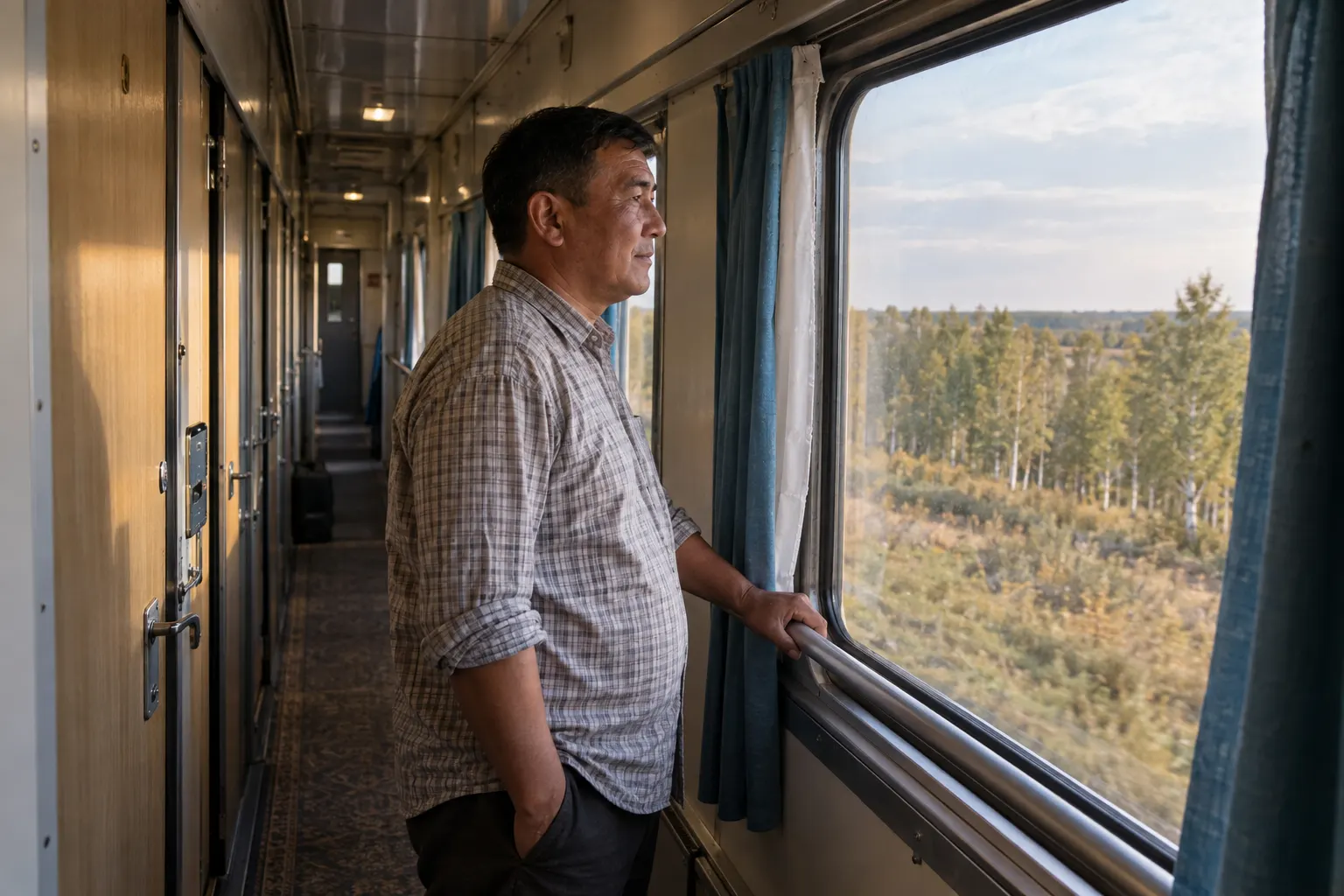
- Spend time in the corridor with the horizon when queasy; the berth has no view and the restaurant car does.
- Use the long station stops: platform air and solid ground reset an accumulating wooziness.
- Shift your sleep schedule gradually with the time zones instead of fighting them; tiredness lowers the nausea threshold.
- Have relief ready before departure. If nausea starts mid-journey, sound therapy through any headphones is one drug-free option, with relief in about 90 seconds.
Where to sit is its own question, answered properly in where to sit on a train for motion sickness. And for why trains set people off at all, from sway to reading to tilting stock, see the train motion sickness guide.
Frequently asked questions
Do people get motion sick on the Trans-Siberian?
Some do in the first day or two, from the constant gentle sway rather than any rough stretch. Most adapt quickly, the way sailors find their sea legs, and many travellers end up finding the rhythm sleep-inducing. Sensitivity plus a week of exposure is the combination to plan for.
Does the week of travel make it worse than a normal overnight train?
The motion is no stronger, but there is no getting off it, and the time-zone drift erodes sleep, which lowers tolerance. Travellers prone to motion sickness usually find day one hardest and settle as the body recalibrates.
Is the track rough?
It is a heavily used mainline in continuous maintenance, ridden by heavy stock at moderate speed. Expect the jointed-track rhythm and slow rolling sway of classic long-distance rail rather than jolts.
Other trains and lines
Sources & further reading
Your next question, probably
Feeling it right now, on board?
The 60-second protocol
Not your question? Why do trains set some people off?What actually has evidence?How prone are you, really?
Details on this page reflect published operator, heritage and engineering information as of September 2026; services, fleets and tilt settings change, so check with the operator before you travel. Train, route and operator names are trademarks of their respective owners; Dizzout is not affiliated with or endorsed by them. Motion sickness sensitivity varies from person to person; this page is informational and not medical advice.