
Does the E353 series (Azusa) make you motion sick?
The E353 is the middle path of Japanese tilt: more than a Shinkansen's imperceptible lean, far less than a full Pendolino. Its air springs tilt the body up to 1.5 degrees through the Chuo Main Line's mountain curves toward Matsumoto. For most riders that is below the threshold of noticing; for the motion-sensitive, the Chuo line's continuous winding matters more than the modest tilt on top of it.
Chuo Main Line, Japan · Air-spring tilt, up to 1.5 degrees
Key facts
- The E353 uses an air-spring tilting system allowing up to 1.5 degrees on Chuo Main Line curves, in service since December 2017.
Queasy on the train? Dizzout is drug-free sound therapy you can start from your seat, with relief in about 90 seconds.Starts in your browser · works with any headphones
Get your personalized Dizzout plan. Paid subscription for full access.

On your phone? Scan to start there.
Why the E353 series (Azusa) feels the way it does
Tilt: Active air-spring, small
Pneumatic air-spring tilt of up to 1.5 degrees, designed for the curving Chuo Main Line between Shinjuku and Matsumoto.
The Chuo Main Line threads river valleys west of Tokyo, so the Azusa's two and a half hours involve genuine, repeated curvature. JR East chose a small air-spring tilt rather than a full pendular system: 1.5 degrees takes the edge off the lateral force without the big roll that troubles susceptible riders on hard-tilting trains. The result sits closer to a conventional express than to a Pendolino in feel. If the line still gets to you, it is the geography doing it: the curves come steadily from Otsuki onward.
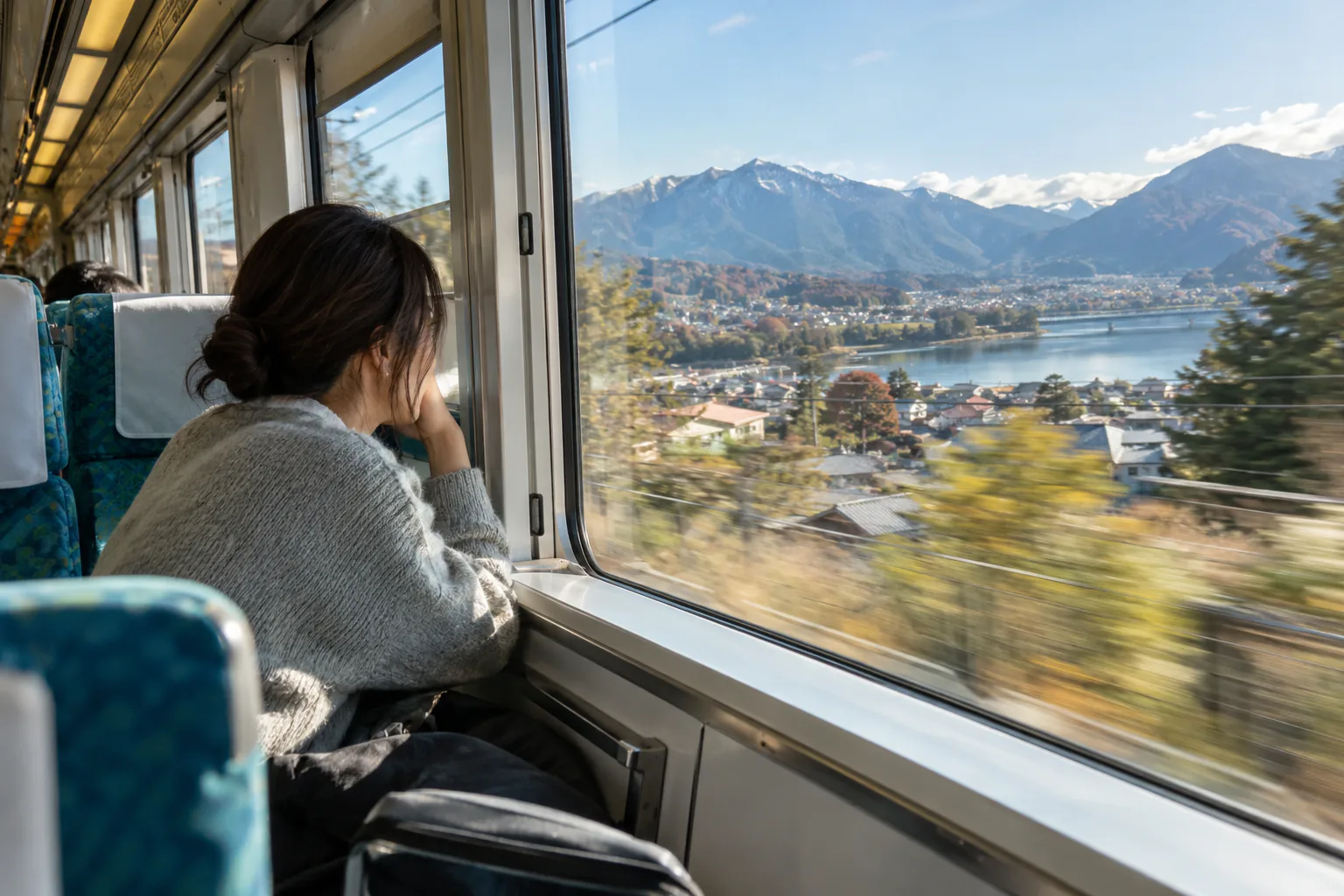
Where it runs
- JR EastAzusa and Kaiji limited expresses, Shinjuku to Matsumoto, since December 2017
Riding the E353 series (Azusa)? Set it up first
Stop Motion Sickness Now
A winding line is a bad place to go looking for an app. Put it on your phone before you board: Dizzout is a drug-free app that plays precisely calibrated audio through any headphones you already own, wired or Bluetooth, with relief in about 90 seconds. Free to download.
Get your personalized Dizzout plan. Paid subscription for full access.
30,000+ travelers in 30+ countries · How we count

On your phone? Scan to start there.
Comparing apps first? See how the motion sickness apps compare
Know someone who gets motion sick?
Send them the app that helps stop it, drug-free, in about 90 seconds, works with any headphones. Free to download.
What helps on board
- The Chuo line's river valleys wind for real: give your eyes the gorge scenery through the middle hour rather than a phone.
- The tilt is small and smooth, so what accumulates is ordinary repeated curvature; regular horizon checks drain it before it builds.
- Keep cool and lightly fed; two and a half winding hours reward the boring preparations.
- If a wave builds mid-ride, you do not have to white-knuckle it: sound therapy through any headphones is a drug-free option with relief in about 90 seconds.
Where to sit is its own question, answered properly in where to sit on a train for motion sickness. And for why trains set people off at all, from sway to reading to tilting stock, see the train motion sickness guide.
Frequently asked questions
Does the Azusa tilt?
Slightly. The E353's air springs tilt the body up to 1.5 degrees, a fraction of a full tilting train's lean. It is enough to soften the Chuo line's curves at speed and small enough that most riders never register it.
Why do I feel the Azusa more than a Shinkansen?
The route, not the train. The Chuo Main Line winds through mountain valleys with steady curvature for well over an hour, while Shinkansen lines are built nearly straight. The motion dose difference between the two journeys is large whatever the trains do.
Where on the route do the curves start?
The line leaves Tokyo's sprawl and begins winding in earnest around Otsuki, staying curvy through the Katsunuma wine country and the passes toward Kofu and Matsumoto.
Other trains and lines
Sources & further reading
Your next question, probably
Feeling it right now, on board?
The 60-second protocol
Not your question? Why do trains set some people off?What actually has evidence?How prone are you, really?
Details on this page reflect published operator, heritage and engineering information as of September 2026; services, fleets and tilt settings change, so check with the operator before you travel. Train, route and operator names are trademarks of their respective owners; Dizzout is not affiliated with or endorsed by them. Motion sickness sensitivity varies from person to person; this page is informational and not medical advice.