
Does the 883 series Sonic make you motion sick?
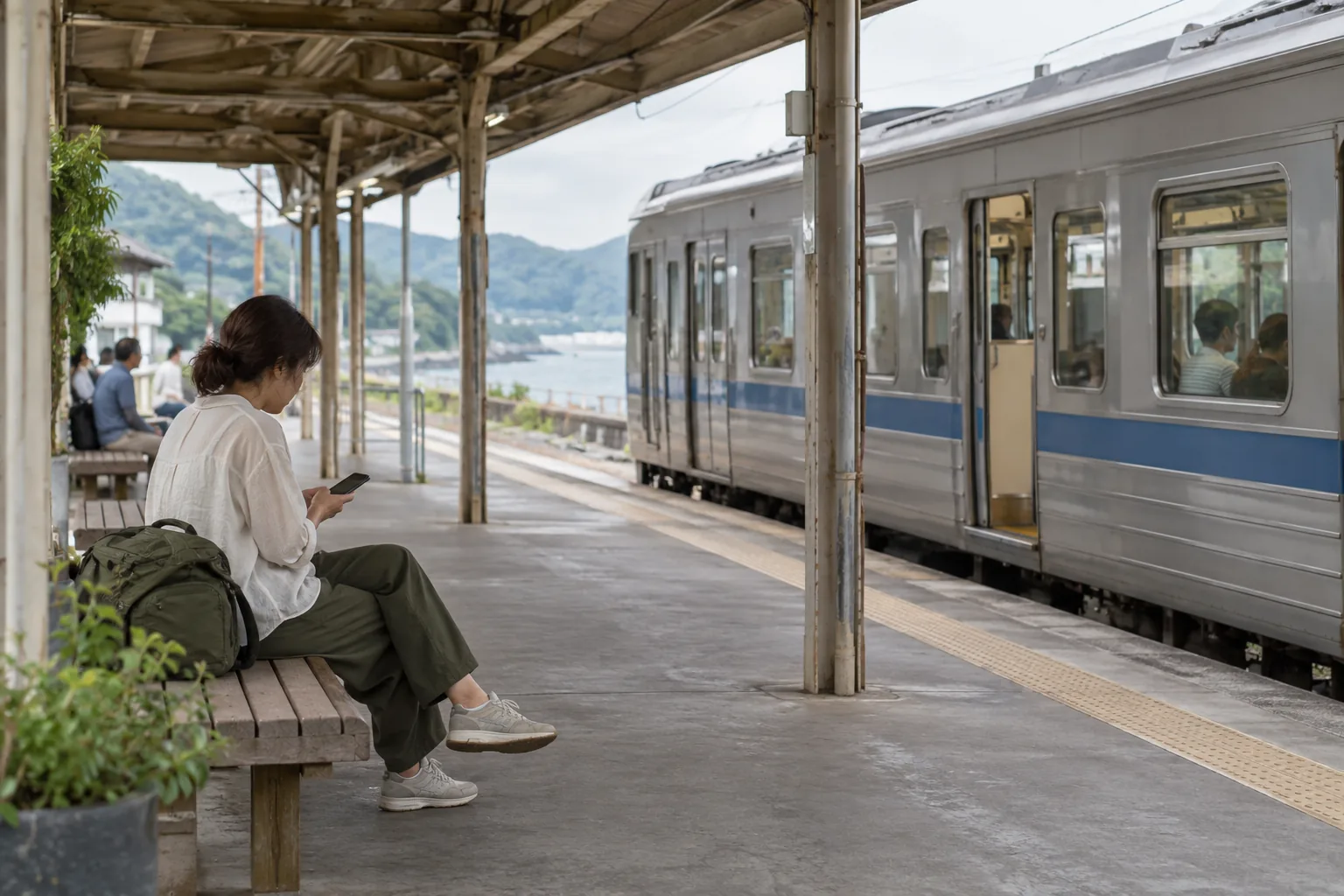
Japan's tilt-nausea story does not live on the Shinkansen. It lives on limited expresses like the blue 883 series Sonic, which tilts through the curves of the coastal Nippo line at pace, hour after hour. The Sonic is fast precisely because it leans, and that lean is the classic active-tilt sensation: the sideways push disappears while the carriage rolls around you.
Kyushu, Japan · Tilting express on a coastal line
Key facts
- The 883 series is a tilting EMU that has run Sonic limited express services since 20 April 1995.
- JR Kyushu documents the Sonic 883 as a tilting train that holds speed through curves.
Queasy on the train? Dizzout is drug-free sound therapy you can start from your seat, with relief in about 90 seconds.Starts in your browser · works with any headphones
Get your personalized Dizzout plan. Paid subscription for full access.

On your phone? Scan to start there.
Why the 883 series Sonic feels the way it does
Tilt: Active, controlled pendulum family
A tilting AC EMU that JR Kyushu runs hard along the curving coastal Nippo Main Line between Hakata, Oita and Beppu.
The Shinkansen network was built straight, but Kyushu's legacy lines follow the coast and the hills, so JR Kyushu speeds them up with tilting stock instead of new alignments. The 883 has run Sonic services since 1995, tilting through curve sequences that a conventional express would take noticeably slower. The mechanism is the one the tilting-train literature describes: your inner ear feels roll and residual lateral force while the cabin interior stays visually level, and on a line this curvy the doses accumulate. Riders sensitive to tilt tend to notice the winding coastal stretches between Kokura and Beppu most.
Where it runs
- JR KyushuSonic limited express, Hakata to Oita and Beppu
What the research says about tilting trains
Tilting-train motion sickness has a real, peer-reviewed literature: studies report more sickness on tilting than on comparable non-tilting trains, and point at carriage roll, the level of tilt compensation and the timing of each tilt against the curve as the variables that matter.
Keep loose belongings contained
Stow your bag and keep ordinary headphones for Dizzout together in their case. Leave the passenger aisle clear.
Free to download. Paid subscription for full access.
30,000+ travelers in 30+ countries · How we count

On your phone? Scan to start there.
Comparing apps first? See how the motion sickness apps compare

Know someone who gets motion sick?
Send them the app that helps stop it, drug-free, in about 90 seconds, works with any headphones. Free to download.
What helps on board
- Watch the coastal stretches instead of your phone; the sea horizon is the one reference that always agrees with your inner ear.
- The route alternates coast and hills, so save reading for the station stops rather than betting on a smooth stretch lasting.
- Keep cool: Kyushu humidity plus a warm carriage lowers motion tolerance, and a vent or a cooler car helps more than it sounds.
- Pack the drug-free rescue: a sound therapy session through any headphones, with relief in about 90 seconds.
Where to sit is its own question, answered properly in where to sit on a train for motion sickness. And for why trains set people off at all, from sway to reading to tilting stock, see the train motion sickness guide.
Frequently asked questions
Why do I feel the Sonic more than the Shinkansen?
The Sonic is a tilting express on a winding coastal line; the Shinkansen is a barely-tilting train on purpose-built straight track. The 883 leans into curve after curve for the better part of two hours, which is a far bigger motion dose than the Tokaido line ever gives you.
Does the 883 series tilt a lot?
It is a full tilting train in the controlled-pendulum family, and you can feel it working on the curves. JR Kyushu's own material describes the tilt as what lets Sonic services hold speed on the Nippo line. We do not quote an exact angle because we have not found a primary spec that states one.
Which stretch of the Hakata to Beppu run is the most winding?
The coastal running along the Nippo line south of Kokura, where the track follows the shoreline's shape. The urban stretch near Hakata is tamer.
Other trains and lines
Sources & further reading
Your next question, probably
Feeling it right now, on board?
The 60-second protocol
Not your question? Why do trains set some people off?What actually has evidence?How prone are you, really?
Details on this page reflect published operator, heritage and engineering information as of September 2026; services, fleets and tilt settings change, so check with the operator before you travel. Train, route and operator names are trademarks of their respective owners; Dizzout is not affiliated with or endorsed by them. Motion sickness sensitivity varies from person to person; this page is informational and not medical advice.