
Is the Glacier Express rough?
The Glacier Express is famously the slowest express in the world, and slow is mostly good news for motion sickness. Nothing about it is violent: the challenge is duration. Around 8 hours of continuous gentle curving, 291 bridges, 91 tunnels and a crossing of the 2,033 m Oberalp Pass add up to a long, steady motion dose, and it is the length of exposure rather than any single bend that catches sensitive riders.
Zermatt to St. Moritz, Switzerland · about 8 hours · 291 bridges, 91 tunnels, about 8 hours
Key facts
- The Glacier Express crosses 291 bridges and passes through 91 tunnels between Zermatt and St. Moritz, taking about 8 hours.
- The Oberalp Pass, at 2,033 m, is the highest point of the route.
Queasy on the train? Dizzout is drug-free sound therapy you can start from your seat, with relief in about 90 seconds.Starts in your browser · works with any headphones
Get your personalized Dizzout plan. Paid subscription for full access.

On your phone? Scan to start there.
Why the Glacier Express moves you the way it does
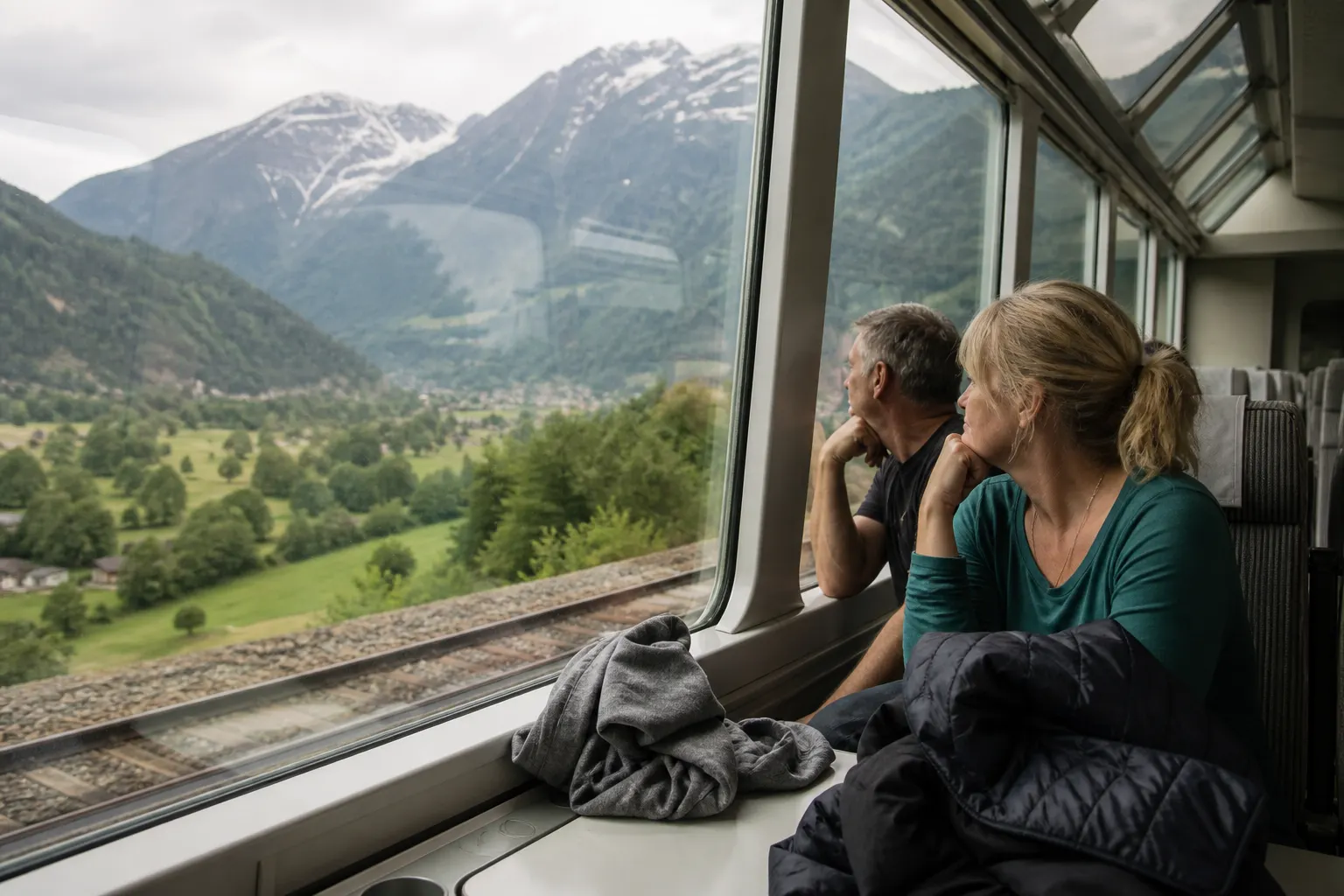
Metre-gauge mountain railway curves come constantly, and parts of the climb use rack sections with their own distinct push. Each individual input is small at these speeds; eight hours of them is what accumulates. The panoramic cars work in your favour: the huge windows keep the mountains and valley floor in view, and a visible horizon is the single most useful anti-nausea input a train can give you. Riders who struggle usually report it in the second half of the day, which is an exposure pattern, not a route pattern.
The journey
- Operator
- Glacier Express AG (MGB and RhB)
- Duration
- about 8 hours
- Windows
- Panoramic cars with large curved windows that keep the horizon in view
- Season
- Runs year round apart from an autumn maintenance gap; winter days are shorter on light
Riding the Glacier Express? Set it up first
Stop Motion Sickness Now
A winding line is a bad place to go looking for an app. Put it on your phone before you board: Dizzout is a drug-free app that plays precisely calibrated audio through any headphones you already own, wired or Bluetooth, with relief in about 90 seconds. Free to download.
Get your personalized Dizzout plan. Paid subscription for full access.
30,000+ travelers in 30+ countries · How we count

On your phone? Scan to start there.
Comparing apps first? See how the motion sickness apps compare
Know someone who gets motion sick?
Send them the app that helps stop it, drug-free, in about 90 seconds, works with any headphones. Free to download.
What helps on board
- Use the panoramic windows for their real job: the mountains and valley floor in your peripheral vision are what keep eight winding hours tolerable.
- Pace the trip. The dining service and a book are fine on the calmer valley running; keep the view in frame through the rack climbs and the pass.
- Treat it like a long-haul flight for food and drink: light, steady, and easy on the wine at lunch, because the curves never stop coming.
- Have relief ready for the late hours, when accumulated motion catches people: sound therapy through any headphones, drug-free, with relief in about 90 seconds.
Where to sit is its own question, answered properly in where to sit on a train for motion sickness. And for why trains set people off at all, from sway to reading to tilting stock, see the train motion sickness guide.
Frequently asked questions
Is the Glacier Express bad for motion sickness?
It is gentle but long. The train is slow and the curves are taken at low speed, so there is no single rough section; what gets sensitive riders is eight hours of continuous mild motion. Most people are fine, and the panoramic windows help by keeping the horizon in view.
Which part of the trip is hardest?
There is no notorious stretch. Riders who feel it usually report symptoms building in the later hours, which points at accumulated exposure rather than any particular pass or valley. Breaking the journey, which many itineraries do anyway, resets the clock.
Does the altitude matter on this route?
The line tops out at the 2,033 m Oberalp Pass, which is high enough to notice on exertion but well below the altitudes where sickness is common. If you feel off, the hours of motion are the likelier cause than the elevation.
Other trains and lines
Sources & further reading
Your next question, probably
Feeling it right now, on board?
The 60-second protocol
Not your question? Why do trains set some people off?What actually has evidence?How prone are you, really?
Details on this page reflect published operator, heritage and engineering information as of September 2026; services, fleets and tilt settings change, so check with the operator before you travel. Train, route and operator names are trademarks of their respective owners; Dizzout is not affiliated with or endorsed by them. Motion sickness sensitivity varies from person to person; this page is informational and not medical advice.