
Is the Gulf of Lion rough? What to expect on the crossing
Yes, in the mistral, and this is the specific place people mean when they ask whether the Mediterranean gets rough. The Gulf of Lion is a wide bay on the French south coast, open to the south and sitting directly downwind of the Rhône valley. When the mistral funnels down that valley, the gulf has a long-standing reputation for the roughest water in the western Mediterranean.
Crossing the Gulf of Lion this week? Dizzout is drug-free sound therapy you can start in your seat on the crossing, with relief in about 90 seconds.Starts in your browser · works with any headphones
Stop seasickness. Get your personalized Dizzout plan. Paid subscription for full access.

On your phone? Scan to start there.
Gulf · Western Mediterranean · Reputation among passengers: has a long-standing reputation for rough passages.
For the wider sea, month by month: is the Mediterranean Sea rough?
- Low
- Moderate
- High
- Very high
Roughness summarises typical reported conditions for this crossing, not a forecast for any given sailing.
Mistral funnelled down the Rhône valley
In the Nausea Index table of the 121 sea crossings we cover, the Gulf of Lion is rated rough, one of 34 in that band, with 6 rated higher. Full table: the roughest sea crossings, ranked.
Key facts
- The Gulf of Lion is a gulf, and passenger reports place it in the high roughness band.
- The mechanism behind that reputation: Mistral funnelled down the Rhône valley.
- Conditions are reported roughest in January, February, March, November and December.
- The calmest months are usually July, August and September.
- It is also known as Golfe du Lion.
Why is the Gulf of Lion so rough?
The mistral is a pressure-driven wind, set up by high pressure over the Bay of Biscay and low pressure near the Gulf of Genoa, and it accelerates as it is squeezed through the Rhône valley. Over the gulf it commonly blows sustained above 40 knots with gusts reported to 100 knots. It then works on a wide, shallow continental shelf, and the fetch is straight offshore, so waves of 4.5 to 6 metres are common in a mistral, with maxima around 9 metres.
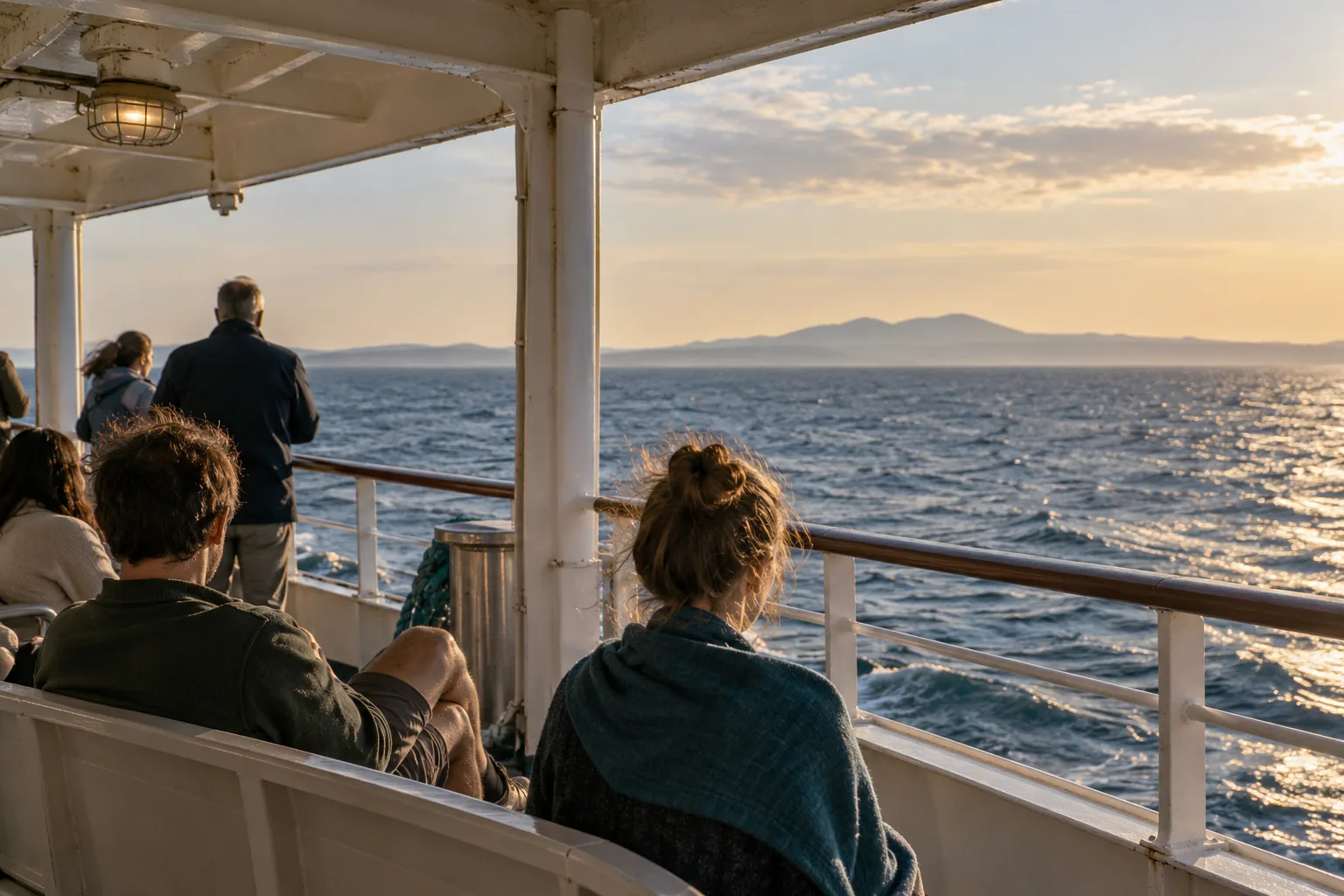
When is the Gulf of Lion roughest?
Winter and spring, with the strongest episodes in the transition between them. From October to March, waves over 5 metres are recorded in the gulf. Between April and June, waves of 1.5 to 3 metres become about three times more frequent. From July to September, 95% of wave heights are below 1.5 metres, which is why the summer gulf has a completely different reputation.
| Roughest water in Jan | Roughest water in Feb | Roughest water in Mar | Roughest water in Apr | Roughest water in May | Roughest water in Jun | Roughest water in Jul | Roughest water in Aug | Roughest water in Sep | Roughest water in Oct | Roughest water in Nov | Roughest water in Dec |
|---|---|---|---|---|---|---|---|---|---|---|---|
| Rough | Rough | Rough | Mixed | Mixed | Mixed | Calm | Calm | Calm | Mixed | Rough | Rough |
Typical seasonal pattern, not a forecast. Any month can deliver a calm crossing or a bad one. Check the marine forecast for your sailing date. Select a month to see every sea and ferry crossing ranked for it.
Where to be on board
Front to back
- Bow (front)Avoid
- MidshipBest
- Stern (aft)OK
The crossing: 8.5-14 hours
Roughest stretch: The first half, offshore of the Rhône delta
Low deck, midship. The exposed stretch is the first half, before Corsica starts to give any shelter.
Get your read
A few quick questions about you, then your trip. Nothing is saved or sent.
Step 1: about you
How you usually react to travel is the single best signal. These come from the validated MSSQ.
Step 2: your trip
Pick the kind of trip you are planning.
Crossing the Gulf of Lion? Have Dizzout ready
Stop seasickness
Dizzout is drug-free sound therapy you can start in your seat on the crossing, with relief in about 90 seconds. It plays precisely calibrated audio through any headphones you already own, wired or Bluetooth. Free to download.
Get your personalized Dizzout plan. Paid subscription for full access.
30,000+ travelers in 30+ countries · How we count

On your phone? Scan to start there.
Comparing apps first? See how the motion sickness apps compare
Not travelling yet? Remind me the day before my trip
Know someone who gets motion sick?
Send them the app that helps stop it, drug-free, in about 90 seconds, works with any headphones. Free to download.
The crossings that cross it
| Route | Typical duration | What to know |
|---|---|---|
| Marseille-Ajaccio | 12-13h 45m | Overnight sailing across the gulf, operated by Corsica Linea and La Méridionale. |
| Toulon-Bastia | 8.5-12.5 hours | Usually sailed overnight, leaving from the eastern edge of the gulf. |
What helps on this crossing
- The mistral is forecast days ahead and often blows for one to three days. Shifting a sailing by 48 hours frequently means a different sea altogether.
- Book a cabin rather than a reclining seat. These are 11 to 14 hour night crossings, and lying down is easier than sitting upright in swell.
- Sail in summer if you can. Between July and September, 95% of wave heights recorded on the gulf's coast are under 1.5 metres.
- Air matters more than a view at night. A sheltered spot on an open deck, out of the wind, beats a stuffy interior lounge.
- The mistral does not always drop overnight, so an evening departure into a running mistral will still be a working sea by morning.
For the full toolkit see the seasickness guide, or what to do once it has already started. For what the trials actually say about the oldest trick on that list, see the verdict on looking at the horizon. If the rocking follows you ashore afterwards, that is land sickness, which is normal, and it passes.
Frequently asked questions
Is the Mediterranean rough?
In most places, not especially. The Gulf of Lion is the main exception. It is the stretch of the western Mediterranean where a named wind reliably produces heavy seas, with waves of 4.5 to 6 metres common during a mistral. If a Mediterranean crossing has been described to you as rough, this is usually the water being described.
How long does the mistral last?
Most episodes run one to three days, and some continue for a week. Winds above 30 knots have been recorded lasting more than 65 hours in one stretch. Because it is driven by a large-scale pressure pattern rather than a passing front, it is well forecast and unusually persistent for a Mediterranean wind.
When is the Gulf of Lion calmest?
July to September. In those months 95% of recorded wave heights are below 1.5 metres, and the mistral is at its least frequent. Waves above 5 metres are recorded between October and March, and the strongest mistral episodes tend to fall in the transition from winter into spring.
Is the ferry from Marseille to Corsica rough?
It depends entirely on the mistral. The crossing takes roughly 12 to 14 hours, sails overnight, and passes straight through the most exposed part of the gulf in its first half. In settled summer conditions it is commonly reported as an easy overnight. In a mistral, passengers describe it very differently.
What should I take for seasickness on a Mediterranean ferry?
Ask a pharmacist or doctor what is suitable for you, rather than picking something at the port. One general point is worth knowing: most options are intended to be taken before travel rather than once symptoms have started, so decide before you board, not halfway across.
Is the Gulf of Lion rough in winter?
Usually, yes. In a typical year, December, January and February are all rated rough. This is the typical pattern, not a forecast for any sailing.
Other crossings
Sources & further reading
- https://resources.eumetrain.org/data/7/7/Content/Mistral.htm
- https://en.wikipedia.org/wiki/Mistral_(wind)
- https://www.britannica.com/science/mistral
- https://www.corsicalinea.com/eng/book/the-crossings/marseille-ajaccio
- https://www.researchgate.net/publication/250306276_Spatial_variability_of_wave_conditions_in_the_Gulf_of_Lions_NW_Mediterranean_sea
Sea conditions described here are typical patterns drawn from published marine and operator information as of July 2026, not a forecast: conditions on any given sailing depend on the weather that day, and any month can deliver a calm crossing or a bad one. Route and operator names are trademarks of their respective owners; Dizzout is not affiliated with or endorsed by them. Seasickness sensitivity varies from person to person; this page is informational and not medical advice.