
Call of Duty: Warzone Motion Sickness: Why It Happens & What Helps
Call of Duty and Warzone generate steady motion-sickness complaints, enough that gaming press has covered it with expert commentary, but they're also among the best-equipped shooters to fix it: a full FOV slider on every platform, separate motion-blur toggles, and a set of accessibility options most players never open.
The quick fix: Turn off parallax effects in Call of Duty: Warzone: Settings > Accessibility > Display > Parallax Effects.
Still queasy with parallax effects off? Dizzout runs on your phone: pause, move your headphones over and press play, with relief in about 90 seconds.Starts in your browser · works with any headphones
Calm game nausea. Get your personalized Dizzout plan. Paid subscription for full access.

On your phone? Scan to start there.
PC, PlayStation, Xbox · first-person · Has comfort settings · Player-reported motion-sickness risk: commonly reported by motion-sensitive players.
- Low
- Moderate
- High
- Very high
Risk levels summarise what passengers and riders commonly report, not measured testing.
Key facts
- Call of Duty: Warzone runs on PC, PlayStation, Xbox.
- The camera is first-person.
- Player reports place it in the moderate band for motion sickness.
- The game ships a full set of comfort settings.
- 5 specific settings are listed on this page, starting with FOV.
Why Call of Duty: Warzone can trigger motion sickness
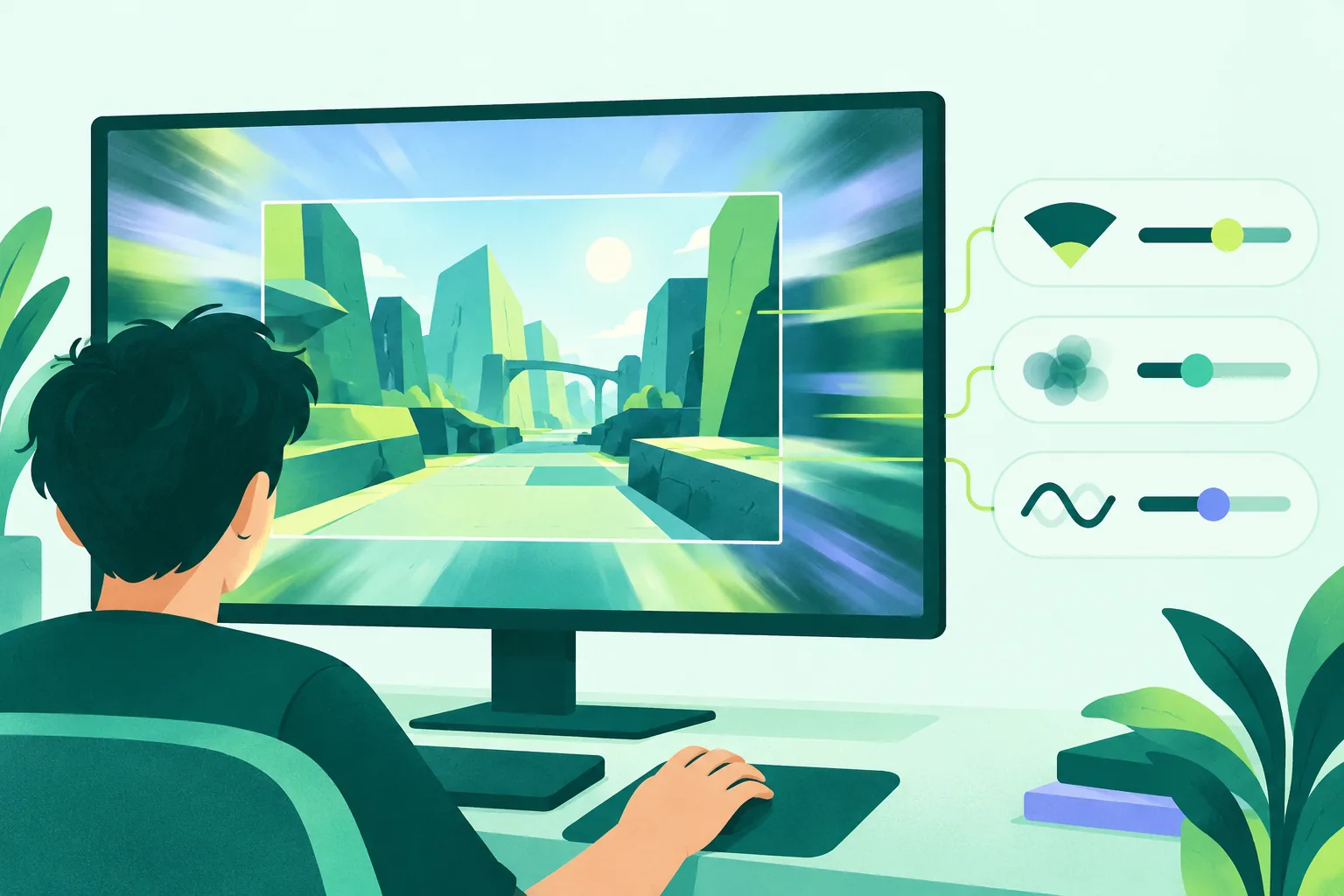
The commonly reported triggers are the default field of view of 80 (slider range 60-120), weapon and world motion blur smearing the image during turns, camera bob while sprinting, and parallax weapon sway. Since Warzone 2.0, consoles got the same 60-120 FOV slider PC players had, which removes the biggest trigger for most motion-sensitive players.
- Default FOV of 80 before adjustment
- World + weapon motion blur during fast turns
- Sprint camera movement and weapon bob
- Parallax/depth effects on scopes and HUD
For adult players: turn away for a break
For adult players: pause before starting another session. If you want to try Dizzout, get your phone and ordinary headphones ready away from the monitor.
Free to download. Paid subscription for full access.
30,000+ travelers in 30+ countries · How we count

On your phone? Scan to start there.
Comparing apps first? See how the motion sickness apps compare
Comfort settings in Call of Duty: Warzone
Call of Duty: Warzone ships a full set of comfort settings.
| Setting | Where | Recommendation |
|---|---|---|
| FOV | Settings > Graphics > View | Raise toward 100-120 (available on PC and console since Warzone 2.0) |
| World Motion Blur / Weapon Motion Blur | Settings > Graphics > Post Processing Effects | Both off |
| 1st Person Camera Movement | Settings > Graphics > View | Reduce (e.g. Least) to calm sprint bob |
| Parallax Effects | Settings > Accessibility > Display | Off |
| Center Dot | Settings > Accessibility | On: a fixed focal point helps some players |
Where is the 1st person camera movement setting in Call of Duty: Warzone?
In Call of Duty: Warzone, the 1st Person Camera Movement setting is in Settings > Graphics > View. Reduce it to calm sprint bob.
How do I turn off parallax effects in Call of Duty: Warzone?
In Call of Duty: Warzone, open Settings > Accessibility > Display and set Parallax Effects to Off.
Where is the center dot setting in Call of Duty: Warzone?
In Call of Duty: Warzone, open Settings > Accessibility and set Center Dot to On. A fixed focal point helps some players.
One guide explains these settings for every game: how field of view, motion blur, head bob and camera shake trigger motion sickness.
Know someone who gets motion sick?
Send them the app that helps stop it, drug-free, in about 90 seconds, works with any headphones. Free to download.
Settings or an app: which one do you need?
In-game settings
Field of view, camera shake and motion blur fix the cause on screen, where the game offers them.
Dizzout
Sound therapy through any headphones, for when the nausea has already started. Eyes open or closed, on any phone, with relief in about 90 seconds.
What helps beyond the settings
- Make the FOV change first: it's the commonly reported biggest single fix
- Stable frame rate over pretty graphics: cap settings for smoothness
- Break between matches instead of queueing straight through
- Headphones are already on: a sound-therapy app like Dizzout is designed to help once symptoms start
The fixes people reach for once they step away from the screen are covered separately, with the trials attached: the remedy verdicts.
Frequently asked questions
Why does Warzone make me motion sick?
The commonly reported culprits are the narrow default field of view, motion blur during fast turns, and sprint camera bob, all of which feed your eyes intense motion while your body sits still. Warzone is actually one of the more fixable shooters: raise FOV (60-120 slider on all platforms), turn both motion blurs off, and reduce first-person camera movement.
What FOV should I use in Warzone for motion sickness?
Most motion-sensitive players do better between 100 and 120: a wider view reduces the tunnel-vision effect that commonly drives queasiness. Raise it in steps and stop where it feels comfortable; very wide FOV adds edge distortion that bothers some people, so the sweet spot is personal.
I've changed every setting and still feel sick. Now what?
Settings reduce triggers but don't change how sensitive your inner-ear/eye mismatch response is. Keep sessions shorter, stop at the first signs, and use off-screen tools: fresh air, a fixed gaze point on something still, and slow breathing with a longer exhale.
Add the Call of Duty: Warzone comfort badge to your site
For wikis, guides, Discord servers and stream panels. The badge shows this page's risk rating and links here for the settings.
Other game motion-sickness guides
Sources & further reading
Your next question, probably
Can you build tolerance?
Graded exposure, honestly assessed, so you can keep playing
Not your question? Is it your screen or your headset?
Based on publicly reported player experiences and each game's documented settings, as of July 2026. Settings menus change with updates, so check your version. Game names are trademarks of their respective owners; Dizzout is not affiliated with or endorsed by them. Motion-sickness sensitivity varies by person, so this is informational, not a game review or a substitute for a doctor's advice.