
Is the Vancouver (Tsawwassen) to Victoria (Swartz Bay) crossing rough?
Usually not, and honestly so. Tsawwassen to Swartz Bay takes about 1 hour 35 minutes on BC Ferries' large double-ended ships, crossing the open Strait of Georgia first and then threading Active Pass and the Gulf Islands. Route guides describe it plainly as a smooth crossing; winter gales supply the exceptions.
Strait of Georgia and Gulf Islands channels · about 1 hour 35 minutes · Reputation among passengers: generally reported as one of the calmer crossings.
- Low
- Moderate
- High
- Very high
Roughness summarises typical reported conditions on this route, not a forecast for any given sailing.
Open strait first, island maze after
Key facts
- The Vancouver (Tsawwassen) to Victoria (Swartz Bay) crossing takes about 1 hour 35 minutes, operated by BC Ferries.
- It crosses the Strait of Georgia and Gulf Islands channels, and passenger reports place the route in the low roughness band.
- What drives the rough days: Open strait first, island maze after.
- The calmest months are usually March, April, May, June, July, August, September and October.
Taking the Vancouver (Tsawwassen) to Victoria (Swartz Bay) crossing? Dizzout is drug-free sound therapy you can start in your seat on the crossing, with relief in about 90 seconds.Starts in your browser · works with any headphones
Stop seasickness. Get your personalized Dizzout plan. Paid subscription for full access.

On your phone? Scan to start there.
Why the Vancouver (Tsawwassen) to Victoria (Swartz Bay) crossing gets rough
Only the first half is open water, and even that is an inland strait rather than ocean: no Pacific swell reaches it, so the worst on offer is wind chop when a front funnels down the Strait of Georgia. The second half winds through the Gulf Islands, which are sheltered enough that the main sensation is scenery. The ships are big, wide and stabilised commuter workhorses.
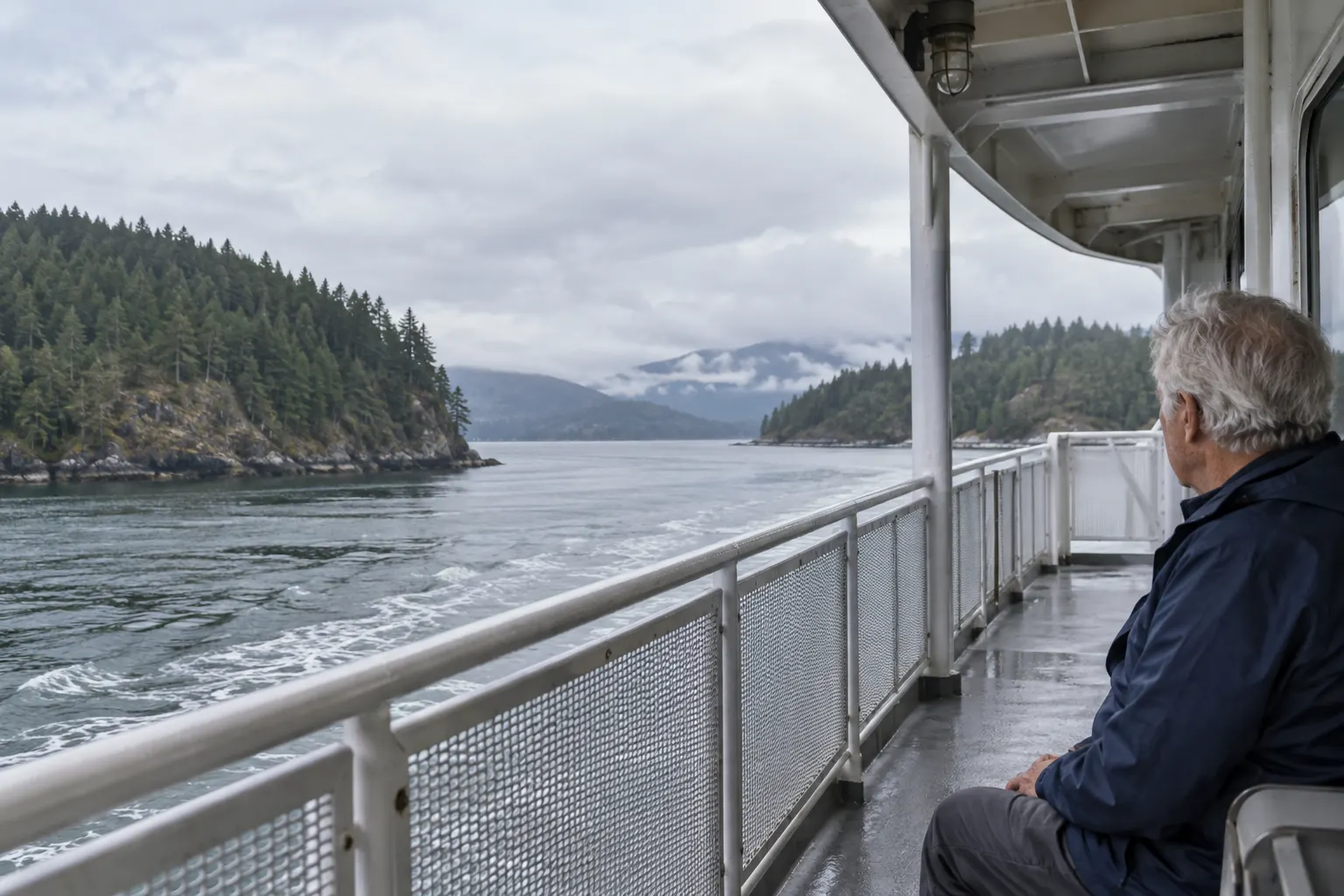
This route crosses the Salish Sea. For the full picture of that water, every crossing on it and what drives its reputation, see is the Salish Sea rough?
When it's worst, month by month
November to February gales provide the occasional choppy first half and rare schedule adjustments; the rest of the year the crossing is routinely calm.
| Roughest water in Jan | Roughest water in Feb | Roughest water in Mar | Roughest water in Apr | Roughest water in May | Roughest water in Jun | Roughest water in Jul | Roughest water in Aug | Roughest water in Sep | Roughest water in Oct | Roughest water in Nov | Roughest water in Dec |
|---|---|---|---|---|---|---|---|---|---|---|---|
| Mixed | Mixed | Calm | Calm | Calm | Calm | Calm | Calm | Calm | Calm | Mixed | Mixed |
Typical seasonal pattern, not a forecast. Any month can deliver a calm crossing or a bad one. Check the marine forecast for your sailing date. Select a month to see every sea and ferry crossing ranked for it.
Where to be on board
Front to back
- Forward loungesOK
- Central decksBest
- Aft loungesOK
The crossing: about 1h35
Roughest stretch: The open Strait of Georgia, first half
On a windy winter day the central seating rides best; the rest of the year, sit wherever the Gulf Islands view is.
Taking the Vancouver (Tsawwassen) to Victoria (Swartz Bay) crossing? Have Dizzout ready
Stop seasickness
Dizzout is drug-free sound therapy you can start in your seat on the crossing, with relief in about 90 seconds. It plays precisely calibrated audio through any headphones you already own, wired or Bluetooth. Free to download.
Get your personalized Dizzout plan. Paid subscription for full access.
30,000+ travelers in 30+ countries · How we count

On your phone? Scan to start there.
Comparing apps first? See how the motion sickness apps compare
Not travelling yet? Remind me the day before my trip
Know someone who gets motion sick?
Send them the app that helps stop it, drug-free, in about 90 seconds, works with any headphones. Free to download.
What helps on this crossing
- On a gale-warning day, sit centrally for the Strait of Georgia half; Active Pass onward is sheltered.
- The outside decks offer horizon and mountain views, the easy fix for mild queasiness.
- With 8 to 10 sailings daily, waiting out a front is usually a one-coffee delay.
- Nervous first-timers can relax: this is one of North America's gentlest major crossings.
For the full toolkit see the seasickness guide, or what to do once it has already started. Choosing between a fast catamaran and a conventional ship elsewhere too? The physics is the same everywhere: see the catamaran guide. If the rocking follows you ashore afterwards, that is land sickness, which is normal, and it passes.
Frequently asked questions
Is the Vancouver to Victoria ferry rough?
Usually no: the route crosses an inland strait with no ocean swell, then winds through sheltered Gulf Islands channels, and guides commonly describe it as a smooth crossing. Winter gales can chop the open first half; even then the big double-ended ferries keep their schedule in nearly all conditions.
How long is Tsawwassen to Swartz Bay?
About 1 hour 35 minutes with BC Ferries, with roughly 8 to 10 sailings a day. Terminals sit about 40 minutes from each city centre, so the sea leg is often the quickest part of the trip.
Which part of the crossing feels the weather?
The Strait of Georgia half, before the ship enters Active Pass. On windy days the open strait builds short chop; once among the Gulf Islands the water flattens and stays flat to Swartz Bay.
Do I need seasickness medicine for this ferry?
Almost everyone crosses without a thought for it. If you are unusually prone and sailing into a winter gale, a pharmacist can advise on options; motion sickness medicines are generally labelled for use before departure, and the exposed section is the first 45 minutes.
Other ferry routes
Sources & further reading
Your next question, probably
Where on the ship should you be?
Which cabins move least, and what to do if you already booked one
Not your question? What actually works at sea?Sick right now, mid-crossing?Still rocking after you land?
Conditions described here are typical patterns drawn from published marine and operator information as of September 2026, not a forecast: any month can deliver a calm crossing or a bad one, and schedules, vessels and operators change. Route, vessel and operator names are trademarks of their respective owners; Dizzout is not affiliated with or endorsed by them. Seasickness sensitivity varies from person to person; this page is informational and not medical advice.