
Is the Seattle to Bainbridge Island crossing rough?
No, and it is a good benchmark for what calm feels like. Seattle to Bainbridge is Washington State Ferries' busiest route: about 35 minutes across sheltered Puget Sound on car ferries over 400 feet long carrying up to 2,500 people, with 4.9 million passengers in 2024. Fog and the odd winter blow slow it; rough water almost never features.
Puget Sound · about 35 minutes · Reputation among passengers: generally reported as one of the calmer crossings.
- Low
- Moderate
- High
- Very high
Roughness summarises typical reported conditions on this route, not a forecast for any given sailing.
The sheltered sound's flagship commute
Key facts
- The Seattle to Bainbridge Island crossing takes about 35 minutes, operated by Washington State Ferries.
- It crosses the Puget Sound, and passenger reports place the route in the low roughness band.
- What drives the rough days: The sheltered sound's flagship commute.
- The calmest months are usually February, March, April, May, June, July, August, September and October.
Taking the Seattle to Bainbridge Island crossing? Dizzout is drug-free sound therapy you can start in your seat on the crossing, with relief in about 90 seconds.Starts in your browser · works with any headphones
Stop seasickness. Get your personalized Dizzout plan. Paid subscription for full access.

On your phone? Scan to start there.
Why the Seattle to Bainbridge Island crossing gets rough
Puget Sound is deep, narrow and thoroughly sheltered from the Pacific by the Olympic Peninsula, so ocean swell simply does not exist here. Strong southerlies can raise whitecaps and a light motion on the biggest winter days, and fog is the more operationally relevant weather. The ferries are among the largest vehicle ferries in the United States, sized for commuting rather than seafaring drama.
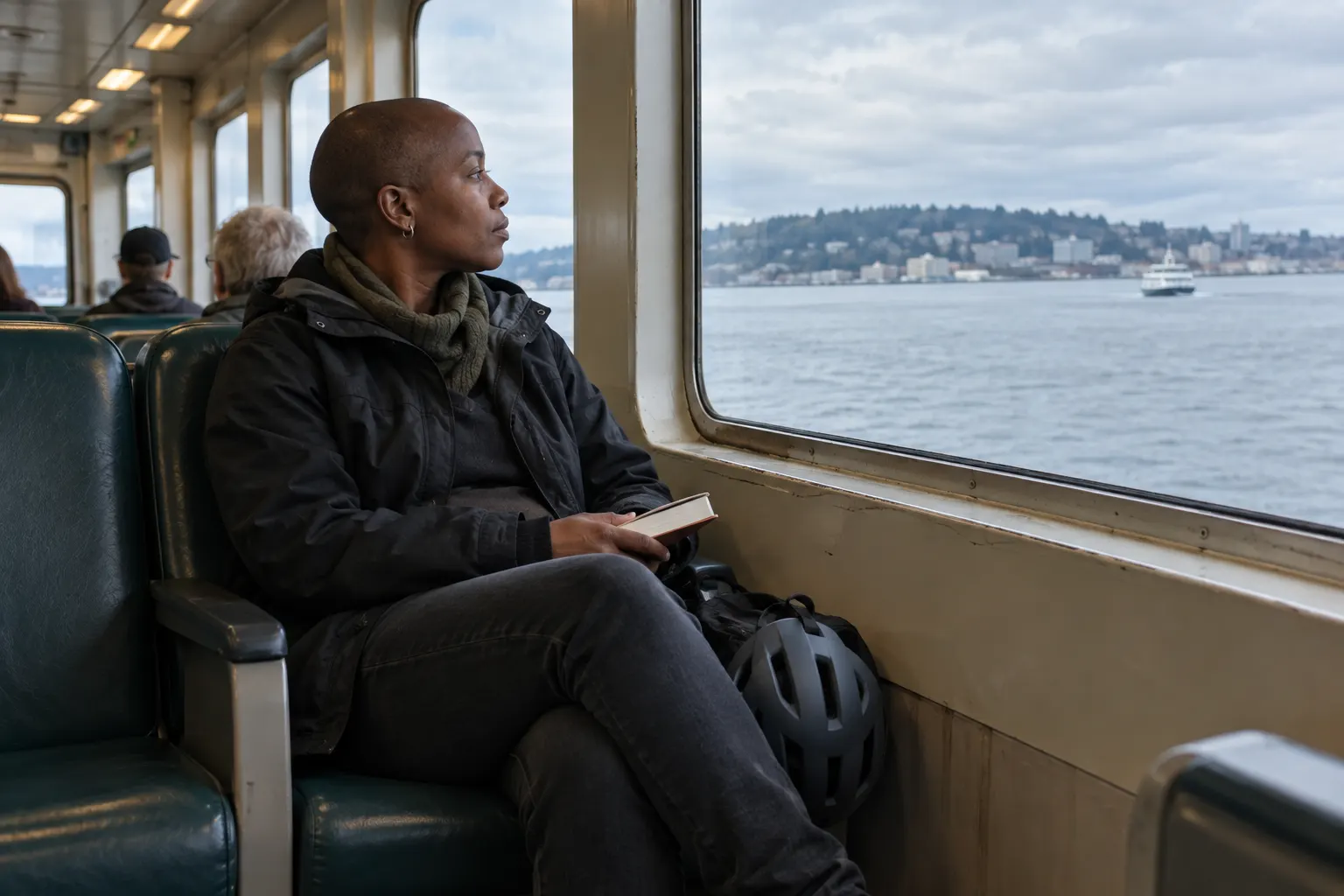
This route crosses the Salish Sea. For the full picture of that water, every crossing on it and what drives its reputation, see is the Salish Sea rough?
When it's worst, month by month
November to January storms occasionally add a gentle roll; the rest of the year the crossing is a moving viewpoint for the skyline and the Olympics.
| Roughest water in Jan | Roughest water in Feb | Roughest water in Mar | Roughest water in Apr | Roughest water in May | Roughest water in Jun | Roughest water in Jul | Roughest water in Aug | Roughest water in Sep | Roughest water in Oct | Roughest water in Nov | Roughest water in Dec |
|---|---|---|---|---|---|---|---|---|---|---|---|
| Mixed | Calm | Calm | Calm | Calm | Calm | Calm | Calm | Calm | Calm | Mixed | Mixed |
Typical seasonal pattern, not a forecast. Any month can deliver a calm crossing or a bad one. Check the marine forecast for your sailing date. Select a month to see every sea and ferry crossing ranked for it.
Where to be on board
Front to back
- Forward cabinOK
- Central cabinBest
- Aft cabinOK
The crossing: about 35 minutes
Seat choice is a scenery decision here, not a motion one; the bow-facing seats give the skyline or the Olympics depending on direction.
Put work away for a break
Close the laptop when you pause screen work. Keep ordinary headphones accessible if you choose Dizzout during the crossing.
Free to download. Paid subscription for full access.
30,000+ travelers in 30+ countries · How we count

On your phone? Scan to start there.
Comparing apps first? See how the motion sickness apps compare
Not travelling yet? Remind me the day before my trip

Know someone who gets motion sick?
Send them the app that helps stop it, drug-free, in about 90 seconds, works with any headphones. Free to download.
What helps on this crossing
- Nothing is usually needed; this is among the calmest saltwater crossings anywhere.
- Very sensitive riders on a stormy day can sit centrally and watch the horizon out the big windows.
- The outside decks are the antidote to any mild wobble, with a skyline thrown in.
- If motion sickness rules your travel, use this route as a zero-anxiety baseline for what ferries can be.
For the full toolkit see the seasickness guide, or what to do once it has already started. Choosing between a fast catamaran and a conventional ship elsewhere too? The physics is the same everywhere: see the catamaran guide. If the rocking follows you ashore afterwards, that is land sickness, which is normal, and it passes.
Frequently asked questions
Is the Seattle to Bainbridge ferry rough?
No; Puget Sound is sheltered from the Pacific and carries no ocean swell, so the 35 minute crossing is calm in nearly all weather. The biggest winter southerlies add a mild motion at most, and fog affects operations more than waves do.
How big are the ferries on this route?
Among the largest vehicle ferries in the US: over 400 feet long with room for up to 2,500 passengers. The route carried about 4.9 million riders in 2024, making it Washington State Ferries' busiest.
How long is the crossing?
About 35 minutes between Colman Dock in downtown Seattle and Bainbridge Island, with frequent daily sailings serving commuters and visitors.
Is this a good ferry for people who get seasick?
It is close to ideal: short, sheltered, huge stable ships and constant views. If any crossing can rebuild confidence after a bad experience elsewhere, it is this one; no medicine conversation is usually needed for it.
Other ferry routes
Sources & further reading
Your next question, probably
Where on the ship should you be?
Which cabins move least, and what to do if you already booked one
Not your question? What actually works at sea?Sick right now, mid-crossing?Still rocking after you land?
Conditions described here are typical patterns drawn from published marine and operator information as of September 2026, not a forecast: any month can deliver a calm crossing or a bad one, and schedules, vessels and operators change. Route, vessel and operator names are trademarks of their respective owners; Dizzout is not affiliated with or endorsed by them. Seasickness sensitivity varies from person to person; this page is informational and not medical advice.