
Is the Hyannis to Nantucket crossing rough?
Often enough that the fast boats have a reputation. Hyannis to Nantucket crosses Nantucket Sound in about an hour on the fast catamarans Iyanough and Grey Lady, or about 2 hours 15 minutes on the traditional car ferries. The sound is shallow and open to the south-west wind, so it builds short steep chop quickly, and the light fast hulls pass every wave along to their passengers.
Nantucket Sound · about 1 hour fast ferry, about 2 hours 15 minutes traditional · Reputation among passengers: mixed: commonly reported as uncomfortable in the wrong conditions.
- Low
- Moderate
- High
- Very high
Roughness summarises typical reported conditions on this route, not a forecast for any given sailing.
Shallow sound chop under fast catamarans
Key facts
- The Hyannis to Nantucket crossing takes about 1 hour fast ferry, about 2 hours 15 minutes traditional, operated by Steamship Authority and Hy-Line Cruises.
- It crosses the Nantucket Sound, and passenger reports place the route in the moderate roughness band.
- What drives the rough days: Shallow sound chop under fast catamarans.
- Conditions are reported roughest in January, February, November and December.
- The calmest months are usually March, April, May, June, July, August, September and October.
Taking the Hyannis to Nantucket crossing? Dizzout is drug-free sound therapy you can start in your seat on the crossing, with relief in about 90 seconds.Starts in your browser · works with any headphones
Stop seasickness. Get your personalized Dizzout plan. Paid subscription for full access.

On your phone? Scan to start there.
Why the Hyannis to Nantucket crossing gets rough
Nantucket Sound averages shallow, and shallow water turns wind into closely spaced, steep waves within hours, the same mechanism that makes the North Sea busy. The prevailing summer south-westerly blows across the route most afternoons. The fast catamarans ride that chop with rapid pitching; the conventional ferries shoulder through it with a slow roll that most stomachs tolerate far better. Forum threads about rough fast-boat crossings are a Cape Cod perennial.
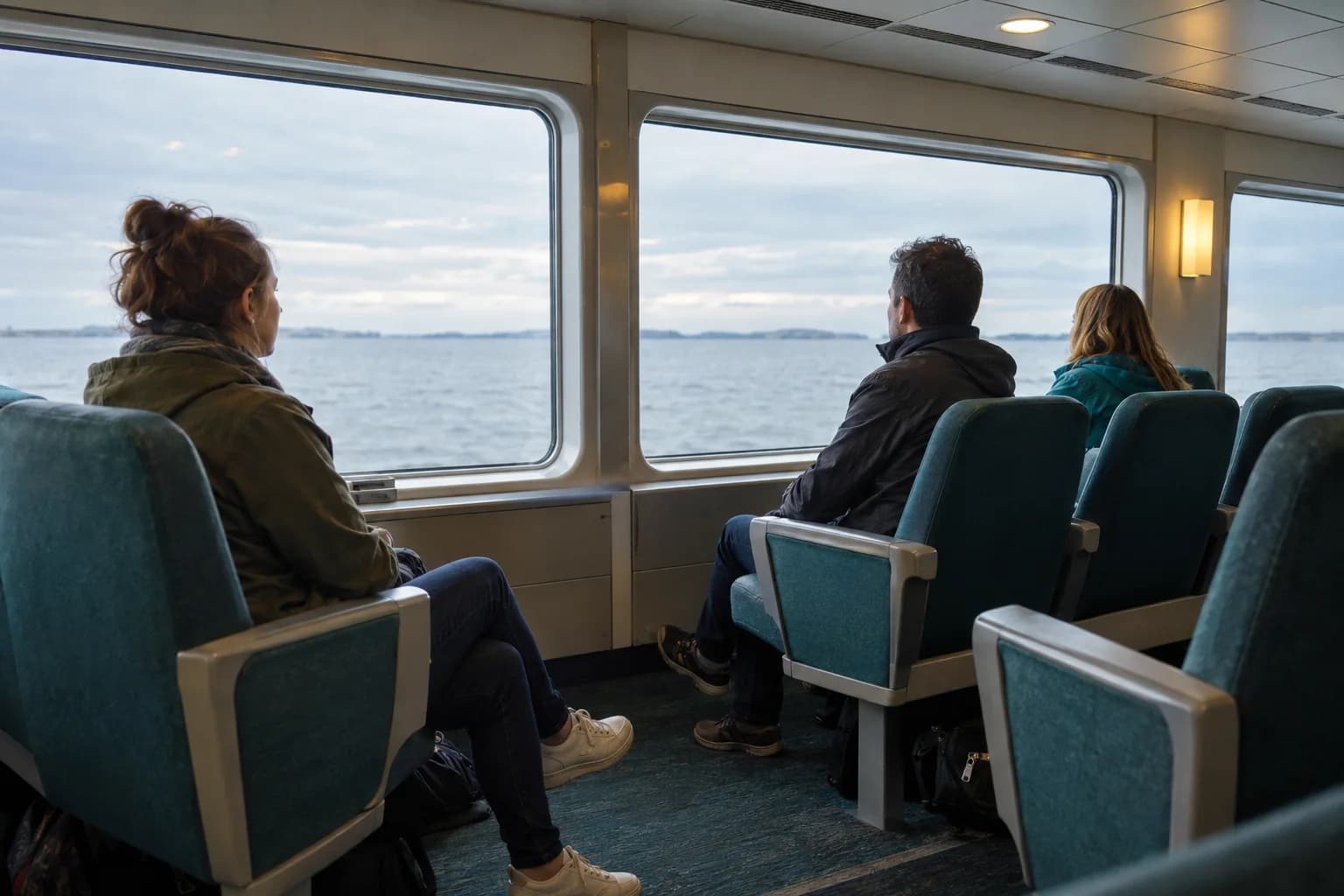
When it's worst, month by month
Summer afternoons bring the south-westerly chop; mornings are usually gentler. Fall and winter storms produce the properly rough days and the cancellations.
| Roughest water in Jan | Roughest water in Feb | Roughest water in Mar | Roughest water in Apr | Roughest water in May | Roughest water in Jun | Roughest water in Jul | Roughest water in Aug | Roughest water in Sep | Roughest water in Oct | Roughest water in Nov | Roughest water in Dec |
|---|---|---|---|---|---|---|---|---|---|---|---|
| Rough | Rough | Mixed | Mixed | Mixed | Mixed | Mixed | Mixed | Mixed | Mixed | Rough | Rough |
Typical seasonal pattern, not a forecast. Any month can deliver a calm crossing or a bad one. Check the marine forecast for your sailing date. Select a month to see every sea and ferry crossing ranked for it.
Where to be on board
Front to back
- Front rowsAvoid
- Central, main deckBest
- Rear rowsOK
The crossing: 1 to 2.25 hours
Roughest stretch: The open sound, most of the crossing
On the fast boats, central main-deck seats; on the car ferries, midship benches with a window. Both beat the bow in chop.
Which boat to pick
The traditional ferry is the motion-sensitive choice on any breezy day: twice the time, a fraction of the movement, and it keeps sailing in weather that pauses the fast boats. On flat mornings the catamaran's hour is honestly pleasant.
Keep audio out of the larger suitcase
Put the phone and headphones you use for Dizzout in your personal bag before boarding. Prepare the kit while seated rather than searching through larger luggage later.
Free to download. Paid subscription for full access.
30,000+ travelers in 30+ countries · How we count

On your phone? Scan to start there.
Comparing apps first? See how the motion sickness apps compare
Not travelling yet? Remind me the day before my trip

Know someone who gets motion sick?
Send them the app that helps stop it, drug-free, in about 90 seconds, works with any headphones. Free to download.
What helps on this crossing
- Prone to seasickness? Take the traditional ferry, especially for afternoon crossings in a south-westerly.
- Book morning fast boats; the sound's chop builds with the day's wind.
- Sit central and low, horizon out the window, coffee after landing.
- If the fast ferries pause for weather, treat the still-running car ferry as the correct amount of boat that day.
For the full toolkit see the seasickness guide, or what to do once it has already started. Choosing between a fast catamaran and a conventional ship elsewhere too? The physics is the same everywhere: see the catamaran guide. If the rocking follows you ashore afterwards, that is land sickness, which is normal, and it passes.
Frequently asked questions
Is the Nantucket fast ferry rough?
On breezy afternoons, commonly: Nantucket Sound's shallow water builds short steep chop, and the light catamarans pitch through it in a way passengers write forum threads about. Morning crossings and calm days are easy. The traditional car ferries handle the same water far more steadily.
How long is Hyannis to Nantucket?
About 1 hour on the fast catamarans from the Steamship Authority (Iyanough) and Hy-Line (Grey Lady), and about 2 hours 15 minutes on the Steamship Authority's traditional car ferries.
Fast ferry or slow ferry to Nantucket if I get seasick?
Slow, on any day with wind in the forecast: the conventional ferries' size and pace turn the sound's chop into a mild roll. The hour saved on the catamaran is only a bargain when the sound is flat, which mostly means mornings and settled spells.
Should I take seasickness medicine before the crossing?
Many summer visitors ask; a pharmacist or doctor should answer for your case. Useful facts: the crossing is one to just over two hours depending on boat, and most motion sickness medicines are labelled for use before departure, so the decision belongs at the dock in Hyannis.
Other ferry routes
- Is the Vancouver (Tsawwassen) to Victoria (Swartz Bay) crossing rough?
- Is the Seattle to Bainbridge Island crossing rough?
- Is the North Sydney to Port aux Basques crossing rough?
- Is the Long Beach to Catalina Island crossing rough?
- Is the Fort Myers Beach to Key West (Key West Express) crossing rough?
- All ferry routes →
Sources & further reading
Your next question, probably
Where on the ship should you be?
Which cabins move least, and what to do if you already booked one
Not your question? What actually works at sea?Sick right now, mid-crossing?Still rocking after you land?
Conditions described here are typical patterns drawn from published marine and operator information as of September 2026, not a forecast: any month can deliver a calm crossing or a bad one, and schedules, vessels and operators change. Route, vessel and operator names are trademarks of their respective owners; Dizzout is not affiliated with or endorsed by them. Seasickness sensitivity varies from person to person; this page is informational and not medical advice.