
Is the Naples to Capri crossing rough?
Now and then, and the boat type decides how much you feel it. Naples to Capri takes about 45 to 50 minutes by hydrofoil or fast craft and 60 to 80 minutes by conventional ferry, across a bay that is calmer than open sea but not tame. The small fast boats transmit every bit of chop; the slower ferries flatten most of it, and they keep sailing on days the hydrofoils stay tied up.
Bay of Naples, Tyrrhenian Sea · about 45 to 50 minutes by fast craft, 60 to 80 minutes by conventional ferry · Reputation among passengers: mixed: commonly reported as uncomfortable in the wrong conditions.
- Low
- Moderate
- High
- Very high
Roughness summarises typical reported conditions on this route, not a forecast for any given sailing.
Small fast hulls on an open bay approach
Key facts
- The Naples to Capri crossing takes about 45 to 50 minutes by fast craft, 60 to 80 minutes by conventional ferry.
- It crosses the Bay of Naples, Tyrrhenian Sea, and passenger reports place the route in the moderate roughness band.
- What drives the rough days: Small fast hulls on an open bay approach.
- The calmest months are usually April, May, June, July, August and September.
Taking the Naples to Capri crossing? Dizzout is drug-free sound therapy you can start in your seat on the crossing, with relief in about 90 seconds.Starts in your browser · works with any headphones
Stop seasickness. Get your personalized Dizzout plan. Paid subscription for full access.

On your phone? Scan to start there.
Why the Naples to Capri crossing gets rough
Most of the run is semi-sheltered bay, but the final approach to Capri opens to whatever the south-west is sending, and afternoon winds regularly chop the outer bay. Hydrofoils and small fast craft ride harshly in that chop because light hulls at speed cannot ignore it; conventional ferries barely notice the same water. In rough weather the hydrofoils are cancelled first, which is itself the local seaworthiness verdict.
This route crosses the Mediterranean Sea. For the full picture of that water, every crossing on it and what drives its reputation, see is the Mediterranean Sea rough?
When it's worst, month by month
Summer mornings are typically smooth with a building afternoon breeze; winter brings the swell days that cancel fast craft outright. The conventional ferries are the year-round constant.
| Roughest water in Jan | Roughest water in Feb | Roughest water in Mar | Roughest water in Apr | Roughest water in May | Roughest water in Jun | Roughest water in Jul | Roughest water in Aug | Roughest water in Sep | Roughest water in Oct | Roughest water in Nov | Roughest water in Dec |
|---|---|---|---|---|---|---|---|---|---|---|---|
| Mixed | Mixed | Mixed | Calm | Calm | Calm | Calm | Calm | Calm | Mixed | Mixed | Mixed |
Typical seasonal pattern, not a forecast. Any month can deliver a calm crossing or a bad one. Check the marine forecast for your sailing date. Select a month to see every sea and ferry crossing ranked for it.
Where to be on board
Front to back
- Front rowsAvoid
- Central, lowBest
- Rear rowsOK
The crossing: 45 to 80 minutes
Roughest stretch: The open outer bay, on the Capri approach
On hydrofoils and fast craft, sit central and low and skip the front cabin; on the ferries, anywhere with a horizon view works.
Which boat to pick
The practical rule locals give visitors: queasy stomach or breezy forecast, take the slower conventional ferry; flat morning and a tight schedule, the hydrofoil is fine. Morning sailings are usually smoother than afternoon ones in summer, when the sea breeze builds after midday.
Pack the kit before boarding
Keep ordinary headphones for Dizzout in a protected pocket while waiting. Put personal audio away whenever boarding needs your attention.
Free to download. Paid subscription for full access.
30,000+ travelers in 30+ countries · How we count

On your phone? Scan to start there.
Comparing apps first? See how the motion sickness apps compare
Not travelling yet? Remind me the day before my trip

Know someone who gets motion sick?
Send them the app that helps stop it, drug-free, in about 90 seconds, works with any headphones. Free to download.
What helps on this crossing
- Choose the conventional ferry over the hydrofoil if you are prone to motion sickness; the time difference is 20 to 30 minutes.
- Go in the morning; the bay's afternoon breeze is the usual chop-maker in season.
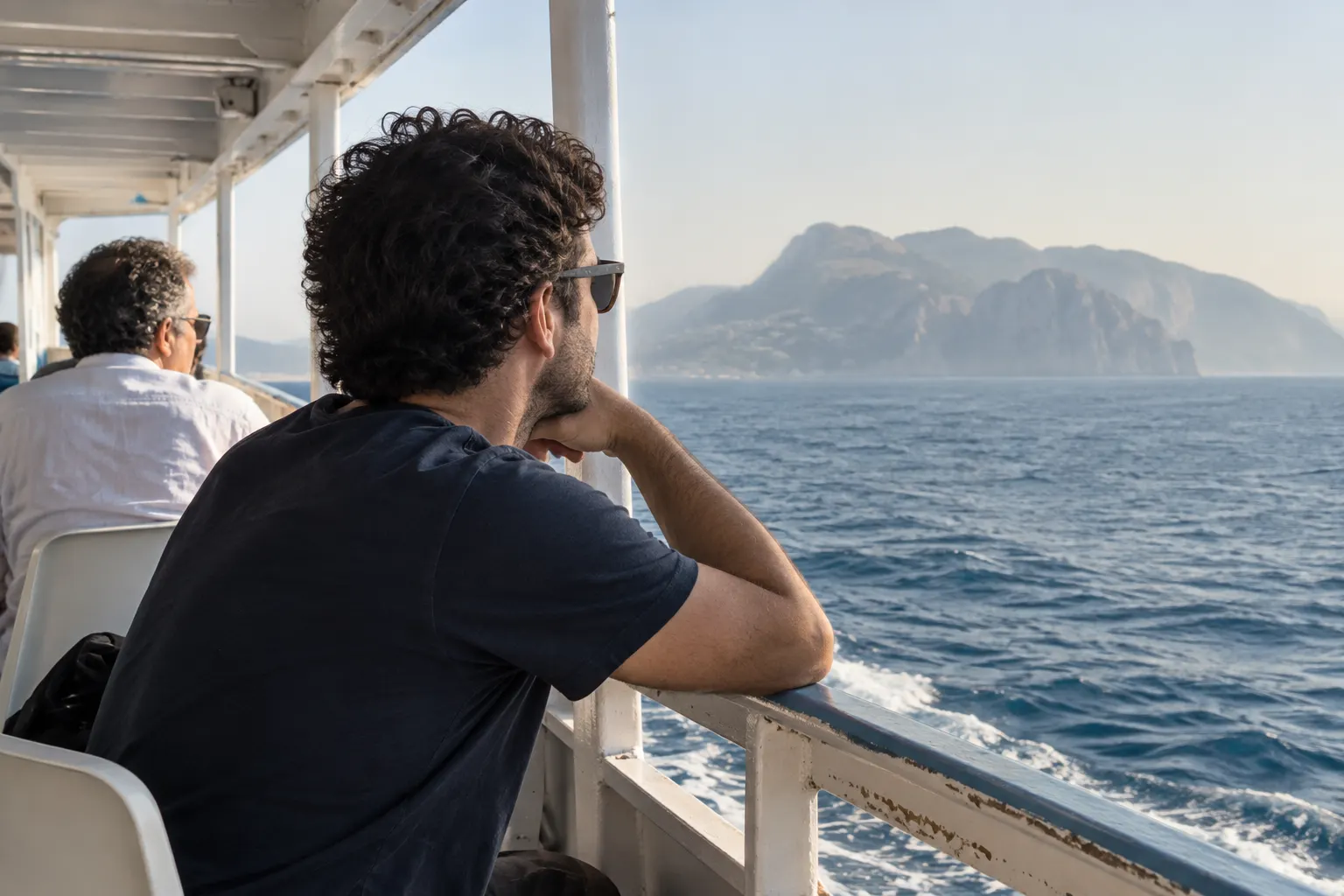
- Sit central, watch Vesuvius or the island rather than your phone.
- If the hydrofoils are cancelled, treat it as information: the slower ferry will still be the right amount of boat that day.
For the full toolkit see the seasickness guide, or what to do once it has already started. Choosing between a fast catamaran and a conventional ship elsewhere too? The physics is the same everywhere: see the catamaran guide. If the rocking follows you ashore afterwards, that is land sickness, which is normal, and it passes.
Frequently asked questions
Do people get seasick on the Naples to Capri hydrofoil?
On breezy afternoons, yes, it is a common complaint: small fast hulls meet outer-bay chop with rapid slamming that sensitive stomachs dislike. The conventional ferries on the same route carry the same passengers in far more comfort on those days. On calm mornings both are easy.
How long is the crossing to Capri?
About 45 to 50 minutes by hydrofoil or fast craft and 60 to 80 minutes by conventional ferry, with frequent departures from Molo Beverello and Calata Porta di Massa in Naples.
Ferry or hydrofoil to Capri: which should I book?
For motion comfort, the ferry, especially on windy forecasts or afternoon crossings; for pure speed on a flat morning, the hydrofoil. In rough weather the choice makes itself: hydrofoils cancel first, ferries keep going longest.
Is seasickness medicine sensible for a 45 minute hop?
Usually seat choice and boat choice do the job on a crossing this short, but if you are highly prone, ask a pharmacist; motion sickness medicines are generally labelled to be taken before travel, and the crossing is over quickly.
Other ferry routes
Sources & further reading
Your next question, probably
Where on the ship should you be?
Which cabins move least, and what to do if you already booked one
Not your question? What actually works at sea?Sick right now, mid-crossing?Still rocking after you land?
Conditions described here are typical patterns drawn from published marine and operator information as of September 2026, not a forecast: any month can deliver a calm crossing or a bad one, and schedules, vessels and operators change. Route, vessel and operator names are trademarks of their respective owners; Dizzout is not affiliated with or endorsed by them. Seasickness sensitivity varies from person to person; this page is informational and not medical advice.