
Is the Hong Kong to Macau crossing rough?
Sometimes, and the middle third is where it happens. Hong Kong to Macau takes about an hour on TurboJET jetfoils and Cotai Water Jet catamarans, crossing the Pearl River estuary where it opens to the South China Sea. On monsoon-swell and typhoon-season days the exposed middle gets choppy, and seasick crossings are a well-documented part of local lore.
Pearl River estuary, South China Sea · about 55 to 60 minutes · Reputation among passengers: mixed: commonly reported as uncomfortable in the wrong conditions.
- Low
- Moderate
- High
- Very high
Roughness summarises typical reported conditions on this route, not a forecast for any given sailing.
An estuary that opens to the South China Sea
Key facts
- The Hong Kong to Macau crossing takes about 55 to 60 minutes, operated by TurboJET and Cotai Water Jet.
- It crosses the Pearl River estuary, South China Sea, and passenger reports place the route in the moderate roughness band.
- What drives the rough days: An estuary that opens to the South China Sea.
- Conditions are reported roughest in June, July, August and September.
- The calmest months are usually March and April.
Taking the Hong Kong to Macau crossing? Dizzout is drug-free sound therapy you can start in your seat on the crossing, with relief in about 90 seconds.Starts in your browser · works with any headphones
Stop seasickness. Get your personalized Dizzout plan. Paid subscription for full access.

On your phone? Scan to start there.
Why the Hong Kong to Macau crossing gets rough
The route starts and ends in relatively sheltered harbour waters but crosses a wide, open estuary mouth in between, where South China Sea swell and monsoon wind waves roll in unobstructed. High-speed craft take that chop at 40-plus knots, which turns moderate seas into a rhythmic pounding. Services stop entirely when typhoon signals rise; short of that, they sail and let the sea decide the comfort.
When it's worst, month by month
Typhoon season, roughly June to October, brings the swell events and occasional full suspensions; the winter monsoon adds choppy grey days from November to February. Spring is commonly the smoothest window.
| Roughest water in Jan | Roughest water in Feb | Roughest water in Mar | Roughest water in Apr | Roughest water in May | Roughest water in Jun | Roughest water in Jul | Roughest water in Aug | Roughest water in Sep | Roughest water in Oct | Roughest water in Nov | Roughest water in Dec |
|---|---|---|---|---|---|---|---|---|---|---|---|
| Mixed | Mixed | Calm | Calm | Mixed | Rough | Rough | Rough | Rough | Mixed | Mixed | Mixed |
Typical seasonal pattern, not a forecast. Any month can deliver a calm crossing or a bad one. Check the marine forecast for your sailing date. Select a month to see every sea and ferry crossing ranked for it.
Where to be on board
Front to back
- Front rowsAvoid
- Central, low deckBest
- Rear rowsOK
The crossing: about 1 hour
Roughest stretch: The open estuary mouth, mid-crossing
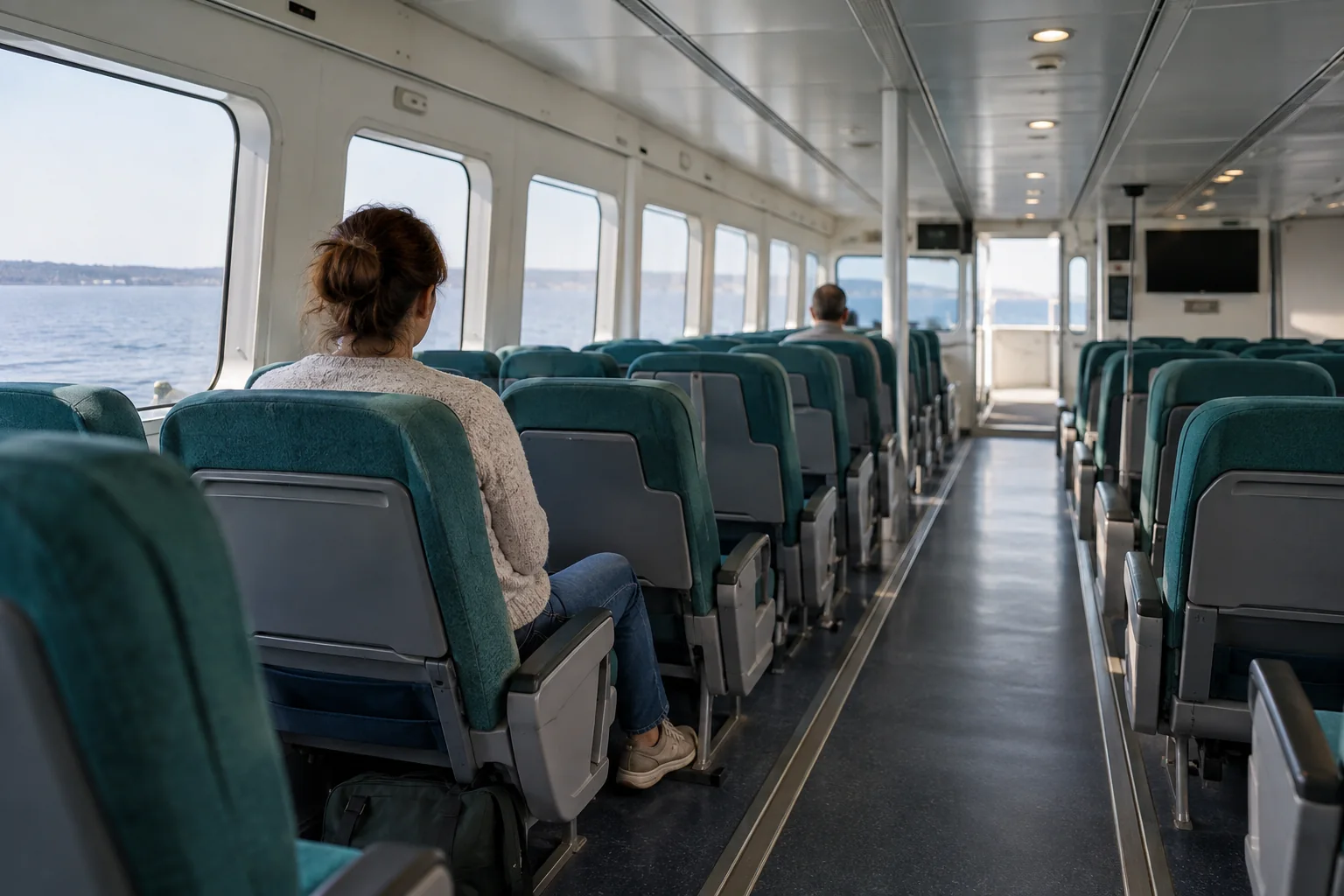
Book or pick central main-deck seats; the upper-deck and front-row seats amplify the jetfoil's pitching in chop.
Which boat to pick
Both operators run fast craft, so there is no slow-boat option; the practical choices are seat position, sailing time and, on the worst days, the bus over the Hong Kong-Zhuhai-Macau Bridge, which removes the sea from the equation entirely.
Clear your passenger space
Gather loose bag straps before handling ordinary headphones for Dizzout. Keep the ferry footwell and aisle clear.
Free to download. Paid subscription for full access.
30,000+ travelers in 30+ countries · How we count

On your phone? Scan to start there.
Comparing apps first? See how the motion sickness apps compare
Not travelling yet? Remind me the day before my trip

Know someone who gets motion sick?
Send them the app that helps stop it, drug-free, in about 90 seconds, works with any headphones. Free to download.
What helps on this crossing
- Sit central and low, and skip the front rows on windy days.
- Morning sailings often beat the afternoon sea breeze in summer.
- Go light on the dim sum before a typhoon-season crossing.
- If a storm signal is up or rising, take the bridge bus instead; when signals climb high enough the ferries stop anyway.
For the full toolkit see the seasickness guide, or what to do once it has already started. Choosing between a fast catamaran and a conventional ship elsewhere too? The physics is the same everywhere: see the catamaran guide. If the rocking follows you ashore afterwards, that is land sickness, which is normal, and it passes.
Frequently asked questions
Do people get seasick on the Hong Kong to Macau ferry?
Regularly enough that it is standing advice in local forums: the middle third of the crossing is open to South China Sea swell, and the high-speed craft pound through it on rough days. On calm days, which are plenty, the hour passes without incident.
How long is the crossing?
About 55 to 60 minutes with TurboJET from Sheung Wan or Cotai Water Jet towards the Cotai side, with very frequent departures through the day and night.
What happens during typhoons?
Sailings are suspended when typhoon signals reach the operators' thresholds, and the Hong Kong-Zhuhai-Macau Bridge buses become the fallback. In the approach and aftermath of a storm, expect residual swell to make sailings bumpy even once they resume.
Should I take seasickness medicine before this ferry?
For an hour-long hop most people manage with seat choice and timing; if you are highly prone, ask a pharmacist, noting that motion sickness medicines are generally labelled for use before boarding.
Other ferry routes
Sources & further reading
Your next question, probably
Where on the ship should you be?
Which cabins move least, and what to do if you already booked one
Not your question? What actually works at sea?Sick right now, mid-crossing?Still rocking after you land?
Conditions described here are typical patterns drawn from published marine and operator information as of September 2026, not a forecast: any month can deliver a calm crossing or a bad one, and schedules, vessels and operators change. Route, vessel and operator names are trademarks of their respective owners; Dizzout is not affiliated with or endorsed by them. Seasickness sensitivity varies from person to person; this page is informational and not medical advice.