
Is the Hirtshals to Torshavn crossing rough?
Often, and the schedule admits it. Hirtshals to Torshavn on Smyril Line's Norrona takes about 30 hours in summer and about 38 in winter, the difference being partly weather routing. The route leaves the North Sea and commits to the open North Atlantic between Shetland and the Faroes, with no shelter for the better part of a day.
North Sea, then open North Atlantic · about 30 hours in summer, about 38 hours in winter · Reputation among passengers: has a long-standing reputation for rough passages.
- Low
- Moderate
- High
- Very high
Roughness summarises typical reported conditions on this route, not a forecast for any given sailing.
A day and a half into the open North Atlantic
Key facts
- The Hirtshals to Torshavn crossing takes about 30 hours in summer, about 38 hours in winter, operated by Smyril Line.
- It crosses the North Sea, then open North Atlantic, and passenger reports place the route in the high roughness band.
- What drives the rough days: A day and a half into the open North Atlantic.
- Conditions are reported roughest in January, February, November and December.
- The calmest months are usually April, May, June, July and August.
Taking the Hirtshals to Torshavn crossing? Dizzout is drug-free sound therapy you can start in your seat on the crossing, with relief in about 90 seconds.Starts in your browser · works with any headphones
Stop seasickness. Get your personalized Dizzout plan. Paid subscription for full access.

On your phone? Scan to start there.
Why the Hirtshals to Torshavn crossing gets rough
North of Scotland the route runs out of continental shelter entirely: this is open ocean at storm-track latitude, where Atlantic depressions parade eastwards for much of the year. Swell out here is long, heavy and constant even between storms. Norrona is a proper little ship for it, built for year-round Faroese service, and the winter timetable's extra hours exist precisely because the ship sometimes has to go the long way around the weather.
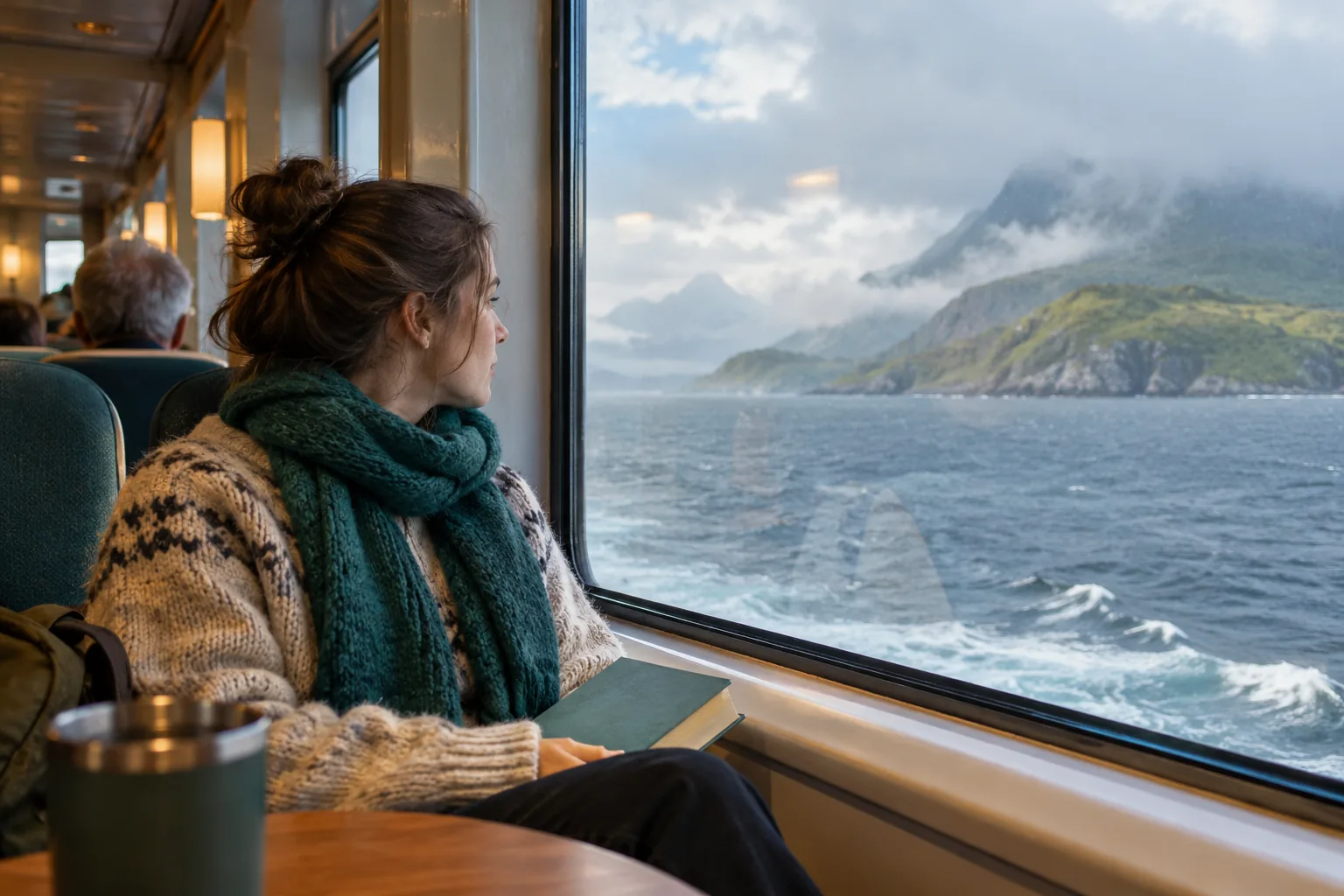
This route crosses the North Sea. For the full picture of that water, every crossing on it and what drives its reputation, see is the North Sea rough?
When it's worst, month by month
June to August offers the gentlest odds and the famous approach scenery; September to March is genuinely heavy-weather season, when rolling days are standard and the schedule stretches. Anyone with a strict agenda sails in summer.
| Roughest water in Jan | Roughest water in Feb | Roughest water in Mar | Roughest water in Apr | Roughest water in May | Roughest water in Jun | Roughest water in Jul | Roughest water in Aug | Roughest water in Sep | Roughest water in Oct | Roughest water in Nov | Roughest water in Dec |
|---|---|---|---|---|---|---|---|---|---|---|---|
| Roughest | Roughest | Rough | Mixed | Mixed | Mixed | Mixed | Mixed | Rough | Rough | Roughest | Roughest |
Typical seasonal pattern, not a forecast. Any month can deliver a calm crossing or a bad one. Check the marine forecast for your sailing date. Select a month to see every sea and ferry crossing ranked for it.
Where to be on board
Front to back
- Bow (front)Avoid
- MidshipBest
- Stern (aft)OK
The crossing: 30 to 38 hours
Roughest stretch: Open Atlantic from north of Scotland to the Faroes
Book a midship cabin low in the ship and consider it part of the fare, not an upgrade; this is an ocean passage with a ferry timetable.
Taking the Hirtshals to Torshavn crossing? Have Dizzout ready
Stop seasickness
Dizzout is drug-free sound therapy you can start in your seat on the crossing, with relief in about 90 seconds. It plays precisely calibrated audio through any headphones you already own, wired or Bluetooth. Free to download.
Get your personalized Dizzout plan. Paid subscription for full access.
30,000+ travelers in 30+ countries · How we count

On your phone? Scan to start there.
Comparing apps first? See how the motion sickness apps compare
Not travelling yet? Remind me the day before my trip
Know someone who gets motion sick?
Send them the app that helps stop it, drug-free, in about 90 seconds, works with any headphones. Free to download.
What helps on this crossing
- Cabin midship and low, always; on 30-plus hours the difference compounds.
- Settle into ship rhythm early: light regular meals, horizon time on deck, horizontal when tired.
- The first night is North Sea, the second half is ocean; pace yourself for the second act.
- Summer sailings stack every advantage: shorter schedule, gentler seas, and the Faroes arriving in daylight.
- If a big system is forecast, expect delay rather than cancellation; the ship routes around weather and arrives late.
For the full toolkit see the seasickness guide, or what to do once it has already started. Choosing between a fast catamaran and a conventional ship elsewhere too? The physics is the same everywhere: see the catamaran guide. If the rocking follows you ashore afterwards, that is land sickness, which is normal, and it passes.
Frequently asked questions
How rough is the ferry to the Faroe Islands?
This is an open North Atlantic passage, and it behaves like one: long heavy swell is normal, winter storms are frequent, and the winter timetable adds about 8 hours partly for weather routing. Summer crossings are regularly pleasant. It is the most sea-like sea journey on the northern European ferry map, and passengers who treat it that way do fine.
How long does Hirtshals to Torshavn take?
About 30 hours on the summer schedule and about 38 hours in winter with Smyril Line's Norrona, the only car ferry serving the Faroes. The crossing continues onwards to Iceland on its second leg.
Is Norrona a stable ship?
She is a purpose-built year-round Atlantic ferry with stabilisers and the hull for this run, and she keeps the islands supplied through winters that would park most ferries. Stability systems reduce rolling; nothing removes ocean swell. A midship cabin low down is the passenger's half of the bargain.
What about seasickness medication for a 30 hour ocean crossing?
Have that conversation with a pharmacist or doctor before this trip in particular, mentioning the duration and the overnight format. Motion sickness medicines are generally labelled for use before departure, and on a crossing this long the plan matters more than on any short hop.
Other ferry routes
Sources & further reading
Your next question, probably
Where on the ship should you be?
Which cabins move least, and what to do if you already booked one
Not your question? What actually works at sea?Sick right now, mid-crossing?Still rocking after you land?
Conditions described here are typical patterns drawn from published marine and operator information as of September 2026, not a forecast: any month can deliver a calm crossing or a bad one, and schedules, vessels and operators change. Route, vessel and operator names are trademarks of their respective owners; Dizzout is not affiliated with or endorsed by them. Seasickness sensitivity varies from person to person; this page is informational and not medical advice.