The short answer
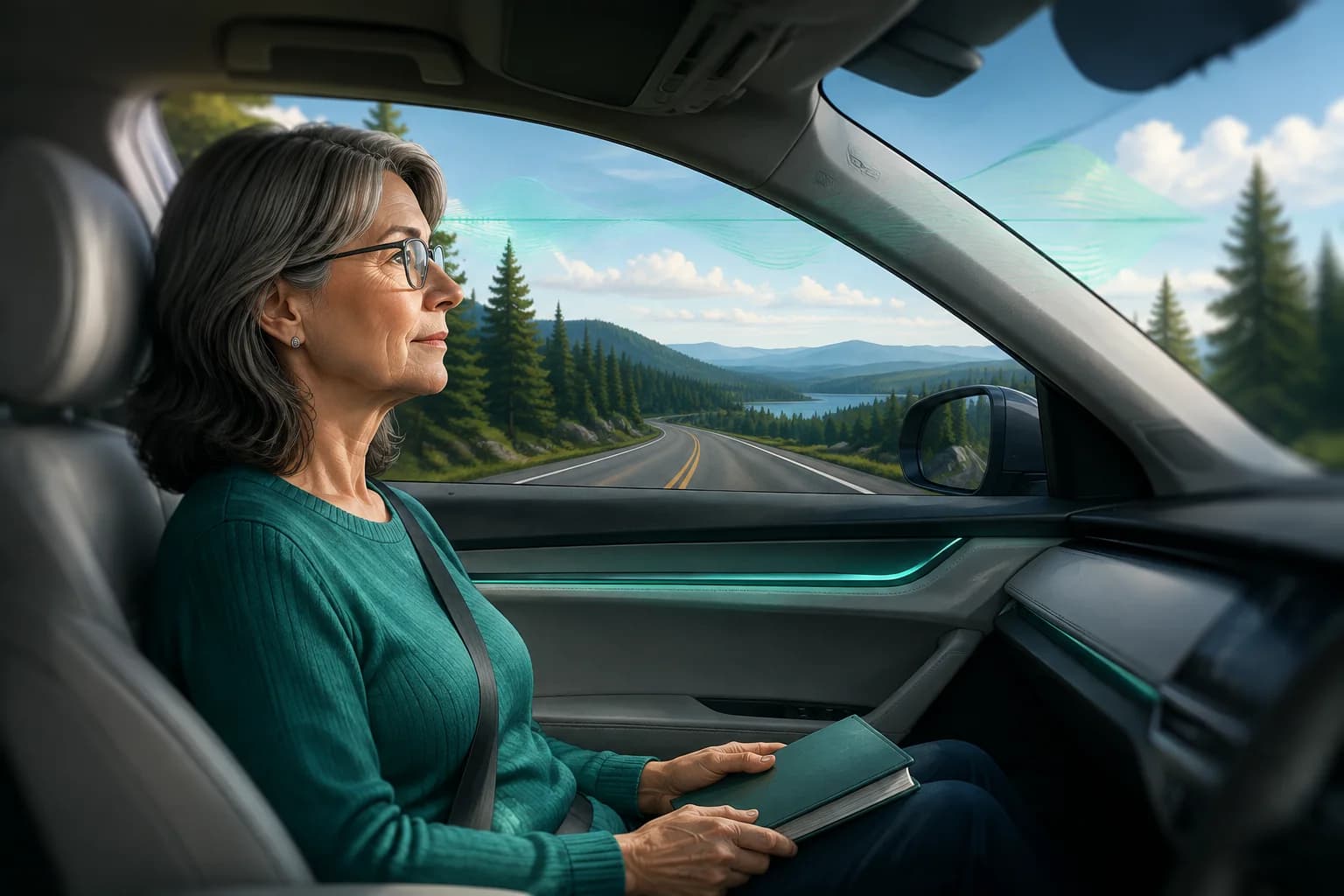
A robotaxi can make you carsick, and for some riders it is harder on the stomach than a normal taxi even though the motion itself is usually gentler. What you lose is anticipation: no driver's head turning before a corner, no hands easing off before a stop. That prediction is a large part of why drivers rarely get carsick while their passengers do, so removing the last human cue removes what was quietly keeping the conflict small. Sit where you can see forward, keep your eyes on the road, and leave the in-car screen alone once the trip starts.
The first driverless ride is strange in a good way, right up to the moment the wheel turns by itself into a left hook, your stomach lifts half a second late, and you notice you never saw it coming.
Here is what changes when nobody is driving, what is still under your control, and what to do if it has already started.
Prone to motion sickness? Drug-free, works with the headphones already in your pocket, about 90 seconds.Starts in your browser · works with any headphones
Get your personalized Dizzout plan. Paid subscription for full access.

On your phone? Scan to start there.
Why a driverless ride can feel worse than a taxi
Car sickness starts as a disagreement between your senses. Your inner ear registers the car accelerating, braking and leaning, and your eyes report a cabin that looks perfectly still. Your brain gets two accounts of the same moment and answers with nausea. That is the same mechanism at work in any car, and the back seat has always been the harder place to sit.
A robotaxi adds a second problem: it is a ride you cannot influence. In a normal taxi you can ask the driver to take it easier, or to crack a window before things get bad. If you already know that rideshares are worse than your own car, this is that effect with one more cue removed.
The cue you lose: you cannot read a driver who is not there
There is a documented oddity in motion sickness: drivers rarely get sick, and their passengers regularly do. Rolnick and Lubow tested why in 1991. They ran twenty-two pairs of subjects through the same nauseogenic rotation, one of each pair controlling it and the other along for the ride, with head movement, vision, activity and predictability matched across the pair. The subjects who had control reported significantly fewer symptoms. Their explanation reaches for feed-forward mechanisms: a brain issuing the commands already knows what is about to arrive.
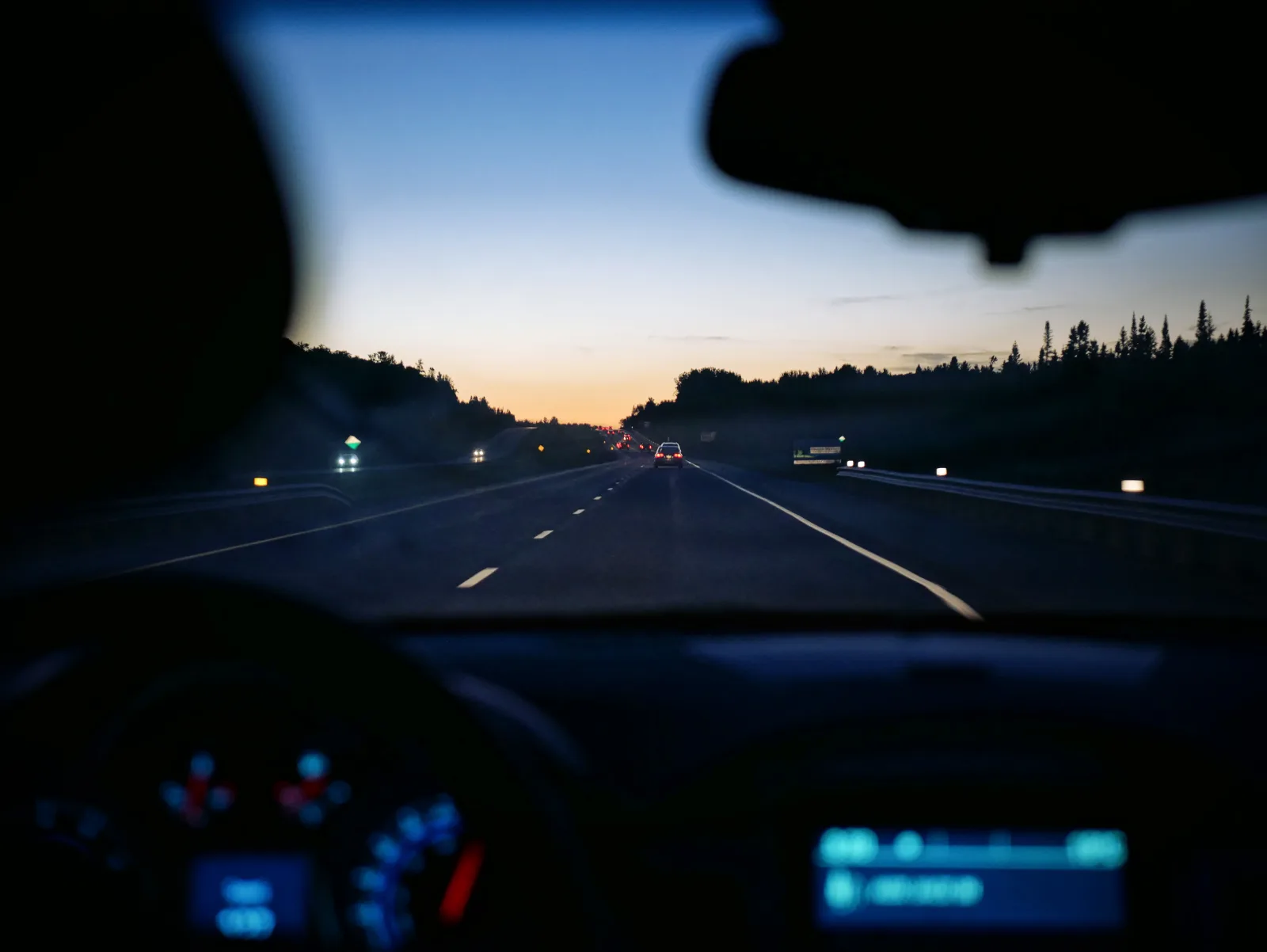
Passengers get a weaker version of that secondhand. You watch the road, and you watch the driver: a head turning toward a mirror, a foot easing off before a red light. None of it is conscious, all of it feeds the prediction. In their review of sickness in self-driving cars, Diels and Bos make that the central design principle: a clear view of the road ahead lets an occupant predict the future motion path, and the sensory conflict shrinks with it. Remove the driver and only the road is left, which is why where your eyes go matters more here than in a cab.
Smooth is not the same as predictable
The obvious objection is that these cars drive gently. Often they do, and riders who brace for a rollercoaster are usually surprised by how calm the average minute is.
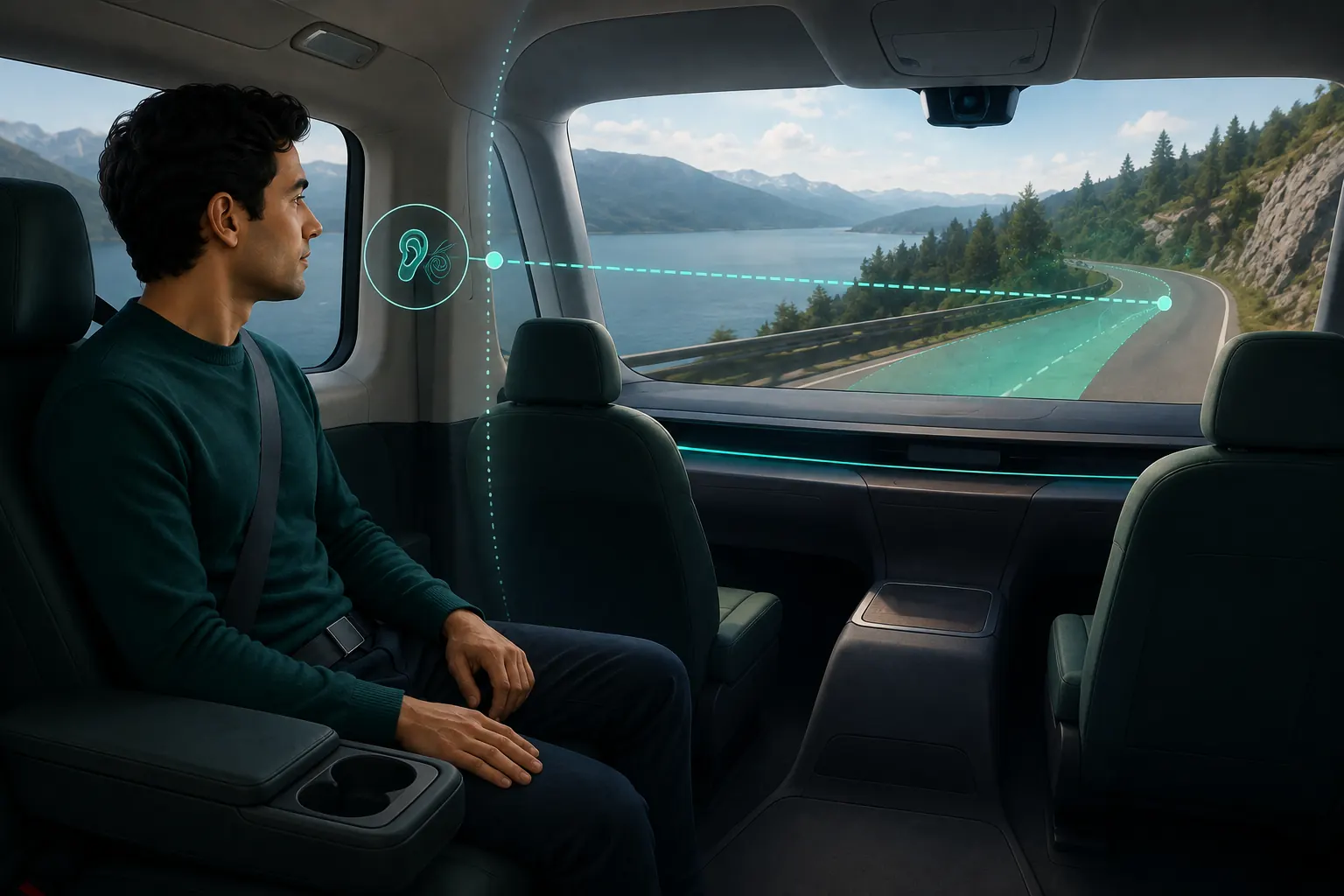
But smoothness and predictability are different things, and only one is on offer. Smoothness lowers how much motion your inner ear picks up. Predictability lowers how much of it arrives as a surprise. A robotaxi can beat a human driver on the first and lose on the second, because the machine gives you nothing to read: no posture, no hesitation before a turn. It decides and executes, and you find out when your body does. If you have never checked how sensitive you are, the motion sickness test puts your susceptibility on a percentile instead of a guess.
Where riders are allowed to sit, and why it matters
Read the operator's own help page rather than a forum, because this is where the rumours are. Waymo's rider rules say the driver's seat is off limits and you are free to sit in any available seat, up to four riders in total, with your seat belt on for the whole trip. Its seating page makes the front passenger seat available to any rider at least 8 years old, and asks you to bring and fit your own child seat below that age. Policies differ by operator and by city, and they change, so check the service you actually book.
The front seat matters for one reason: it has the windshield in front of it, the earliest view of the road ahead anywhere in the vehicle. Which seat wins in which vehicle is a longer answer with real ranking behind it, and it has its own page: the best seat for motion sickness.
The in-car screen is the wrong place to look
The in-car screen is genuinely useful: the route, the car's own picture of the street. It is also mounted low and inside the cabin, and Diels and Bos are blunt about the cost. A display sitting at a downward angle makes you look into the vehicle interior, which is exactly the line of sight you need to anticipate the motion path. Their recommendation is the opposite arrangement: put displays near the line of sight out of the window, and keep them small enough that peripheral vision still picks up the direction of travel.
So treat the screen as a setup tool. Set the temperature, confirm the drop-off, then look up and stay looking up. The same goes for your phone, the older version of this problem.
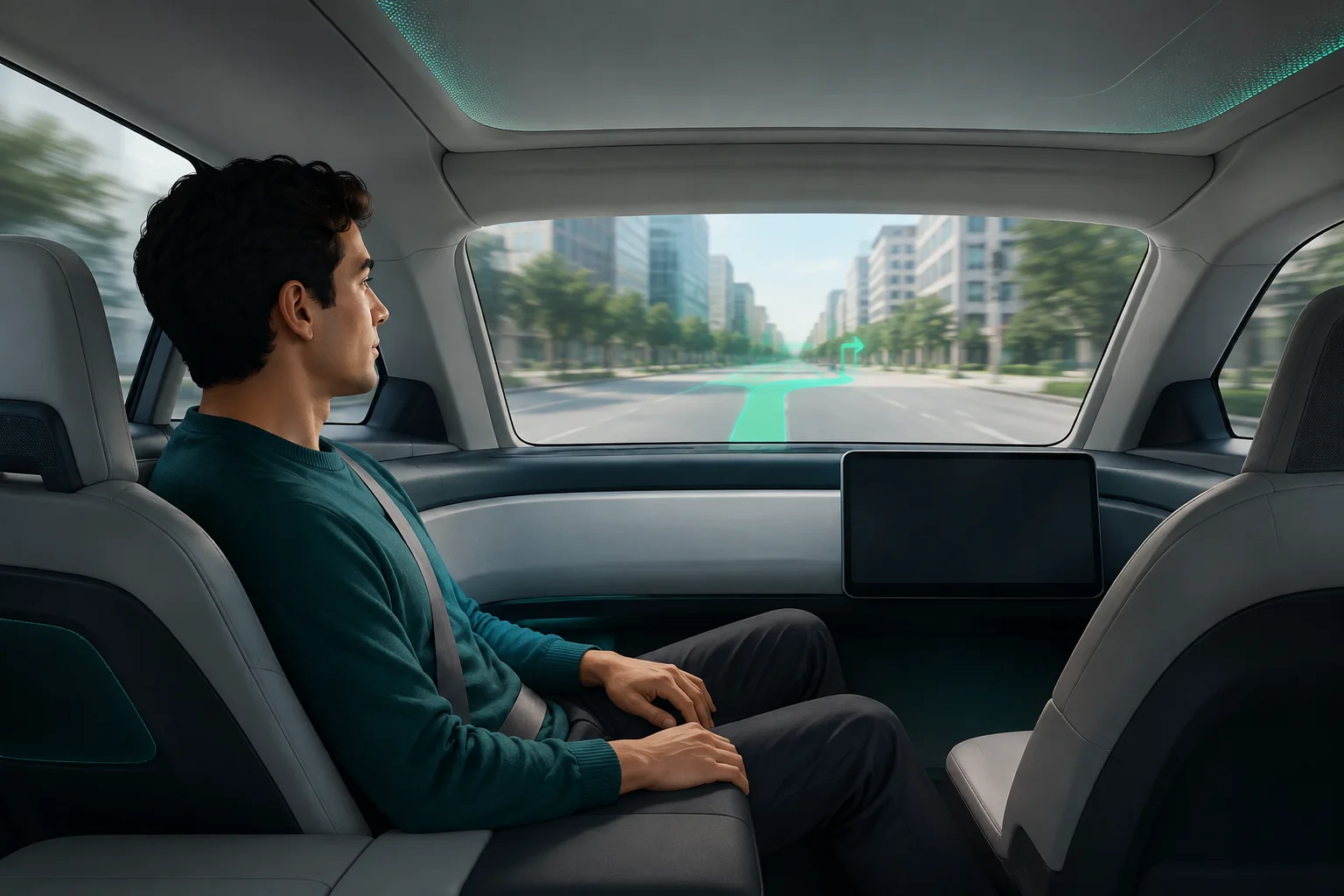
One tempting idea deserves an honest answer. Showing a passenger the path ahead really can help. Diels and Bos point to a 2011 simulator study by Feenstra and colleagues in which passengers rode turbulent aircraft motion, and a rollercoaster-style track of the trajectory to come was drawn onto an earth-fixed visual scene. Airsickness fell by a factor of no less than 4.2. That was a large, world-fixed picture of where the vehicle was about to go, not a route map by your knee, and whether the small version does the same job is still an open question.
What to do on a ride you have already started
If it is building and you are ten minutes from the drop-off, work in this order:
- Get your eyes on the road ahead. Through the windshield if you can see it, otherwise the furthest fixed point out of a side window.
- Put the screen and the phone down. Both are the conflict, not a distraction from it.
- Cool the cabin, use the window. Temperature sits in your cabin preferences in the app and on the in-car screen, and the physical window controls work throughout the trip.
- Slow your breathing. Longer out-breaths than in, quietly, for a minute.
- End the ride early if you need to. Waymo's in-car features put a pull over control in the app and under cabin preferences on the screen. The motion stops with it, which is the one thing nothing else on this list can do.
- Reach for drug-free relief if it has set in. Sound therapy through the headphones you are already wearing is one option, with relief in about 90 seconds, and it works with your eyes closed, which the windshield trick does not.
Do
- Take the seat with the best forward view your operator allows
- Hold the road ahead through the windshield, or the horizon out of a side window
- Set temperature and music at the start, then leave the screen alone
- Cool air on your face, window down if the road allows it
- Pull over early rather than riding it out to the drop-off
Don't
- Watch the car's own street view on the in-car screen while it drives
- Answer messages or read in the back seat
- Book a long first ride through stop-and-go traffic
- Wait until nausea peaks before doing anything
Practical strategies, not measured effects. Which ones matter most depends on you and the route.
Booking a robotaxi when you know you get carsick
None of this is a reason to skip the ride. It is a reason to book it differently:
- Make the first one short. Ten minutes tells you how your body handles it without committing you to forty.
- Avoid stop-and-go where you can choose. Diels and Bos single out the high accelerations of urban and rush-hour traffic as the conditions where self-driving carsickness is hardest to keep manageable.
- Bring whatever already works for you in a car. If that is a medication, ask your doctor or pharmacist about timing before the trip. The common ones are labelled to be taken before travel starts, and the over-the-counter meclizine label says half an hour to an hour beforehand.
- Know the wider picture. The car motion sickness guide covers what changes between vehicles, seats and roads, most of which still applies when the driver's seat is empty.
The bottom line
A driverless car takes away the one thing a passenger was quietly using to stay ahead of the motion: a person doing something you could read. What is left is the road ahead, and for most people that is enough, as long as you look at it.
If you are reading this from the back seat rather than the kerb, skip the theory: the 60-second protocol is the page you want.
For the part of the ride you cannot control
Stop the nausea
You cannot ask a robotaxi to drive differently. You can change what you look at, and you can carry a backup. Dizzout is one option: precisely calibrated audio through any headphones, relief in about 90 seconds. Drug-free, no drowsiness. Free to download on iOS and Android, subscription for full access.
Get your personalized Dizzout plan. Paid subscription for full access.
30,000+ travelers in 30+ countries · How we count

On your phone? Scan to start there.
Comparing apps first? See how the motion sickness apps compare
Frequently asked questions
Does riding in a Waymo make you carsick?
It can, and a driverless ride can feel worse than a normal taxi even though the driving is smoother. The reason is anticipation rather than motion: with no driver to read, you lose the small cues that told your brain what the car was about to do. Sitting where you can see the road ahead and staying off the in-car screen keeps more of that prediction available to you.
Can you sit in the front seat of a Waymo?
Yes. Waymo's rider rules say the driver's seat is off limits but you are free to take any available seat, and its seating page makes the front passenger seat available to riders at least 8 years old, with a maximum of four riders and seat belts on for the whole trip. Rules differ by operator and city and do change, so check the help page for the service you book. The front seat is worth asking about because it has the clearest view of the road ahead.
Why do self-driving cars make me feel sick?
Motion sickness comes from a mismatch between what your inner ear feels and what your eyes report, and prediction is what normally keeps that mismatch small. Drivers rarely get sick because they know what the car is about to do; passengers borrow a weaker version of that from the driver and from the road ahead. A driverless car removes the driver half, so unless you are looking well ahead, each turn and stop arrives as a surprise.
Is a robotaxi worse than a normal taxi for motion sickness?
It depends which part you are comparing. Robotaxis usually produce smoother motion than a human driver, which helps. They also give you nothing to read and nobody to ask for a slower route, which does not. If you are already sensitive in the back of a rideshare, expect the same trigger here with one more cue removed.
What do I do if I feel sick during a driverless ride?
Get your eyes on the road ahead, put the phone and the in-car screen down, cool the cabin or open a window, and slow your breathing. If it keeps building you can end the ride early: Waymo's in-car features put a pull over control in the app and under cabin preferences on the in-car screen. Standing still for a couple of minutes once you are out does more than pushing through to the drop-off.
Someone you know gets motion sick?
Send them this guide. It might be the trip it saves.
Your next question, probably
Which seat should you take?
Ranked, by vehicle
Not your question? Why do cars do this to you at all?Which app is worth the space on your phone?Queasy right now?
About this article
- Diels C, Bos JE. Self-driving carsickness. Applied Ergonomics 2016;53(Pt B):374-382 (author copy)
- Rolnick A, Lubow RE. Why is the driver rarely motion sick? The role of controllability in motion sickness. Ergonomics 1991;34(7):867-879
- Waymo Help: Rider rules (driver's seat off limits, rider limit, seat belts)
- Waymo Help: Seating (front seat age, rider limit, child seats)
- Waymo Help: In-car features (pull over, cabin preferences)
- DailyMed: meclizine HCl OTC label, Directions (take half an hour to an hour before travelling)
This article is informational and not a substitute for medical advice. Talk to your doctor or pharmacist before taking any medication for motion sickness. Operator policies were read on 4 September 2026 and can change, so check the help pages for the service you book. Brand names are trademarks of their respective owners; Dizzout is not affiliated with or endorsed by them.