The short answer
Yes, sitting in the front seat genuinely helps car sickness. The nausea comes from a mismatch between what your eyes see and what your inner ear feels, and the front seat shrinks that mismatch from both sides: the windshield gives your eyes a clear view of the motion your body is actually feeling, and you sit ahead of the rear axle, where the ride is calmer. It will not fix every case on every road, and children under 13 should still ride in the back for safety. But if you are prone to car sickness and the front seat is open, take it.
Everyone prone to car sickness has heard the advice. Sit up front, you'll feel better. It gets passed around with the ginger candy and the acupressure bands, so it is fair to ask whether it is folklore or fact.
This one is fact, and the reasons why are useful, because they tell you exactly what to do on the days you can't have the front seat: the rideshare, the car pool, the family road trip with a full car.
Car sick in the back seat? Drug-free relief that works from any seat: about 90 seconds on any headphones.Starts in your browser · works with any headphones
Stop car sickness. Get your personalized Dizzout plan. Paid subscription for full access.

On your phone? Scan to start there.
The short answer: yes, the front seat genuinely helps
The advice has official backing. The CDC's travel medicine guidance lists sitting in the front seat of a car among the ways to reduce motion sickness on the road, alongside fresh air and a view of the horizon. The advice earns its place because the front seat attacks the problem at its source, twice: once through your eyes, and once through the ride itself.
Neither advantage is magic. A susceptible passenger on a twisty mountain road can still get sick in the front. But moving from the back row to the front passenger seat is the single cheapest upgrade available to you, and it costs nothing but calling it first.
Why the windshield view calms your inner ear
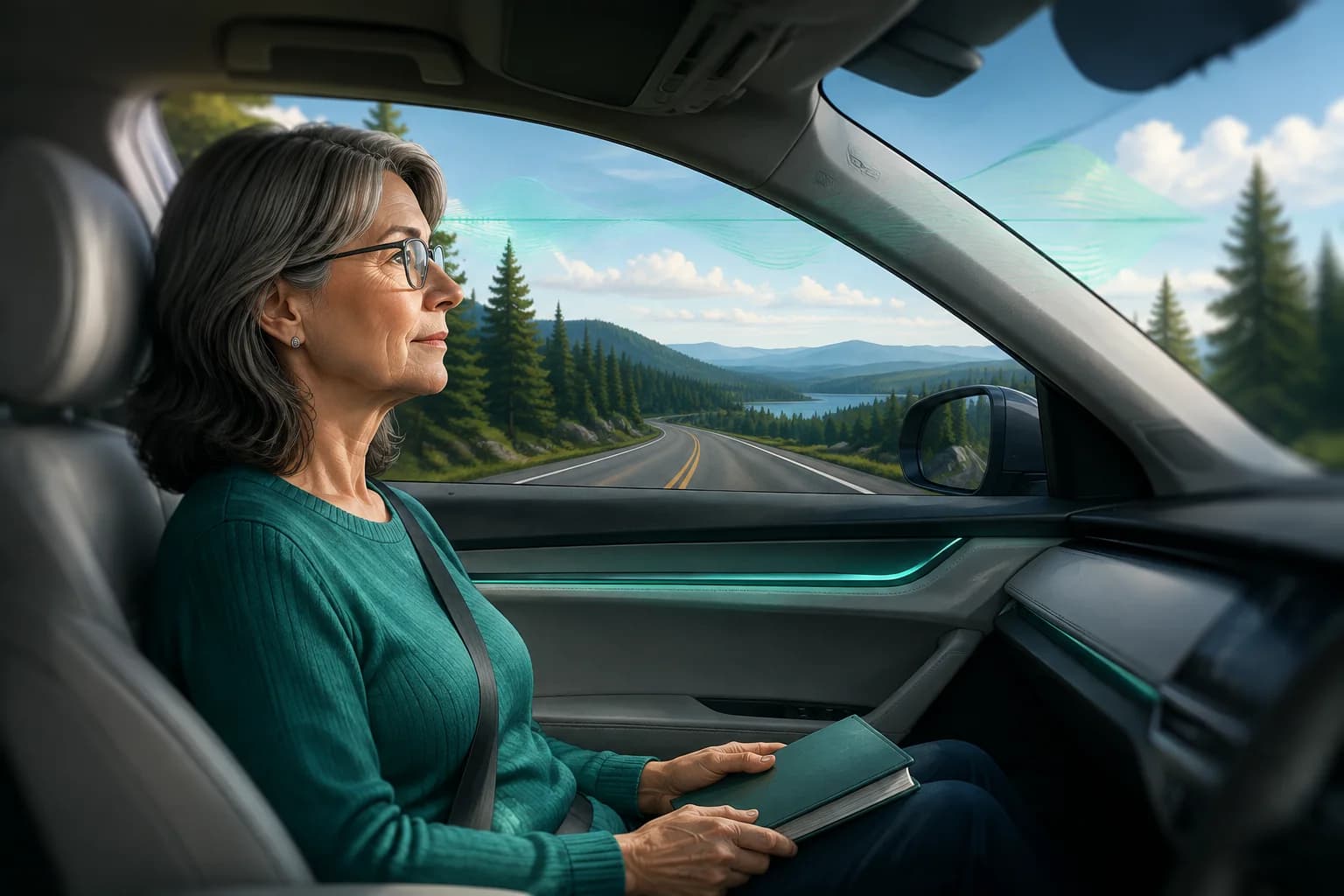
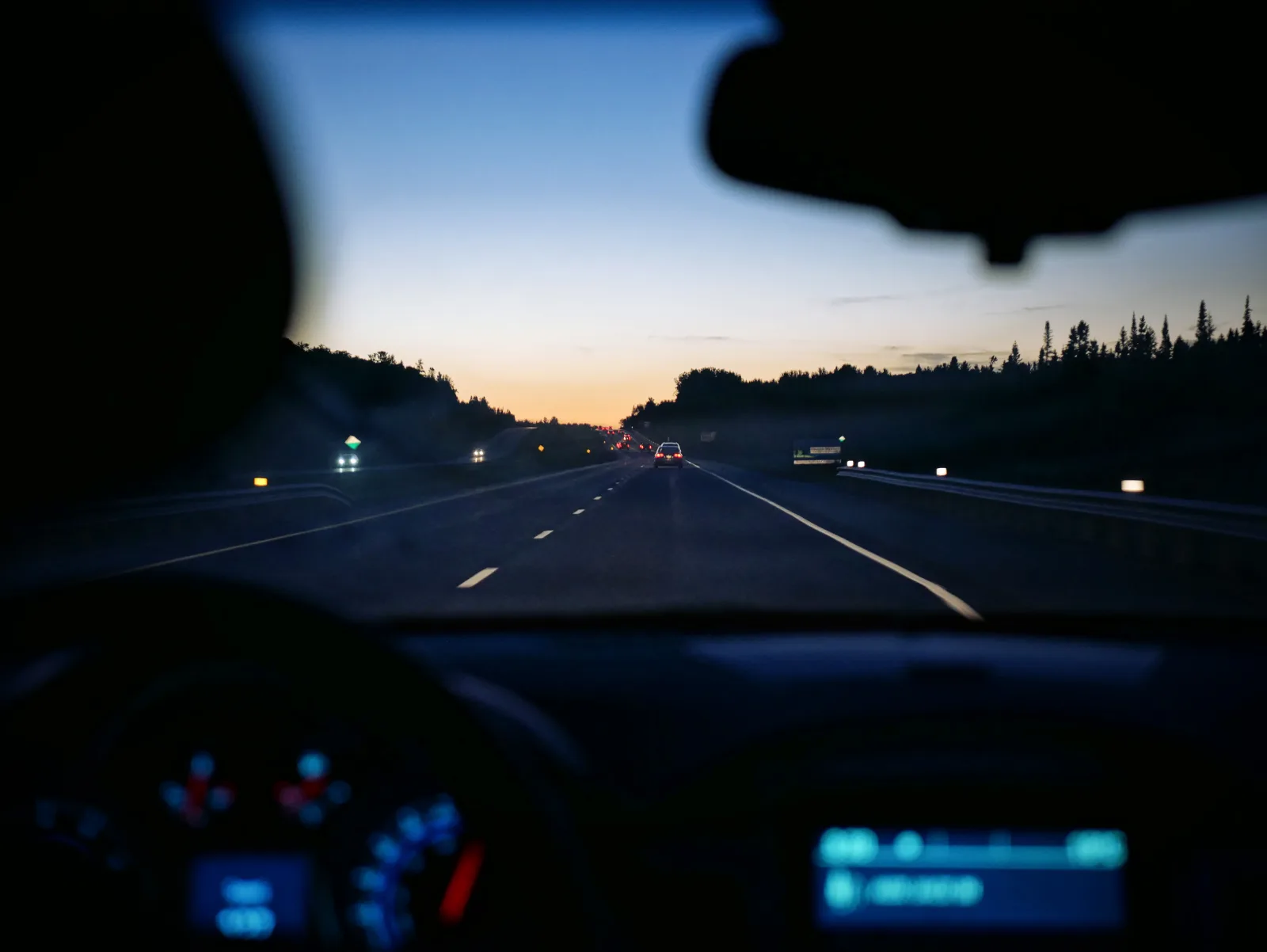
Car sickness starts as an argument between senses. Your inner ear feels every acceleration, turn and bump. If your eyes are filled with a headrest, a seatback and a side window where the world streams past sideways, they report something very different, and your brain reacts badly to the two stories. In the front seat, your eyes get the road ahead: the same forward motion, the same curves, the same slowing traffic your inner ear is registering. The two stories finally match.
The view does a second, quieter job: prediction. When you can see the bend coming, your brain braces for the turn before your inner ear feels it. In a classic experiment, pairs of people rode out the same nauseogenic motion, one with control over it and one without, and the person in control reported far fewer symptoms. That finding is the standard explanation for why the driver almost never gets sick. The front passenger cannot steer, but the windshield hands them the driver's preview.
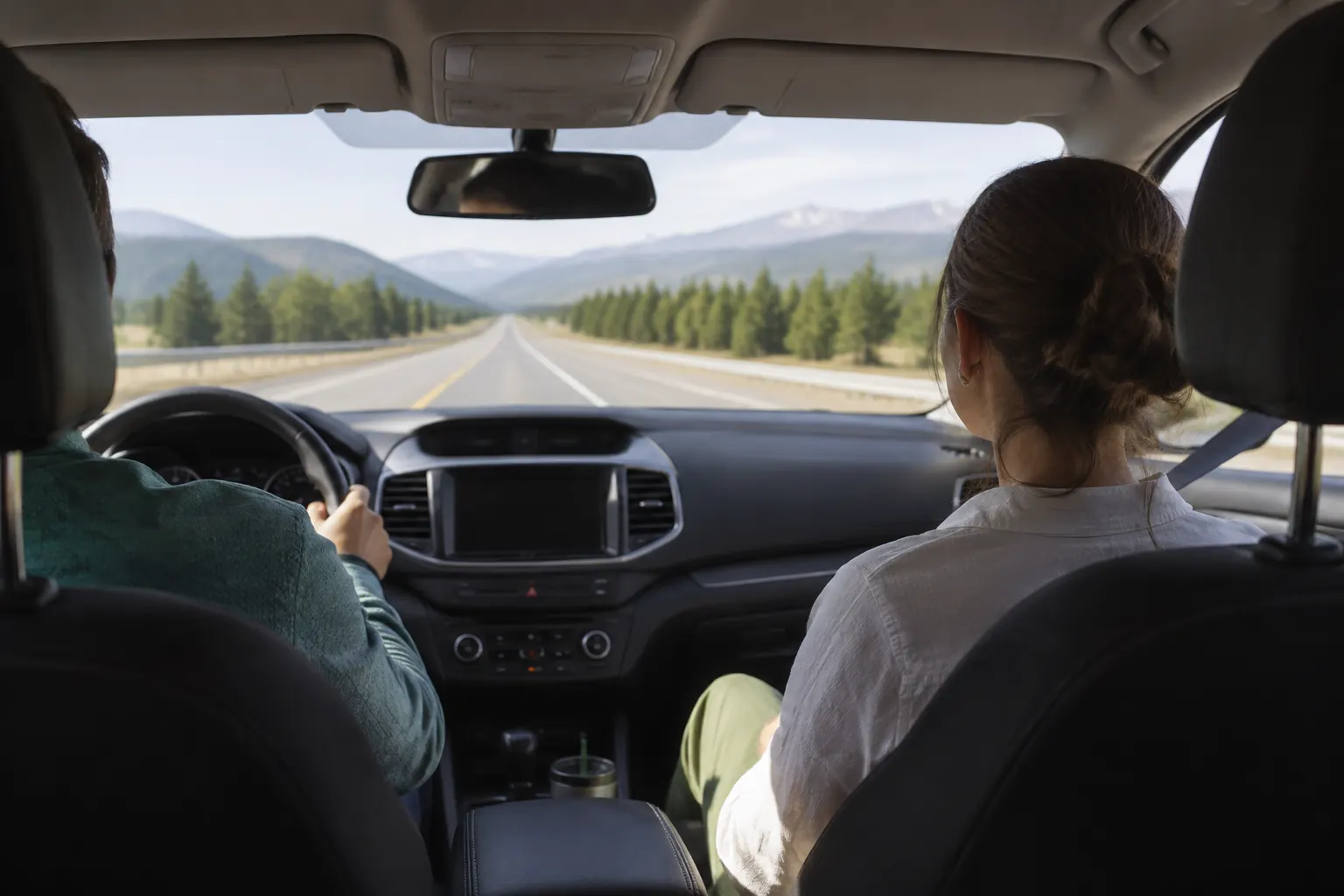
- Prefer
- Front passenger. Full windshield view, ahead of the rear axle, and you see every curve coming.
- Alternative
- Middle rear, if it gives you a clear line of sight through the windshield.
- Watch for
- Third row or a rear-facing seat. No forward view and the most motion in the car.
The suspension advantage nobody mentions
The view gets all the credit, but the front seat also rides differently. Sit near or over the rear axle and you feel bumps as sharper vertical hits, and every pitch of the body, nose dipping under braking, tail settling under throttle, moves you through a bigger arc than someone sitting further forward. Vans and three-row SUVs make this obvious: the third row bounces through motion the front seats barely register.
So the back row of the same car, on the same road, simply serves your inner ear a rougher input while serving your eyes a poorer view. That combination is why so many people say they only get sick in the back, and it is the whole case for the back seat page existing at all.
When the front seat is not enough
The front seat lowers the dose of conflict. It does not make you immune. Three things can still push you over the line. First, looking down: a phone or a book in the front seat rebuilds the exact mismatch the windshield just solved, because your eyes lock onto a still page while the car moves. Second, the road itself: switchbacks and stop-and-go traffic can outrun anyone's threshold. Third, your own baseline, which varies a lot from person to person; the motion sickness test gives you an honest read on yours in about two minutes.
The strongest version of the seat upgrade is driving yourself, since the driver both controls and predicts every movement. But you cannot always drive, and nobody should drive queasy. For everything beyond seat choice, from air and gaze habits to medicine timing, the full guide to stopping motion sickness walks the whole toolkit.
Back seat survival: sightlines, air and stops
Some days the back seat is simply yours. The goal back there is to rebuild what the front seat gives for free: a forward view, calm air, and a brain that is not fighting its inputs.
Do
- Take the middle rear seat if it gives you a windshield view
- Keep your eyes up and out, on the road or the horizon
- Point a vent at your face or crack the window
- Agree on a stop every hour or so before you set off
- Eat light before the drive, and sip water during it
Don't
- Scroll your phone or read once the car is moving
- Sit staring at the seatback in a warm, closed cabin
- Wait until the nausea peaks before doing anything
- Ride on an empty stomach or straight after a heavy meal
Practical strategies, not measured effects. Which ones matter most is personal.
Two pages go deeper than this list: why the back seat hits harder covers the mechanism, and the step-by-step back seat guide turns it into a routine for the ride. And keep something for the moment prevention fails. Sound therapy through headphones is one option built for exactly that moment: it is drug-free, causes no drowsiness, works from any seat in the car, and is designed to help calm the response in about 90 seconds.
Kids who are too young for the front seat
Here the comfort advice hits a hard safety wall. NHTSA recommends that children under 13 ride in the back seat, properly restrained for their age and size, because the back is the safer place in a crash and front airbags are built for adult bodies. Car sickness is miserable; it is never a reason to move a child up front early.
Work within the back row instead. Give the child the seat with the best forward view, usually the middle, and a correctly fitted booster often raises a smaller child enough to actually see out. Swap screens and books for window games, music or audio stories that keep eyes up. Run cool air toward their face and build in regular stops. If you are considering any motion sickness medicine for a child, check with your pharmacist or pediatrician first; ages, doses and suitability differ by product, and a doctor who knows your child beats any general article.
Rideshares and car pools: making the back bearable
Adults meet the back seat most often in someone else's car, where you cannot rearrange the seating chart. You still have moves. Ask for the front seat; in a rideshare most drivers will say yes, and in a car pool a plain "I get car sick in the back" settles it fast. If the back it is, take the middle belt when the view is better there, sit tall, and look through the windshield between the front seats rather than out the side glass.
Then manage the air and the timeline. Ask for a cooler cabin or a cracked window, skip the phone until you are out of the car, and on longer shared drives, speak up early rather than white-knuckling it, because a two-minute stop beats the alternative for everyone in the car. If it is already building, the feel sick right now protocol is written for exactly that moment.
The front seat advice survives because it is true. Claim it when you can, rebuild its ingredients when you can't, and keep relief within reach for the rides where the seating chart wins.
For the seats you didn't choose
Stop the nausea
Rideshares, car pools and full cars put adults in the back row all the time. Dizzout plays precisely calibrated audio through any headphones, one option for when the nausea starts and the front seat was never on offer. Drug-free, no drowsiness, about 90 seconds. Free to download on iOS and Android, with a paid subscription for full access.
Get your personalized Dizzout plan. Paid subscription for full access.
30,000+ travelers in 30+ countries · How we count

On your phone? Scan to start there.
Comparing apps first? See how the motion sickness apps compare
Not travelling yet? Remind me the day before my trip
Frequently asked questions
Why does the front seat help with car sickness?
Two reasons. The windshield view lets your eyes see the same motion your inner ear feels, which shrinks the sensory mismatch that causes the nausea, and seeing the road ahead lets your brain predict curves and braking before they arrive. The front seat also sits ahead of the rear axle, so bumps and body pitch move you less than they move the back row.
Why do I only get car sick in the back seat?
The back seat gives you a worse version of the same ride. Your view is mostly headrests and side windows, so your eyes lose the forward motion your inner ear is reporting, and sitting near the rear axle means bumps and pitch hit harder. Same car, same road, bigger sensory conflict. It is one of the most common patterns in car sickness, not a quirk of yours.
At what age can a child ride in the front seat?
NHTSA recommends children ride in the back seat until age 13, in the right restraint for their age and size, because the back is the safer position in a crash and front airbags are designed for adults. Local laws vary, but the safety guidance does not bend for car sickness. Help a younger child in the back instead: the seat with the best forward view, eyes up, cool air, and regular stops.
What helps car sickness when you have to sit in the back?
Rebuild what the front seat provides. Take the seat with a windshield view, keep your eyes on the road or horizon instead of a phone, get cool air on your face, and plan stops before you leave. If nausea starts anyway, act early: fix your gaze forward, breathe slowly, and use whatever relief you carry. Sound therapy through headphones is one drug-free option that works from any seat.
Does driving yourself stop car sickness completely?
Not completely, but it is the strongest seat change there is. Drivers rarely get motion sick because they control the motion and predict every turn and stop before feeling it. Rarely is not never: on hard roads, or with high personal susceptibility, even drivers can feel off. And driving is not an option for kids, for shared rides, or once you already feel sick, so it pays to have a back seat plan too.
Where is the best place to sit in a car to avoid car sickness?
The front passenger seat, facing forward. The windshield lets your eyes see the motion your inner ear feels, and you sit ahead of the rear axle, where the ride is calmer. If you have to ride in the back, choose a seat with a view forward through the windshield and keep your eyes on the road ahead. Driving yourself helps most of all, because a driver anticipates every turn.
Someone you know gets motion sick?
Send them this guide. It might be the trip it saves.
Your next question, probably
Why does the back row hit so much harder?
The back-seat problem, explained in full
Not your question? Stuck back there today?What is car sickness, exactly?Feeling sick right now?
About this article
- CDC Yellow Book, motion sickness chapter. Includes the front seat recommendation for car travel.
- NHTSA. Car seats and booster seats: children under 13 ride in the back seat.
- Rolnick A, Lubow RE. Why is the driver rarely motion sick? The role of controllability in motion sickness. Ergonomics, 1991.
- MedlinePlus (NIH). Motion sickness overview.
This article is informational and not a substitute for medical advice. Talk to your pediatrician before giving a child any motion sickness medicine, and follow your local child passenger safety laws.