The short answer
The steadiest seat on a plane is over the wing, by the window. An aircraft pitches and rolls around its center of gravity, which sits near the wings, so the seats there move least while the tail swings most. The front cabin is second best, and the last rows are the roughest place to sit. A window seat adds a view of the horizon, which gives your eyes the same motion story your inner ear is telling. If the seat map leaves you the back, there is still an in-seat plan.
Ask around and you will hear every theory: the front is smoothest, the back is fine once you're cruising, it makes no difference at altitude. Then one bumpy descent in row 34 settles the argument, usually while the drink cart blocks the aisle to the bathroom.
The physics here is simple, and it is the same reason the back of a school bus bounces more than the front. Here is where to sit, why it works, and what to do when booking leaves you nothing to choose.
Airsick when the bumps start? Drug-free, works from any row, about 90 seconds on any headphones.Starts in your browser · works with any headphones
Ease plane sickness. Get your personalized Dizzout plan. Paid subscription for full access.

On your phone? Scan to start there.
The short answer: over the wing, window seat
Book a window seat in the rows aligned with the wing. That puts you close to the aircraft's center of gravity, where pitching and rolling movement is smallest, and it gives your eyes a fixed anchor: the wing against the horizon. The CDC's travel health guidance and MedlinePlus both point to the wing seats as the place where you feel the least motion. Your second choice is the forward cabin. The seats to avoid are the last few rows.
- Prefer
- Over the wing, near the center of gravity. Pitch and roll movement is smallest here.
- Alternative
- Forward cabin. Steadier than the tail, without the wing's full advantage.
- Watch for
- The last rows. Furthest from the pivot, so every movement is amplified.
Why the plane pivots around the wing
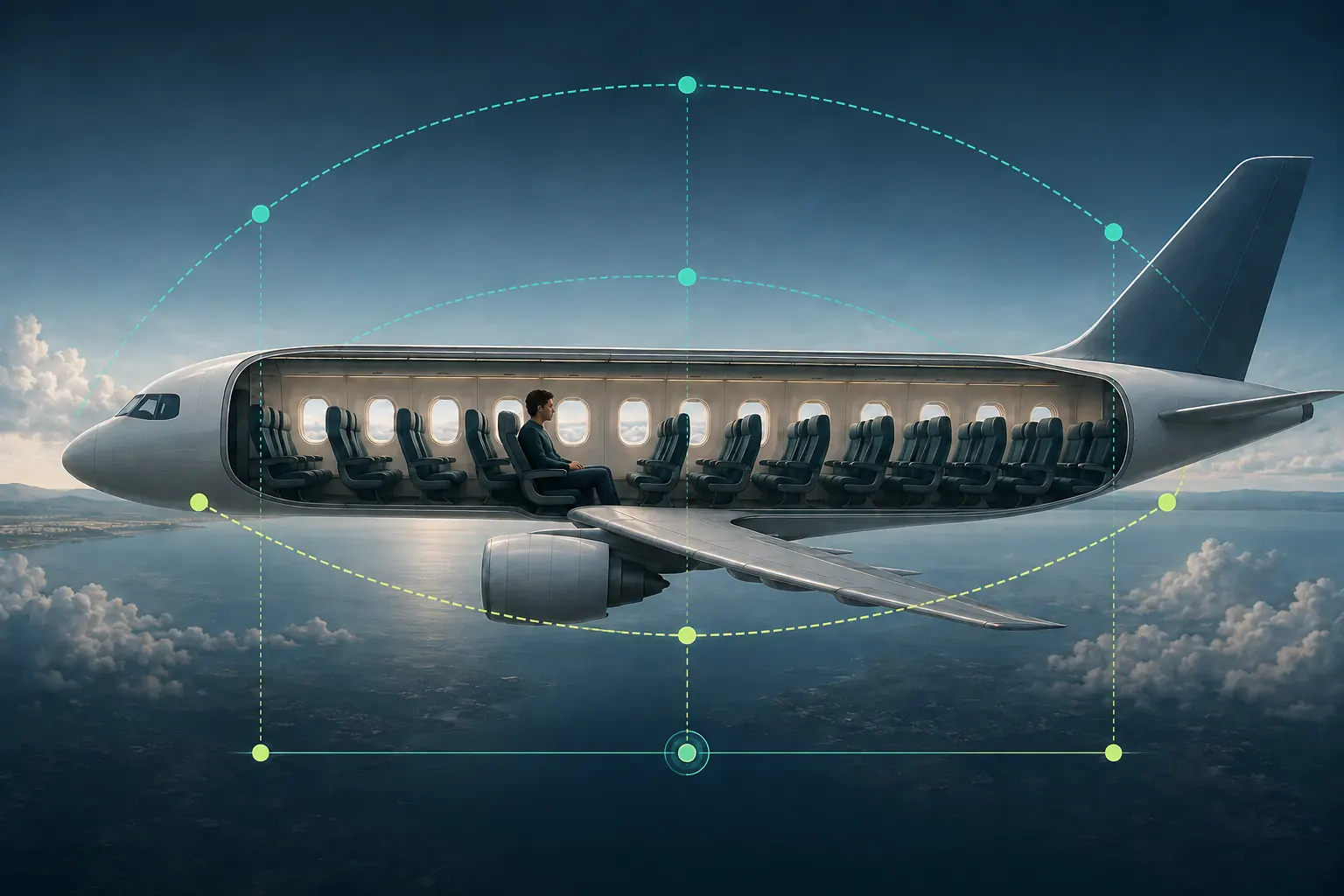
A plane in flight rotates around its center of gravity, and the center of gravity sits near the wings. When the nose pitches up or a gust rolls the aircraft, the whole cabin rotates around that point. Sit at the pivot and you mostly turn in place. Sit at the tail and you swing through an arc, the way the end of a seesaw travels further than its middle.
Turbulence adds sharp vertical bumps on top, and those are also felt least near the center of gravity and most at the ends of the fuselage. That is why the same patch of rough air can feel like a shrug in row 14 and a drop in row 34.
Front cabin vs back rows: what actually differs
If the wing rows are taken, go forward, not back. The front cabin sits ahead of the center of gravity, so it moves more than the wing rows but noticeably less than the tail.
The back combines the worst of everything for a queasy flyer. You ride the longest arc of every pitch and roll. On many aircraft you also sit next to the rear galley and lavatories, so smells drift your way, and by the time the cart reaches you the cabin has been bumping for a while. Front or back of the plane? Front, every time. But the wing rows beat both.
Window, middle or aisle when you feel queasy
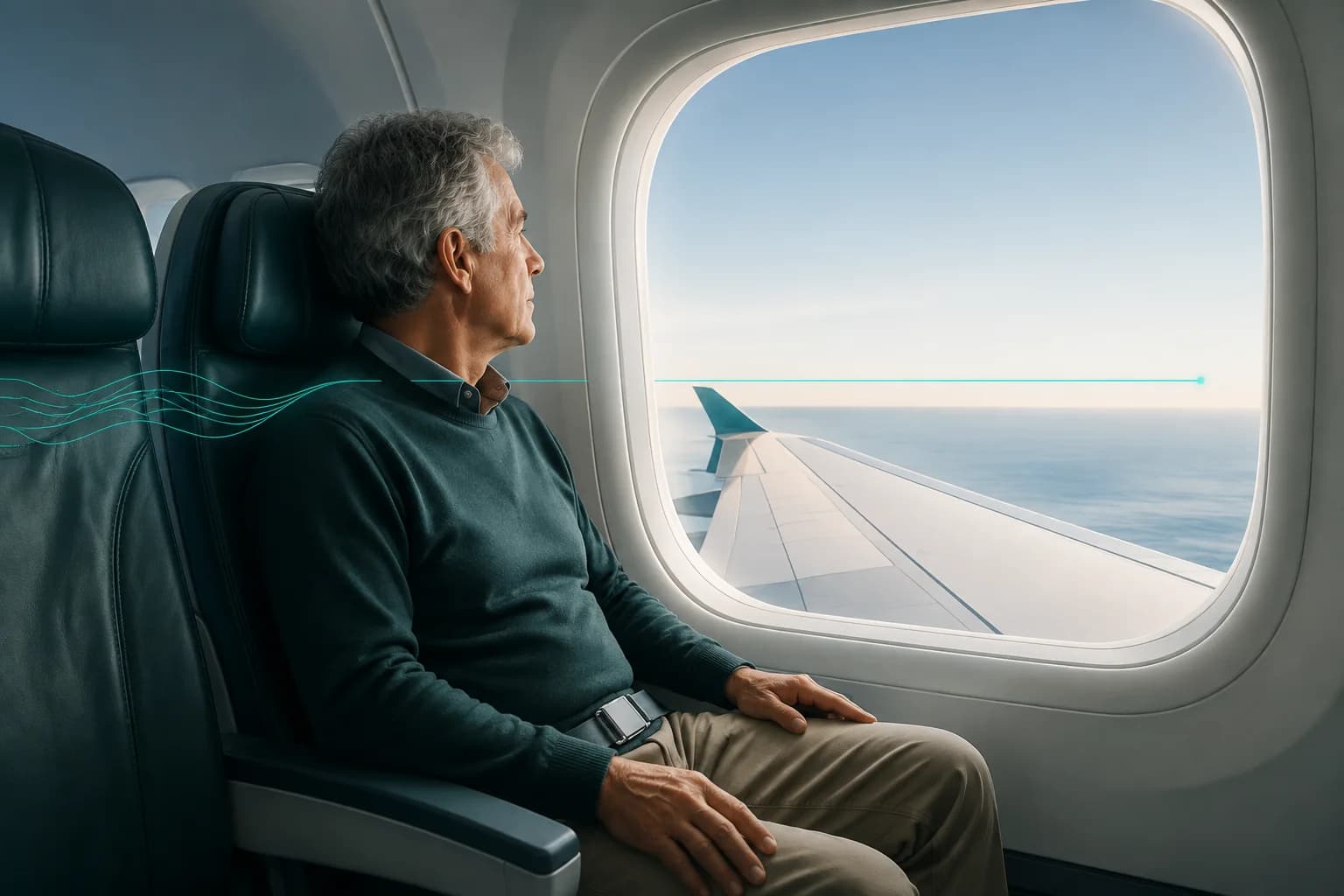
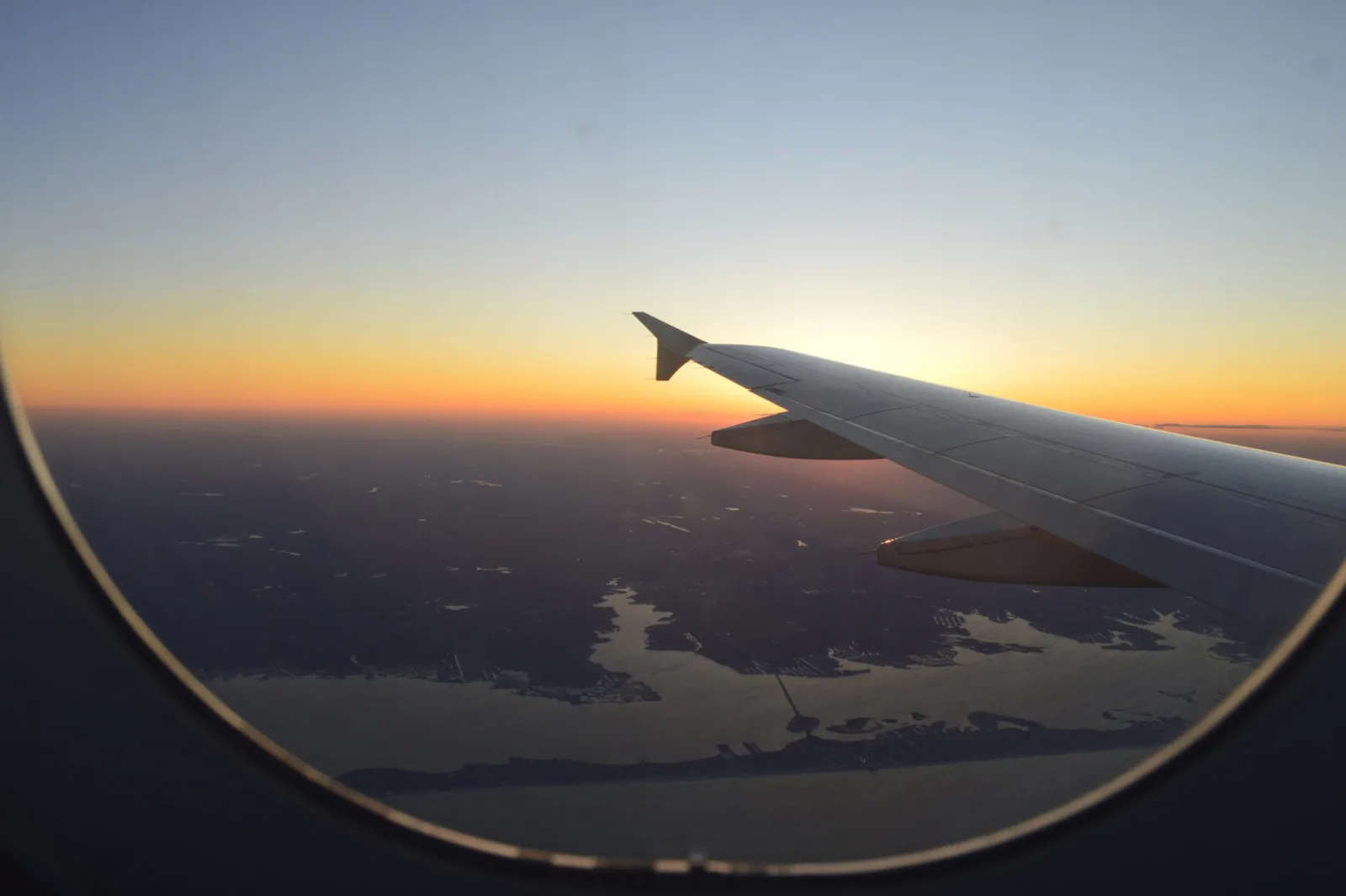
The window seat wins for one reason: the horizon. Motion sickness is your brain getting two stories that do not match, motion from the inner ear and stillness from the eyes. A view of the horizon lets your eyes confirm what your body feels, which shrinks the mismatch. We wrote a full guide to using a window seat well, down to which side to pick.
The aisle gets you to the bathroom fast and lets you stretch, but it gives your eyes nothing to anchor on and the cart clips your elbow. The middle is the worst of both. If you must trade, an aisle seat in the wing rows still beats a window seat in the back: position along the fuselage matters more than the letter on your boarding pass.
Does aircraft size matter
Generally, yes. A bigger, heavier aircraft responds less to the same gust, so the ride through identical air feels calmer. Small regional planes also spend more time at lower altitudes, where more of the weather lives. Given the choice between a small regional hop and a larger jet on the same route, the larger jet is usually easier on your stomach.
No plane outruns a rough day, though. Size shifts the odds. It does not remove them, which is why the rest of this plan matters.
Booking tactics: picking the wing rows on a seat map
- Open the seat map before you pay. Most maps draw the wings. Aim for the rows between the wing's leading and trailing edges, window if you can get it.
- Consider the exit rows. On many narrow-body jets they sit over the wing, and the extra legroom is a bonus, not the point.
- Beware basic economy. The cheapest fares often assign seats at check-in, and the leftovers cluster in the back. If flying makes you sick, the seat selection fee is part of the remedy budget.
- Check in early if you did not pick a seat. The earlier you check in, the more of the map is still open.
- Fly in the morning when you can. Afternoon heat stirs up the bumpy convective air that makes summer descents lively. Morning air is often calmer.
- Know your risk before you spend. The motion sickness test takes a few minutes and tells you how susceptible you are, which makes the seat fee an easy call either way.
Stuck in the back? Your in-seat plan
Sometimes the map is full, the fare assigns you row 34, and the trip happens anyway. Position is only one lever. Here is what to do from any seat.
Do
- Point the overhead vent at your face
- Rest your head against the headrest and keep it still
- Look at the horizon, or close your eyes
- Breathe slowly and evenly
- Have headphones and relief ready before takeoff
Don't
- Read or scroll while the cabin is bumping
- Board on a heavy meal or alcohol
- Stare at the seatback screen through turbulence
- Wait until nausea peaks before acting
Practical strategies, not measured effects. Which ones help is personal.
- Cool air first. Open the vent and aim it at your face. A warm, stale cabin makes queasiness worse; cool moving air helps most people.
- Keep your head still. Press it into the headrest so the small jolts pass through the seat instead of your inner ear.
- Give your eyes the right input. Horizon if you have a window, closed eyes if you do not. The seatback screen and your phone feed the mismatch.
- Eat light, skip alcohol. A heavy or boozy start makes every later bump cost more.
- Have drug-free relief ready. If it sets in anyway, sound therapy through headphones is one option designed to help calm the response in about 90 seconds, and it works with your eyes closed, from any row, with the seatbelt sign on.
What to do when turbulence starts anyway
Keep your seatbelt fastened whenever you are seated. That is the FAA's standing advice for avoiding injury, and it happens to be good advice for your stomach too: a snug belt keeps your body moving with the plane instead of a beat behind it. Then run the plan above. Head against the headrest, vent on, eyes to the horizon or closed, slow breaths, screen off.
With your belt on, ordinary turbulence is a comfort problem, and it passes. If the queasiness follows you off the plane, the air sickness page covers the wobbly hour after landing. And before the next trip, the full pre-flight routine walks through everything from booking to touchdown, so the seat is your first line of defense instead of your only one.
For the flights where row 34 is what you got
Stop the nausea
Seat strategy ends when the map fills up. Dizzout plays precisely calibrated audio through any headphones, from any seat on the plane. Drug-free, no drowsiness, about 90 seconds, and it is already in your pocket when the descent gets bumpy.
Get your personalized Dizzout plan. Paid subscription for full access.
30,000+ travelers in 30+ countries · How we count

On your phone? Scan to start there.
Comparing apps first? See how the motion sickness apps compare
Not travelling yet? Remind me the day before my trip
Frequently asked questions
Is the front or back of the plane better for motion sickness?
The front, clearly. The back rows sit furthest from the aircraft's center of gravity, so they swing through the longest arc in every pitch and roll and feel turbulence the most. The front cabin is calmer, and the rows over the wing are calmer still, because they sit closest to the point the plane rotates around.
Why is over the wing the most stable part of a plane?
A plane rotates around its center of gravity, which sits near the wings. Seats close to that pivot mostly turn in place, while seats at the nose and tail swing through an arc, like the ends of a seesaw. Vertical bumps from turbulence are also felt least near the center of gravity, so the wing rows get the calmest version of any rough patch.
Are bigger planes better for motion sickness?
Usually. A heavier aircraft responds less to the same gust, and larger jets tend to cruise above more of the weather that small regional planes fly through. Size only shifts the odds, though: on a genuinely rough day every aircraft moves, so pair the bigger plane with a wing-row window seat and an in-seat plan.
Which seats should you avoid on a plane?
The last few rows, first: they move the most, and on many aircraft they sit next to the rear galley and lavatories, which adds smells to the motion. Middle seats anywhere are the next to skip, since they give your eyes no horizon and your head nothing to lean against. If the wing rows are gone, a forward seat beats anything in the tail.
What helps mid-flight if you already feel sick?
Point the air vent at your face, press your head into the headrest, and give your eyes either the horizon or darkness, not a screen. Breathe slowly and skip food and alcohol until it settles. Sound therapy through headphones is one drug-free option designed to help calm the response in about 90 seconds, and it works with your eyes closed from any seat.
Someone you know gets motion sick?
Send them this guide. It might be the trip it saves.
Your next question, probably
Window seat booked: how do you use it well?
Strategies for the seat you picked
Not your question? Want the full pre-flight routine?Why do planes hit you harder than cars?Feeling it right now?
About this article
This article is informational and not a substitute for medical advice. Seat layouts vary by airline and aircraft; check the seat map for your specific flight. If flying reliably makes you sick despite good seat choices, or dizziness lasts well after landing, talk to your doctor.