The short answer
Your medication did not give you motion sickness, but it moved your starting line. Nausea and vomiting are listed among the most common adverse reactions on the Ozempic, Wegovy and Mounjaro labels, and all three say the medicine delays gastric emptying, so food sits in your stomach longer than it used to. A journey that used to begin from neutral now begins from slightly queasy, and the same winding road tips you the rest of the way. Most of what you can change is about food, timing, and asking your prescriber before you add anything on top.
You have driven this road a hundred times and the road has not changed. What changed is the weekly injection you started a few weeks ago, Ozempic, Wegovy or Mounjaro, and now you are winding the window down twenty minutes in.
Two separate things are happening in the same stomach. They feel identical from the inside and they do not answer to the same fixes. Here is how to tell them apart, and what to change about the journey.
Prone to motion sickness? Nothing to swallow and nothing to absorb: sound therapy through the headphones already in your bag, about 90 seconds.Starts in your browser · works with any headphones
Get your personalized Dizzout plan. Paid subscription for full access.

On your phone? Scan to start there.
Two kinds of nausea that feel the same
Motion sickness is a sensory argument. Your inner ear feels the car move while your eyes, locked on a phone, insist you are sitting still. The brain gets two accounts it cannot reconcile and answers with nausea, cold sweat and a headache. Nothing in that mechanism involves your stomach chemistry.
Medication nausea is a different event with the same face. It comes from the medicine, not the road, and it is on the label rather than inferred. The confusing part is that both can happen in the same hour, and neither announces which it is.
What the label says about the stomach
Two facts come straight from prescribing information, so you do not have to take anyone's word for them. First, nausea and vomiting sit among the most common adverse reactions. The Ozempic label lists nausea, vomiting, diarrhea, abdominal pain and constipation in that group. The Wegovy label, same medicine at weight-loss doses, opens its list with nausea, diarrhea and vomiting, and the Mounjaro label reads much the same. Ozempic and Mounjaro both add that most of those reports came during dose escalation, and the Mounjaro label says they decreased over time.
One difference, in case you have seen it argued: Mounjaro's tirzepatide acts on two gut hormone receptors where semaglutide acts on one. The labels still say the same thing about the stomach.
Second, the fact that matters for travel: these medicines delay gastric emptying. All three labels say so, along with the note that it has the potential to affect how oral medicines taken at the same time are absorbed. In everyday terms, food leaves your stomach more slowly than it did a month ago. You feel full sooner and stay full longer.
Nobody can tell you how much those two effects add together on a moving road. We have not found a study of that intersection, so be suspicious of any number attached to it. What is fair to say is that the adjustments below are cheap to try.
Why the eat before you travel advice stops fitting
Standard travel advice is to avoid an empty stomach and eat something light an hour or two before you go. Our eating before travel page grades it untested, because nobody has run the trial, though an empty stomach is not protective either. The specifics of the meal sit in a separate guide.
What stops fitting is the hidden timing assumption. That advice quietly expects a light meal to be largely on its way out of your stomach by the time the car pulls away, and delayed gastric emptying is the labeled effect that changes it. So the adjustment is smaller and earlier rather than none at all: still eat, less of it, further ahead of departure, and stop when you feel full rather than when the plate is empty.
Travelling on nothing is its own problem, and a bigger one if you are also managing blood sugar. If you are not sure what smaller and earlier means for you, ask your prescriber, pharmacist or dietitian. It is a quick question.
Adding a motion sickness tablet on top: the question to ask
A website cannot tell you whether to take a travel sickness tablet alongside a GLP-1, and should not try. What it can do is hand you the two label-level facts that make the conversation with your pharmacist a short one.
- An oral tablet is one of the things being absorbed differently. The labels say delayed gastric emptying has the potential to affect the absorption of oral medicines taken at the same time. Ask about timing rather than assuming it.
- The usual travel tablets are sedating antihistamines. The CDC Yellow Book says the most common side effect of motion sickness medication is drowsiness or sedation. If you are already flat from nausea, learn that before the drive. What each one is sits on the medication pages, including dimenhydrinate and meclizine.
Injection day and travel day
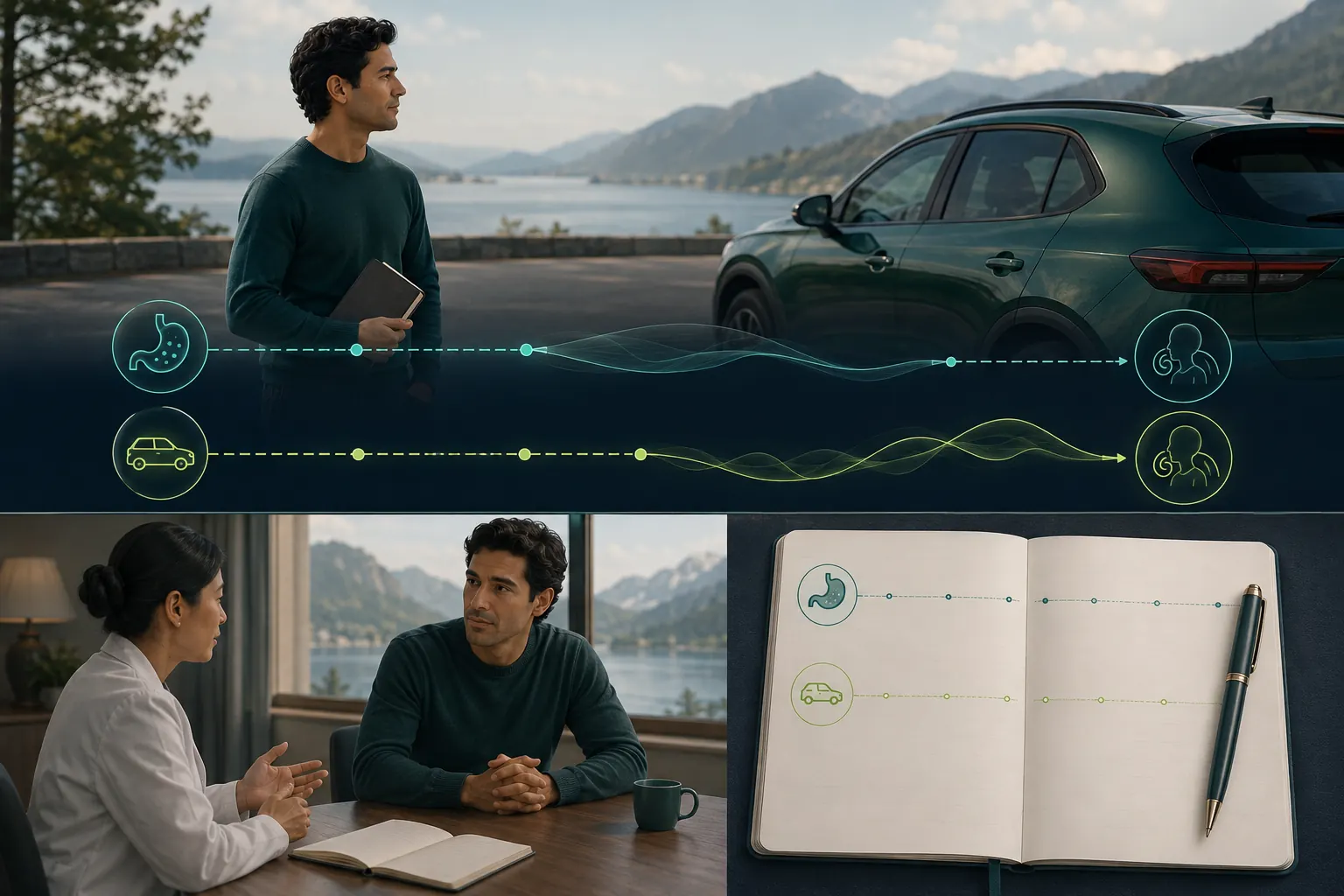
People notice patterns: a trip that felt fine one week and awful the next, with the only difference being where it fell relative to a dose. The labels support one version of this. Both the Ozempic and Mounjaro labels say most reports of nausea and vomiting came while the dose was being raised, and the Mounjaro one adds that they decreased over time. Whether your own nausea peaks on a particular day of the week is not something the prescribing information describes, so check it rather than assume it. Note each journey with its date, your dose timing, what you ate and how you felt. Three or four entries usually show a shape.
What helps on the journey itself
Everything below aims at the sensory half of the problem, the half the road is causing. None of it does anything about medication nausea. What it can do is stop the road from adding to a stomach that is already busy.
- Take the front seat and watch the road. Giving your eyes the same story your inner ear is telling is the best-supported free fix there is. The full list of what works starts there.
- Put the phone down. Reading in a moving car widens the gap between what your eyes see and what your body feels.
- Cool air on your face. A cracked window or a vent aimed at you is the oldest advice there is, and nobody has tested it properly. It costs nothing and it usually comes with a view out, so it stays on the list.
- Small sips, not a big drink. With a stomach emptying slowly, volume works against you. Sip water rather than filling up before you set off.
- Have something drug-free ready. Sound therapy through headphones is one option designed to help calm the motion sickness response in about 90 seconds, and it adds nothing to your stomach.
Do
- Eat smaller and earlier than you used to, and stop when you feel full
- Ask your pharmacist before adding any travel sickness tablet
- Take the front seat, watch the road, keep cool air moving
- Write down how each journey went relative to your dose and meals
Don't
- Move, delay or skip a dose to suit a trip
- Travel on nothing at all to avoid feeling full
- Assume an oral tablet behaves the way it used to
- Read or scroll once the queasiness starts
Practical strategies, not measured effects. The medication questions belong with your prescriber or pharmacist.
What to tell your prescriber
MedlinePlus puts it simply: tell your doctor and pharmacist what prescription and nonprescription medicines, vitamins, supplements and herbal products you take or plan to take. A travel sickness tablet counts, even one you have bought off a shelf for years without thinking about it.
Four things make the appointment useful: when the nausea started relative to starting or raising your dose, whether it happens away from cars and boats, what you have already changed about food and timing, and the name of anything you want to add for a journey. Give the trip date, so the answer is about your week rather than about travel in general.
Some symptoms are not a travel problem at all. Severe or persistent nausea, vomiting you cannot keep ahead of, signs of dehydration, or severe abdominal pain are reasons to contact your prescriber rather than to plan around.
Relief you do not have to swallow
Stop the nausea
You are already carrying one medicine and you may not want a second one on top. Dizzout plays precisely calibrated audio through any headphones instead, one option designed to help calm the motion sickness response in about 90 seconds. Drug-free and no drowsiness. It does nothing about medication nausea, and it is not a reason to change anything your prescriber set. Free to download on iOS and Android.
Get your personalized Dizzout plan. Paid subscription for full access.
30,000+ travelers in 30+ countries · How we count

On your phone? Scan to start there.
Comparing apps first? See how the motion sickness apps compare
Frequently asked questions
Does Ozempic make motion sickness worse?
We have not found a study of that specific combination, so nobody can put a number on it. What the Ozempic prescribing information does say is that nausea and vomiting are among the most common adverse reactions and that the medicine delays gastric emptying. If a journey already made you queasy, starting from a stomach that is emptying slowly is a harder starting point. Ask your prescriber if travel is now reliably difficult.
Can you take Dramamine with Ozempic?
That is a question for your pharmacist or prescriber, and it takes them about a minute. Two facts frame it: the labels for these medicines say delayed gastric emptying has the potential to affect the absorption of oral medicines taken at the same time, and the CDC Yellow Book says the most common side effect of motion sickness medication is drowsiness or sedation. Bring the names of everything you take, including anything bought over the counter.
Why do I feel carsick since starting Wegovy?
Wegovy contains semaglutide. Its label opens the most common adverse reactions with nausea, diarrhea and vomiting, and states that the medicine delays gastric emptying. Motion sickness is a separate mechanism, a mismatch between what your eyes and your inner ear report, but the two land in the same place and can stack on the same drive. If the nausea is also there when you are not travelling, the road is not the whole story.
Should I eat before travelling on a GLP-1?
Usually yes, but smaller and earlier than the standard advice assumes. That advice quietly expects a light meal to have largely left your stomach by departure, and delayed gastric emptying is the labeled effect that changes it. Travelling on nothing at all is its own problem, especially if you are managing blood sugar, so ask your prescriber or dietitian what the smaller, earlier version should look like for you.
Is this the medication or is it motion sickness?
Motion sickness starts after the movement does, gets worse when you look down at a screen, eases when you watch the road, and fades once you stop. Medication nausea tends to be there before you get in the car, ignores whether you are moving, and tracks meals and your dose schedule. If both descriptions fit, both are probably happening. Writing down a few journeys with times, meals and dose timing is the quickest way to see which one dominates.
Someone you know gets motion sick?
Send them this guide. It might be the trip it saves.
Your next question, probably
What works without adding a second drug?
The drug-free options, compared honestly
Not your question? What are the travel sickness tablets, exactly?Which remedies hold up and which do not?Want relief that is not swallowed?
About this article
- DailyMed: OZEMPIC (semaglutide) injection prescribing information
- DailyMed: WEGOVY (semaglutide) injection prescribing information
- DailyMed: MOUNJARO (tirzepatide) injection prescribing information
- MedlinePlus: Semaglutide Injection (patient drug information)
- CDC Yellow Book: Motion Sickness (medication side effects)
This article is informational and not a substitute for medical advice. Do not change, delay or skip a prescribed dose because of anything you read here, and check with your doctor or pharmacist before adding any medication for travel. Brand names are trademarks of their respective owners; Dizzout is not affiliated with or endorsed by them.