
Does the ETR 610 (Astoro) make you motion sick?
The Astoro is the tilting train on the EuroCity runs between Switzerland and Milan. It belongs to the same New Pendolino family as Britain's Class 390, so the same tilt mechanics apply: the carriage leans into curves your inner ear feels but your eyes cannot see indoors. One concrete detail sets this corridor apart: on the Gotthard route, testing found the train's weight limited how much extra cornering speed the tilt could buy, so the tilt works less hard here than the brochure suggests.
Switzerland to Italy · Active tilt, Gotthard corridor
Key facts
- The ETR 610 is the international fourth-generation Pendolino, a tilting train; weight limited its cornering speed gains on the Zurich to Milan Gotthard route in testing.
Queasy on the train? Dizzout is drug-free sound therapy you can start from your seat, with relief in about 90 seconds.Starts in your browser · works with any headphones
Get your personalized Dizzout plan. Paid subscription for full access.

On your phone? Scan to start there.
Why the ETR 610 (Astoro) feels the way it does
Tilt: Active
A tilting EMU from Alstom's New Pendolino family, built for the cross-border EuroCity corridors between Switzerland and Milan.
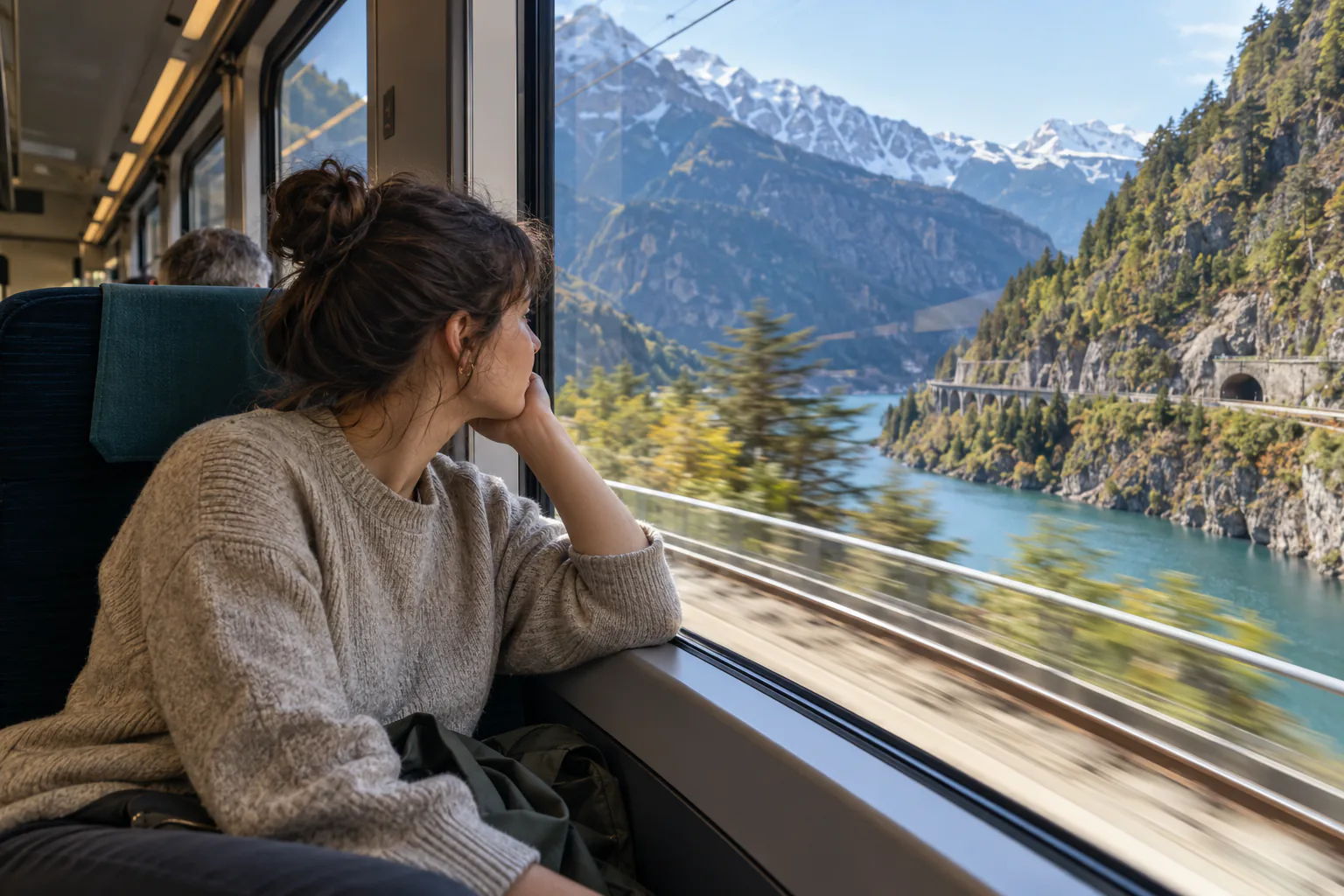
The classic Gotthard line is a mountain railway of loops and curves, exactly the territory tilting trains were invented for. The ETR 610 tilts actively there, and susceptible riders should expect the standard active-tilt sensation on the winding sections. The Gotthard Base Tunnel changed part of the picture: trains routed through the base tunnel cross under the mountains on straight, level track for 57 km, no tilt needed, which splits the journey into calm tunnel running and curvier valley legs at each end.
Where it runs
- SBB and TrenitaliaEuroCity services between Zurich, Basel and Milan
What the research says about tilting trains
Tilting-train motion sickness has a real, peer-reviewed literature: studies report more sickness on tilting than on comparable non-tilting trains, and point at carriage roll, the level of tilt compensation and the timing of each tilt against the curve as the variables that matter.
Put the reader away for a pause
Stow the reader when you take a visual break. Keep ordinary headphones accessible if you choose Dizzout during the journey.
Free to download. Paid subscription for full access.
30,000+ travelers in 30+ countries · How we count

On your phone? Scan to start there.
Comparing apps first? See how the motion sickness apps compare

Know someone who gets motion sick?
Send them the app that helps stop it, drug-free, in about 90 seconds, works with any headphones. Free to download.
What helps on board
- On the classic mountain line, treat the looping sections as watch-the-window time: the valley floor reappearing at new angles is disorienting on a screen and settling through the glass.
- Keep some cool air moving; the climbs are long and a warm carriage lowers everyone's threshold.
- Plan food around the mountain section: something plain beforehand beats eating through the curves, and alcohol drops your tolerance exactly where the line winds most.
- Queue up relief before departure: sound therapy through any headphones, drug-free, with relief in about 90 seconds.
Where to sit is its own question, answered properly in where to sit on a train for motion sickness. And for why trains set people off at all, from sway to reading to tilting stock, see the train motion sickness guide.
Frequently asked questions
Does the Zurich to Milan train tilt?
Yes. The ETR 610 Astoro is a New Pendolino family tilting train, and it uses its tilt on the winding classic sections of the route. On the long straight run through the Gotthard Base Tunnel, tilt is irrelevant.
Which parts of the trip feel the most?
The curving valley approaches on each side of the Alps, and the lakeside running toward Milan. The base tunnel itself is the calmest stretch of the journey: nearly an hour of straight, level track.
Is the Astoro like the British Pendolino?
Mechanically yes, both are Alstom Pendolino family active-tilt trains. The corridors differ: the Swiss-Italian route mixes mountain curves with long tunnels, and on the Gotthard leg the tilt buys less speed than usual because of the train's weight.
Other trains and lines
Sources & further reading
Your next question, probably
Feeling it right now, on board?
The 60-second protocol
Not your question? Why do trains set some people off?What actually has evidence?How prone are you, really?
Details on this page reflect published operator, heritage and engineering information as of September 2026; services, fleets and tilt settings change, so check with the operator before you travel. Train, route and operator names are trademarks of their respective owners; Dizzout is not affiliated with or endorsed by them. Motion sickness sensitivity varies from person to person; this page is informational and not medical advice.