
Is the Darjeeling Himalayan Railway rough?
The Darjeeling toy train climbs from about 100 m to about 2,200 m using loops that circle over themselves and Z-shaped reverses where the train changes direction on the mountainside. It does all this at walking-to-jogging pace, which makes it a case study in slow motion sickness: nothing jolts, but the direction changes never stop, and the full run takes around seven hours.
New Jalpaiguri to Darjeeling, India · about 7 hours full line; joy rides about 2 hours · Loops and Z-reverses to 2,200 m
Key facts
- The line climbs from about 100 m at New Jalpaiguri to about 2,200 m using zigzag reverses and loops; the Batasia Loop below Ghum was built in 1919.
- The Darjeeling Himalayan Railway was inscribed as a UNESCO World Heritage site in 1999.
Queasy on the train? Dizzout is drug-free sound therapy you can start from your seat, with relief in about 90 seconds.Starts in your browser · works with any headphones
Get your personalized Dizzout plan. Paid subscription for full access.

On your phone? Scan to start there.
Why the Darjeeling Himalayan Railway moves you the way it does
Narrow gauge and a shoestring Victorian budget meant the line gains height by geometry: it spirals at the Batasia Loop below Ghum, and at the Z-reverses the train pulls past a switch and backs up the next leg, so the world flips direction repeatedly. Slow speeds keep forces tiny, but sensitive inner ears object to unpredictability more than to force, and this line is nothing but direction changes. The small, short-wheelbase heritage coaches also wag more per track imperfection than mainline stock. The two-hour joy rides from Darjeeling concentrate the loops without the seven-hour exposure.
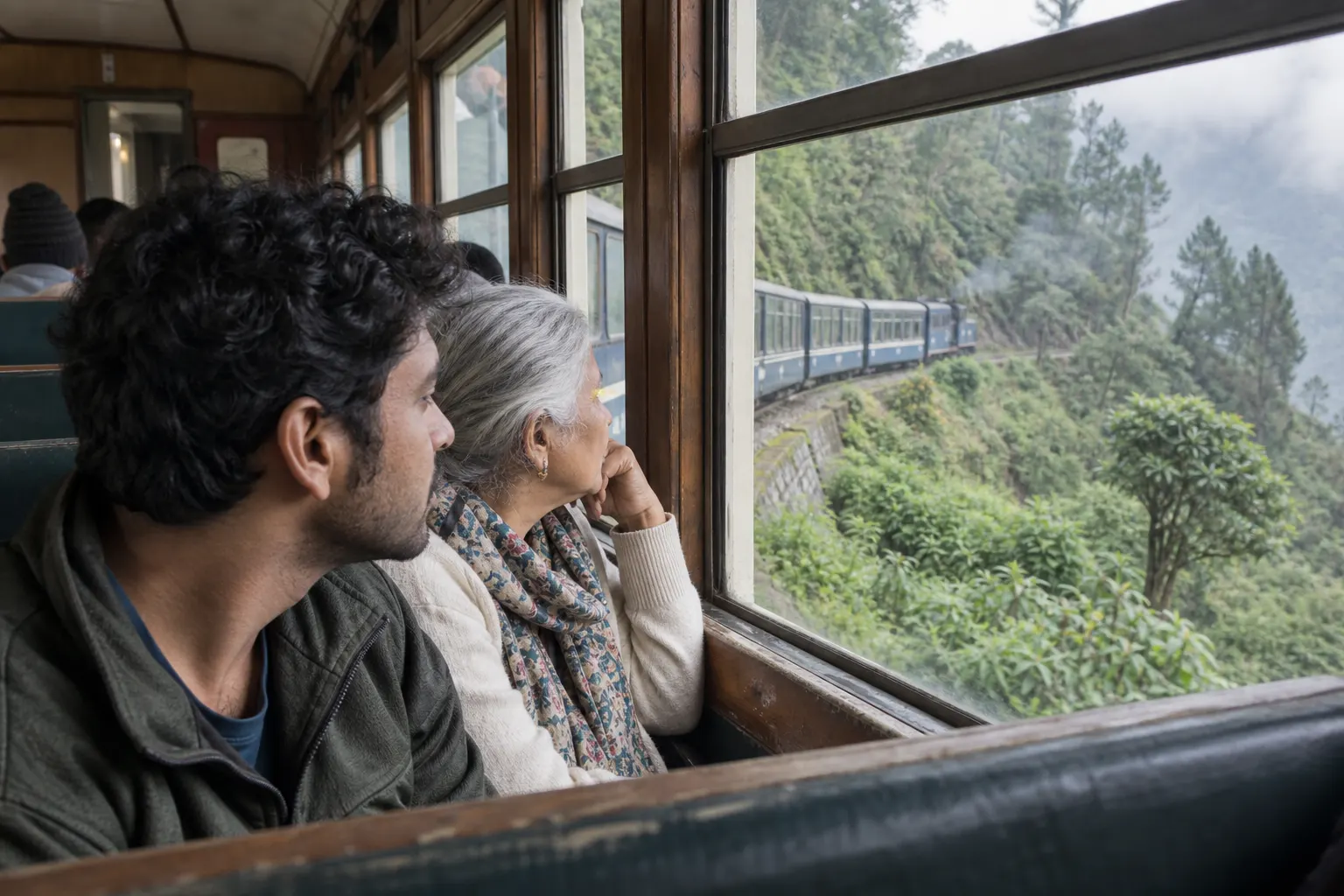
The journey
- Operator
- Indian Railways
- Duration
- about 7 hours full line; joy rides about 2 hours
- Windows
- Small heritage coaches
- Season
- Monsoon brings landslide risk
Riding the Darjeeling Himalayan Railway? Set it up first
Stop Motion Sickness Now
A winding line is a bad place to go looking for an app. Put it on your phone before you board: Dizzout is a drug-free app that plays precisely calibrated audio through any headphones you already own, wired or Bluetooth, with relief in about 90 seconds. Free to download.
Get your personalized Dizzout plan. Paid subscription for full access.
30,000+ travelers in 30+ countries · How we count

On your phone? Scan to start there.
Comparing apps first? See how the motion sickness apps compare
Know someone who gets motion sick?
Send them the app that helps stop it, drug-free, in about 90 seconds, works with any headphones. Free to download.
What helps on board
- At the Batasia Loop and the Z-reverses, watch the manoeuvre: seeing the train double back explains the direction changes your inner ear is complaining about.
- The joy rides last about two hours; the full line takes seven. If you are susceptible, the short Ghum section gives you the famous engineering without the endurance test.
- Small heritage coaches warm up fast; keep air moving and drink water through the climb.
- Queue up relief before departure: sound therapy through any headphones, drug-free, with relief in about 90 seconds.
Where to sit is its own question, answered properly in where to sit on a train for motion sickness. And for why trains set people off at all, from sway to reading to tilting stock, see the train motion sickness guide.
Frequently asked questions
Is the Darjeeling toy train bad for motion sickness?
It is slow, so nothing hits hard, but the loops and Z-reverses keep changing your direction for hours, which some inner ears dislike more than speed. The seven-hour full line is the endurance version; the two-hour joy rides are a gentler taster.
What happens at a Z-reverse?
The train pulls past a switch on a dead-end spur, then reverses up the next zigzag leg, gaining height like a switchback road. You physically change direction of travel, which is charming and, repeated across the climb, mildly disorienting.
Is the altitude a factor at Darjeeling?
Darjeeling sits around 2,000 m and Ghum a little higher, enough for some visitors to feel the thinner air on exertion, though well below classic altitude sickness territory. On the train itself the motion and winding are the likelier cause of queasiness.
Other trains and lines
Sources & further reading
- https://www.awaygowe.com/darjeeling-toy-train-ride-himalayan-railway/
- https://en.wikipedia.org/wiki/Batasia_Loop
- https://www.incredibleindia.gov.in/en/west-bengal/darjeeling/darjeeling-himalayan-railway
- https://darjeeling.gov.in/tourist-place/joy-ride-in-darjeeling-himalayan-railway-popularly-known-as-toy-train-from-darjeeling-to-darjeeling-via-batasia-loop-ghoom/
Your next question, probably
Feeling it right now, on board?
The 60-second protocol
Not your question? Why do trains set some people off?What actually has evidence?How prone are you, really?
Details on this page reflect published operator, heritage and engineering information as of September 2026; services, fleets and tilt settings change, so check with the operator before you travel. Train, route and operator names are trademarks of their respective owners; Dizzout is not affiliated with or endorsed by them. Motion sickness sensitivity varies from person to person; this page is informational and not medical advice.