Google Pixel 10 motion sickness setting: yes, and where to find it
Somewhere on Google's servers there is a switch that decides whether your Pixel 10 shows motion sickness dots, and since mid September 2026 it is on across Android 17 Pixels: 9to5Google reports Motion Assist widely rolled out. The feature is Motion Assist: reference dots that move with the vehicle, a Quick Settings tile, and automatic activation when a car ride is detected, rolling out to Android 17 devices since late August 2026 with Pixels at the front of the line. It arrives through Play services, so it appears on a Pixel 10 without any visible update. If yours still lacks it, restart once; the steps below stay the working plan in the car.
Motion sickness dots: built in on this phone
The dots answer, precisely
A Pixel 10 on Android 17 can receive Google's Motion Assist through the staged Play services rollout that began around August 25, 2026, and by mid September 2026 9to5Google reported it widely rolled out on Android 17 Pixels. It appears under the Google account profile in Settings, not under Accessibility, and in the Quick Settings tiles.
Launched on Android 16 with 7 years of OS updates promised; Android 17 began reaching Pixels on June 16, 2026, so an updated Pixel 10 meets Motion Assist's system requirement.
Dots help you keep reading. If the nausea has already started, compare the Android motion sickness apps, including the sound-based ones you use with headphones.
Prone to motion sickness? Dots on and still queasy? Dizzout is drug-free sound therapy that works with any headphones.Starts in your browser · works with any headphones
Get your personalized Dizzout plan. Paid subscription for full access.

On your phone? Scan to start there.
Why this search happens for the Google Pixel 10
The Pixel 10 is the current mainstream Pixel, the model behind Google's record September 2025 in the US, so a very large pool of owners is typing this exact question. Apple's vehicle motion cues made the dots famous, and Pixel 10 owners want to know where Android's version is.
The Pixel 10 series drove Google's record single-month US sales in September 2025, up 28% year over year per Counterpoint.
What actually helps
Where the settings live
- Check for Motion Assist
Settings > your Google account profile > All services > Personal & device safety > Motion Assist - Remove animations
Settings > Accessibility > Color and motion > Remove animations
- Check Settings > your Google account profile > All services > Personal & device safety for Motion Assist; if it has arrived, turn on auto-activation so the dots appear without you thinking about it.
- Think of the dots as a reading aid, not a rescue: they are built to prevent symptoms during screen use, so start them before you start scrolling.
- The strongest free fix is still the oldest one: eyes up, horizon ahead, fresh air moving.
- If you are a passenger who needs to read, take a break every few minutes and look out the window between stretches.
- When nausea starts anyway, one drug-free option is sound therapy: the Dizzout app plays precisely calibrated audio through any headphones and is designed for relief in about 90 seconds.
Make room for a screen break
Put your phone away and look outside. If you choose Dizzout, prepare your ordinary headphones while parked.
Free to download. Paid subscription for full access.
30,000+ travelers in 30+ countries · How we count

On your phone? Scan to start there.
Comparing apps first? See how the motion sickness apps compare
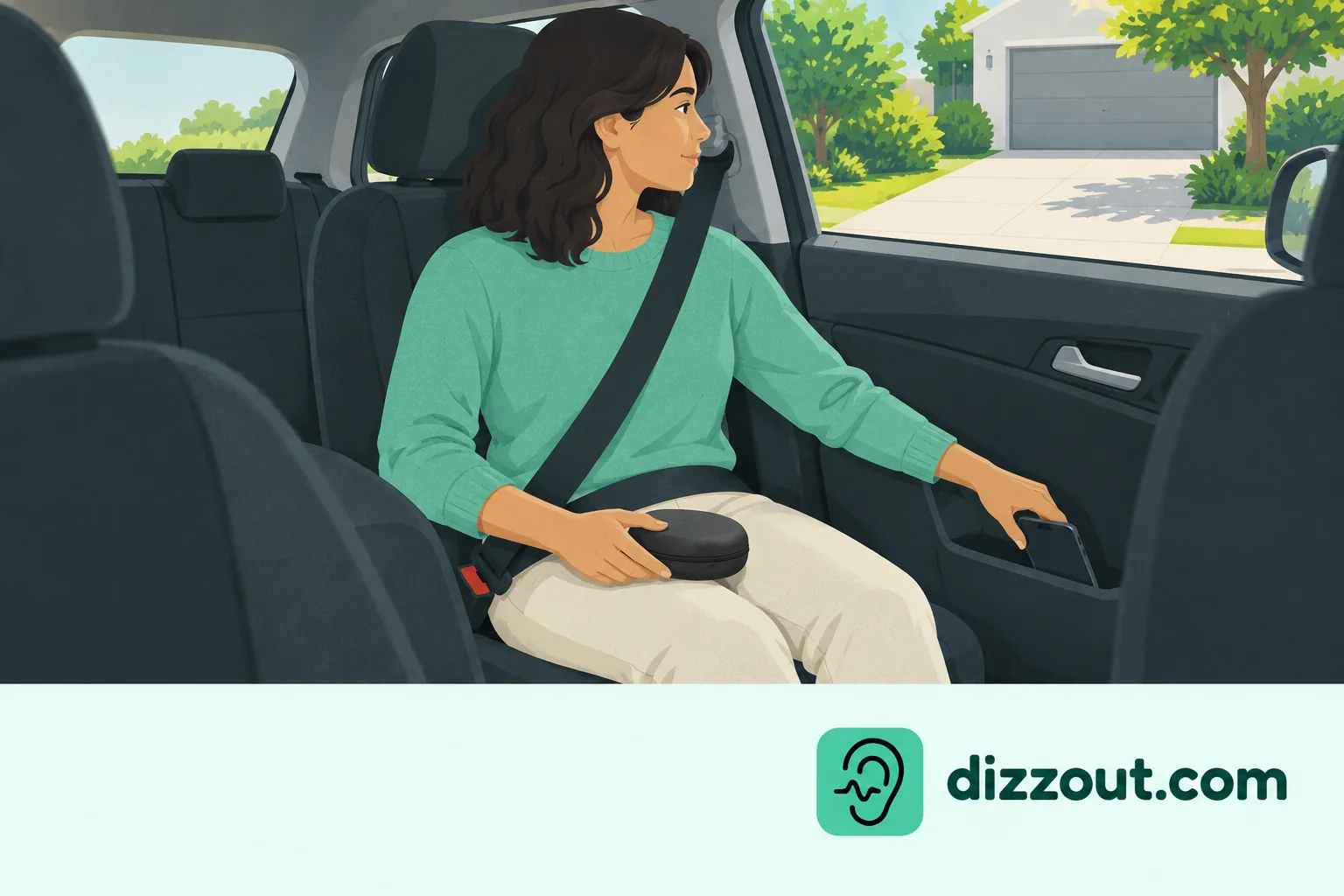
Know someone who gets motion sick?
Send them the app that helps stop it, drug-free, in about 90 seconds, works with any headphones. Free to download.
Frequently asked questions
Does the Pixel 10 have a motion sickness setting?
Yes, under your Google account services, not Accessibility. Google's Motion Assist began a staged rollout to Android 17 devices on August 25, 2026 and was widely rolled out on Android 17 Pixels by mid September, per 9to5Google. Checking that screen confirms it on your unit.
Where is Motion Assist on the Pixel 10?
Settings > your Google account profile > All services > Personal & device safety > Motion Assist. It sits with Google's services rather than in Accessibility, so do not conclude anything from an empty Accessibility menu.
Why does another Pixel have the dots and my Pixel 10 doesn't?
The rollout is phased and server-side, so two identical units could differ for weeks: Android Police found brand-new Pixel 11 models without it at the end of August 2026, before the mid-September wide rollout. On a lagging unit, update Play services to 26.33.32 or later and restart once.
Do motion sickness dots actually work on a phone screen?
The idea is to give your eyes motion signals that match your inner ear while you look at the screen, the same approach Apple uses. It is prevention for screen time only, and no independent published trial has tested Google's implementation. Keep a backup plan for symptoms that arrive anyway.
More phone models
Related
- Pixel Motion AssistWhere it lives on a Pixel, how to turn it on, and what to check when the entry is missing.
- Android motion sickness settingWhat Android offers today across makers, and what it does not.
- Motion sickness dots: which phones have themThe dots feature explained, and the honest device-by-device list.
- Vehicle Motion Cues, in fullApple's built-in version: what it does, and which devices run it.
Your next question, probably
Which phones have the dots built in?
The honest device-by-device list
Not your question? What are Vehicle Motion Cues?Feeling it right now?
Settings paths were checked at the makers' own support pages as of September 2026, where a first-party source exists; the rest is labelled reported and dated. Phone menus change with software updates and vary by model and region, so your own settings menu is the final word. Samsung, Galaxy, Google, Pixel, Android, Apple and iPhone, and all other phone names used here, are trademarks of their respective owners; Dizzout is not affiliated with or endorsed by any phone maker. Sensitivity varies from person to person; this page is informational and not medical advice.