
Small plane vs airliner: which is worse for motion sickness?
The small plane is usually the rougher ride, for two clean physical reasons. Light aircraft fly low, inside the layer of air that daytime heating churns with thermals, while jets climb above most of it and cruise in smoother air. And a light airframe responds to every gust that a heavy airliner simply plows through. A scenic flight, island hopper or bush transfer therefore delivers more motion per minute than a jet leg many times longer. The comfort levers are real, though: morning departures beat midday heat, and calm-day flying is a different sport.
People who fly airliners without a second thought often get caught out the first time they board a six-seater for a scenic loop or an island hop. The surprise is not bad luck; it is altitude and physics. Most small-plane flying happens exactly where the atmosphere is busiest, in the low-level air that sunshine stirs into invisible bumps, and in aircraft light enough to ride every one of them.
This page compares the two honestly for a motion-sensitive traveller: why the small plane moves more, when it does not, and how to book and sit so the sightseeing flight stays worth it.
Whichever option you pick, Dizzout is a drug-free backup for the moment nausea starts: precisely calibrated sound on any headphones, free to try on iOS and Android.
Free to try, no card needed. Or go straight to the App Store or Google Play.
Small plane vs airliner for a motion-sensitive passenger
| Factor | Small plane | Airliner |
|---|---|---|
| Cruising altitude | Low, inside the thermal layer | High, above most of the churn |
| Response to gusts | Light airframe rides every one | Mass smooths all but the big ones |
| Flight profile | Turns, banking, circling the sights | Long straight cruise |
| Worst time of day | Hot afternoons | Matters little |
| Duration of exposure | Short flights, constant texture | Long flights, mostly still |
| Your controls | Morning slot, horizon, vents, calm day | Seat choice, the usual habits |
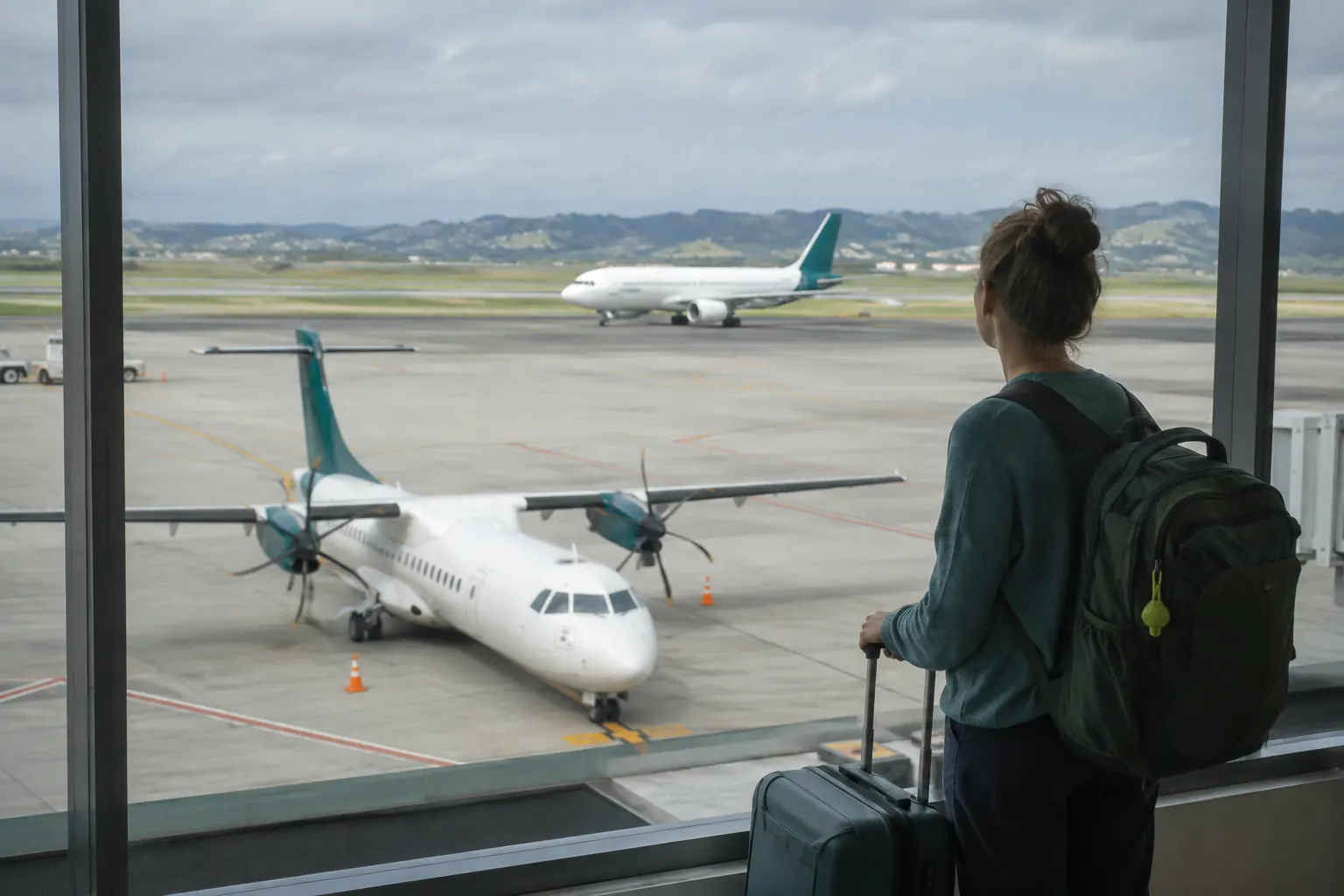
Altitude: where the bumps live
On a sunny day, the ground heats unevenly, and columns of warm air rise from fields, ridges and parking lots while cooler air sinks between them. That churn mostly lives in the lowest few thousand feet, exactly the band where sightseeing flights, island hoppers and training aircraft operate. Flying through it feels like a boat crossing chop: a steady patter of small lifts and drops, with bigger jolts near ridgelines and shorelines where the air moves in waves of its own.
A jet spends a few minutes climbing through that layer, then cruises far above it, where the air is usually far smoother. Turbulence exists up high too, but as an occasional event rather than the background texture of the whole flight.
Weight: why light wings feel everything
The second factor is the aircraft itself. How much a gust displaces a plane depends heavily on how much aircraft there is to displace: a light machine with big wings for its weight gets nudged by air that a two-hundred-tonne airliner treats as a rounding error. The same principle you feel between a small boat and a ship applies between a small plane and a jet.
Small aircraft also fly the kind of profiles that add motion: lower and slower over the scenery, banking so passengers can see the volcano or the reef, circling points of interest. A scenic flight is, by design, a sequence of turns, and sustained banking is provocative in a way straight-and-level flying is not. None of this makes small planes unsafe or unbearable; it makes them honest about being closer to the weather.
How to make the small flight comfortable
Book the morning. Thermal turbulence builds with daytime heating, so the air an hour after sunrise is routinely gentler than the same route at two in the afternoon, and pilots of scenic flights will tell you the early slots ride best. Calm, stable weather days help even more; if your schedule has any slack, ask the operator which day looks smoothest.
Aboard, the usual rules apply with extra force: eyes out at the horizon rather than down at a camera screen, cool air vents open, a settled but not empty stomach, and a night of decent sleep beforehand. Seat position matters less in a small cabin than in an airliner, but a window with a view of the horizon is worth having. Keep the flight short for a first attempt: a twenty-minute loop tells you cheaply whether an hour-long one is a good idea.
When to use which
Take the airliner question off the table: if a jet gets you there, it is the smoother option almost every time. Say yes to the small plane when the flight is the experience, and stack it: book the earliest slot of the day, favour calm settled weather, keep your eyes on the horizon instead of a viewfinder, and start with a short flight before committing to a long one. If a small-plane transfer is unavoidable on your route, treat the morning departure as the one genuinely powerful choice you get to make, and arrive rested rather than hungover and coffee-loaded.
Try drug-free motion sickness relief
Try Dizzout Free
Free to try on iOS and Android · ~90 seconds · works on any headphones.
Frequently asked questions
Why do small planes feel so much bumpier than jets?
Two reasons stack. Small planes cruise low, inside the layer of air that daytime heating fills with rising and sinking currents, while jets climb above most of it within minutes. And a light airframe is displaced by gusts that a heavy airliner barely registers, the same way a dinghy feels chop that a ship ignores. Add the turning, banking profile of a scenic flight and the ride simply contains more motion per minute.
When is the best time of day to book a scenic flight?
Morning, and the earlier the better. Thermal turbulence grows with the day's heating and typically peaks through the afternoon, so the first slots after sunrise are routinely the smoothest air the route will see all day. Operators know this, and on hot or mountainous routes the difference between an early flight and a mid-afternoon one can be dramatic. Calm, stable weather days multiply the benefit.
Are island hopper and bush flights doable if I get motion sick?
Usually yes, with planning. The legs are short, which caps how much any queasiness can build, and the levers that help are in your hands: a morning departure, eyes on the horizon, cool vent air, a sensible breakfast, and remedies you already trust from other travel. Many motion-sensitive travellers do these hops routinely. If a first short flight goes badly, that is useful information to gather before booking the hour-long version.
Small planes fly where the weather lives, and they tell you the truth about it. Meet them on their good terms, early air, calm days, eyes on the horizon, and the scenic flight usually stays a highlight rather than a story you tell with a grimace.
Related comparisons
- Helicopter vs plane for motion sickness
- Small plane sightseeing flights: the full guide
- Air sickness: the full guide
- Motion sickness on a plane: seats and strategies
- All motion sickness comparisons
This page is general information, not medical advice; individual reactions to flight motion vary widely. Flight operations and conditions are the operator's and pilot's call; nothing here overrides their guidance.