
Helicopter vs plane: which is worse for motion sickness?
Minute for minute, the helicopter usually asks more of your inner ear: constant rotor vibration, low flight through the bumpiest air, and a tour profile built from banked turns, swoops and hovering that no fixed-wing flight matches. The saving grace is duration, since most tours last well under an hour. Individual reactions scatter widely here, and some people who handle boats badly are fine in helicopters and vice versa. If you are choosing a scenic flight and motion is your worry, a fixed-wing tour or an early-morning helicopter slot with the doors on is the gentler order of the day.
Helicopter tours generate a very specific kind of pre-trip anxiety: a once-in-a-lifetime booking over a volcano, canyon or coastline, and a passenger quietly wondering whether they will spend it staring into a sick bag. The question of how helicopters compare with planes has a real answer, and it starts with what a helicopter does differently in the air.
This page compares the two honestly, covers why reactions vary so much between people, and lists the booking choices that actually move the odds: time of day, doors, seat and route.
Whichever option you pick, Dizzout is a drug-free backup for the moment nausea starts: precisely calibrated sound on any headphones, free to try on iOS and Android.
Free to try, no card needed. Or go straight to the App Store or Google Play.
Helicopter vs plane for a motion-sensitive passenger
| Factor | Helicopter | Plane |
|---|---|---|
| Vibration | Constant rotor shake | Minimal at cruise |
| Flight profile | Banked turns, swoops, hover | Straighter runs, gentler turns |
| Altitude flown | Low, terrain-hugging | Low on tours, high on transport legs |
| Typical exposure | 15 to 60 minutes | Minutes to many hours |
| Your booking levers | Morning slot, doors on, calm route | Morning slot, jet over prop where possible |
| Individual variation | High, reactions genuinely split | High |
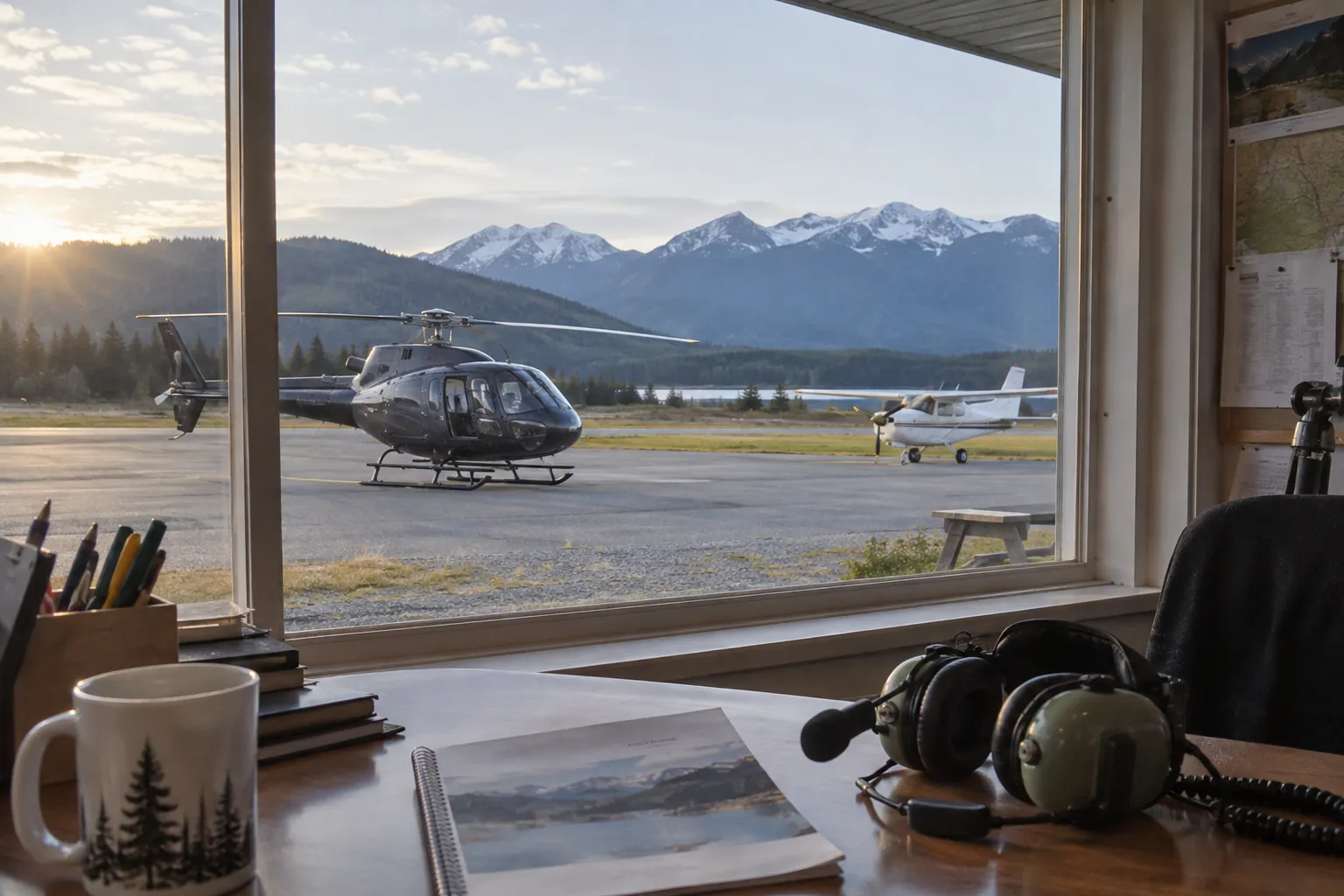
What a helicopter adds to the motion diet
Three things separate the helicopter experience. First, vibration: the rotor system feeds a constant fine shake through the airframe that fixed-wing aircraft do not have, and long exposure to vibration wears on sensitive passengers. Second, altitude and terrain: tours fly low, often deliberately hugging ridgelines, waterfalls and cliff faces where air currents are liveliest, so the background texture is busier than a cruise at altitude. Third, the profile: a tour is a sequence of banked turns, pull-ups over crests, descents into valleys and stationary hovers, each one a distinct vestibular event.
A plane on a scenic route shares the low altitude but not the rest: no rotor vibration, no hover, and generally longer, straighter runs between turns. That is why, for most prone passengers, the helicopter is the spicier ride minute for minute.
Why the comparison still splits people
Motion sickness is stubbornly individual, and helicopters showcase it. Some travellers who cannot ride a ferry report smooth, happy helicopter tours; others who fly airliners weekly come off a twenty-minute doors-off flight green. The differences come down to which motions your own system dislikes most, how turbulent the specific day was, and how aggressive the tour profile is; a gentle coastal cruise and a canyon-swooping thrill route are different products in the same aircraft.
Duration works in the helicopter's favour. Symptoms build with time, and most tours end before deep misery has a chance to develop, whereas a long bumpy plane leg can grind on. If your history says you sicken slowly, a short helicopter tour may treat you better than its reputation. If you sicken fast, profile and timing choices matter more than aircraft type.
Booking the gentler version
The levers here are unusually concrete. Book the first flights of the morning, when the air is coolest and calmest, and avoid hot mid-afternoon slots when thermals are working. Choose the standard doors-on tour rather than doors-off, which adds wind blast and noise on top of everything else. Ask the operator which of their routes is the calm one; most companies run both a gentle scenic loop and a more dynamic option and will tell you plainly.
On the day: eyes out at the horizon, not down into a camera screen for minutes at a time; a normal light meal beforehand; the headset conversation as distraction, which genuinely helps. Front seats offer the widest view and the best forward anticipation where the operator assigns them, though weight-and-balance rules mean seating is often not yours to choose. And if the forecast turns windy, rebooking beats bravery.
When to use which
Choose a fixed-wing scenic flight when motion is your main worry and both formats cover the sights; it is the calmer profile for most people. Choose the helicopter when it is the experience you actually want, and buy the gentle version of it: earliest slot of the day, doors on, the operator's calm route, eyes on the horizon rather than the viewfinder. Keep the first booking short. And for pure transport where an airliner is an option, the jet wins on smoothness without contest; the interesting decision only exists between the small aircraft.
Try drug-free motion sickness relief
Try Dizzout Free
Free to try on iOS and Android · ~90 seconds · works on any headphones.
Frequently asked questions
Are helicopters worse than planes for motion sickness?
For most prone passengers, minute for minute, yes: helicopters add rotor vibration, low terrain-hugging flight and a profile full of banked turns and hovers that fixed-wing flying does not match. But tours are short, which limits how far symptoms can build, and individual reactions genuinely scatter; some people handle helicopters better than boats or even cars. Your own history with other transport is the best predictor you have.
What helps most on a helicopter tour if I am prone?
The booking choices outweigh the in-flight ones. Take the earliest morning slot when the air is calm, keep the doors on, and ask the operator for their gentlest route; they know which one it is. In flight, keep your eyes on the horizon and the far scenery rather than down into a camera screen, use the headset chatter as distraction, and eat a normal light meal beforehand rather than flying empty.
Is a doors-off helicopter flight harder on the stomach?
It adds wind blast, noise and a stronger sense of exposure on top of the standard motion, and photographers spend it looking through viewfinders, which removes the horizon anchor. None of that helps a queasy passenger, and most operators quietly agree the doors-on tour is the comfortable one. Doors-off is a photography product; if motion sickness is in the conversation at all, it is the wrong variant to book.
A helicopter is the busiest thing you can strap into for sightseeing, and the shortest. Buy the calm morning, the doors and the gentle route, give your eyes the horizon, and the flight usually fits inside what your stomach will tolerate, with the canyon or the volcano to show for it.
Related comparisons
- Small plane vs airliner
- Hot air balloon vs helicopter
- Air sickness: the full guide
- Helicopter tours: seats and turns
- All motion sickness comparisons
This page is general information, not medical advice; individual reactions to flight motion vary widely. Tour operations, seating and routes are the operator's call, and their safety briefing outranks anything here.