
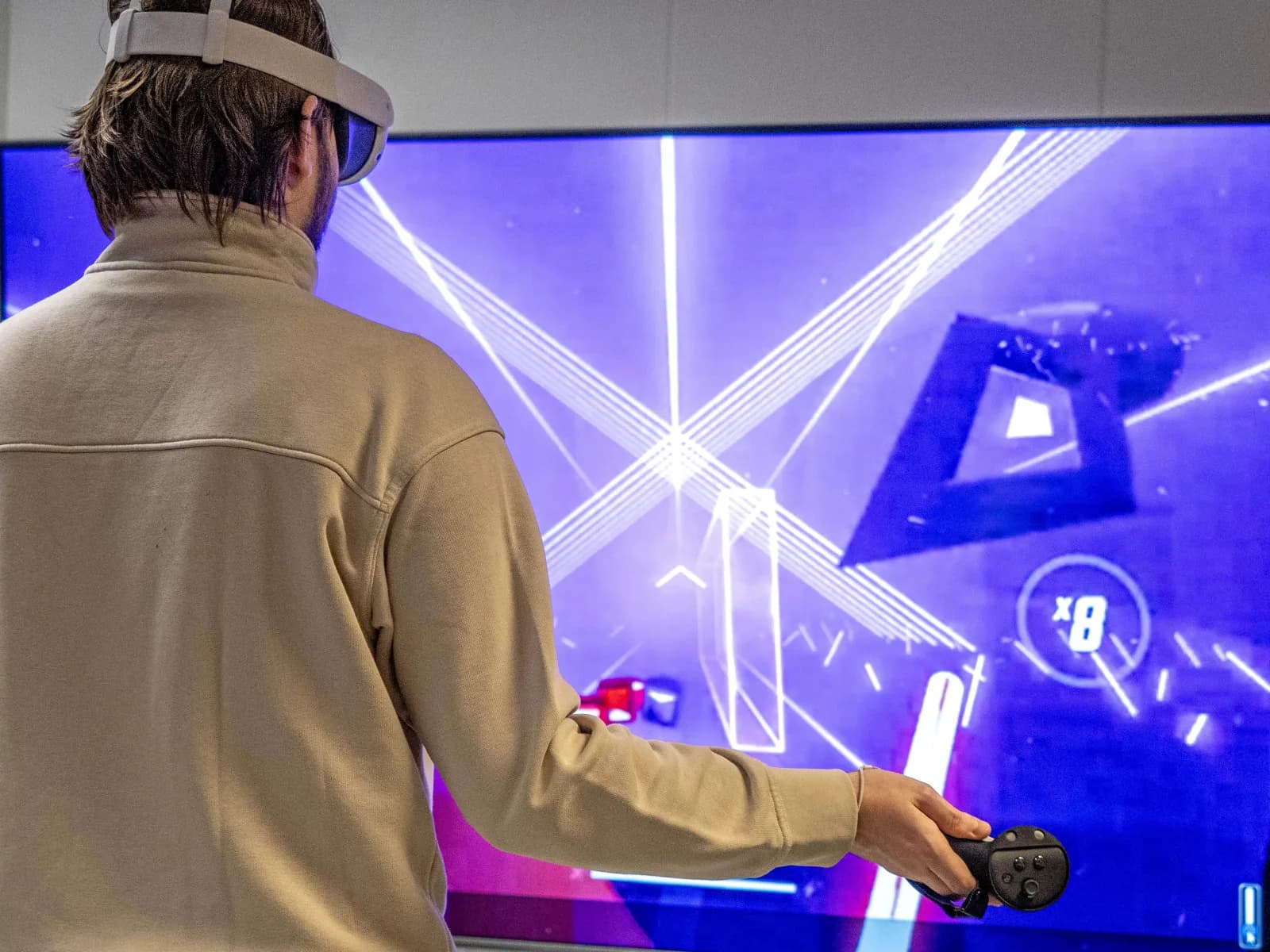
The short answer
For most players, yes. VR motion sickness fades with repeated exposure, and the comfortable state on the far side is what players call VR legs. The pattern most people report is two to six weeks of short, frequent sessions, each one ended at the first wave of queasiness rather than after it. Comfort settings, teleport movement and a seated start all speed the process up. A minority never fully adapt, which is a real outcome and worth knowing about before you spend more on hardware.
Every VR forum has the same thread. Someone bought a headset, lasted eleven minutes in their first game, and wants to know whether it gets better or whether the headset was a mistake. The replies are always some version of the same advice: you have to get your VR legs.
The term is borrowed from sea legs, and the borrowing is accurate. Sailors adapt to a moving deck through days of exposure, and players adapt to a moving world the same way. Here is what that adaptation looks like week by week, how to pace it so it actually happens, and what to do about the sessions in between.
Queasy mid-game? Drug-free, no drowsiness, about 90 seconds on any headphones, including the pair under your headset strap.Starts in your browser · works with any headphones
Calm VR nausea. Get your personalized Dizzout plan. Paid subscription for full access.

On your phone? Scan to start there.
What VR legs are and why the term exists
VR sickness is a sensory mismatch. Your eyes see you sprinting across a battlefield while your inner ear reports a person standing still in a living room. The brain reads that conflict as something being wrong and answers with nausea, sweat and dizziness. The full mechanism is on our VR motion sickness page.
VR legs are what you have once your brain has updated its expectations. With enough repetition it learns that this particular kind of visual motion never comes with inner ear confirmation, and it stops raising the alarm. The formal name is habituation, and it is not fringe advice: the CDC's travel medicine guidance calls habituation the most effective countermeasure for motion sickness, ahead of any medication. Every VR comfort routine that works is built on it.
The honest timeline: two to six weeks for most
Nobody can promise you a date. But the pattern players report is consistent enough to plan around: with short sessions every day or two, most people feel a clear difference inside two weeks and are comfortable somewhere between weeks two and six. A lucky few adapt in days. Slow adapters take a couple of months. What never works is the calendar alone, because adaptation follows exposure, not time. Ten minutes a day for three weeks beats one three-hour session a month.
Days 1 to 3
Sessions last minutes, not hours, and end at the first wave of warmth or unease.
Week 1 to 2
Sessions stretch. The first wave arrives later than it used to.
Weeks 2 to 4
Smooth movement starts to feel tolerable with the vignette on and the speed low.
Weeks 4 to 6
Most players who kept at it play full sessions with settings relaxed.
The pattern players commonly report, not a measured schedule. Yours may run faster or slower.
One session is a different question from one month. If you want to know how long a single bout lasts once it starts, that is covered in how long VR sickness lasts. This page is about the weeks-long curve across sessions.
Stop at the first wave, not after it
The most common mistake is to approach adaptation like weight training and push through the nausea to toughen up. It backfires. Once you are fully sick the session is over anyway, the misery lingers for hours, and you come back the next day dreading the headset. You also do not need the misery: repeated exposure below the threshold is what drives habituation.
So the rule is simple. Play until the first wave, the flush of warmth, the extra saliva, the slight unease behind the eyes, and stop there. Take the headset off, look at the room, come back tomorrow. Sessions of five to fifteen minutes are normal at the start. Meta's own safety guidance for Quest headsets leans the same way: take regular breaks, and pick games by their comfort ratings rather than jumping straight into intense ones.
Do
- End the session at the first wave of warmth or unease
- Come back the next day, or the day after
- Add a few minutes per session as the wave arrives later
- Sit down for new games and new movement modes
Don't
- Push through to full nausea to toughen up
- Take a week off after every rough session
- Start a new game with smooth turning on day one
Pacing habits players converge on, not measured effects.
Comfort settings that speed adaptation
Comfort settings exist to shrink the mismatch while your brain learns. Use them heavily at the start, then relax them one at a time as sessions get easier.
- Vignetting on. Narrowing the view during movement cuts the optic flow in your peripheral vision, where much of the trouble starts.
- Snap turning instead of smooth turning. Smooth rotation is the harshest common stimulus in VR. Snap turns skip it entirely.
- Sit down for anything new. A chair gives your body a stable reference and removes the balance load.
- Protect your frame rate. Stutter makes the visual story even harder for your brain to reconcile. Lower the graphics first.
- Fit the headset properly. A sharp image and correct lens spacing remove low-grade eye strain that stacks on top of the mismatch.
Teleport first, smooth locomotion later
Think of movement options as a ladder. Teleport shows your eyes almost no motion at all, so start every new game there when it is offered. When teleport starts to feel boring rather than merciful, switch to smooth locomotion with the vignette at maximum and the speed low. Then widen the vignette, then raise the speed, then try smooth turning. Each rung is a small mismatch your brain can absorb. Jumping straight to the top rung on day one is how eleven-minute first sessions happen.
Game choice is part of the same ladder. Slow, standing-still games first. Cockpit games in the middle, because the visible cockpit frame acts as a fixed reference. Free-movement shooters and anything with forced camera motion last.
The fan trick and other player rituals
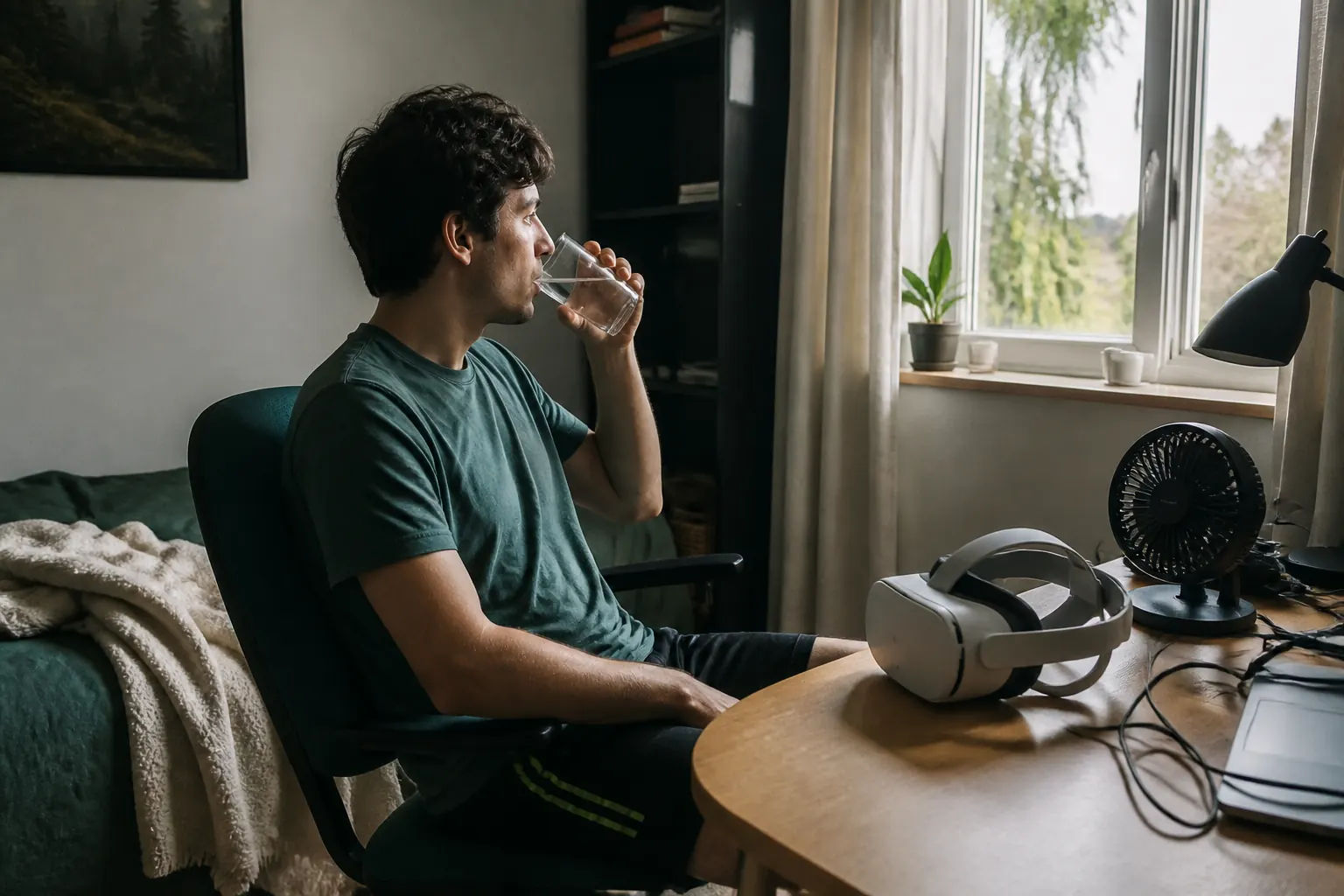
Ask adapted players how they got there and you hear the same rituals. A fan pointed at your face is the most repeated one, and it has some logic behind it: cool moving air is an old motion sickness comfort, and it counters the sweaty warmth that arrives with the first wave. A textured mat under bare feet gives your body a fixed point of contact. Some people chew gum or keep ginger nearby.
None of these are proven accelerants, and none will rescue bad pacing. But they are cheap and harmless, and they keep sessions pleasant, which keeps you coming back. Coming back is the whole game. If you want the deliberate version, structured exposure with progression rules, our motion sickness training page covers what practice can and cannot do.
Should you take a pill before VR?
Dramamine comes up in every VR legs thread, so here are the label facts. Its classic formula is dimenhydrinate, an antihistamine sold for motion sickness. MedlinePlus, the NIH drug reference, says to take it 30 minutes to an hour before motion and warns it can make you drowsy. Its label covers motion sickness from travel, real motion, which VR does not involve. If you are considering it, ask your pharmacist or doctor first.
Even setting that aside, the plan has two problems. Drowsiness and VR mix badly: you are often standing, turning and swinging controllers with your eyes covered. And the math is wrong for adaptation. Getting your VR legs takes weeks of regular sessions, and a sedating pill before every one of them is not a routine most people want. Pills fit an occasional ferry crossing better than daily practice.
What most players actually need is something for the session itself, the wave that arrives at minute nine while your legs are still under construction. Sound therapy is one option there. Headphones already sit under the headset strap, and Dizzout plays precisely calibrated audio designed to help calm the response in about 90 seconds, with nothing to swallow and no drowsiness carried into the rest of the day.
The minority who never fully adapt
Honesty requires this section. Some people do everything right, pacing, settings, teleport, weeks of patience, and still cannot handle smooth locomotion, or VR at all. Susceptibility to motion sickness varies enormously from person to person, and people at the sensitive end of that range often carry it into VR. If you have always been the carsick one in the family, our motion sickness test gives you a sense of where you sit before you invest more.
Not adapting to smooth locomotion is not the same as being locked out of VR. Plenty of long-term players stay on teleport permanently and lose little they care about, and seated and cockpit-framed games stay open to sensitive players. If your symptoms are severe, show up with no headset involved, or come with hearing changes or vertigo that lingers, take that to a doctor rather than a settings menu. For what VR sickness feels like and when it warrants attention, see VR sickness.
For the weeks while your legs grow
Stop the nausea
Adaptation takes weeks, and a pill before every session makes no sense. Dizzout plays precisely calibrated audio through the headphones already under your strap: when a wave hits, relief in about 90 seconds, drug-free, no drowsiness. Free to download on iOS and Android, with a paid subscription for full access.
Get your personalized Dizzout plan. Paid subscription for full access.
30,000+ travelers in 30+ countries · How we count

On your phone? Scan to start there.
Comparing apps first? See how the motion sickness apps compare
Frequently asked questions
How long does it take to get your VR legs?
Most players who use short, frequent sessions report a clear improvement inside two weeks and comfortable play somewhere between two and six weeks. Fast adapters get there in days and slow adapters can take a couple of months. Exposure drives it, not the calendar, so regular short sessions beat rare long ones.
Does VR motion sickness go away permanently?
For most people the adaptation holds as long as they keep playing now and then. After a long break some sensitivity can return, but the second climb is usually much faster than the first. A minority never fully adapt to intense smooth locomotion no matter how long they train.
Should you play through VR nausea or stop?
Stop at the first wave. Habituation comes from repeated exposure below the threshold, not from suffering past it, and pushing into full nausea ends your day, lingers for hours and builds dread of the next session. End the session while you still feel mostly fine and come back tomorrow.
Does Dramamine work for VR sickness?
Dramamine's classic formula is dimenhydrinate, an antihistamine labeled for motion sickness from travel, taken 30 minutes to an hour before motion, and it can make you drowsy. Drowsiness is a poor fit for standing in a headset, and a pill before every session for the weeks adaptation takes is impractical. If you want to try it, check with your pharmacist or doctor first.
Why do some people never adapt to VR?
Susceptibility to motion sickness varies widely between individuals, and people at the sensitive end of the range sometimes never get comfortable with smooth locomotion however carefully they train. That is a trait, not a failure of effort. Teleport movement, seated play and cockpit-framed games usually remain workable even then.
Someone you know gets motion sick?
Send them this guide. It might be the trip it saves.
Your next question, probably
How long does a single bout last?
Honest ranges for one session
Not your question? Why does VR make you sick at all?Can you train tolerance on purpose?Feeling it right now?
About this article
- CDC Yellow Book: Motion Sickness
- MedlinePlus (NIH): Dimenhydrinate
- Meta Quest Safety Center: VR safety guidelines
This article is informational and not a substitute for medical advice. Talk to your doctor or pharmacist before taking any medication. Product and company names are trademarks of their respective owners; Dizzout is not affiliated with or endorsed by them.