The short answer
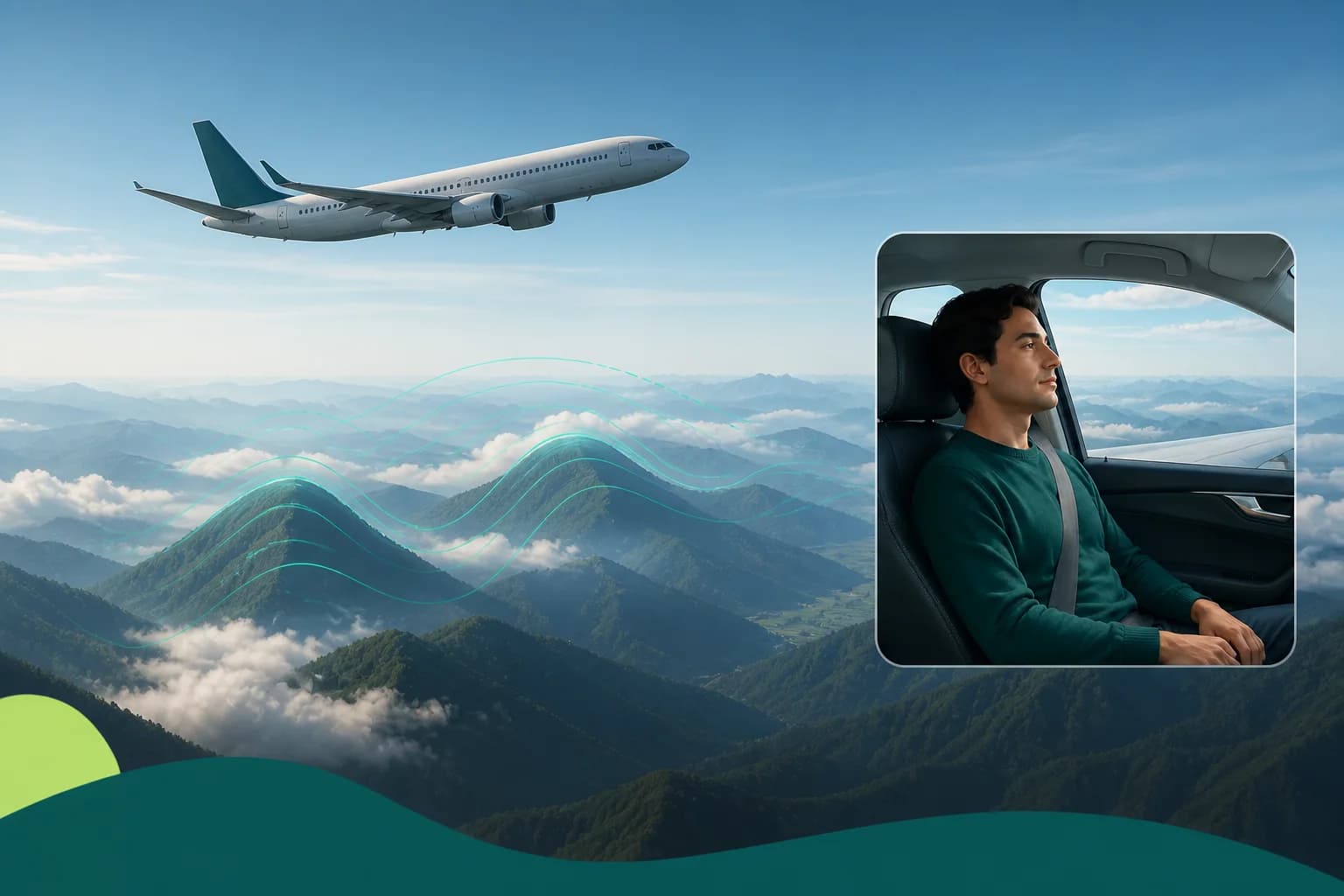
Yes, elevators can cause real motion sickness. Your inner ear senses vertical acceleration every time the car speeds up or slows down, while your eyes see a cabin that is not moving at all. That is the same sensory mismatch behind car sickness and seasickness, compressed into a few seconds and repeated every ride. High speed elevators stretch the acceleration out, and glass elevators add a visual swoop, so both tend to feel worse. For most people the queasiness fades within a minute or two of stepping out.
An elevator ride seems too short to make anyone sick. Ten seconds in a low building, maybe forty in a tall tower, and you are out. Yet plenty of people step off a fast lift with a floating stomach, a light head, and a wobble that takes half a hallway to wear off.
If that is you, you are not imagining it. Elevators produce exactly the kind of motion your inner ear notices most and your eyes see least. Here is what happens in those few seconds, and what to do about it, especially if you ride forty floors twice a day.
Get your personalized Dizzout plan. Drug-free, no drowsiness, about 90 seconds on any headphones.Starts in your browser · works with any headphones
Paid subscription for full access.

On your phone? Scan to start there.
Yes, elevators can cause real motion sickness
Motion sickness is not about how far you travel. It is about a disagreement between your senses. Motion sickness starts when your inner ear reports one story about how your body is moving and your eyes report another. In a car, the ear feels the swaying while the eyes rest on a still phone screen. In an elevator, the ear feels the car surge upward or sink away while the eyes see a sealed metal box in which nothing moves at all.
The disagreement only lasts a few seconds, which is why most people feel nothing. But the brain's nausea response does not require a long journey to switch on, and some inner ears are simply more sensitive than others. If yours is, a fast lift can hand you a compressed dose of the same symptoms a winding road delivers over an hour: queasiness, a light or heavy head, cold sweat, and that unmistakable floating stomach.
The stomach drop: what acceleration does to your inner ear
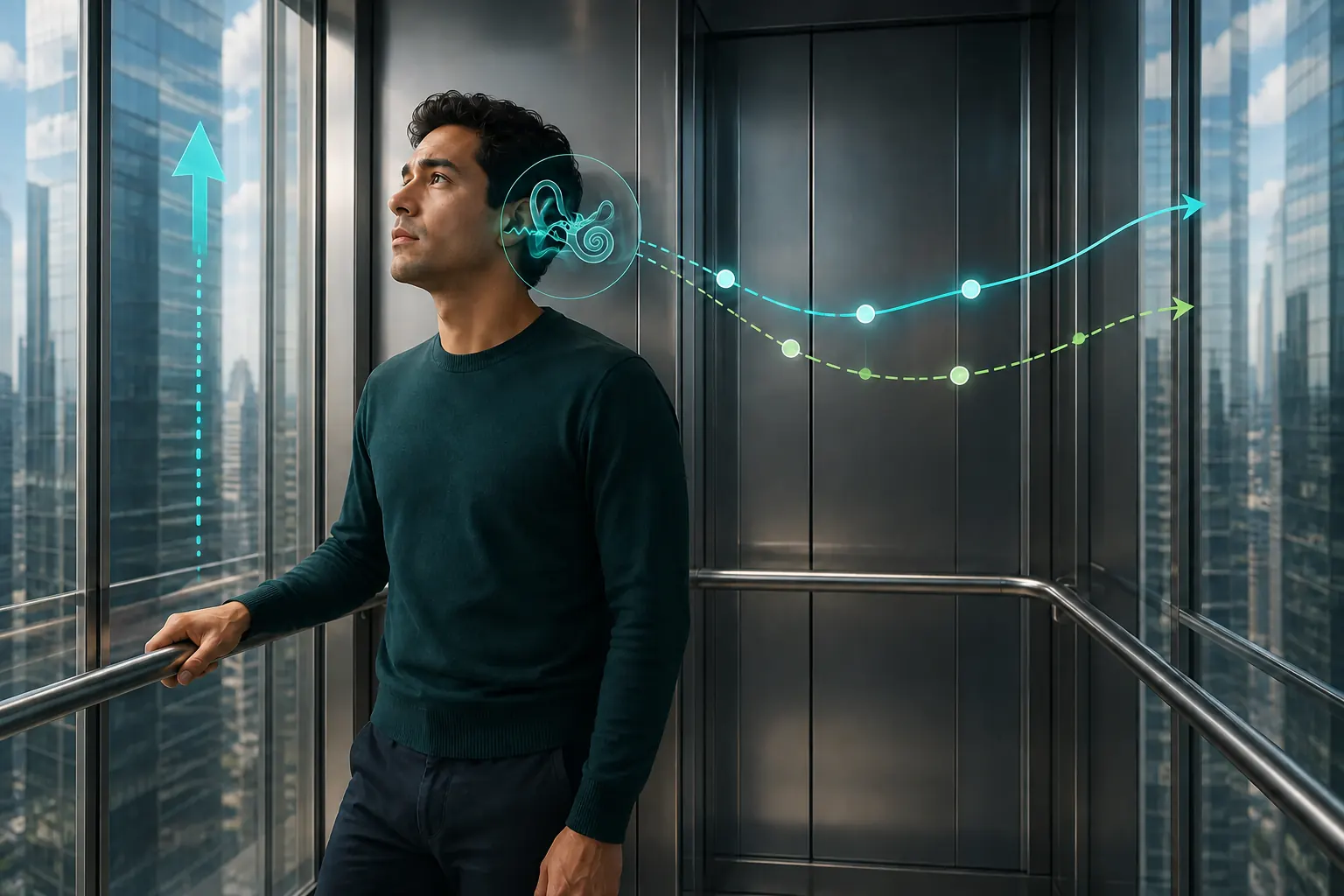
Deep in each inner ear sit small organs that sense gravity and straight-line acceleration. They are what tell you which way is down and whether you are speeding up or slowing down, even with your eyes closed. Vertical motion is their home turf.
Here is the detail that explains the whole experience: those organs only respond to changes in speed. When the elevator accelerates upward, you feel briefly heavier. When it brakes at your floor, or starts to descend, you feel briefly lighter, and that moment of lightness is the classic stomach drop. In between, at constant speed, your inner ear reports nothing at all. It cannot tell smooth cruising from standing still.
So a single elevator ride is really two jolts of sensation with a blank stretch in the middle: a press at the start, a float at the end. Your eyes contradict both jolts, because the cabin around you never appears to move. Two brief mismatches per ride, a dozen rides per day, and a sensitive system starts to protest.
Why high speed and express elevators feel worse
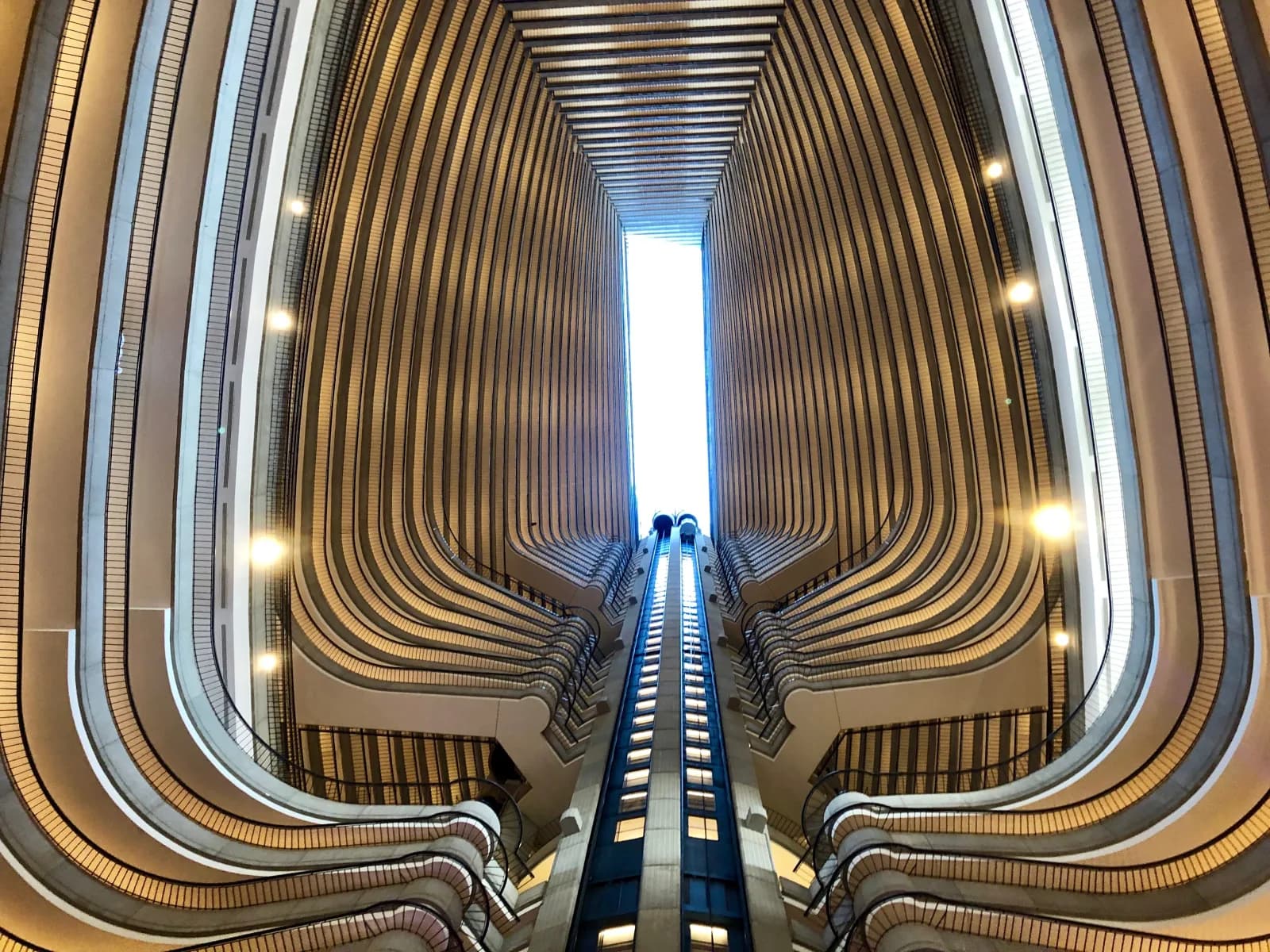
If acceleration is the trigger, faster elevators mean more of it. An express lift in a tall tower has to reach a much higher top speed, so it accelerates harder and for longer at each end of the run. The press and the float both get stronger and last longer, which gives your inner ear a bigger signal for your eyes to contradict.
Very tall buildings add a second effect: air pressure. Climbing hundreds of feet in under a minute changes the pressure on your eardrums fast enough to feel, which is why your ears pop in a supertall express lift the way they do on a plane. Ear fullness on top of a sensory mismatch makes the whole ride feel more disorienting than either alone.
Slow local elevators are not automatically kinder, though. A car that stops at every floor runs the press-and-float cycle over and over, so a long local ride can nag at your stomach in a way one clean express run does not.
Glass elevators and the visual swoop
Glass lifts change the equation, and not in one direction. Now your eyes finally see motion: the atrium floor drops away, the skyline swoops, the floors flick past. For some riders that actually helps, because vision and inner ear briefly agree. For many others it is worse, because the visual motion is fast, vertical, and unlike anything the body meets elsewhere, and a fear of heights can tighten the stomach before the car even moves.
The swooping view can even do the work on its own. Watching the ground rush away through glass is intense visual motion, and intense visual motion can stir queasiness with no ride at all, the same way screens and VR can make you motion sick indoors. If glass lifts hit you harder than closed ones, the view is your trigger, and the fix is simple: face the doors.
Quick fixes for a queasy ride
You cannot slow the elevator down, but you can shrink the mismatch and steady the body it lands on:
- Hold the rail and soften your knees. A firm hand and slightly bent knees give your body real, steady contact to reason from during the press and the float.
- Fix your gaze on something stable inside the car. The door seam or the floor indicator works. In a glass lift, turn your back to the view and face the doors.
- Breathe out slowly through the stop. The braking phase is where the drop hits. A long, slow exhale as the car slows helps keep the nausea response from spiking.
- Mind your stomach before you ride. A completely empty stomach and a heavy, greasy meal both make queasiness easier to start. A light, plain snack is the middle path.
- Give yourself a beat at the top. Step out, stand still, and let your senses re-agree. The wobble usually settles within a minute or two.
- Have relief ready if it lingers. If the queasiness follows you out of the lift, sound therapy through headphones is one drug-free option designed to help calm the response in about 90 seconds. And if you are at the desk feeling rough right now, start with the 60-second protocol.
Relief that fits a forty-floor commute
Stop the nausea
There is no horizon to watch in an elevator and no window to crack. Dizzout plays precisely calibrated audio through any headphones instead: drug-free, no drowsiness, about 90 seconds. It lives on the phone already in your pocket, ready before the doors open and again for the ride back down.
Get your personalized Dizzout plan. Paid subscription for full access.
30,000+ travelers in 30+ countries · How we count

On your phone? Scan to start there.
Comparing apps first? See how the motion sickness apps compare
When it is worth a vestibular checkup
A brief wobble after a fast lift is common and harmless. Dizziness that behaves differently deserves attention, because the balance organs the elevator is poking at can have problems of their own.
None of these mean something is definitely wrong. They mean the pattern no longer looks like simple motion sickness, and a doctor can check the inner ear properly. Balance disorders are common, and the earlier they are looked at, the easier they are to sort out.
Daily riders: building a routine that works
If you work on the 40th floor, this is not a travel problem, it is a twice-a-day problem, and that changes the playbook. Motion sickness pills are built for journeys: you take them an hour ahead, they last far longer than your ride, and the common ones can cause drowsiness, which is a bad trade for a morning at your desk. Ask your pharmacist or doctor before using any of them for something this brief.
A repeating trigger rewards a repeating routine instead. Same spot in the car, hand on the rail, eyes on the door seam, slow exhale through the stop, a beat in the lobby before you walk. Because the trigger is predictable, a drug-free tool on your phone fits the shape of the problem: headphones are already in at 8am, and about 90 seconds covers the ride and the recovery. It is one option, not a magic switch, but it is one you can reach for twenty times a week.
One more thing worth knowing about yourself: sensitivity to this stuff sits on a spectrum, and where you sit predicts which situations will bite. Two minutes with the motion sickness test will show you where you land, and whether the lift is likely to stay your only trigger.
Frequently asked questions
Why do elevators make me feel sick?
Your inner ear senses the car accelerating and braking, while your eyes see a cabin in which nothing moves. That sensory mismatch is the same mechanism behind car sickness and seasickness, just compressed into a few seconds. Some inner ears are more sensitive than others, which is why the person next to you feels nothing.
Why do fast elevators feel worse than slow ones?
Faster elevators accelerate harder and for longer at each end of the run, so the press at the start and the stomach drop at the stop are both stronger. In very tall buildings the rapid climb also changes air pressure fast enough to make your ears pop, which adds to the disorientation. Slow elevators that stop at every floor can bother some people too, because they repeat the acceleration cycle over and over.
Are glass elevators worse for motion sickness?
For many people, yes. The view dropping away is intense vertical visual motion, and a fear of heights can add tension on top. A minority actually find glass lifts easier because their eyes finally see the motion their inner ear feels. If glass lifts hit you harder, face the doors instead of the view.
How do you stop feeling dizzy after an elevator ride?
Step out, stand still, and fix your eyes on something stable while your senses re-agree; the wobble usually fades within a minute or two. Slow breathing helps the nausea response settle. If queasiness lingers, sound therapy through headphones is one drug-free option designed to help calm the response in about 90 seconds.
Is elevator dizziness ever a sign of something else?
It can be. A brief wobble after a fast ride is normal, but dizziness that lasts hours, happens away from elevators and vehicles, involves true spinning, or comes with hearing changes or ringing in the ears deserves a doctor's visit. Those patterns point toward the balance system itself rather than ordinary motion sickness.
Someone you know gets motion sick?
Send them this guide. It might be the trip it saves.
Your next question, probably
Not sure this is ordinary motion sickness?
The full symptom picture, mild to severe
If that is not your question:
About this article
- MedlinePlus, National Library of Medicine: Motion Sickness
- CDC Yellow Book: Motion Sickness
- NIH National Institute on Deafness and Other Communication Disorders: Balance Disorders
This article is informational and not a substitute for medical advice. If dizziness is severe, keeps coming back, or arrives with hearing changes, talk to a doctor.