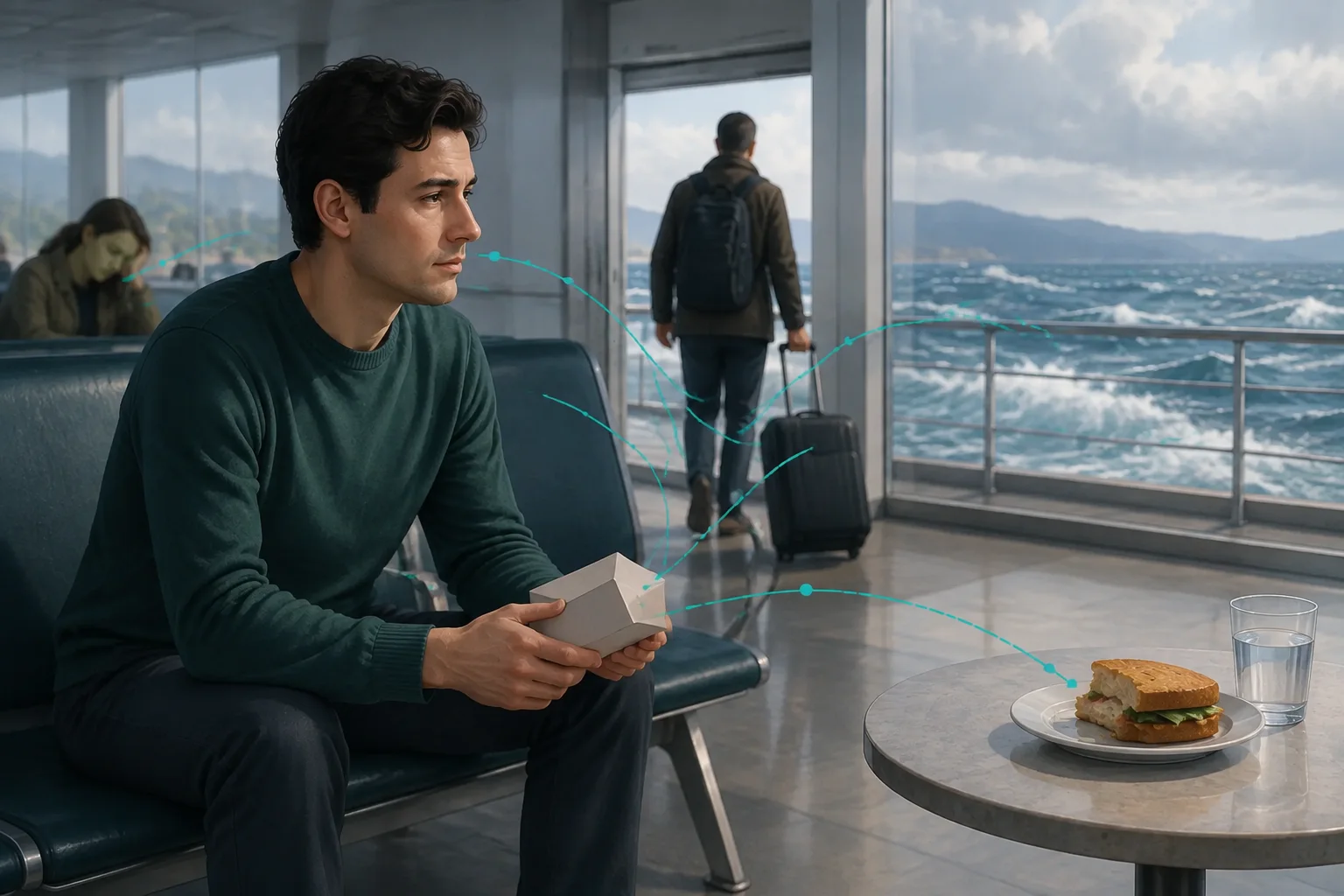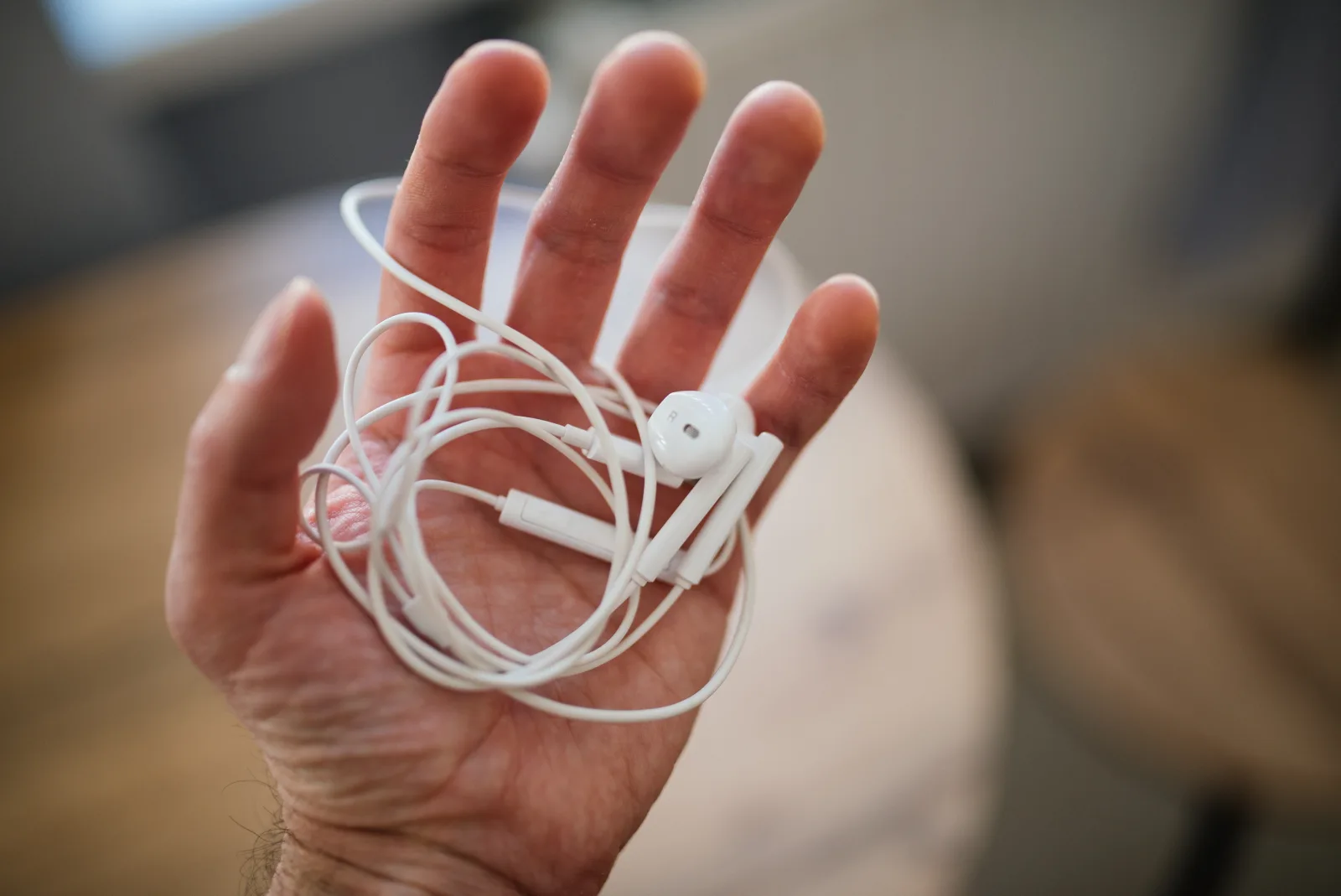
The short answer
Plugging one ear does not stop motion sickness. We could not find a single published trial of the trick, and the anatomy argues against it: the balance organs sit deep in the inner ear and report head movement and gravity, so an earplug changes what you hear, not what they feel. Noise cancelling headphones do not fix the underlying sensory mismatch either, though a quieter ride is genuinely easier to bear. The instinct behind all this folklore is still correct. Motion sickness does start in the ear, which is exactly why sound through headphones is worth taking seriously.
Search for car sickness fixes and you will meet the same family of tips again and again: put a foam earplug in one ear, wear it on your non-dominant side, switch ears halfway, chew gum, try noise cancelling. They all share one idea, that the ear is the way in.
That idea deserves a fair hearing, because it is half right. Here is each trick checked against what evidence exists, and what your ears actually have to do with nausea.
Prone to motion sickness? Drug-free sound therapy on any headphones. Relief in about 90 seconds.Starts in your browser · works with any headphones
Get your personalized Dizzout plan. Paid subscription for full access.

On your phone? Scan to start there.
Why ear folklore exists at all
People have always sensed that motion sickness lives somewhere in the head rather than the stomach. Sailors talk about sea legs, doctors talk about the inner ear, and anyone who has felt the world keep swaying after a ferry ride knows the ear is involved. So home remedies cluster around it.
There is also a simple reason ear tricks spread whether or not they work: every trip ends. If you put an earplug in twenty minutes before the winding road ran out, the earplug gets the credit. Cheap, harmless tricks survive on that logic for generations. The only way to sort them is to ask what each one would have to change inside the ear, and whether anyone has tested it.
The one earplug trick: verdict
The claim comes in several versions: one earplug in the non-dominant ear, or the ear opposite your writing hand, or switching sides every hour. The usual explanation is that it "confuses" or "rebalances" the inner ear enough to break the nausea loop.
We looked for a trial and could not find one. Not a negative result, no result: the trick appears in forums and travel tips, not in the medical literature. The proposed mechanism does not survive contact with anatomy either. Your balance organs, the semicircular canals and the otolith organs, sit behind the eardrum in the deepest part of the ear and read rotation and gravity. A foam plug in the ear canal blocks airborne sound on its way to the eardrum. It does not reach the balance organs and it does not change the motion they report to your brain.
So the honest verdict is untested, with no plausible mechanism as usually explained. If it seems to help you, the likeliest reasons are distraction and expectation, which are real effects but not ones an earplug has a monopoly on. It costs almost nothing and hurts nothing, so nobody needs to talk you out of it. Just do not build your trip around it.
Noise cancelling headphones: verdict
Noise cancelling does something real: it samples outside noise and plays an opposing signal, which is very good at flattening steady sounds like engine drone and road rumble. The question is whether that touches motion sickness.
Directly, no. Motion sickness is a conflict between what your eyes see and what your balance organs feel, and cabin noise is not part of that conflict. Muting the drone does not change the motion signal, so noise cancelling on its own is not a fix and we found no trial testing it as one.
Indirectly, it can still earn its seat. A long ride in constant noise is tiring, and fatigue and general discomfort lower your threshold for nausea, the same way heat and stale air do. A quieter cabin is a calmer cabin, and headphones also give you a channel for something genuinely useful to listen to, which matters below. One honest caution: some people find the sealed, pressure-like feel of noise cancelling unpleasant in a moving vehicle. If that is you, switch to transparency mode or open earbuds and lose nothing.
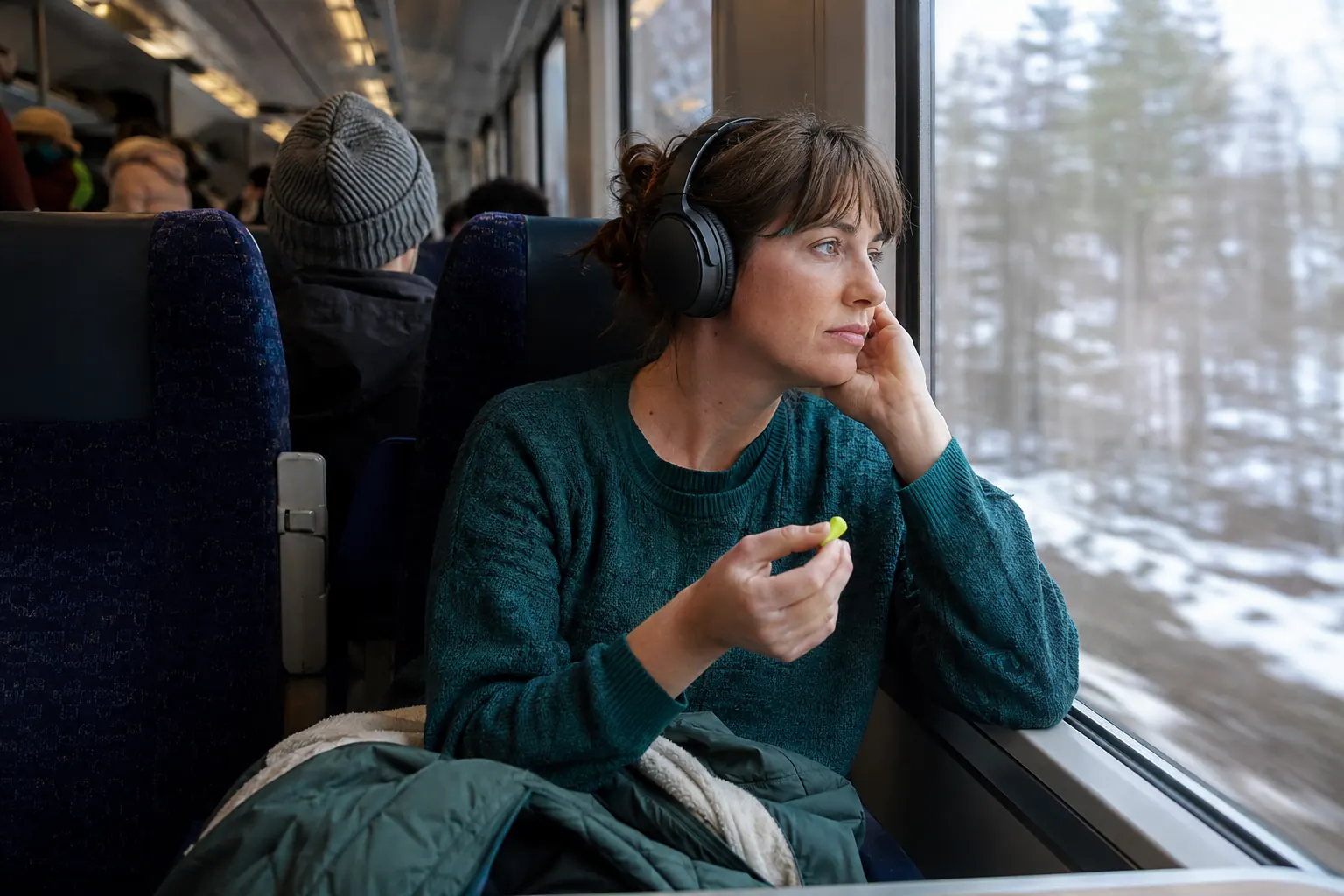
Myth
An earplug in one ear rebalances your inner ears and stops the nausea.Fact: No published trial tests it, and an ear-canal plug never reaches the balance organs. They read motion and gravity, not sound.
Myth
Noise cancelling fixes motion sickness by silencing the ride.Fact: Cabin noise is not part of the eye-ear conflict. A quieter ride is easier to bear, but the mismatch is untouched.
The verdicts argued in this article, drawn as claims and answers.
Chewing gum: the one-line answer
Gum is the one piece of ear-adjacent folklore with a real trial behind it: in a VR test, people who chewed gum felt measurably less sick, and a pleasant taste tracked with the benefit more than any particular flavor. The full verdict, including what that trial could and could not show, lives on our chewing gum page.
What your ears actually have to do with nausea
The inner ear holds two separate instruments. One is the cochlea, which hears. The other is the vestibular system, a set of fluid-filled canals and pouches that report every turn, tilt and bump of your head, plus which way gravity points.
Motion sickness is what happens when that vestibular report and your eyes disagree. In the back seat with a phone, your ears feel every curve while your eyes swear you are sitting still over a page. Your brain gets two stories it cannot reconcile and responds with nausea, cold sweat and that grey, heavy feeling. This is the standard sensory conflict account you will find in the CDC's travel medicine reference.
Now the folklore makes sense, and so does its failure. The ear really is where the trouble starts, but the earplug aims at the wrong instrument: it muffles the cochlea and leaves the vestibular system talking. Blocking sound cannot change what the balance organs report. Whether the right sound can help the brain settle the argument is a different question, and it is the one worth asking.
The deliberate version: sound designed for the job
Your ears are the one sense in this conflict you can conveniently reach through hardware you already own. That is the thinking behind sound therapy for motion sickness: instead of plugging the ear and hoping, it plays precisely calibrated audio through ordinary headphones instead of muffling sound the way an earplug does.
Dizzout is our version of that idea, and one option among the many remedies worth comparing. It is drug-free, causes no drowsiness, works with any wired or Bluetooth headphones, and is designed to help in about 90 seconds. You can see how a session runs before deciding whether it belongs in your kit.
What no ear trick can do
Nothing you put in or over your ears rewrites the situation that made you sick. Reading in the back seat on a winding road will keep generating the conflict no matter what you are wearing, and no audio, ours included, is a promise for everyone or every ride.
The basics still carry most of the weight: sit where the motion is smallest, keep your eyes on the road or horizon, get fresh air, and skip the phone. The full playbook walks through those in order. For people who get severely sick on every trip, medication is a legitimate option too. Talk to your pharmacist or doctor about what fits you before travelling.
A sensible ear-based plan for your next trip
Worth doing
- Bring headphones you find comfortable for the whole ride
- Use noise cancelling for calm on loud legs, transparency if the seal bothers you
- Pack gum: pleasant taste did the work in the one real trial
- Have a sound therapy session ready before symptoms peak
Skip
- Rely on one earplug as your whole plan
- Read or scroll and expect any ear trick to cover for it
- Wait until full nausea before acting
Practical suggestions from this article, not measured effects.
Before you leave, take the seat with the smallest motion and put the phone away. During the ride, use your headphones for something that actually helps: calm listening on the easy stretches, a sound therapy session when the first wave arrives, gum in your pocket for the winding parts. And if you are already queasy while reading this in the car, the feel sick right now page is the short version: eyes up, air on, and act before it peaks.
The ear-based option that was built on purpose
Stop the nausea
The folklore picked the right target and the wrong method. Dizzout plays precisely calibrated audio through any headphones, wired or Bluetooth. Drug-free, no drowsiness, about 90 seconds. Free to download, with a paid subscription for full access.
Get your personalized Dizzout plan. Paid subscription for full access.
30,000+ travelers in 30+ countries · How we count

On your phone? Scan to start there.
Comparing apps first? See how the motion sickness apps compare
Frequently asked questions
Does putting an earplug in one ear stop motion sickness?
There is no published trial of the one earplug trick, and the anatomy argues against the usual explanation. The balance organs sit deep in the inner ear and sense head movement and gravity, while an earplug only blocks sound travelling down the ear canal, so the motion signal your brain receives is unchanged. It is cheap and harmless, but any benefit likely comes from distraction and expectation rather than the plug itself.
Do noise cancelling headphones make motion sickness better or worse?
Neither, directly. Motion sickness comes from a mismatch between your eyes and your inner ear, and cabin noise is not part of that mismatch, so cancelling it is not a fix. A quieter ride can still help you stay calm and less fatigued, which raises your threshold for nausea. A minority of people dislike the pressure-like feel of noise cancelling in a moving vehicle; transparency mode solves that.
Does chewing gum really help car sickness?
It has better evidence than most folklore. A trial that induced motion sickness with a VR headset found people who chewed gum felt measurably less sick, and a pleasant taste predicted the benefit more than any specific flavor. Whether it transfers fully to a real car or ferry is untested, but gum is cheap and worth packing. Our chewing gum page has the full verdict.
Why are the ears involved in motion sickness at all?
The inner ear contains the vestibular system, fluid-filled canals and pouches that report your head's rotation, tilt and position relative to gravity. Motion sickness starts when that report conflicts with what your eyes see, like feeling every curve while reading a still page. Hearing uses a separate instrument in the same ear, the cochlea, which is why blocking sound does not block the motion signal.
Can sound through headphones help with motion sickness?
It is the deliberate version of the ear instinct. Rather than muffling the ear, sound therapy plays precisely calibrated audio through ordinary headphones. Dizzout is one option built on that approach: drug-free, no drowsiness, designed to help in about 90 seconds, and it works with any wired or Bluetooth headphones.
Someone you know gets motion sick?
Send them this guide. It might be the trip it saves.
Your next question, probably
What actually works, verdict by verdict?
Every common remedy, checked
Not your question? Does gum hold up in a real trial?How does the app use your ears?Feeling sick right now?
About this article
- Golding JF. Motion Sickness. CDC Yellow Book: Health Information for International Travel.
- National Institute on Deafness and Other Communication Disorders (NIH). Balance Disorders.
- Kaufeld M, De Coninck K, Schmidt J, Hecht H. Chewing gum reduces visually induced motion sickness. Exp Brain Res. 2022;240(2):651-663.
This article is informational and not a substitute for medical advice. If motion sickness is severe, frequent, or comes with hearing changes or lasting vertigo, talk to a doctor. Product and company names are trademarks of their respective owners; Dizzout is not affiliated with or endorsed by them.