The short answer
For most cruisers the realistic options are meclizine or dimenhydrinate tablets, the prescription scopolamine patch, ginger, acupressure bands, and drug-free sound therapy. The tablets and the patch are the ones with label-backed coverage windows, and each trades drowsiness or lead time for that coverage. The patch needs a prescription and hours of lead time but one application lasts up to 72 hours; the tablets are over the counter and quicker but shorter. Bands and ginger carry weak evidence and few downsides. The right pick depends on how long you will be at sea and how sharp you need to stay.
Every cruise forum has the same thread. Someone sails in three weeks, gets carsick on winding roads, and wants to know what to pack. The answers pile up fast: Bonine, the patch, ginger chews, wristbands, something called the coast guard cocktail. All of it delivered with total confidence and none of it agreeing.
Here is the same list, sorted by what a label or travel-medicine guidance actually states, so you can pick based on your cruise instead of a stranger's.
Seasick in your cabin or out on deck? Drug-free, no drowsiness, about 90 seconds on any headphones. Packs lighter than a pill bottle.Starts in your browser · works with any headphones
Stop seasickness on your cruise. Get your personalized Dizzout plan. Paid subscription for full access.

On your phone? Scan to start there.
The honest ranking, up front
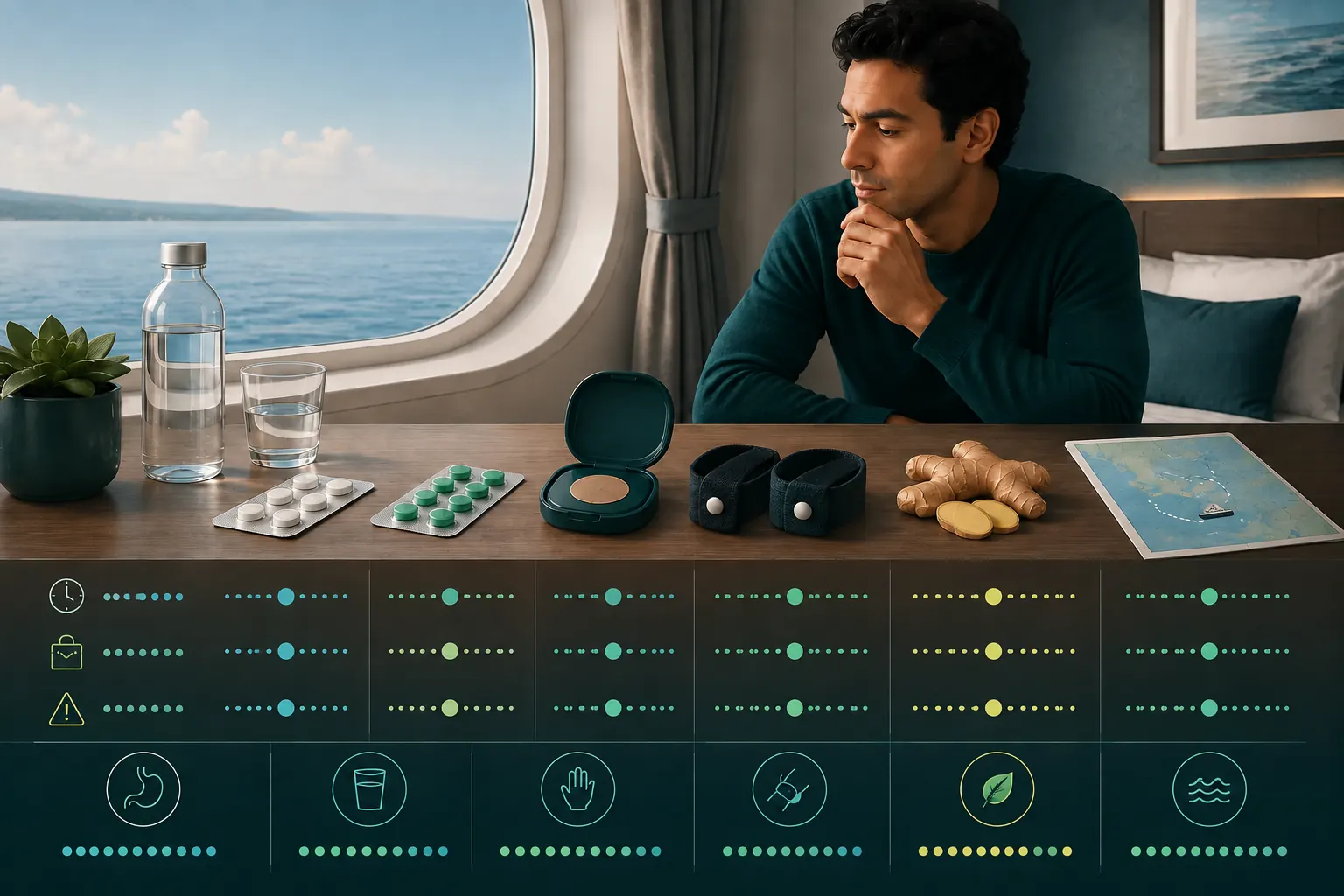
One honest thing first: nobody can rank these by how well they will work in your body. What can be ranked is everything else, where you get each one, how far ahead it has to go in, how long it covers, and what its own label lists as side effects. That is this table. The full medication guide goes deeper on each label.
| Option | Where you get it | Lead time | Coverage | The tradeoff |
|---|---|---|---|---|
| Meclizine (Bonine) | Over the counter | 1 hour before | Up to 24 hours | Drowsiness for some |
| Dimenhydrinate (Dramamine) | Over the counter | 30 to 60 minutes | 4 to 6 hours | Drowsiness is the common complaint |
| Scopolamine patch | Prescription | At least 4 hours, ideally more | Up to 72 hours | Dry mouth, blurred vision, grogginess |
| Ginger | Any shop | None | While it lasts | Weak, contradictory evidence |
| Acupressure bands | Any pharmacy | None | While worn | No better than placebo in lab trials |
| Dizzout (sound therapy) | App store, any headphones | None, play it when needed | Repeat whenever | Needs headphones, paid subscription for full access |
Pills: dimenhydrinate and meclizine on a ship
Dimenhydrinate, the classic Dramamine, goes in 30 to 60 minutes before motion and one dose covers roughly 4 to 6 hours. On a seven-night cruise that means redosing several times a day, and drowsiness is the complaint you hear most. Fine for a rough afternoon, tiring as a whole-week plan.
Meclizine, sold as Bonine and Dramamine Less Drowsy, fits a cruise better on paper: the label says take it 1 hour before travel and one dose covers up to 24 hours. So it becomes a morning habit, one tablet with breakfast. Less drowsy is not non-drowsy, though. Some people sail through the day clear-headed and some feel wrapped in cotton until dinner.
The patch: 72 hours of coverage and its quirks
The scopolamine patch is the set-and-forget option. You stick it behind your ear, it releases medicine slowly for up to 72 hours, and you swap it for a fresh one behind the other ear if the cruise runs longer. It is prescription-only in the US, so this decision has to happen before you travel, at a doctor's appointment, not in the terminal.
The quirks are real. The label lists dry mouth, drowsiness, blurred vision, and dizziness among the common effects, and some people get disoriented on it. It also needs lead time: the label says apply it at least 4 hours before you need it, and CDC travel guidance puts its onset at 6 to 8 hours, so earlier is better. Wash your hands after touching it, and do not cut a patch to make a smaller dose.
Wristbands and ginger: what the evidence supports
Less than the gift shop implies. CDC travel guidance describes the evidence for ginger as weak and contradictory, and notes that in laboratory trials acupressure bands performed no better than placebo. It adds a fair caveat: placebo effects can be strong, and if a band works for you, it works for you.
The honest role for both is the harmless layer. Cheap, zero side effects, stackable with anything else on this page. Just do not let a wristband be the only thing between you and three days of open ocean. The boating remedy comparison covers this same tradeoff for smaller boats, where the motion is rougher and the stakes are higher.
The coast guard cocktail, explained and cautioned
You will meet this phrase in every seasickness thread. It is the nickname for a prescription pairing of promethazine, an antihistamine used against nausea, with ephedrine, a stimulant added to offset the drowsiness. The logic: CDC guidance lists promethazine as the most sedating of the antihistamines used for motion sickness, so crews who had to stay functional paired it with something to push back.
The caution: both halves are serious medicines with their own effects and interactions, and this is a combination a doctor prescribes deliberately, not something to assemble from separate packets. If your seasickness history is bad enough that a normal tablet has failed you, that history is worth an actual travel-medicine appointment. Bring the phrase up there.
Timing: what to take before sail away
CDC travel guidance is blunt on this point: these medicines do their job better taken before the motion starts than after nausea sets in. Working back from sail away:
- Patch users: apply it the morning of departure or earlier. The label minimum is 4 hours before you need it, and CDC guidance puts its onset at 6 to 8 hours.
- Meclizine: one tablet an hour before boarding, then per the label, one every 24 hours.
- Dimenhydrinate: 30 to 60 minutes before, and plan for redosing every 4 to 6 hours per the label.
- Ginger and bands: no lead time. Add them whenever.
- Sound therapy: no lead time either. Have the app and headphones on you rather than in the cabin.
The first evening matters most. The ship leaves shelter, the motion is new, and your body has not adapted yet. Most people find the first day or two hardest and steadier legs after that, which is worth knowing before you commit to a week of tablets. Cabin choice and the other free layers are their own topic: the cruise prevention hacks cover those.
What the ship's doctor can do if you are already sick
You are not stranded if you packed nothing. Ask at guest services first: many ships keep basic seasickness tablets there or in the shops on board. If you are past the point of keeping a tablet down, the medical center is the next stop. Large cruise ships carry medical staff, seasickness is among the most routine things they see, and they have options a pharmacy shelf does not.
Two practical notes. Ship medical visits are usually billed like a private clinic, so check whether your travel insurance covers them. And while you wait for either, the 60-second protocol is what to do with your eyes, horizon, and breathing in the meantime.
The drug-free option that skips the tradeoffs
Every drug on this page trades something for its coverage: drowsiness on your shore excursion, lead time you have to plan around, a prescription you needed last month. The gap they all share is the moment coverage runs out. The pill was six hours ago, dinner is in the aft restaurant, and the swell picked up at sunset.
That gap is where sound therapy fits. Dizzout plays precisely calibrated audio through any headphones, and it is one option designed to help calm the response in about 90 seconds, with no drowsiness and nothing to check against medicines you already take. It is not a promise, bodies differ, but it needs no lead time and you can use it again whenever the motion does.
Building your personal cruise plan
Put it together from your own trip, not from the forum's:
- Long cruise, want set-and-forget: ask your doctor about the patch well before departure, and test how you tolerate it before the trip if they agree.
- Prone but functional: meclizine each morning per the label, with a drug-free layer for the gaps.
- Excursion days you need to stay sharp for: lead with the drug-free layers, keep a tablet as backup.
- Not sure you are prone at all: take the motion sickness test before you buy anything, and read the fuller cruise guide for what to expect on board.
Whatever you pick, run it past a pharmacist or doctor, especially if you take other medication, are pregnant, or are packing for kids. The best cruise plan is the one you settled on at home, not the one you improvise at the gift shop after the ship starts to roll.
For the moment the pill cannot cover
Stop the nausea
Dizzout is sound therapy through any headphones: at dinner, on the tender, at 2am in a rolling cabin. Drug-free, no drowsiness, about 90 seconds. Free to download, with a paid subscription for full access.
Get your personalized Dizzout plan. Paid subscription for full access.
30,000+ travelers in 30+ countries · How we count

On your phone? Scan to start there.
Comparing apps first? See how the motion sickness apps compare
Not travelling yet? Remind me the day before my trip
Frequently asked questions
What is the best seasickness medicine for a cruise?
There is no single best, because each option trades something different. The scopolamine patch offers the longest coverage, up to 72 hours, but needs a prescription and carries dry mouth and blurred vision among its listed effects. Meclizine is over the counter and one dose is labelled for up to 24 hours, which suits a daily-tablet routine, though it can still cause drowsiness. The best pick is the tradeoff you can live with, confirmed with a pharmacist or doctor.
When should you take seasickness medication before a cruise?
Before the motion starts, not after nausea sets in. The scopolamine patch goes on at least 4 hours ahead per its label, and CDC travel guidance puts its onset at 6 to 8 hours, so apply it earlier than the minimum. Meclizine is labelled for 1 hour before travel and dimenhydrinate for 30 to 60 minutes before, so time your dose back from sail away.
What is the coast guard cocktail?
It is the nickname for a prescription pairing of promethazine, a strongly sedating antihistamine used against nausea, with ephedrine, a stimulant added to offset the drowsiness. It is not an over-the-counter product and not something to assemble yourself. If ordinary tablets have failed you before, raise it at a travel-medicine appointment and let a doctor decide.
Can the ship's doctor give you something for seasickness?
Yes. Large cruise ships carry medical staff, and seasickness is one of the most routine problems they handle. Ask at guest services first, since many ships keep basic seasickness tablets available on board, and go to the medical center if you cannot keep a tablet down. Visits are usually billed like a private clinic, so check your travel insurance.
What works for seasickness without making you drowsy?
The non-drug layers: a horizon view, fresh air, a midship cabin, and short breaks from screens and reading. Ginger and acupressure bands are drowsiness-free too, though the evidence behind them is weak. Dizzout's sound therapy is one drug-free option designed to help calm the response in about 90 seconds through any headphones, with no drowsiness. Meclizine marketed as less drowsy is less, not none.
Are there natural seasickness remedies for a cruise?
Yes. Ginger is the best studied, taken before you sail and again on rough days. Acupressure bands are cheap and low-risk, though the evidence for them is mixed. The free habits matter most: a midship cabin on a low deck, time on deck with your eyes on the horizon, fresh air and light meals. If symptoms start anyway, drug-free sound therapy through headphones is an option, and Dizzout states relief in about 90 seconds.
Someone you know gets motion sick?
Send them this guide. It might be the trip it saves.
Your next question, probably
What else prevents seasickness on board?
Cabin choice, food, horizon
Not your question? How likely are you to get seasick at all?Want the medication labels in full?Feeling it right now?
About this article
by the Dizzout editorial team.
- CDC Yellow Book, Motion Sickness chapter.
- MedlinePlus: Scopolamine transdermal patch.
- MedlinePlus: Meclizine.
- Dramamine Original Formula (dimenhydrinate) Drug Facts label.
This article is informational and not a substitute for medical advice. Read the leaflet that comes with any medicine and talk to a pharmacist or doctor before taking one. Brand names are trademarks of their respective owners; Dizzout is not affiliated with or endorsed by them.