The short answer
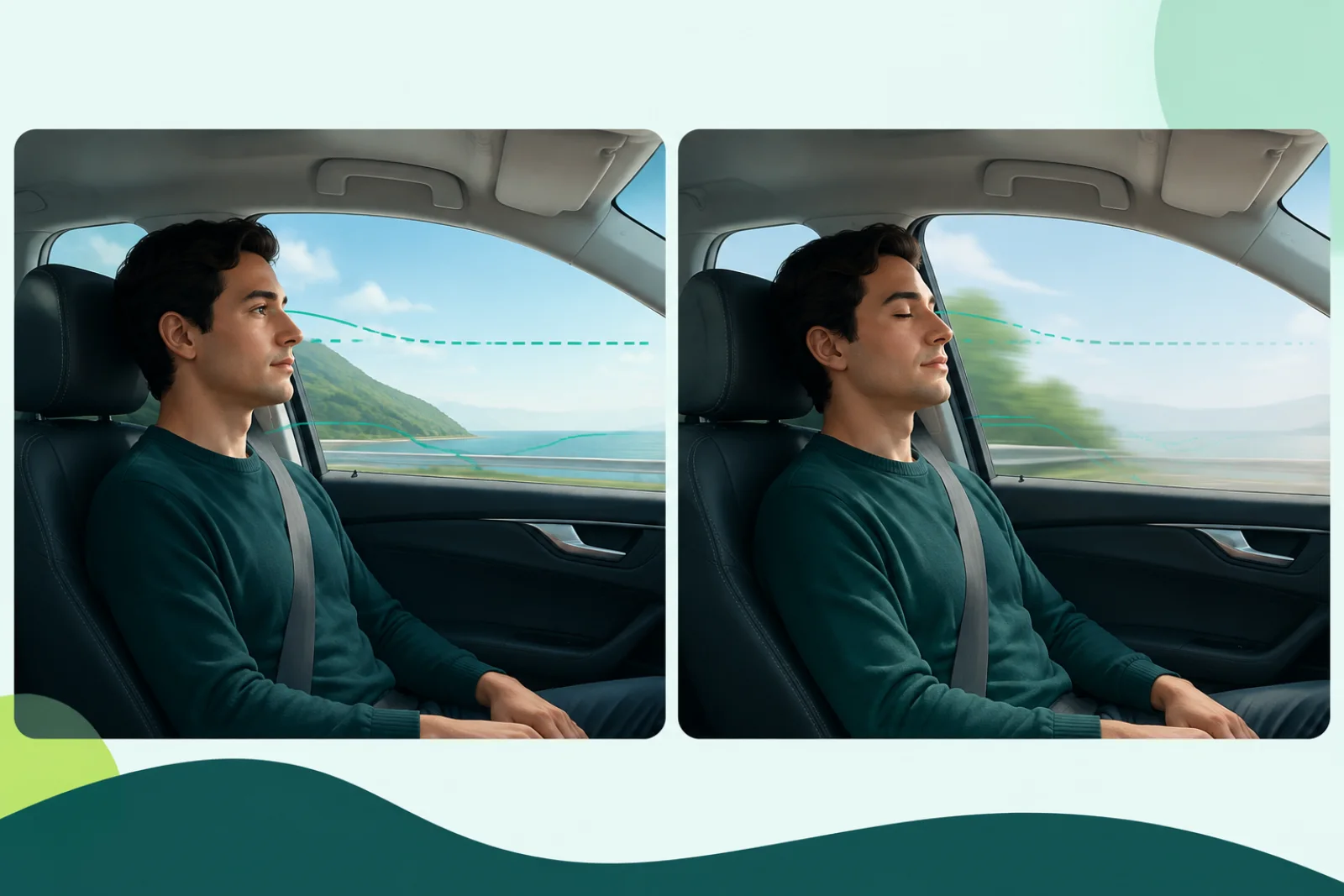
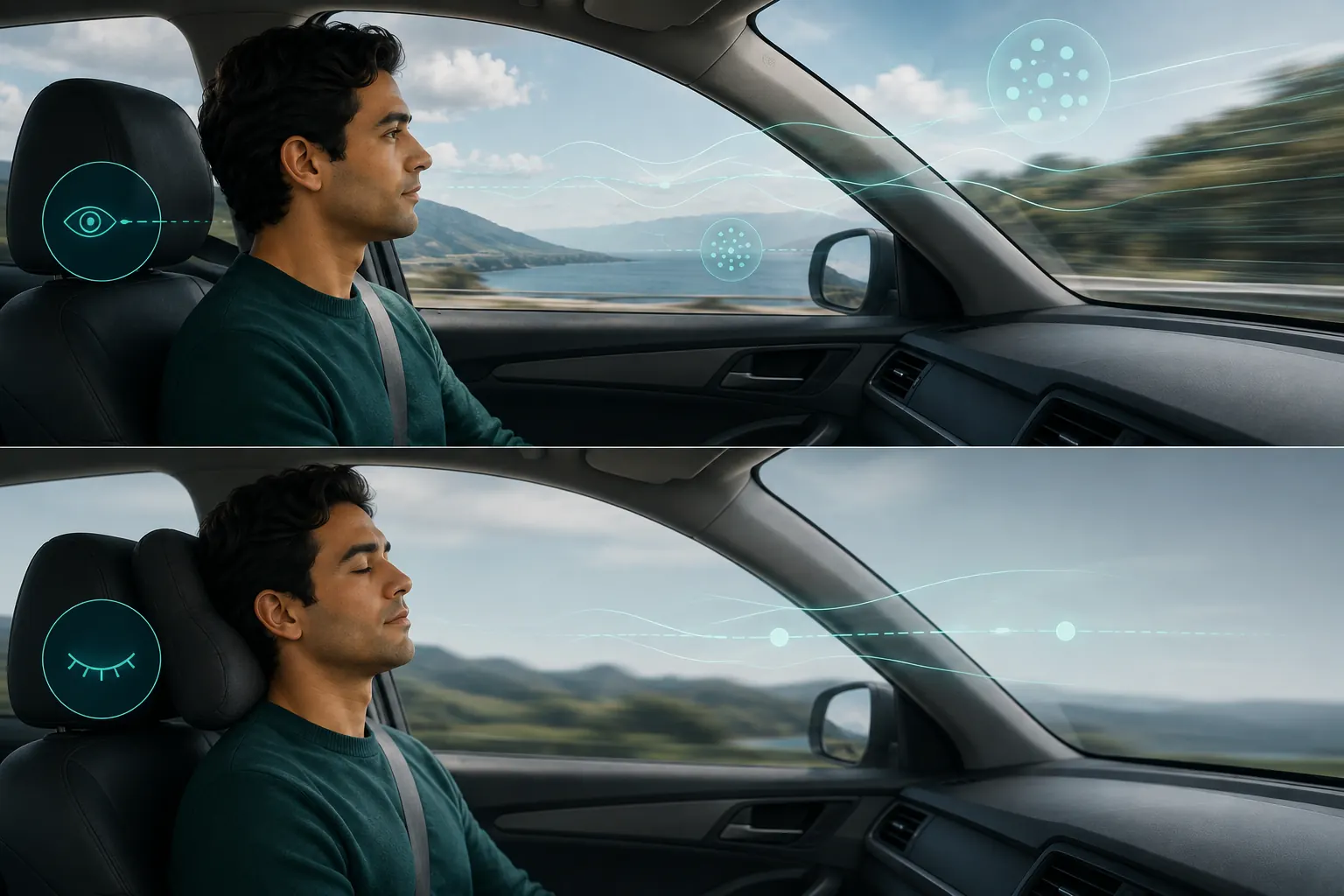
Closing your eyes can help motion sickness when the visual scene itself is causing or worsening the conflict, such as a screen, a VR image or a cabin interior that looks still. In a moving car or boat, looking at a real horizon is often the better first move because it gives your eyes accurate motion information. The rule is simple: if you can see a stable outside reference, use it; if all you can see is misleading motion or a still interior, close your eyes and keep your head supported.
The advice sounds contradictory because both answers can be right. Eyes open is useful when the view tells the truth about your movement. Eyes closed is useful when the view is the lie.
Key facts
- A real horizon can reduce the mismatch between what your eyes see and your inner ear feels.
- Closing your eyes removes visual input, which can help when a screen, simulation or still cabin is the provoking view.
- Reading with eyes open is not the same as looking outside; it usually makes car sickness worse.
- Keeping the head still or supported can reduce extra vestibular stimulation whichever visual strategy you use.
- Neither method is a cure, and the better one can change during the same trip.
Prone to motion sickness? Drug-free sound that works whether your eyes are open or closed.Starts in your browser · works with any headphones
Get your personalized Dizzout plan. Paid subscription for full access.

On your phone? Scan to start there.
Why eyes open and eyes closed can both help
Motion sickness is usually explained as a mismatch between sensory signals and the movement your brain expected. In a car, your inner ear feels acceleration and turns. If your eyes are fixed on a book or phone, they report a stable little rectangle. The disagreement grows.
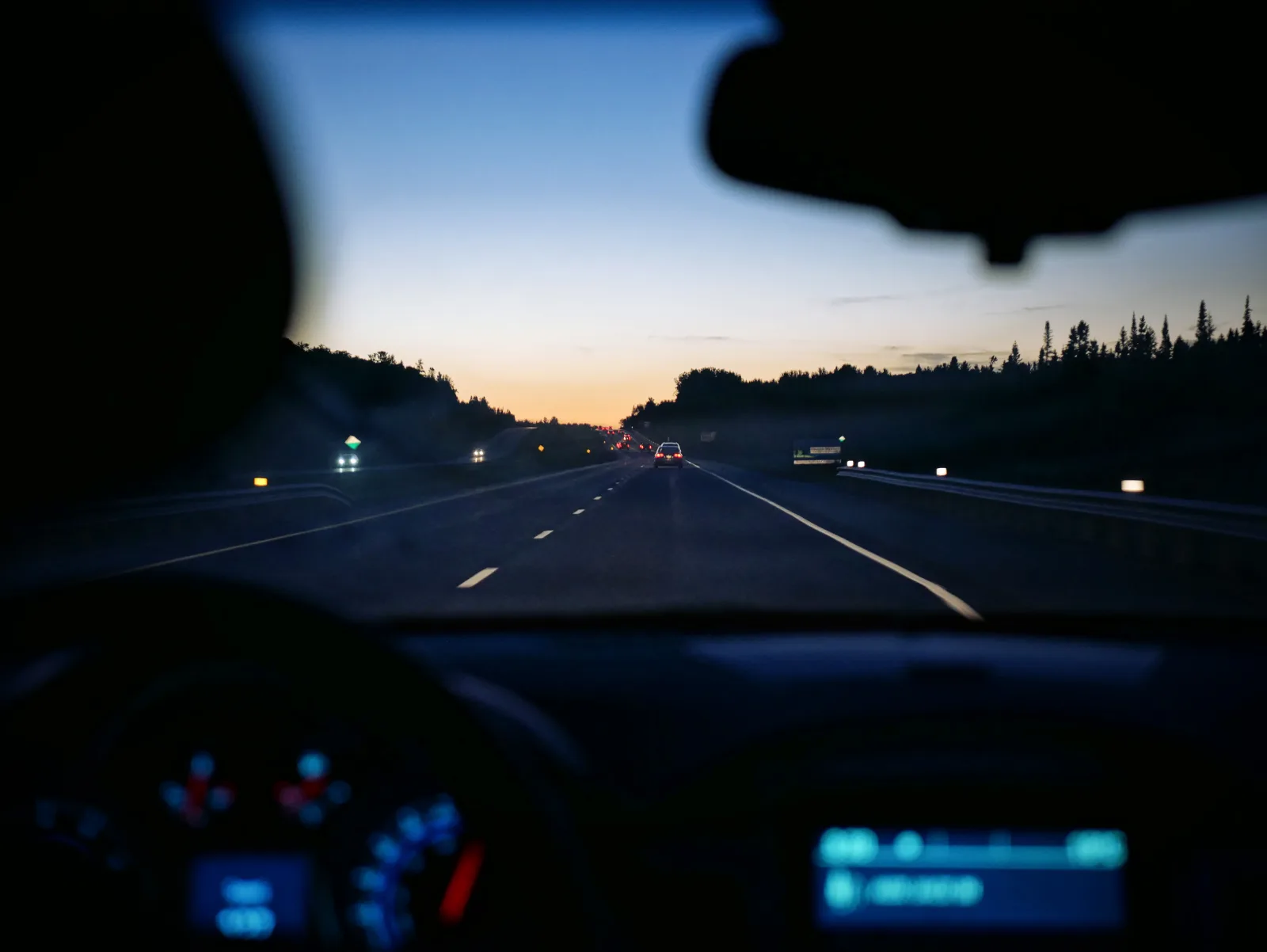
Look through the windshield and the visual signal becomes useful: the road bends, the horizon shifts, and your brain gets warning about the next motion. The CDC lists obtaining a visual horizon reference as a protective countermeasure in cars, buses, ships and simulators.
Close your eyes and the conflicting visual report disappears instead. That can be useful when there is no truthful outside view, when a VR scene is the trigger, or when watching turbulent motion makes you feel worse. You are reducing information rather than correcting it, which is why a good real-world horizon often wins when one is available.
| Situation | Try first | Reason |
|---|---|---|
| Car or bus with a clear windshield view | Eyes open, look far ahead | The road gives advance visual information about turns and braking |
| Boat with a visible horizon | Eyes open, hold the horizon | The outside reference confirms the motion |
| Below deck or inside a windowless cabin | Eyes closed, head supported | The still interior conflicts with the movement you feel |
| Reading or using a phone in a vehicle | Stop the task, then look outside | Close visual work is a common trigger |
| VR or a moving screen | Close your eyes and stop the experience | The visual motion itself is the provoking input |
| Plane turbulence with no useful view | Eyes closed, head supported | There may be no reliable horizon reference to use |
In a car, do this before closing your eyes
- Put the phone or book away completely.
- Lift your gaze through the windshield toward the furthest part of the road you can see.
- Support your head against the headrest and avoid repeated side-to-side movement.
- Ask for smoother braking and acceleration, and move to the front passenger seat when it is safe and available.
- If looking outside still feels worse, close your eyes, keep the head supported and use slow regular breathing.
On a boat, plane or in VR
On deck, a real horizon is valuable. Below deck, the walls may look still while the ship rolls, so closing your eyes or moving outside can be better. Choose a position closer to the center of the vessel and away from the bow, where motion is larger.
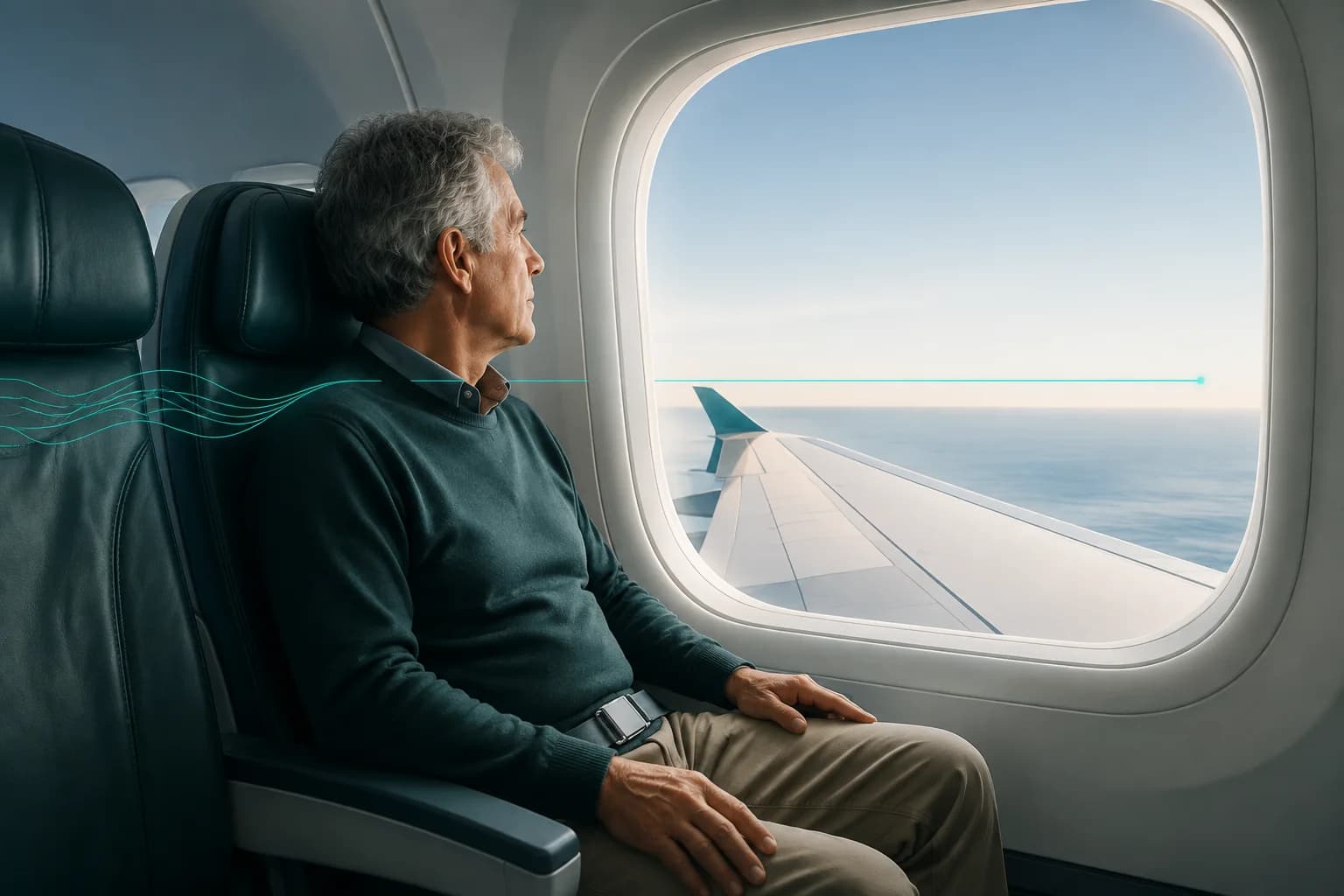
In a plane, a wing-area window seat can provide both a useful view and less motion, but clouds and darkness can remove the reference. In that case, rest your head and close your eyes rather than trying to read through turbulence.
In VR, closing your eyes is an emergency stop, not a training technique. Pause the experience, remove the headset once you are stable, and wait until symptoms settle. Pushing through nausea can make the association harder to unlearn.
The bottom line
Use the view if it is accurate and useful. Remove it if it is misleading. In a car or on deck, look toward the road or horizon first. With a screen, VR image or still interior in front of you, stop the visual task and close your eyes if needed. Head support and early action help either strategy do its job.
Relief that does not depend on the view
Get your personalized Dizzout plan
Dizzout plays precisely calibrated audio through any wired or Bluetooth headphones. It works with your eyes open or closed, is drug-free, and Dizzout states relief in about 90 seconds. Individual experiences vary.
Paid subscription for full access.
30,000+ travelers in 30+ countries · How we count

On your phone? Scan to start there.
Comparing apps first? See how the motion sickness apps compare
Frequently asked questions
Does closing your eyes stop motion sickness?
It can reduce symptoms for some people by removing conflicting visual input, but it does not stop the underlying motion and is not a cure. In a moving vehicle with a clear outside view, looking toward the road or horizon may work better because it gives your brain accurate information about the movement.
Is it better to keep your eyes open or closed when carsick?
Keep them open if you can look through the windshield toward the road ahead. Close them if the only view is a phone, book, nearby cabin interior or visually confusing motion. Support your head and switch strategies if the first choice makes you feel worse.
Why does looking at the horizon help nausea?
The horizon gives your eyes a stable external reference that matches the movement your inner ear is sensing. That reduces the visual and vestibular mismatch associated with motion sickness. It is most useful when the horizon is real, visible and far away.
Should I close my eyes during turbulence?
If there is no useful outside view, closing your eyes and supporting your head can be more comfortable than reading or watching the cabin. Use slow regular breathing. If symptoms are severe or unusual, tell the cabin crew and seek medical advice when appropriate.
Someone you know gets motion sick?
Send them this guide. It might be the trip it saves.
Your next question, probably
Feeling sick right now?
The 60-second protocol
Not your question? Why does the mismatch cause nausea?Which seat gives you the best view?What works without medicine?
About this article
by the Dizzout editorial team.
This article is informational and not a substitute for medical advice. If dizziness or nausea occurs without motion, persists after travel, or comes with neurological or hearing symptoms, seek medical care.